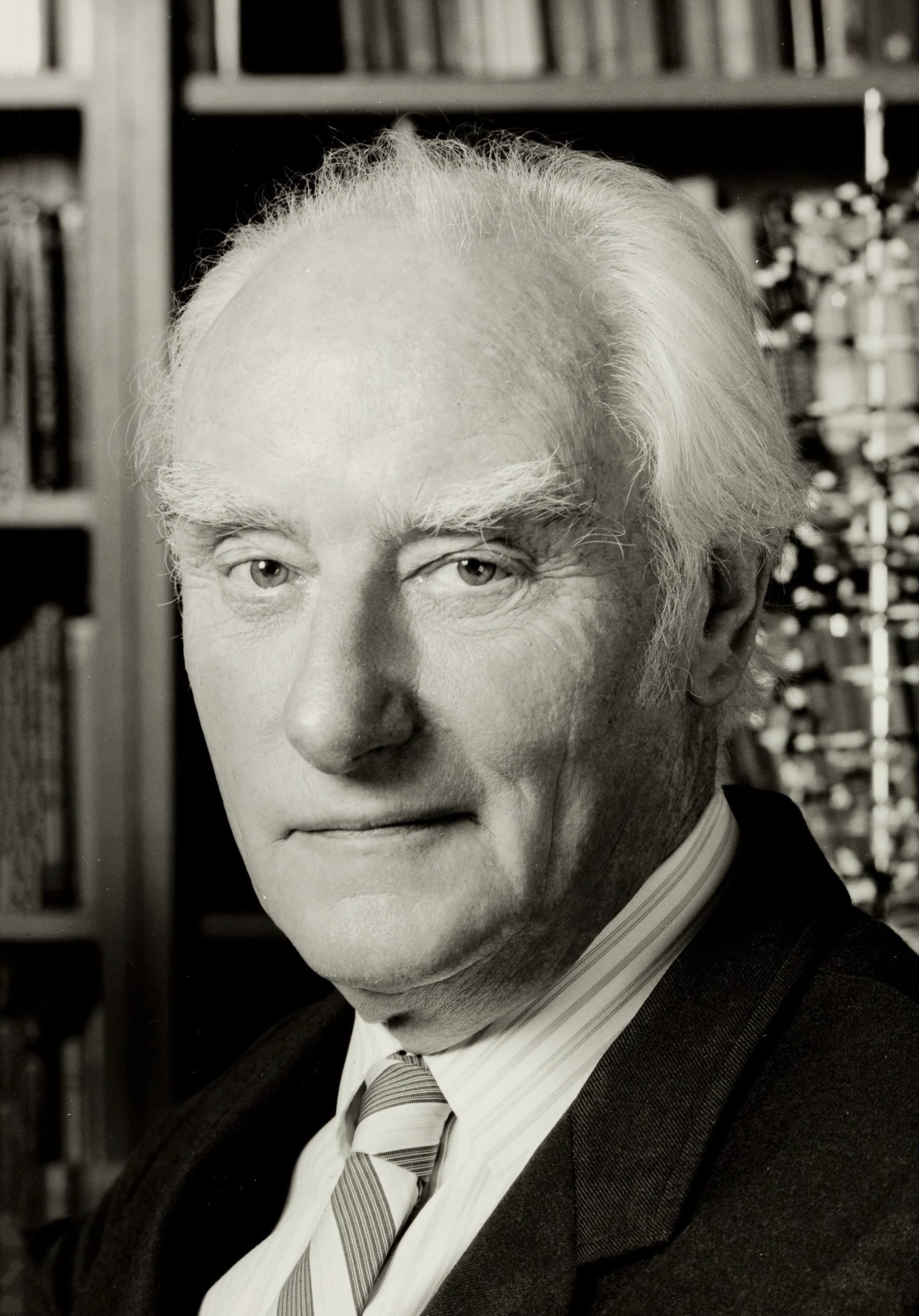
Francis Crick
 United Kingdom
molecular biologist•biophysicist•neuroscientist
Birthday
June 8, 1916
Birth Sign
Gemini
Birthplace
Northampton, England
Age
Died at 88
Height
6 ft (183 cm)
About
Francis Harry Compton Crick was an English molecular biologist, biophysicist, and neuroscientist best known for co-discovering the double-helix structure of DNA alongside James Watson in 1953. That breakthrough, built on X-ray diffraction data from Rosalind Franklin and Maurice Wilkins, earned Crick, Watson, and Wilkins the 1962 Nobel Prize in Physiology or Medicine and fundamentally reshaped biology. Crick is also remembered for coining the term central dogma to describe the one-way flow of genetic information from DNA to RNA to protein.
After his DNA work, Crick shifted his focus to neuroscience. In 1976 he moved to the Salk Institute for Biological Studies in La Jolla, California, where he spent the rest of his career exploring the neural correlates of consciousness. He wrote The Astonishing Hypothesis (1994), arguing that consciousness arises entirely from physical brain processes. Crick remained active in research until his death from colon cancer in 2004, editing a manuscript on his deathbed. His legacy extends beyond the lab: the Francis Crick Institute in London, a £700 million biomedical research centre, opened in 2016 and continues his tradition of bold, interdisciplinary science.
Early Life & Background
Crick grew up in Northampton, England, where his father managed a shoe factory. As a child he devoured the Children's Encyclopedia, particularly the science and chemistry sections, and conducted home experiments including a failed attempt to make artificial silk. He attended Northampton Grammar School and at 14 won a scholarship to Mill Hill School in London, where he independently studied Mendelian genetics because it was not taught. Crick earned a second-class honours degree in physics from University College London in 1937 and began graduate research on water viscosity at high temperatures, a problem he later called the dullest imaginable. His PhD was interrupted when a bomb destroyed his apparatus during the Battle of Britain. During World War II he worked for the British Admiralty designing acoustic and magnetic mines. After the war, determined to leave weapons work, he entered biology, saying, What you are really interested in is what you gossip about. In 1947 he joined the Strangeways Research Laboratory in Cambridge, studying magnetism's effects on chick cells, and in 1949 moved to the Medical Research Council Unit at the Cavendish Laboratory under Max Perutz to work on protein X-ray crystallography.
Career Growth
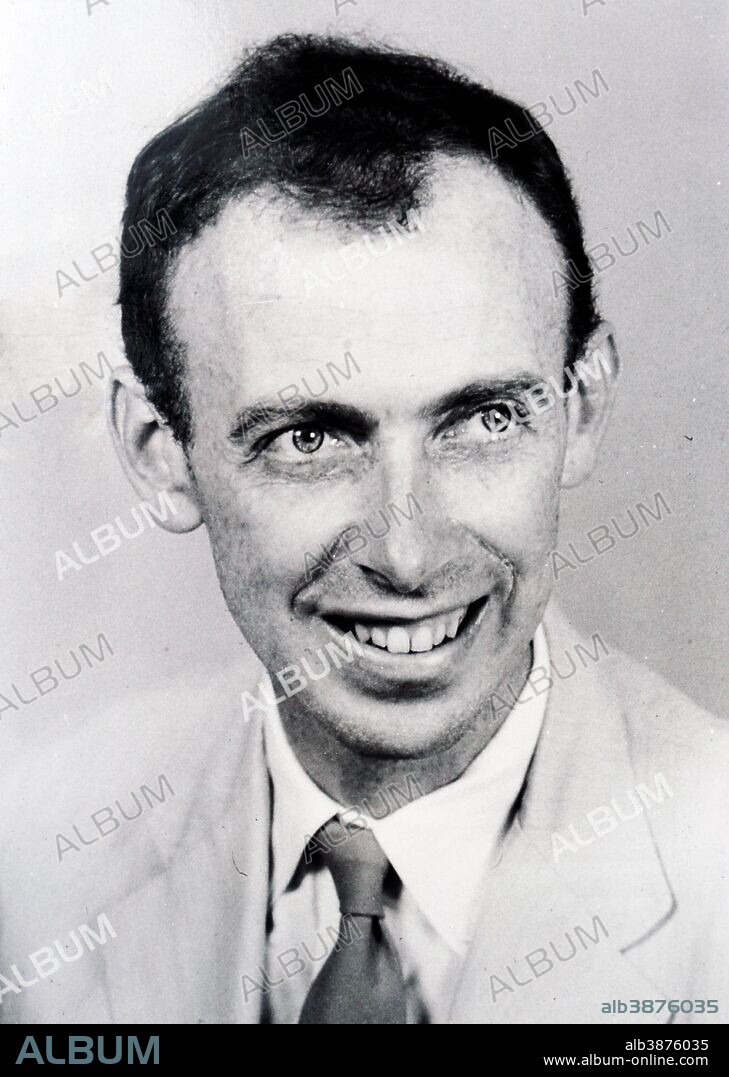
Crick's pivotal moment came in 1951 when he met James Watson at the Cavendish Laboratory. Sharing a burning interest in the molecular basis of heredity, they used Rosalind Franklin's X-ray diffraction images and Maurice Wilkins's data to build a model of DNA. On February 28, 1953, they deduced the double-helix structure; their paper appeared in Nature on April 25, 1953. For this discovery Crick, Watson, and Wilkins shared the 1962 Nobel Prize in Physiology or Medicine. Crick earned his PhD from Cambridge in 1954 with a dissertation on X-ray diffraction by helices. In 1961, with Sydney Brenner, he demonstrated that the genetic code is read in triplets. He also formulated the central dogma of molecular biology. In 1976 Crick moved to the Salk Institute in La Jolla, where he turned to theoretical neurobiology and consciousness research, co-authoring The Astonishing Hypothesis (1994) with Christof Koch. He remained at Salk until his death, editing a manuscript on his deathbed.
Career Timeline
Public Image & Style
Crick is widely portrayed as a brilliant, intense, and sometimes arrogant scientist singularly focused on solving the biggest problems in biology. He approached science with sharp, analytical, and often provocative thinking. In popular culture he is a central figure in the story of DNA, featured in books, documentaries, and films. The scientific community reveres him, and the Francis Crick Institute carries his name. There is no official fandom, but his work is celebrated in science education and at events like DNA Day. His social media presence is posthumous, managed through the Crick Institute's accounts.
Fame & Fandom
Francis Crick never had a fandom in the pop-culture sense, no fan club, no hashtag campaigns, no formal name for the enthusiasts who revere him. Instead, his most devoted followers are the thousands of scientists who work in his shadow, and the institution that bears his name, the Francis Crick Institute in London, serves as a living monument to his legacy. A niche but passionate community of science historians and biographers has recently rallied around his story, sparked by Matthew Cobb's 2025 biography, which drew reviews in The Economist, The New York Times, and Science, the closest thing to fan-driven media attention Crick has ever received.
As of August 2026, iFANN's Global Fame Engine has evaluated Francis Crick but he does not currently hold a placement in the published rankings, neither in the Global Top 1,000 nor in any Top-100 scope list. His fame, though immense within the scientific community, does not translate to the mass cultural metrics that drive modern celebrity rankings. His iconic moments, the 1953 double-helix model, the 1962 Nobel Prize, are documented history, not folklore, and his legend is being actively rewritten by scholars correcting the myth that he and Watson stole Rosalind Franklin's data. Crick's true fanbase is the global scientific research community, and his legacy continues to grow through the work of the institute that carries his name.
Interesting Facts and Legends
Crick once said he was born again when he switched from physics to biology at age 31. He was an outspoken atheist and humanist. In the 1960s he privately speculated about directed panspermia, the idea that life on Earth might have been deliberately seeded by an advanced alien civilization. He collaborated with neuroscientist Christof Koch for over a decade on the neural correlates of consciousness. Crick's PhD was awarded in 1954, after his Nobel Prize-winning discovery. He was appointed to the Order of Merit in 1991, a British honour limited to 24 living members.
One of the most enduring legends of Crick's career is the moment he and James Watson announced their discovery of the double helix in the Eagle pub in Cambridge, with Crick declaring they had found 'the secret of life', a story still retold by scientists and historians. Another iconic moment is his later shift to neuroscience in the 1970s, a move that puzzled some colleagues but is now seen as visionary. Recent scholarship has also revisited the long-held accusation that Crick and Watson stole Rosalind Franklin's data, with a 2025 Nautilus article arguing the 'theft' narrative is a distortion of what actually happened, a piece of cultural mythology that continues to evolve.
Notable Quotes
“You, your joys and your sorrows, your memories and your ambitions, your sense of personal identity and free will, are in fact no more than the behavior of a vast assembly of nerve cells and their associated molecules.”
“What you are really interested in is what you gossip about.”
“The difference between my lecture and your book is that my lecture had a lot more intellectual content and nothing like so much gossip.”
“We have discovered the secret of life.”
Family & Personal Life
Crick married twice. His first wife was Ruth Doreen Dodd; they married in 1940 and divorced in 1947. They had one son, Michael Francis Compton Crick, born in 1940. In 1949 Crick married Odile Speed, an art student he met while working at the Strangeways Laboratory. They had two daughters, Gabrielle and Jacqueline. Odile was a supportive partner throughout his career, and they remained together until Crick's death in 2004. The family lived in Cambridge and later in La Jolla, California. Crick's father Harry managed a shoe factory; his mother Annie Elizabeth Wilkins was a former schoolteacher.
Notable Connections
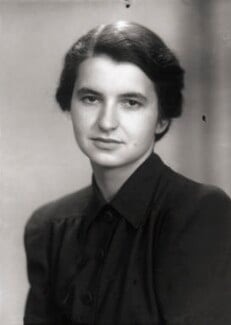
James Watson was Crick's primary collaborator on the DNA structure. Maurice Wilkins shared the Nobel Prize with them. Rosalind Franklin's X-ray data (Photo 51) was essential to the discovery. Sydney Brenner worked with Crick on the triplet code. Christof Koch collaborated with Crick on consciousness research. Max Perutz headed the MRC Unit at the Cavendish where Crick worked.
Relationships & Dating History
Crick married his first wife, Ruth Doreen Dodd, in 1940. They had one son, Michael, before divorcing in 1947. In 1949 he married Odile Speed, an art student. They had two daughters, Gabrielle and Jacqueline, and remained together until Crick's death in 2004. Odile was a constant support throughout his career. As of 2026, Francis Crick is deceased; he was married to Odile Crick at the time of his passing.
- MarriedRuth Doreen Dodd1940 - 1947First wife. They had one son, Michael. Divorced in 1947.
- MarriedOdile Speed1949 - 2004CurrentSecond wife. They had two daughters, Gabrielle and Jacqueline. Remained married until Crick's death.
Death & Aftermath
Died
July 28, 2004 (aged 88)
Death Place
La Jolla, California, USA
Cause of Death
Colorectal cancer
Francis Crick spent his final days working at the Salk Institute for Biological Studies in La Jolla, California. He died on July 28, 2004, at the age of 88 after a long illness with colorectal cancer that had complicated his health in his later years. The scientific community responded with immediate tributes from the Nobel Prize organization and the Royal Society, while peers like James Watson mourned the loss of a thinker who uniquely bridged physics, chemistry, and biology. Major publications including Nature and The New York Times published retrospectives celebrating his shift from genetics to neuroscience and his work on consciousness. No public funeral service or burial location was ever confirmed, as Crick maintained a private personal life throughout his career. Posthumous recognition included the establishment of the Francis Crick Institute in London in 2015 and the publication of Matthew Cobb's biography Cric: A Mind in Motion in November 2025. Academic journals revisited his contributions with special issues examining his later work on the conscious brain.
Net Worth (Estate Value)
$5–10 Million
iFANN Editorial Team estimate
iFANN currently estimates Francis Crick's estate at $5–10 million as of 2026. His personal wealth at death was modest for a Nobel laureate, under $10 million. The estate's primary value comes from book royalties, licensing of his image and name, and ongoing sales of his scientific publications. The Francis Crick Institute, a £700 million research centre named after him, is not owned by the estate. Annual revenue from intellectual property is in the low six figures. The estate is managed by his family, including his son Michael. Since Crick's death in 2004, the estate has seen steady but modest income, with occasional boosts from new biographies or media projects.
Awards Won (5)
Crick won the Nobel Prize in Physiology or Medicine in 1962 for the DNA structure. He also received the Royal Society's Copley Medal (1975), the Albert Lasker Award (1960), the Charles Leopold Mayer Prize (1961), and the Gairdner Foundation International Award (1962).
1962 · Physiology or Medicine
Discovery of the molecular structure of DNA
1975 · Science
Elucidation of the structure and function of DNA
Known For
Discovery of DNA double helix
1953 · Co-discoverer
Central dogma of molecular biology
1958 · Originator
Triplet nature of genetic code
1961 · Co-discoverer
The Astonishing Hypothesis
1994 · Author
Keywords
Sources
Quick Facts
- Profession
- molecular biologist, biophysicist, neuroscientist
- Born
- June 8, 1916
- Birthplace
- Northampton, England
- Died
- July 28, 2004
- Death Place
- San Diego, California, USA
- Gender
- Male
- Spouse
- Odile Crick
- Birth Sign
- Gemini
Personal Details
- Full Name
- Francis Harry Compton Crick
- Height
- 6 ft (183 cm)
- Spouse
- Odile Crick
- Children
- Michael Francis Compton Crick, Gabrielle Crick, Jacqueline Crick
- Education
- University College London (BSc in Physics, 1937); Cambridge University (PhD, 1954)
Frequently Asked Questions
Was Francis Crick married?
What was Francis Crick's net worth?
How old was Francis Crick when he died?
Did Francis Crick have children?
Is Francis Crick still alive?
Join the community
fans discussing