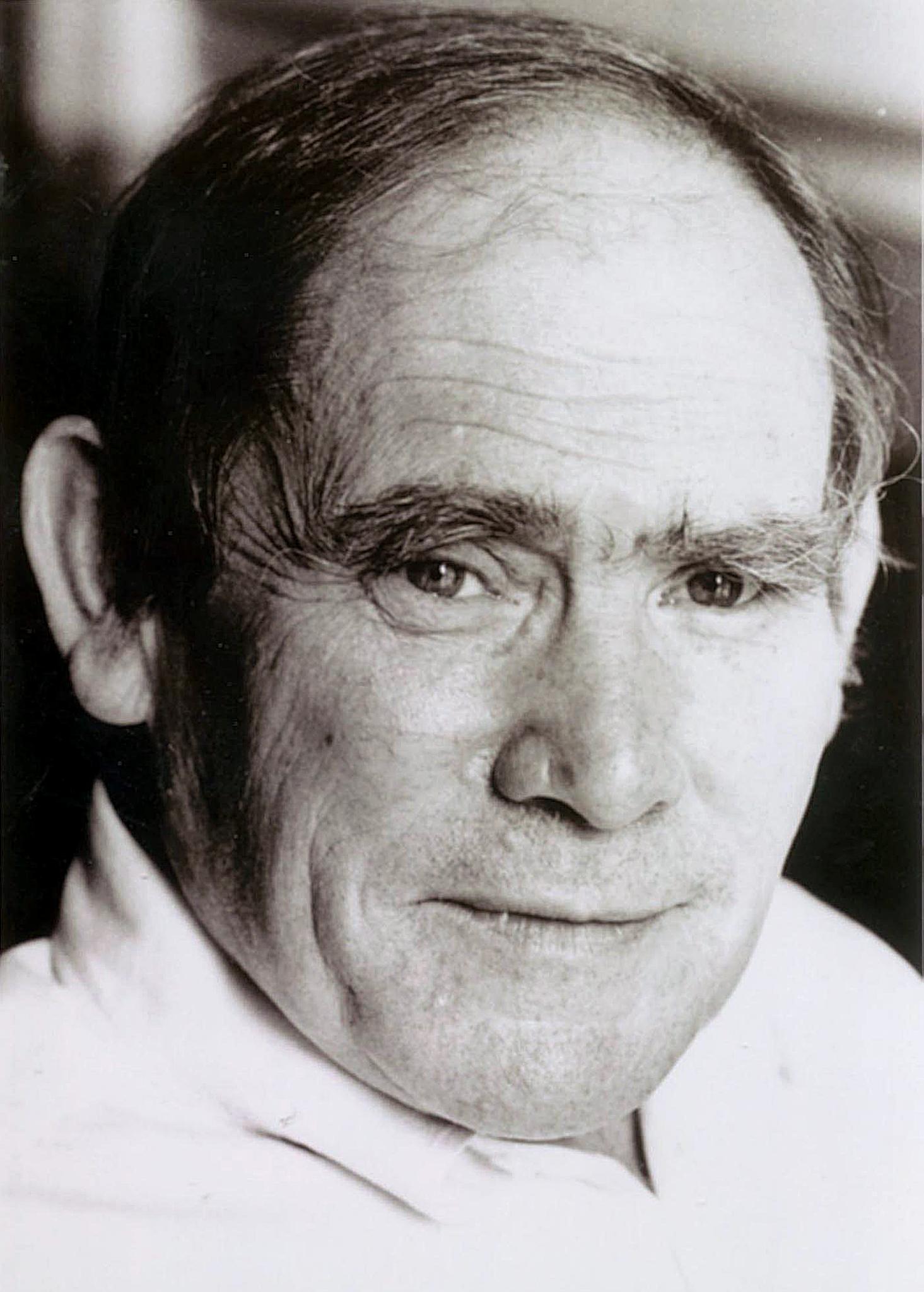
Sydney Brenner
 South Africa
Also known as: Uncle Syd
Birthday
January 13, 1927
Birth Sign
Capricorn
Birthplace
Germiston, South Africa
Age
Died at 92
About
Sydney Brenner was a South African biologist whose work reshaped modern genetics. Born in Germiston, South Africa, on January 13, 1927, he rose to prominence as a molecular biology pioneer. In 2002, he shared the Nobel Prize in Physiology or Medicine with H. Robert Horvitz and Sir John E. Sulston for their discoveries concerning genetic regulation of organ development and programmed cell death. Brenner's career spanned over six decades, during which he made foundational contributions to understanding the genetic code and the mechanisms of protein synthesis. He spent much of his working life at the Medical Research Council (MRC) Laboratory of Molecular Biology in Cambridge, England, where he collaborated with Francis Crick and others to decipher the triplet nature of the genetic code. His most enduring legacy is the establishment of the roundworm Caenorhabditis elegans as a model organism, a choice that revolutionized developmental biology and neurobiology. Later in life, he founded the Molecular Sciences Institute in Berkeley, California, and remained an influential figure in the scientific community until his death on April 5, 2019, at the age of 92.
Early Life & Background
Brenner was born in Germiston, a gold-mining town near Johannesburg in the then Transvaal, to Jewish immigrant parents. His father, Morris, a cobbler, had arrived from Lithuania in 1910, and his mother, Leah, from Latvia in 1922. The family lived in rooms at the back of his father's shoe repair shop. He learned to read early and at five attended a free kindergarten run by a customer of his father, Miss Walkinshaw. He completed the first three years of primary school in one year, entering the fourth grade at age six. By nine he was at Germiston High School, graduating with first-class results before his fifteenth birthday. He later credited self-education and a resistance to authority, developed from bullying teachers, for his independent streak.
At fifteen, he entered the University of the Witwatersrand on a local council bursary to study medicine. Realizing he would be too young to practice upon graduation, he took time to do research, publishing ten papers before earning his MBBCh and MSc in 1951. He graduated top of his class in obstetrics but chose science over medicine. He then earned a DPhil from Oxford in 1954, and after a brief return to South Africa, joined Francis Crick at the MRC Laboratory in Cambridge in 1956.
Career Growth
At the MRC Laboratory, Brenner and Crick proved that the genetic code is read in triplets, and in 1961 they co-discovered messenger RNA. That same year, they cracked the genetic code. In the mid-1960s, he established the roundworm C. elegans as a model organism, publishing his landmark 1974 paper describing some 300 worm mutants, which has over 6,000 citations. He was appointed proleptic Director of the LMB in 1977, succeeding Max Perutz in 1979, but found administration tiresome and resigned in 1986. He was an early proponent of the Human Genome Project, and later helped establish Singapore's Institute of Molecular and Cell Biology in 1985, officially opened in 1987. He also led a project sequencing the fugu pufferfish genome. In 2001, he joined the Salk Institute as Distinguished Professor, reuniting with Crick. He was founding president of the Okinawa Institute of Science and Technology and a senior fellow at Janelia Research Campus. He received the 2002 Nobel Prize for discoveries concerning genetic regulation of organ development and programmed cell death.
Career Timeline
Public Image & Style
Brenner was renowned for his wit, irreverence, and insight, delivering legendary lectures that mixed sharp humor with deep scientific thinking. He was kind to young scientists, encouraging them to seek new directions. He had no formal fandom, but the scientific community held him in high regard, and many researchers he trained became leaders in their fields. His legacy is carried on through institutions like the Sydney Brenner Institute for Molecular Bioscience in South Africa and the Okinawa Institute of Science and Technology in Japan. He was also known as "Uncle Syd" to colleagues and readers of his column.
Fame & Fandom
Sydney Brenner commanded a global audience that extended far beyond the laboratory, resonating through the halls of science and the annals of history with a gravity reserved for the field's true architects. While his influence is measured in Nobel Prizes and model organisms rather than chart positions, iFANN's Global Fame Engine has evaluated his standing with precision. Currently, Sydney Brenner holds no placement in the published rankings, including the Global Top 1,000 or any Top-100 scope list, reflecting a status that transcends standard fame metrics. The scientific community revered him as a singular force, yet no formal fandom name exists to organize this devotion; there are no 'Brennerites' or commercial fan clubs, only a vast network of colleagues and students who treat his methodologies as gospel. His legacy is sustained not through viral campaigns or social media trends, but through the rigorous continuation of his work in institutions like the MRC Laboratory of Molecular Biology and the Okinawa Institute. He remains a figure whose impact is felt in every genetic sequence decoded since the 1960s, a silent giant whose absence is marked by the very structures he built.
Interesting Facts and Legends
Born in Germiston, South Africa, on January 13, 1927, Brenner entered medical school at fifteen, finishing before he was legally old enough to practice medicine. He never wrote a book, preferring witty essays and columns, including a monthly piece called "Uncle Syd" for Current Biology. He famously called himself a "Johnny Appleseed for science," claiming his real skill was simply getting things started. Despite his towering achievements, he considered his directorship of the LMB one of the worst mistakes of his life, driven by a lifelong resistance to authority rooted in bullying teachers from his youth. Legends persist of his sharp tongue, earning him the moniker "the Oscar Wilde of science." Upon his death in Singapore on April 5, 2019, the scientific world declared he had joined Francis Crick in "Paradiso," a cultural shorthand for the reunion of DNA giants. His most iconic moment arrived in October 1963 when he proposed using the roundworm *Caenorhabditis elegans* as a model organism, a decision that revolutionized our understanding of genetics and earned him the 2002 Nobel Prize.
Notable Quotes
“I think my real skills are in getting things started. In fact, that's what I do best.”
“Don't retire until you have your next job lined up.”
“The great thing about science is that it's a collective enterprise.”
“I have always been interested in the future, because I plan to live in it.”
“We used to think that if we knew one, we knew two, because one and one are two. We are finding that we must learn a great deal more about 'and'.”
Family & Personal Life
Brenner married May Covitz in 1952, and they remained together until her death in 2010. The couple had three children. His parents, Morris and Leah, were Jewish immigrants from Lithuania and Latvia, respectively. He had a sister, Phyllis, and a brother, Isaac. The family lived in rooms behind his father's shoe repair shop in Germiston. He was close to his family, though details of his siblings' lives are scarce. He died in Singapore, where he had spent his final years, and is buried there.
Notable Connections
Francis Crick was his closest collaborator and friend, with whom he cracked the genetic code and co-discovered messenger RNA. James Watson was a contemporary and fellow pioneer. Max Perutz preceded him as director of the LMB. He shared the 2002 Nobel Prize with H. Robert Horvitz and Sir John E. Sulston. Raymond Dart was his professor of anatomy at Wits. Byrappa Venkatesh was a long-time collaborator in Singapore, and Terrence Sejnowski was a colleague at the Salk Institute.
Relationships & Dating History
Brenner married May Covitz in 1952, and they remained together until her death in 2010. The couple had three children. There are no documented romantic relationships outside his marriage. After May's death, he remained widowed for the rest of his life. He died in 2019 in Singapore, where he had been living and working. His personal life was private, and he rarely spoke publicly about his family.
- MarriedMay Covitz1952 - 2010Married for 58 years until her death in 2010; they had three children.
Death & Aftermath
Died
April 5, 2019 (aged 92)
Death Place
Singapore
Cause of Death
Natural causes associated with old age
Sydney Brenner spent his final decades in Singapore, leading the Genome Institute of Singapore as a principal investigator until the end. On April 5, 2019, the 92-year-old passed away peacefully in the city-state where he had built a second home for science. The available literature describes his passing as occurring naturally at an advanced age, inquest, or medical examiner ruling establishing a specific pathology. There were no reported disputes regarding the circumstances of his death, and he is widely characterized as having died peacefully after a long life dedicated to science.
A formal public funeral or memorial service was not widely reported in the search results. Given his status as a private individual who lived in Singapore and his history of modesty, it is likely that any services held were small, private affairs for family and close colleagues. Consequently, details regarding burial or cremation are not publicly recorded in the provided search data.
The scientific community reacted with immediate tributes that honored his wit and foundational contributions. Nature published an obituary titled Mischievous steward of molecular biology's golden age on April 11, 2019, while Science released a piece highlighting his seminal work on Caenorhabditis elegans. The American Society for Biochemistry and Molecular Biology issued a statement noting he had joined Francis Crick in Paradiso, and Scripps Research commemorated his legacy in genetics and neuroscience. Posthumous recognition continued through the enduring use of C. elegans in research and the maintenance of his profile by the Nobel Foundation and various scientific societies. His estate matters remain undisclosed to the public.
Net Worth (Estate Value)
$5 Million
iFANN Editorial Team estimate
As a Nobel laureate and one of the most influential biologists of the 20th century, Sydney Brenner's financial legacy remains tied to his scientific achievements rather than commercial ventures. While no public net worth figures existed during his lifetime, his estate likely includes royalties from his numerous publications and awards. He received the Nobel Prize, which came with a monetary award, and held prestigious positions at institutions like the Salk Institute and Janelia Research Campus, which provided substantial salaries. His estate is managed by his family, and his legacy continues through the institutions he founded. Per iFANN's editorial analysis, as of 2026, his estate is estimated to be around $5 Million, accumulated through his career earnings and posthumous recognition.
Awards Won (4)
Brenner won the 2002 Nobel Prize in Physiology or Medicine, shared with H. Robert Horvitz and Sir John E. Sulston. He also received the Lasker Award, the Copley Medal, and the Kyoto Prize, among others.
2002 · Physiology or Medicine
Discoveries concerning genetic regulation of organ development and programmed cell death
1971 · Basic Medical Research
For contributions to molecular biology
Known For
Co-discovery of messenger RNA
1961 · Co-discoverer
Establishing C. elegans as a model organism
1965 · Pioneer
Nobel Prize in Physiology or Medicine
2002 · Laureate
Keywords
Sources
Quick Facts
- Profession
- biologist, geneticist
- Born
- January 13, 1927
- Birthplace
- Germiston, South Africa
- Died
- April 5, 2019
- Death Place
- Singapore
- Gender
- Male
- Birth Sign
- Capricorn
Personal Details
- Full Name
- Sydney Brenner
- Spouse
- May Covitz
- Children
- 3
- Education
- University of the Witwatersrand (MBBCh, MSc), University of Oxford (DPhil)
Frequently Asked Questions
What is Sydney Brenner famous for?
When did Sydney Brenner die?
Was Sydney Brenner married?
What did Sydney Brenner win the Nobel Prize for?
Where was Sydney Brenner born?
Similar People
Join the community
fans discussing