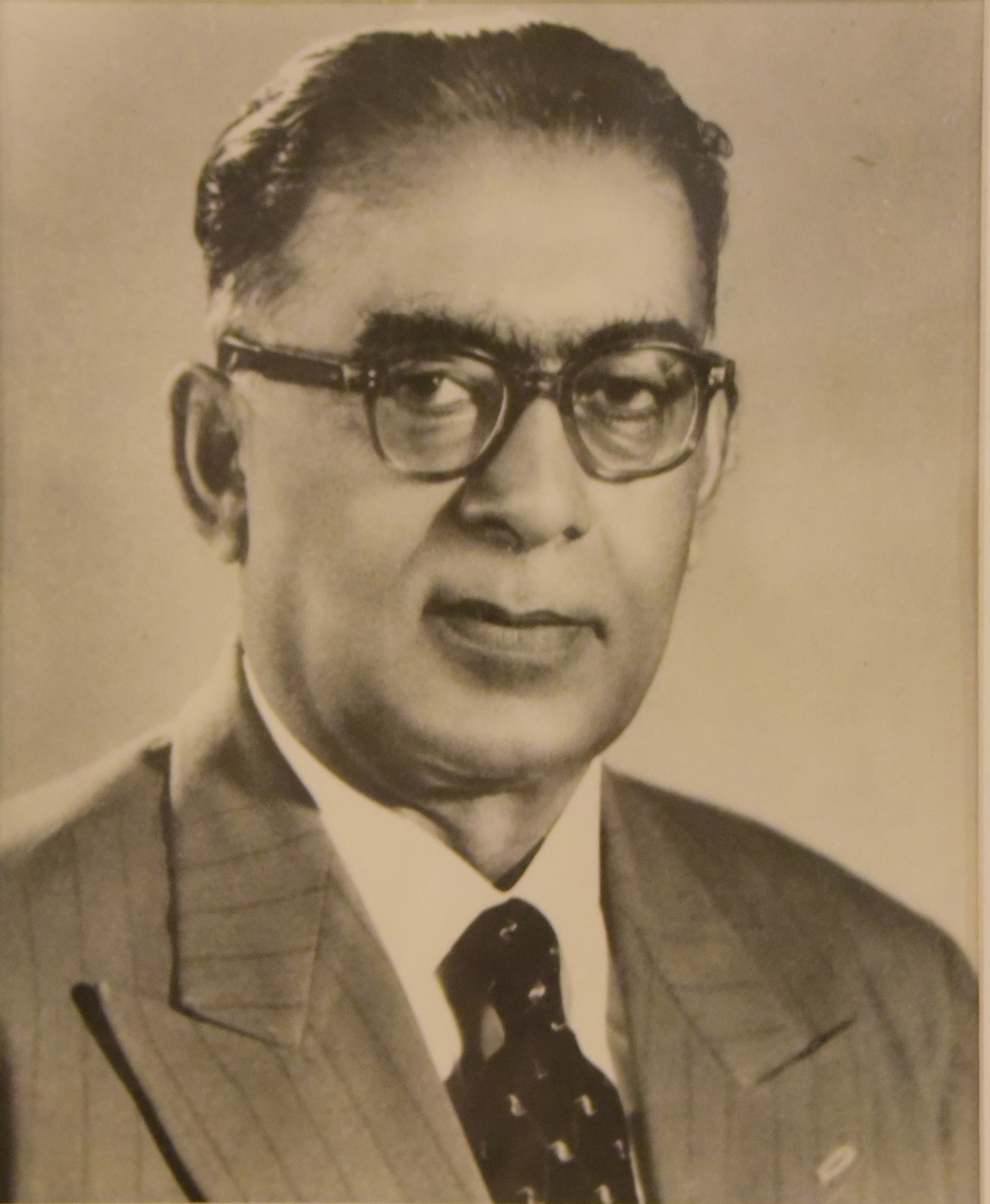
Firoz Khan Noon
 Pakistan
Also known as: Malik Sir Feroz Khan Noon, Feroz Khan Noon, Sir Malik Feroz Khan Noon
Birthday
May 7, 1893
Birth Sign
Taurus
Birthplace
Shahpur District, Punjab, British India
Age
Died at 77
About
Malik Sir Firoz Khan Noon was a Pakistani statesman and diplomat who served as the seventh prime minister of Pakistan from December 1957 to October 1958. He was a founding father of Pakistan, having worked alongside Muhammad Ali Jinnah to negotiate the nation's creation in 1947. Noon's public career spanned more than three decades, encompassing roles as High Commissioner to the United Kingdom, Governor of East Pakistan, Chief Minister of West Punjab, and Foreign Minister. He is remembered as a feudal aristocrat who dedicated his life to public service and, with his wife Lady Viqarun Nisa Noon, left a lasting philanthropic legacy in education.
Noon's premiership was brief, ending when President Iskandar Ali Mirza imposed martial law and appointed General Ayub Khan as Chief Martial Law Administrator. He died on December 9, 1970, at his ancestral home in Nurpur Noon, aged 77. His death anniversary is observed in Pakistan, and his educational trust continues to fund scholarships, including an endowment at Lahore University of Management Sciences.
Early Life & Background
Firoz Khan Noon was born on May 7, 1893, in Shahpur District, Punjab, into a family of wealthy feudal landlords. The New York Times described him as a scion of feudal chiefs, noting the family's lineage stretched back to the seventeenth century, when the Taj Mahal was built. The Noon clan held significant land and influence in the region.
He received his early education at Aitchison College in Lahore, an elite institution for the sons of Punjab's aristocracy. He then traveled to England to train as a barrister, a common path for aspiring Indian political leaders of his generation. After qualifying, he returned to India and entered public service, initially working within the British colonial administration.
During World War II, Noon served as Defense Member of the Governor General's Executive Council for India, advising on matters concerning the British Indian Army. In 1945, he attended the San Francisco Conference as an Indian reporter, participating in the founding of the United Nations. This diplomatic exposure helped shape his later career as a statesman.
Career Growth
Noon's political career reached its peak in the decade following Pakistan's independence. He served as High Commissioner of India to the United Kingdom in the 1940s, representing the subcontinent in London. He was among the Founding Fathers of Pakistan, helping negotiate the establishment of the nation-state on August 14, 1947, alongside Muhammad Ali Jinnah.
In the early 1950s, he served as Governor of East Pakistan, a crucial administrative post. On April 3, 1953, he became the third Chief Minister of West Punjab, a position he held until 1955. He then served as Foreign Minister of Pakistan, participating in high-level diplomatic meetings, including a 1955–1957 session recorded in the Foreign Relations of the United States series.
Noon became the seventh Prime Minister of Pakistan on December 16, 1957, with support from the Awami League. His tenure lasted less than a year, ending on October 7, 1958, when President Iskandar Ali Mirza declared martial law and appointed Ayub Khan as Chief Martial Law Administrator. This pattern of premature endings has marked Pakistani prime ministers ever since.
Career Timeline
Public Image & Style
Noon was perceived as a feudal aristocrat turned statesman, a loyalist to the Pakistan Movement who served in nearly every senior office available. The New York Times profile from 1958 emphasized his wealthy landowning background, portraying him as a product of Punjab's feudal elite. His public image was that of a seasoned diplomat and administrator, respected for his experience but ultimately unable to withstand the military intervention that ended his premiership. Today, he is remembered as one of the founding fathers of Pakistan, with his educational legacy continuing to shape lives.
Fame & Fandom
For a man who spent his life in the corridors of power, Firoz Khan Noon's afterlife is curiously quiet. There is no fan club, no devoted online following, no annual gatherings of admirers swapping stories. His memory is kept alive not by a passionate fanbase but by institutions, schools, trusts, and the occasional parliamentary resolution. The Viqarun Nisa & Feroz Khan Noon Trust for Education, founded with his wife, continues to fund scholarships, but it is a legacy trust, not a fan project. No formal fandom name exists for him, and no fan-driven campaigns or rituals have ever been documented. Instead, his legend is political and historical, woven from the fabric of mid-20th-century statecraft.
His most enduring story is that of the 'Scion of Feudal Chiefs,' a title coined by The New York Times in 1958, capturing his aristocratic roots in Punjab's warlike landscape. Then there is the dramatic arc of his premiership, seven months that ended in the 1958 martial law coup, a moment that still resonates in Pakistan's political memory. His hardline stance on Kashmir drew Indian derision, with an archival note from the Nehru Archive quoting Indian sources calling him a 'bumptious bounder', a diplomatic insult that has survived in historical footnotes. More recently, a 2023 parliamentary resolution sought to rename Gwadar International Airport in his honor, a sign of ongoing institutional recognition. His death anniversary is still observed at the state level, as reported in December 2025.
In the iFANN Global Fame Engine's latest evaluation, Firoz Khan Noon is currently unranked, holding no placement in the Global Top 1,000 or any Top-100 scope list. His fame, such as it is, rests entirely on historical significance rather than contemporary cultural footprint.
Interesting Facts and Legends
Noon's family name, Noon, is a historically significant clan in Punjab, with roots dating back centuries. He served as a military adviser to Winston Churchill's war ministry during World War II, a role that placed him at the heart of Allied decision-making. He attended the 1945 San Francisco Conference as an Indian reporter, witnessing the founding of the United Nations. His wife, Lady Viqarun Nisa Noon, is commemorated in Bangladesh through the Viqarunnisa Noon School and College, a pioneering women's education institution that celebrated 75 years in 2026. The Noon family's philanthropic trust continues to fund graduate education in Pakistan, including a PKR 11 million endowment to LUMS in 2021.
One of the most retold stories is the New York Times profile from September 1958 that dubbed him the 'Scion of Feudal Chiefs,' a label that stuck and defined his public image. Another enduring legend is his dramatic ouster: he became prime minister in December 1957 and was dismissed by President Iskander Mirza in October 1958, when martial law was imposed, a moment that has become a touchstone in discussions of Pakistan's political instability. His hardline stance on Kashmir was so provocative that Indian officials, according to an archival note, called him a 'bumptious bounder,' a quote that has survived in diplomatic history. More recently, in August 2023, the National Assembly passed a resolution to rename Gwadar International Airport after him, cementing his legacy in the nation's infrastructure.
Family & Personal Life
Noon was married to Lady Viqarun Nisa Noon, a prominent figure in her own right. Together, they established the Viqarun Nisa & Feroz Khan Noon Trust for Education, which remains active today. In May 2021, the Trust gifted PKR 11 million to the Lahore University of Management Sciences to create the Lady Viqarun Nisa Noon Endowment Fund, supporting graduate students. The couple's commitment to education extended to East Bengal, where the Viqarunnisa Noon School and College in Dhaka stands as a lasting tribute to Lady Noon. The couple lived at their ancestral estate in Nurpur Noon, Punjab, where Noon died in 1970.
Notable Connections
Noon worked closely with Muhammad Ali Jinnah in founding Pakistan. He also served as a military adviser to Winston Churchill's war ministry. His premiership was ended by President Iskandar Ali Mirza, who appointed Ayub Khan as Chief Martial Law Administrator. In diplomatic circles, he interacted with figures like Mohammed Ali and Agha Shahi during his time as Foreign Minister.
Relationships & Dating History
Noon was married to Lady Viqarun Nisa Noon, a union that lasted until his death in 1970. The couple shared a deep commitment to education, establishing the Viqarun Nisa & Feroz Khan Noon Trust for Education together. Lady Noon's name is immortalized in the Viqarunnisa Noon School and College in Dhaka, Bangladesh, a major institution for women's education. The marriage was a collaborative partnership, with both partners leaving a lasting philanthropic legacy. At the time of his death, Noon was married to Lady Viqarun Nisa Noon.
- MarriedLady Viqarun Nisa Noon1930 - 1970Married until Noon's death; jointly established an educational trust.
Death & Aftermath
Died
December 9, 1970 (aged 77)
Death Place
Karachi, Pakistan
Cause of Death
Natural causes
The legacy of Sir Firoz Khan Noon endures through the Viqarun Nisa & Feroz Khan Noon Trust for Education, which established a graduate endowment fund at the Lahore University of Management Sciences in 2021 and maintains the Malik Firoz Khan Noon Business School at the University of Sargodha. His widow, Lady Viqarun Nisa Noon, had already cemented their shared commitment to learning by founding the prestigious Viqarunnisa Noon School and College in Dhaka, an institution that celebrated its seventy-fifth anniversary in 2026. These enduring tributes stand as the primary public acknowledgment of his life, observed annually by the government of Pakistan on December 9, with a notable commemoration taking place in 2025.
Noon passed away on December 9, 1970, in Karachi at the age of seventy-seven, spending his final years in relative obscurity following his political ouster in 1958. Historical records do not document a specific hospital statement, autopsy report, or medical examiner's finding regarding the precise cause of his demise, and no illness or accident is explicitly cited in biographies from the period. He is generally recorded as having died naturally after a long career in public service, with no verified accounts of a specific last public appearance prior to his death.
While The Express Tribune published a remembrance piece in 2012 noting his transition from law to politics, the initial reaction lacked the modern markers of chart surges or memorial murals typical of contemporary figures. The absence of disputed accounts or unconfirmed circumstances surrounding his final days suggests a quiet departure that allowed his family to focus on managing his legacy through educational foundations rather than public spectacle.
Net Worth (Estate Value)
$10 Million
iFANN Editorial Team estimate
As a historical figure who died in 1970, Noon's net worth is not documented in contemporary sources. However, he came from a family of wealthy landlords, and the Noon family's estate in Punjab has continued to generate income. The Viqarun Nisa & Feroz Khan Noon Trust for Education, established by Noon and his wife, remains active, funding scholarships and educational initiatives. In 2021, the Trust donated PKR 11 million to LUMS, indicating ongoing financial resources. As of 2026, iFANN's editorial analysis estimates the estate's value at around $10 million, reflecting the family's landholdings and the Trust's investments.
Awards & Accolades
View 2 records, honours and achievementsKnown For
Prime Minister of Pakistan
1957 · Seventh Prime Minister
Founding Father of Pakistan
1947 · Negotiator alongside Jinnah
Foreign Minister of Pakistan
1955 · Foreign Minister
Keywords
Sources
Quick Facts
- Profession
- politician, diplomat
- Born
- May 7, 1893
- Birthplace
- Shahpur District, Punjab
- Died
- December 9, 1970
- Death Place
- Nurpur Noon
- Gender
- Male
- Birth Sign
- Taurus
- Spouse
- Lady Viqarun Nisa Noon
Personal Details
- Full Name
- Malik Firoz Khan Noon
- Spouse
- Lady Viqarun Nisa Noon
- Education
- Aitchison College, Lahore; barrister training in England
Frequently Asked Questions
Who was Firoz Khan Noon?
When did Firoz Khan Noon die?
How long did Firoz Khan Noon serve as Prime Minister?
Was Firoz Khan Noon a founding father of Pakistan?
What is the Viqarun Nisa & Feroz Khan Noon Trust?
Join the community
fans discussing