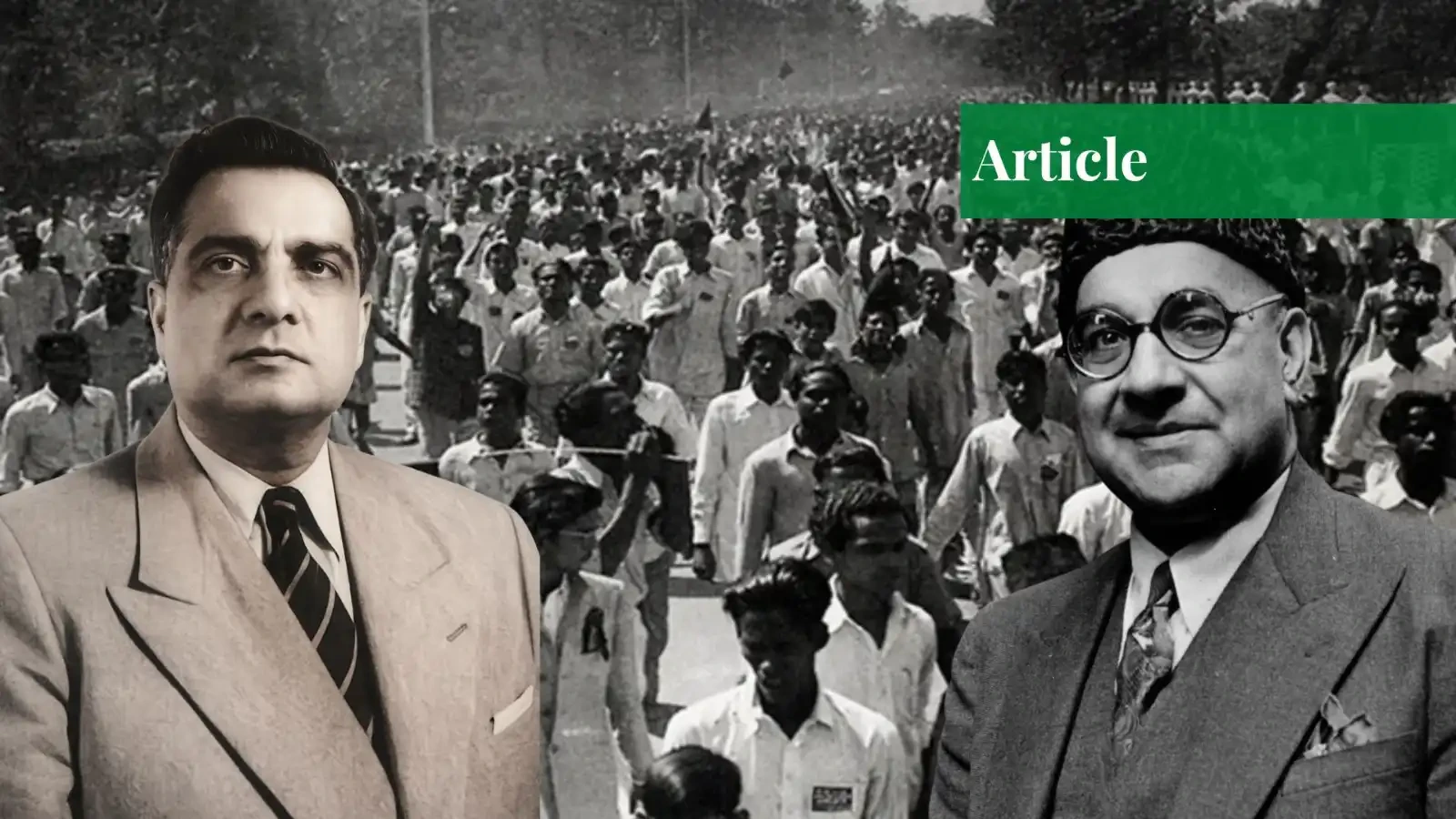
Iskandar Ali Mirza
 Pakistan
Politician and military officer
Also known as: Iskander Mirza
Birthday
November 13, 1899
Birth Sign
Scorpio
Birthplace
Murshidabad, Bengal Presidency, British India
Age
Died at 70
About
Iskandar Ali Mirza was a Pakistani politician and military officer who served as the fourth and last Governor-General of Pakistan from 1955 to 1956 and as the country's first President from 1956 until his overthrow in 1958. He is a historical statesman rather than an entertainer, and his public reputation rests on a brief, turbulent tenure at the top of Pakistan's early political order.
His presidency is remembered for repeated interventions in civilian politics and for the dismissal of four prime ministers in roughly two years. On 7 October 1958 he declared martial law and abrogated the 1956 Constitution, appointing General Ayub Khan as Chief Martial Law Administrator. Nineteen days later Ayub deposed him and assumed the presidency. Mirza spent the rest of his life in exile in London, where he died of a heart attack on his seventieth birthday, 13 November 1969. He is buried in Iran. His legacy remains contested, with retrospectives from 2023 to 2025 describing him as a "hero to villain" figure and the man who "lost the republic."
Early Life & Background
Murshidabad, in the Bengal Presidency of British India, was Mirza's birthplace on 13 November 1899. One Facebook history post gives an alternate date of 14 December 1898, but Wikipedia, Britannica and The New York Times all support 13 November 1899. He was a descendant of Mir Jafar, the Nawab of Bengal whose defection at the Battle of Plassey in 1757 helped the British East India Company take Bengal, and that lineage became a recurring theme in coverage of him. The ancestral family house in Murshidabad was reported by Hindustan Times in 2016 to be in ruins.
Mirza studied at the University of Bombay before entering the Royal Military College, Sandhurst, in 1918, where he was reportedly the first Indian cadet of his cohort. He then served in the British Indian Army and later the Indian Political Service, holding various political posts before moving to the Ministry of Defence in New Delhi in 1946. That posting placed him at the administrative center of the transfer of power, and after Pakistan's independence in 1947 he became the country's first Defence Secretary. In that role he oversaw military operations in the first Kashmir war and handled a secession attempt in Balochistan in 1948.
Career Growth
Mirza's political ascent accelerated in 1954, when he was appointed Governor of East Bengal and tasked with managing the fallout of the Bengali language movement. In 1955 he became Interior Minister, and he played a key role in the removal of Governor-General Malik Ghulam Muhammad before taking the governor-generalship himself that same year. When Pakistan's first constitution was promulgated in 1956, he became the country's first President.
His presidency was turbulent. He intervened repeatedly in civilian politics and dismissed four prime ministers in roughly two years. Facing deadlock and unable to secure political support or re-election, he declared martial law on 7 October 1958, abrogated the 1956 Constitution and appointed General Ayub Khan as Chief Martial Law Administrator. The act ended Pakistan's first democratic experiment and ushered in its first military dictatorship. On 27 October 1958, just weeks later, Ayub Khan deposed him in a coup and assumed the presidency. Mirza went into exile in London and never held office again.
Career Timeline
Public Image & Style
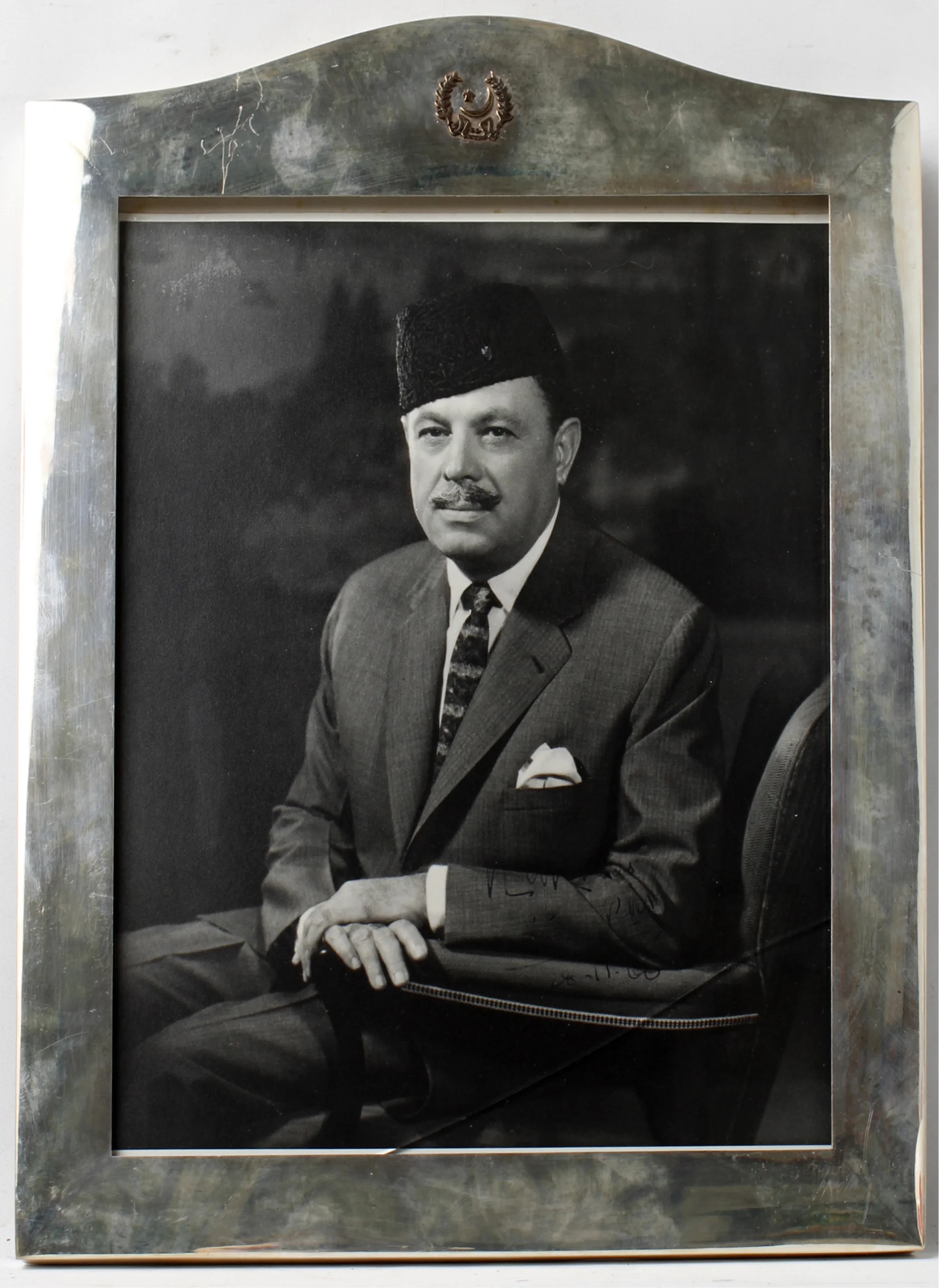
Mirza's public image was that of a soldier-statesman in an age of fragile civilian institutions. Contemporary photographs show him in formal gubernatorial and presidential dress at state evenings, often beside his wife Nahid, and the visual record has fixed him in Pakistani memory as a figure of the drawing room as much as the parade ground. Media coverage since his death has been retrospective and often critical, framing him as a man who intervened in politics rather than a national father figure. He left no social media presence, no interviews in the modern sense, and no personal brand beyond his memoirs.
Fame & Fandom (iFAMOUS Rankings)
Iskandar Ali Mirza never courted a fanbase in the modern sense. His name appears on history textbooks and political science syllabi rather than merchandise racks or social media hashtags. There is no official fandom name because he was not an entertainer, musician, or pop-culture icon whose appeal relied on adoration. The audience for his legacy consists of historians, students, and scholars analyzing Pakistan's constitutional crisis rather than enthusiasts organizing birthday billboards or charity drives. He did not engage with crowds, sign autographs, or host meet-and-greets.
iFANN has evaluated his standing within the global cultural landscape. As of the October 2026 rankings, Iskandar Ali Mirza is evaluated but not currently placed in the published Global Top 1,000 or any scope-based list. This neutral status reflects the nature of his fame: deeply significant within a specific national and academic context but lacking the broad, consumption-driven metrics that drive global celebrity rankings. He is also not on the September 2026 iFAMOUS Rankings flagship list. The absence of a numeric rank does not diminish his impact; it simply categorizes his fame as archival rather than viral. No fan campaigns exist to boost his visibility, and no digital footprint suggests a resurgence in popular interest comparable to modern stars. English Wikipedia drew about 6,900 views in a recent 30-day window, with smaller readership in Urdu, Bengali, Russian and Turkish.
Interesting Facts and Legends
The most retold story about Mirza is the irony of October 1958: he imposed martial law to break a political deadlock, then was himself overthrown by the general he empowered nineteen days later, a cautionary tale still taught in Pakistani civics. Another recurring theme is his descent from Mir Jafar, the "traitor of Plassey," which Pakistani commenters invoke rhetorically. He died on his exact birthday, a detail repeated in nearly every obituary. His Murshidabad birthplace lies in ruins. Verbatim quotations from Mirza are not preserved in the available sources; his own account survives through his memoirs, discussed in a 2023 Dawn review titled "Iskander Mirza's Version." A 2026 news item mentioning "Iskandar Ali Mirza" in the supplied sample actually concerns Mahathir Mohamad and is a name-collision false positive, not about this person.
Family & Personal Life
Mirza married Nahid (also spelled Naheed) Mirza, an Iranian-born woman who became Pakistan's First Lady; she is the subject of a 2019 feature titled "The Iranian who became Pakistan's First Lady." Photographs of the couple at glamorous state evenings in the early presidency circulate widely in Pakistani history archives. Their best-documented child was Humayun Mirza, who authored From Plassey to Pakistan and died in the United States in June 2021, ending the direct line. Sources do not enumerate all offspring in detail, though the family tree remains a common search query.
Notable Connections
Relationships & Dating History
Mirza's documented personal life centers on a single marriage. He married Nahid (also spelled Naheed) Mirza, an Iranian-born woman who became Pakistan's First Lady; a 2019 feature titled "The Iranian who became Pakistan's First Lady" profiles her. Photographs of the couple at glamorous state evenings in the early presidency are widely circulated in Pakistani history archives. No other public romantic relationships are documented in credible sources, and tabloid-style pairings do not exist for him. At the time of his death in 1969 he was married to Nahid Mirza. As of 2026 he is deceased, and there is no current partner.
- MarriedNahid Mirza? - 1969Iranian-born First Lady of Pakistan; married to Mirza until his death in 1969.
Death & Aftermath
Died
November 13, 1969 (aged 70)
Death Place
London, United Kingdom
Cause of Death
Heart attack
Iskandar Ali Mirza died on 13 November 1969 at his residence in Princes Gate, London, the date coinciding exactly with his seventieth birthday. He had lived in exile in the United Kingdom since his deposition eleven years earlier, and the British press and The New York Times both reported a heart attack as the cause of death. No official inquest or legal proceeding followed; the ruling was accepted as reported.
Public reaction was modest and largely confined to obituaries in the international press, which framed him as a controversial first president rather than a national martyr. There was no mass vigil, no state funeral, and no documented public mourning in Pakistan. His body was buried in Iran, a detail noted in the existing record and consistent with his wife Nahid Mirza's Iranian origins, though the sources do not describe the funeral service or its attendees.
Posthumous attention has come mainly through historical writing. A 2023 Dawn review of his memoirs, titled "Iskander Mirza's Version," revisited his own account of the 1958 crisis, and retrospectives in 2023 and 2025 continued to describe him as a "hero to villain" figure and the man who "lost the republic." In May 2024, memoirs were reported claiming Muhammad Ali Jinnah had ordered Mirza to prepare for communal violence before independence, a claim that remains disputed and unverified. His only surviving son, Humayun Mirza, died in the United States in June 2021, ending the direct line. No foundation or estate dispute is documented in the available sources.
Net Worth (Estate Value)
No credible net worth estimate exists for Iskandar Ali Mirza. As a deceased former head of state who spent his final decade in exile, no estate valuation has been published, and the iFANN Editorial Team does not report a figure where the record is silent. Any number would be speculation, and this page does not engage in it. His known assets at death were personal rather than commercial: a residence at Princes Gate, London, and the proceeds of a military and civil-service career. No posthumous licensing, merchandising, or royalty streams are documented, and no estate-managed business or catalog sale appears in the sources. No awards, Hall of Fame inductions, honorary degrees, Walk of Fame stars, Guinness records or "Greatest of All Time" list placements are documented for Mirza.
Awards & Accolades
View 2 records, honours and achievementsKnown For
First President of Pakistan
1956 · President
Governor-General of Pakistan
1955 · Governor-General
Defence Secretary of Pakistan
1947 · Defence Secretary
Keywords
Sources
Quick Facts
- Profession
- Politician and military officer
- Born
- November 13, 1899
- Birthplace
- Murshidabad, Bengal Presidency, British India
- Died
- November 13, 1969
- Death Place
- London, United Kingdom
- Gender
- Male
- Spouse
- Nahid Mirza
- Birth Sign
- Scorpio
- Education
- University of Bombay; Royal Military College, Sandhurst
Personal Details
- Full Name
- Iskandar Ali Mirza
- Spouse
- Nahid Mirza
- Children
- Humayun Mirza (son, died June 2021)
- Education
- University of Bombay; Royal Military College, Sandhurst
Frequently Asked Questions
What happened to Iskander Mirza?
Is Iskander Mirza related to Mir Jafar?
Why did Iskander Mirza impose martial law?
Is Humayun Mirza the son of Iskander Mirza?
Who was Iskander Mirza's wife?
Similar People
Join the community
fans discussing