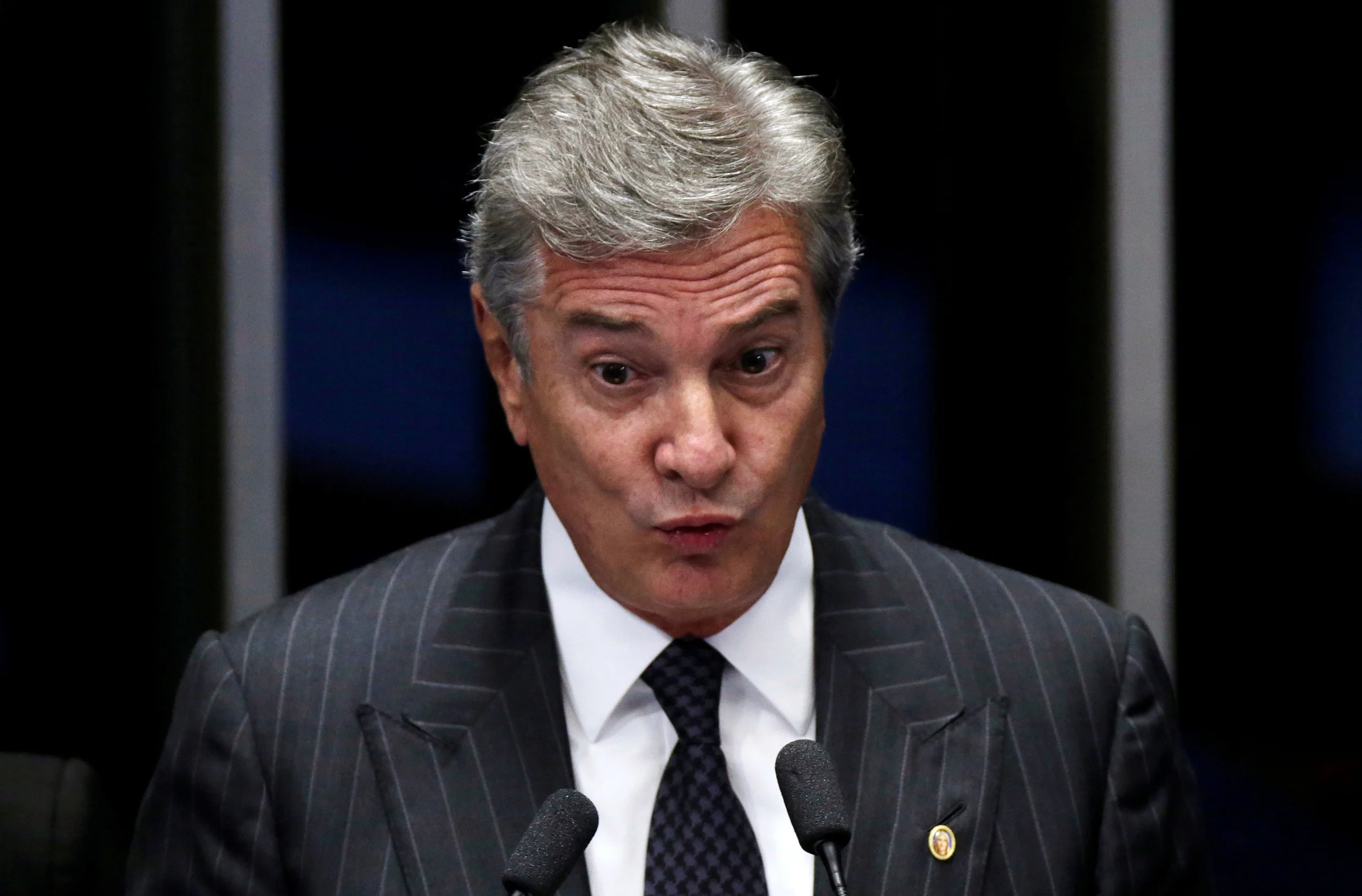
Fernando Collor de Mello
 Brazil
Also known as: Fernando Affonso Collor de Mello, Fernando Collor
Birthday
August 12, 1949
Birth Sign
Leo
Birthplace
Rio de Janeiro
Age
77 years old
Height
5 ft 9 in (1.75 m)
About
Fernando Affonso Collor de Mello is a Brazilian politician and writer who served as the 32nd President of Brazil from March 15, 1990, to September 29, 1992. Born on August 12, 1949, in Rio de Janeiro, he was the youngest person elected president in Brazilian history at age 40 and the first democratically elected leader following the end of the military dictatorship. His presidency ended abruptly due to a massive corruption scandal involving his campaign treasurer, leading to his impeachment and resignation. Decades later, he returned to politics as a Senator for Alagoas before being convicted of corruption in 2023 and arrested in April 2025.
Currently serving a sentence under house arrest, Collor remains a polarizing figure in modern Brazilian history. He is known for his early anti-corruption crusade that used media savvy to build a national reputation, only to become the embodiment of the very corruption he fought. His life story is a dramatic arc of meteoric rise, catastrophic fall, and a controversial comeback that continues to unfold in the courts and the Senate chamber.
Early Life & Background
Fernando Collor de Mello was born into a family deeply entrenched in Brazilian politics and media. His father, Arnon Afonso de Farias Mello, was a senator and the owner of the Arnon de Mello Organization, which controlled TV Gazeta de Alagoas, a major Globo affiliate. His mother, Leda Collor, was the daughter of Lindolfo Collor, a former labor minister and governor of Alagoas. The surname Collor is a Portuguese adaptation of the German Köhler, reflecting his maternal grandfather's heritage. Growing up in this environment, Collor was exposed to political maneuvering and media influence from an early age.
He attended the Colégio Marista de Maceió and later the University of Brasília, where he studied social communication. His early interests were heavily focused on public life and communication, skills he honed while working in his family's media empire. Before entering national politics, he served as the mayor of Maceió from 1979 to 1986 and as a federal deputy. In 1986, he was elected Governor of Alagoas, where he launched a high-profile anti-corruption crusade that utilized media savvy to build a national reputation as a reformist outsider.
Career Growth
Collor's career is defined by three distinct phases: the populist rise, the dramatic fall, and the controversial comeback. In 1989, he won the presidential election in Brazil's first direct vote since 1960, defeating Luiz Inácio Lula da Silva. At 40, he became the youngest president in the nation's history. His administration introduced the "Collor Plan," a radical economic measure that froze savings accounts to combat hyperinflation. While initially popular, the plan caused a severe recession, eliminating over 920,000 jobs in 1990. He also signed the Treaty of Asunción in 1991 creating Mercosur, led the Earth Summit in Rio de Janeiro, and approved the demarcation of the Yanomami Indigenous Territory.
His presidency ended abruptly in 1992 when facing impeachment proceedings over corruption allegations linked to his campaign treasurer, Paulo César Farias. Collor resigned on December 29, 1992, but the Senate convicted him anyway, stripping him of his political rights for eight years. After his political ban expired, Collor returned to the Senate, representing Alagoas from 2007 to 2023. During this period, he faced renewed legal scrutiny regarding alleged bribes from a Petrobras subsidiary. On May 31, 2023, Brazil's Supreme Court sentenced him to 8 years and 10 months in prison for receiving bribes totaling 20 million reais while a senator. Following his conviction, he was arrested on April 25, 2025, and subsequently granted house arrest on May 3, 2025, citing health reasons.
Career Timeline
Public Image & Style
Collor is portrayed as a complex figure: a charismatic populist who rose on a wave of anti-corruption sentiment, only to become the embodiment of the very corruption he fought. Media portrayals oscillate between viewing him as a tragic figure of lost potential and a cautionary tale of unchecked ambition. His style is often described as theatrical and media-centric. He was known for his youthful appearance during his presidency, often characterized by a clean-shaven face and sharp suits. His public image has evolved from a symbol of hope for a new Brazil to a subject of intense scrutiny and historical study regarding the fragility of democratic institutions.
Fame & Fandom (iFAMOUS Rankings)
Fernando Collor de Mello does not command a formal fandom in the conventional sense. There is no documented fan name, no organized fan clubs, and no coordinated campaigns bearing his name. His public following has always been political rather than fan-based, a populist wave that crested during his 1989 presidential run and dissipated amid the corruption scandals that ended his presidency. Today, his appearances are confined largely to courtrooms and political events, and his audience is better described as observers of a cautionary tale than as fans.
In the broader landscape of global attention, Collor de Mello remains a figure of measurable renown. He is evaluated by the engine but not currently in the Top 1,000 published rankings, though his presence in Brazil ensures he remains a significant historical figure. This standing reflects a persistent public awareness of his dramatic arc, from youthful reformer to impeached president to convicted senator, a narrative that continues to resonate across media coverage and public discourse worldwide.
His fame, however, is not the stuff of fan devotion but of historical significance. The stories Brazilians retell about Collor are not of concerts or meet-and-greets but of the maharaja hunt, the savings freeze, and the resignation that failed to stop impeachment. These are the legends that keep his name in circulation, ensuring his place in the rankings without the trappings of a traditional fandom.
Interesting Facts and Legends
Fernando Collor de Mello coined the term "maharajas" to describe corrupt, overpaid public officials, a phrase that became a rallying cry for his 1989 campaign. His decision to freeze savings accounts for 18 months was one of the most controversial economic moves in Brazilian history, affecting millions of citizens directly. He was the second president in Brazilian history to be impeached, though he was the first to actually undergo the process and resign. Beyond politics, Collor is an author, having written several books on economics and politics, including A Revolução Brasileira. The moment Collor declared war on "maharajas" created a cultural mythos of a young, honest hero fighting a corrupt system. This narrative fueled his landslide victory. The day he announced the freezing of bank accounts is a defining moment in Brazilian collective memory, marking the shift from hope to economic pain. Collor's attempt to resign just before his impeachment trial was a calculated move to avoid conviction. It failed spectacularly when the Senate voted to convict him anyway, stripping him of political rights. This moment is often retold as the ultimate failure of a political gambit. The arrest of a former president in 2025, decades after his initial fall, is a rare event that underscores the longevity of Brazil's pursuit of accountability.
Notable Quotes
“We must fight the maharajas!”
“I am not a maharaja.”
“I will not resign to save my skin, but I will resign to save the country.”
“This is a political persecution.”
Family & Personal Life
Fernando Collor de Mello has been married twice. His first marriage was to Rosane Collor (née Rosane de Castro Lins) from 1975 until their divorce during the late 1980s. They met through their families' social circles in Alagoas and had two children together: Pedro Collor de Mello and Fernando Collor de Mello Jr. The couple divorced during the height of his political rise, though they remained connected through their children.
In 1995, Collor married Caroline Serejo Medeiros Collor de Mello, a former model and journalist. She became a prominent figure in his later political campaigns and legal battles. Caroline is known for her staunch defense of him during his corruption trials and acts as a key advisor and partner in his current legal situation. They do not have children together. As of 2026, he remains legally married to Caroline while serving his sentence under house arrest.
Notable Connections
Relationships & Dating History
Fernando Collor de Mello has been married twice. His first marriage was to Rosane Collor (née Rosane de Castro Lins) in 1975. They met through their families' social circles in Alagoas. The marriage produced two children: Pedro Collor de Mello and Fernando Collor de Mello Jr. The couple divorced during the height of his political rise in the late 1980s, though they remained connected through their children.
In 1995, Collor married Caroline Serejo Medeiros Collor de Mello, a former model and journalist. Caroline became a prominent figure in his later political campaigns and legal battles. She is known for her staunch defense of him during his corruption trials and acts as a key advisor and partner in his current legal situation. They do not have children together. As of 2026, Fernando Collor de Mello is currently serving a sentence under house arrest. There are no public reports of new romantic relationships; he remains legally married to Caroline Serejo Medeiros Collor de Mello.
- DivorcedRosane Collor1975 - 1988Met through family circles; two children together.
- MarriedCaroline Serejo Medeiros Collor de Mello1995 - presentCurrentFormer model and journalist; key advisor during legal battles.
Salary, Net Worth In 2026
$2 Million
iFANN Editorial Team estimate
iFANN currently estimates Fernando Collor de Mello's net worth at approximately $2 million. This figure reflects a combination of his historical earnings as a politician and senator, book royalties, and limited personal assets remaining after legal fines and asset seizures. His wealth sources historically included salary as a senator, book royalties, and investments in real estate and media. However, significant portions of his assets were frozen or confiscated during the 1992 impeachment and again following the 2023 conviction.
Estimates vary significantly due to the lack of public financial disclosure requirements for politicians and the impact of legal fines. No specific endorsement deals or business ventures are active in 2026. He likely relies on family support and limited personal savings given his current house arrest status. The iFANN Editorial Team's analysis of his earnings.
Awards & Accolades
View 3 records, honours and achievementsKnown For
President of Brazil
1990 · 32nd President
Senator of Alagoas
2007 · Senator
Keywords
Sources
Quick Facts
- Profession
- politician, writer
- Born
- August 12, 1949
- Birthplace
- Rio de Janeiro
- Gender
- Male
- Spouse
- Caroline Serejo Medeiros Collor de Mello
- Birth Sign
- Leo
Personal Details
- Full Name
- Fernando Affonso Collor de Mello
- Height
- 5 ft 9 in (1.75 m)
- Spouse
- Caroline Serejo Medeiros Collor de Mello
- Children
- Pedro Collor de Mello, Fernando Collor de Mello Jr.
- Education
- University of Brasília
Frequently Asked Questions
How old is Fernando Collor de Mello?
Why was Fernando Collor de Mello impeached?
Is Fernando Collor de Mello still alive?
What happened to Fernando Collor de Mello in 2025?
Who is Fernando Collor de Mello married to now?
Social Media

Join the community
fans discussing