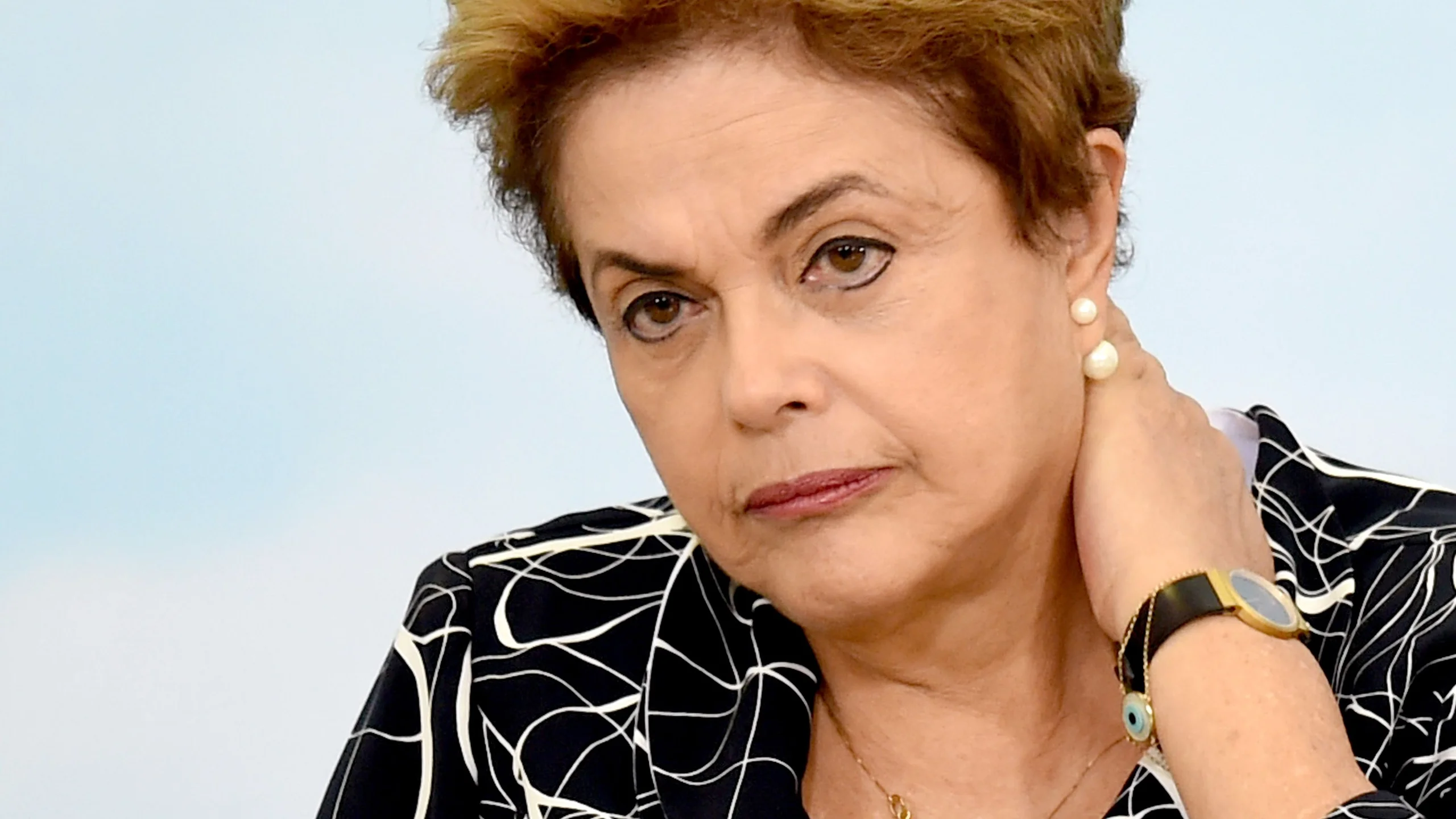
Dilma Rousseff
 Brazil
Also known as: Dilma Vana Rousseff, Dilma Larpsseff
Birthday
December 14, 1947
Birth Sign
Sagittarius
Birthplace
Belo Horizonte, Brazil
Age
78 years old
Height
5 ft 5 in (1.65 m)
About
Dilma Vana Rousseff is a Brazilian economist and politician who made history as the first woman elected President of Brazil. She served as the 36th president from January 1, 2011, until her removal from office on August 31, 2016. As of September 2026, she continues to hold significant influence in global economics as the President of the New Development Bank, a role she assumed in March 2023. Her career bridges the gap between revolutionary activism and high-level statecraft, marking her as a pivotal figure in Latin American politics.
Rousseff's path to the presidency was paved by her work in energy management and her close association with former President Luiz Inácio Lula da Silva. Before becoming head of state, she served as Minister of Mines and Energy and later as Chief of Staff to the presidency. Her tenure as president focused on social welfare programs like Bolsa Família and infrastructure development, though it ended amidst economic recession and political polarization. Today, she remains a vocal advocate for democratic institutions and sustainable development across emerging markets.
Early Life & Background
Born into a middle-class family of Bulgarian immigrants in Belo Horizonte, Dilma Rousseff grew up in a household that valued education and political engagement. Her grandfather, Dimitar Rusev, was a Bulgarian revolutionary who fled persecution, setting an early tone of resistance in her family history. She attended the prestigious Colégio Estadual de Minas Gerais before moving to Porto Alegre to study economics at the Federal University of Rio Grande do Sul. During her university years, she worked as an engineer and energy consultant, developing a technical skillset that would later define her political approach.
The turning point for Rousseff came in the late 1960s following the military coup of 1964. Disillusioned by the dictatorship, she joined the armed guerrilla group *Tupamaros* (specifically the Movimento Libertação Nacional) to fight against the regime. This decision led to her arrest in 1970. She endured two years of imprisonment and torture in solitary confinement before being released under a general amnesty law in 1972. Following her release, she moved back to Porto Alegre where she co-founded the Democratic Labour Party and began her rise through local government roles, serving as the treasury secretary of Porto Alegre and later as the Secretary of Energy for the state of Rio Grande do Sul.
Career Growth
Rousseff's political ascent accelerated after joining the Workers' Party in 2001. Her expertise in economics and energy management led to her appointment by Luiz Inácio Lula da Silva as Minister of Mines and Energy in 2003. During this tenure, she oversaw significant reforms in the energy sector, including the expansion of hydroelectric power and the establishment of the National Agency of Petroleum, Natural Gas and Biofuels. In 2005, following a political crisis involving the "mensalão" scandal, she was appointed Chief of Staff to President Lula, a role she fulfilled until 2010. Her leadership in this capacity was instrumental in maintaining Lula's approval ratings and managing the government's legislative agenda.
In 2010, Rousseff ran for president and won in a runoff election, becoming the first woman to hold the office in Brazil's history. She was re-elected in 2014 with a plurality of the vote. Her presidency focused on social welfare programs like Bolsa Família, infrastructure development, and maintaining economic growth. However, her second term was marred by a severe economic recession, massive corruption scandals, and growing political polarization. On August 31, 2016, the Brazilian Senate voted to impeach her, citing fiscal irregularities known as "pedaladas fiscais." Rousseff vehemently denied these charges, characterizing the event as a "congressional coup d'état." After leaving office, she remained active in public discourse, writing memoirs and advocating for democratic institutions. In March 2023, she was elected as the first President of the New Development Bank, a role she currently holds.
Career Timeline
Public Image & Style
Dilma Rousseff is portrayed in media as a serious, intelligent, and resilient leader. Her style is characterized by conservative, professional attire, often featuring formal suits and glasses, projecting an image of intellectual rigor. She is frequently described as a "technocrat" with a strong ideological foundation. Her public voice is direct and unyielding, particularly when defending her legacy or criticizing political opponents. The narrative surrounding her is one of verified milestones rather than celebrity glamour, emphasizing her role as a historical figure whose influence extends far beyond Brazil's borders.
Fame & Fandom
Dilma Rousseff commands a public presence defined not by the feverish adoration of pop culture, but by the intense, polarized weight of political history. Her supporters are voters and party members rather than a fandom with rituals or a specific name; there are no fan-funded billboards or organized campaigns chasing her image. The narrative surrounding her is one of verified milestones: the first woman to lead Brazil, the guerrilla fighter who challenged a dictatorship, and the leader whose tenure ended in a congressional coup she famously denounced. This legacy has cemented her status as a global figure whose influence extends far beyond Brazil's borders, particularly through her current role leading the New Development Bank. Her fame is measured in historical impact and institutional authority rather than viral moments or celebrity gossip. She remains a central character in the story of Latin American politics, where her voice carries the weight of decades of struggle and governance. According to the iFANN Global Fame Rankings, Dilma Rousseff is currently the 11th most famous person in Brazil. She stands as the 43rd most famous person from Brazil and holds the position of the 15th most famous person in Latin America.
Interesting Facts and Legends
During her time in the underground resistance, Rousseff used the alias "Ana" to protect her identity from the military regime. She is fluent in four languages: Portuguese, Spanish, English, and French. Before switching to economics, she was one of the few women to earn a degree in engineering. An avid fan of Brazilian music, she particularly enjoys samba and MPB (Música Popular Brasileira). In May 2026, she participated in tributes to Fidel Castro alongside former Brazilian President Lula. Her resilience after enduring torture and imprisonment during the dictatorship is a central part of her political mythology, symbolizing the struggle for democracy in Brazil. The phrase "congressional coup d'état," which she used during a speech at George Washington University in 2016, has become a defining moment in her legacy.
Notable Quotes
“My removal from power was a congressional coup d'état.”
“I am not a criminal. I am a victim of a political process.”
“We must build a more just and equal world.”
Family & Personal Life
Dilma Rousseff was born to Pedro Rousseff and Dilma Senna, both Bulgarian immigrants who settled in Brazil. Her grandfather, Dimitar Rusev, was a revolutionary who fled persecution in Bulgaria. Rousseff was never legally married but had two long-term partners. She was in a relationship with Carlos Araújo, a fellow activist, during the 1970s before her imprisonment. Following her release, she entered a partnership with Cláudio Linhares, a civil engineer. They lived together for decades until his death in 2018. While they did not have biological children together, Rousseff has stated she considers herself a mother to her grandchildren. She currently resides in Brazil and maintains a relatively private personal life compared to her public career.
Notable Connections
Relationships & Dating History
Dilma Rousseff's personal life has been kept relatively private compared to her public career, but historical records confirm two significant long-term relationships. She was in a relationship with Carlos Araújo, a fellow activist and economist, during the 1970s. They met while both were involved in the resistance against the military dictatorship. Their relationship ended around the time of her imprisonment and subsequent release in 1972. There are no widely documented children from this union. The relationship is often cited as a pivotal part of her radical youth.
Following her release from prison, Rousseff entered a long-term partnership with Cláudio Linhares, a civil engineer. They lived together for many years, and Linhares supported her political career. While they were not legally married, their relationship lasted for decades until his death in 2018. They did not have biological children together, though Rousseff has stated she considers herself a mother to her grandchildren. As of 2026, Dilma Rousseff is widowed. Her partner Cláudio Linhares passed away in 2018. She has no reported romantic relationships or engagements since then. She remains single and focused on her role at the New Development Bank.
- DatedCarlos Araújo1970 - 1972Met while resisting the military dictatorship; relationship ended before her release from prison.
- In a RelationshipCláudio Linhares1972 - 2018Long-term partner and civil engineer; supported her political career until his death.
Salary, Net Worth In 2026
$2 Million
iFANN Editorial Team estimate
iFANN Editorial Team research places Dilma Rousseff's net worth at approximately $2 million as of 2026. Unlike business tycoons, her wealth is primarily earned income rather than capital gains or equity. Her financial standing derives from her presidential salary during her tenure in Brazil. She also holds real estate investments in Brasília and Porto Alegre, along with modest investment portfolios accumulated over decades. Strict conflict-of-interest regulations governing international bank executives limit speculative wealth accumulation, ensuring her fortune remains grounded in service and compensation rather than corporate speculation.
Awards Won (3)
Rousseff has received numerous distinctions for her political service and leadership. She was awarded the Presidential Medal of Merit by the Brazilian government and the Order of the Southern Cross, one of Brazil's highest honors. She received honorary doctorates from the University of São Paulo and the University of Lisbon. In 2011, she was named one of the 100 most influential people in the world by Time magazine. She also received Global Leadership Awards for her role in advancing women in leadership.
2011 · National Honor
Service to Brazil
2011 · National Honor
Presidency
Known For
President of Brazil
2011 · First Female President
New Development Bank
2023 · President
Keywords
Sources
Quick Facts
- Profession
- economist, politician
- Born
- December 14, 1947
- Birthplace
- Belo Horizonte, Brazil
- Gender
- Female
- Spouse
- Cláudio Linhares (partner until death)
- Birth Sign
- Sagittarius
Personal Details
- Full Name
- Dilma Vana Rousseff
- Height
- 5 ft 5 in (1.65 m)
- Spouse
- Cláudio Linhares (partner until death)
- Children
- Education
- Federal University of Rio Grande do Sul
Frequently Asked Questions
What is Dilma Rousseff's net worth?
Is Dilma Rousseff still alive?
Why was Dilma Rousseff impeached?
Who is Dilma Rousseff's husband?
What is Dilma Rousseff doing now in 2026?
Similar People

Join the community
fans discussing