Evliya Çelebi
Also known as: Dervish Mehmed Zillî, Hezarfen
Birthday
March 25, 1611
Birth Sign
Sagittarius
Birthplace
Istanbul, Ottoman Empire
Age
Died at 72
About
Dervish Mehmed Zillî (25 March 1611 – 1684), universally known as Evliya Çelebi, was an Ottoman Turkish explorer, historian, and writer whose life defined an era of unprecedented travel documentation. He spent over forty years journeying through the Ottoman Empire, the Balkans, North Africa, and parts of Europe, recording his observations in a ten-volume masterpiece called the Seyahatnâme. The title "Çelebi" is an honorific meaning "gentleman" or "man of God," reflecting the respect he commanded even during his lifetime.
His work remains one of the most significant ethnographic records of the 17th century, offering detailed insights into the geography, politics, culture, and daily life of the regions he visited. Unlike many explorers who sought conquest or trade, Evliya traveled primarily for knowledge and curiosity. His writings have secured his place as a national hero in Turkey and a celebrated figure in global literature, with modern scholars continuing to analyze his accounts decades after his death.
Early Life & Background
Dervish Mehmed Zillî entered the world on 25 March 1611 in the Unkapanı district of Constantinople, now Istanbul. He was born into a prominent family; his father, Derviş Mehmed Ağa, served as an imperial goldsmith and jeweler in the court of Sultan Ahmed I, while his mother was a slave-girl of Abkhazian origin. This privileged background provided him with access to high-level political circles and a superior education from a young age.
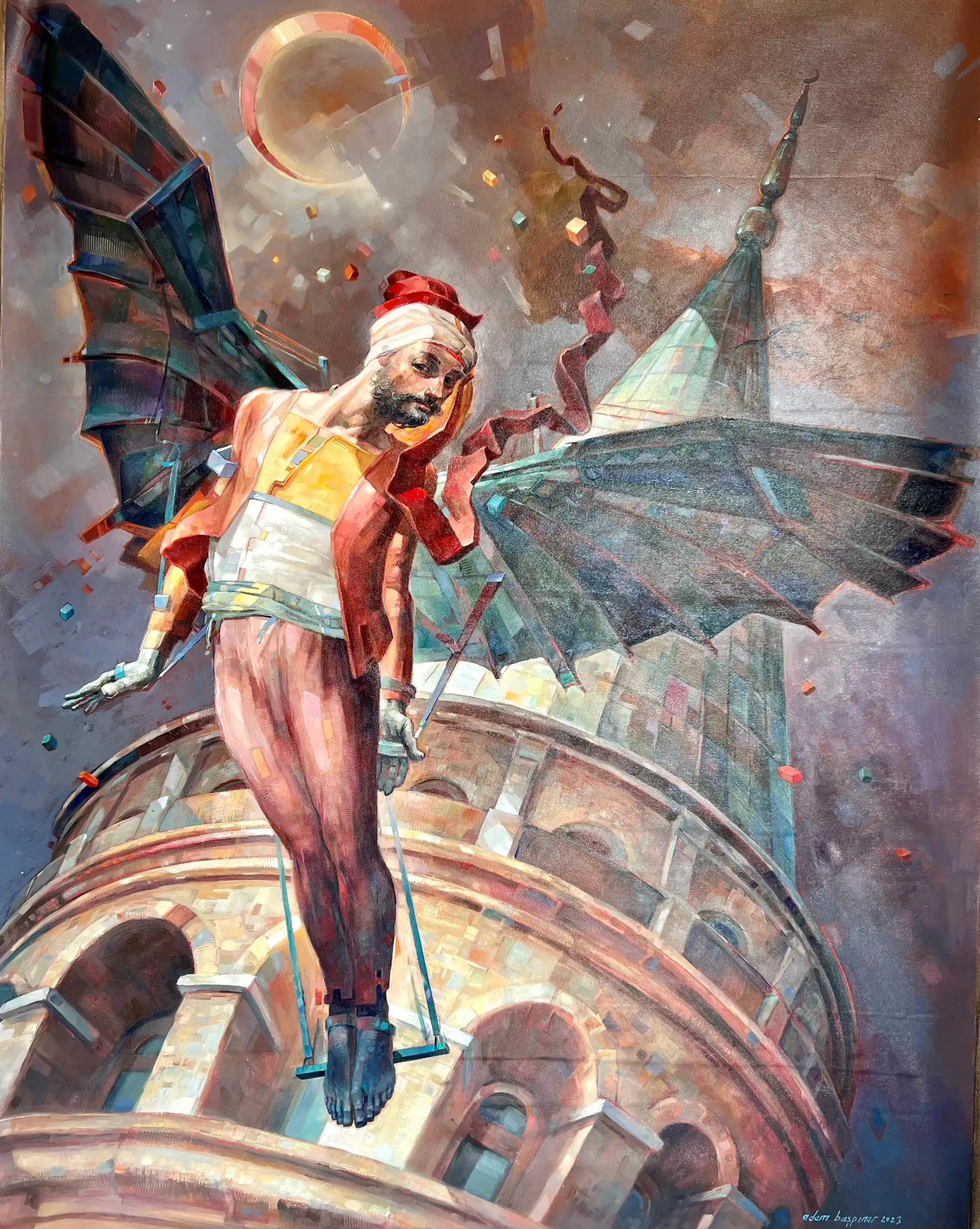
At just six years old, he entered the Imperial Palace to serve as a page under the tutelage of Grand Vizier Kemankeş Kara Mustafa Pasha. This upbringing exposed him to the complexities of court life and allowed him to develop early interests in poetry, history, and the observation of diverse cultures. During his youth, he reportedly attempted to fly from the Galata Tower using wings made of wax and feathers, inspired by the legend of Hezarfen Ahmet Çelebi. Although this stunt failed, it earned him the nickname "Hezarfen" briefly, marking an early sign of his adventurous spirit and fascination with flight and exploration.
Career Growth
Evliya Çelebi's career began around 1630 when he embarked on his first major journey, initiating a forty-year period of extensive travel that would define his legacy. He traversed vast distances primarily on horseback, covering over 100,000 kilometers across the Balkans, Anatolia, the Caucasus, the Middle East, North Africa, and parts of Europe. His breakthrough and enduring fame rest entirely on the Seyahatnâme, a ten-volume travelogue written in Turkish that documents these journeys.
The first volume covers his travels up to 1640, while subsequent volumes detail his expeditions across the empire and beyond. While he did not achieve commercial success in the modern sense during his lifetime, his work gained significant recognition posthumously. In the 19th century, European scholars began translating and studying his writings, cementing his status as a historical giant. Today, his legacy is celebrated globally; streets, schools, cultural centers, and even proposed bridges in Turkey bear his name. A major cultural milestone was the opening of the exhibition and film project "Evliya Çelebi: The Fountain of Youth" in October 2014, which brought his story to a modern audience.
Career Timeline
Public Image & Style
Evliya Çelebi is portrayed in modern Turkey as a symbol of curiosity, bravery, and cultural richness. He is depicted as a humble yet observant scholar who valued human connection and diversity. His image is often associated with the golden age of the Ottoman Empire, representing a time of exploration and intellectual flourishing. Modern tributes include the "Evliya Çelebi Way" trekking route and various academic projects dedicated to mapping his historic paths. He is widely regarded as the "greatest Ottoman explorer" and a national hero in Turkey.
Fame & Fandom
iFANN has not yet collected fame data for this person. As a historical figure from the 17th century, Evliya Çelebi does not have a formal ranking in modern celebrity charts or global attention metrics measured by iFANN. His fame exists in a different dimension, rooted in historical significance rather than contemporary pop culture visibility.
There is no organized "fandom" in the modern pop-culture sense, such as fan clubs or social media armies. Instead, he has a dedicated following among historians, students, and tourists. These groups are often referred to as "Evliya Çelebi enthusiasts" or simply "travelers following his path." Fan activities include hiking the "Evliya Çelebi Way," visiting sites mentioned in his book, and participating in academic conferences dedicated to his work. The enthusiasm for his legacy is driven by a shared appreciation for his detailed documentation of the Ottoman world and his adventurous spirit.
Interesting Facts and Legends
Evliya Çelebi was a noted gourmand who documented the culinary traditions of the cities he visited in great detail, often praising local dishes more than their preparation methods. He spoke multiple languages including Turkish, Persian, Arabic, and possibly others, which facilitated his extensive travels and interactions with diverse populations. He completed nine volumes of his ten-volume travelogue; the final volume was lost or never finished, leaving a gap in his narrative that scholars still seek to fill. His attempt to fly from the Galata Tower using artificial wings became part of his folklore, linking him to the legendary Hezarfen Ahmet Çelebi. The sheer duration and scope of his travels, over 40 years covering over 100,000 kilometers, are legendary in the annals of exploration, surpassing many contemporaries in both distance and detail.
Notable Quotes
“Travel is the only thing you buy that makes you richer.”
“I have seen the world, and I have seen that all men are brothers, though they speak different tongues.”
Family & Personal Life
Evliya Çelebi was born into a prominent family in Constantinople. His father, Derviş Mehmed Ağa, served as an imperial goldsmith and jeweler in the court of Sultan Ahmed I, while his mother was a slave-girl of Abkhazian origin. There are no records of marriages, engagements, dating history, or children in the available historical sources. The Seyahatnâme contains occasional references to women and social interactions, but these are descriptive observations of society rather than accounts of a specific romantic partner or spouse. Consequently, there is no information regarding a current relationship status, divorce, or widowhood, as he lived and died centuries ago without public romantic partnerships recorded in biographical archives.
Notable Connections
Relationships & Dating History
As a figure from the 17th century, Evliya Çelebi's personal romantic life is not documented in the manner of modern celebrities. There are no records of marriages, engagements, dating history, or children in the available historical sources. The Seyahatnâme contains occasional references to women and social interactions, but these are descriptive observations of society rather than accounts of a specific romantic partner or spouse. Consequently, there is no information regarding a current relationship status, divorce, or widowhood, as he lived and died centuries ago without public romantic partnerships recorded in biographical archives. He died unmarried or at least without a recorded spouse in the historical record.
Death & Aftermath
Died
1684 (aged 72)
Death Place
Cairo, Egypt
Cause of Death
Unknown
Dervish Mehmed Zillî passed away in Cairo around 1684 while working on the final volumes of his monumental travelogue. He had settled in Egypt for the last decade of his life to complete the Seyahatnâme, a task that consumed his remaining years without any recorded public spectacle or fanfare. His death marked the end of a forty-year journey across the Ottoman Empire and beyond, but it was not a moment of immediate global celebration. Instead, his passing was noted quietly by those in his circle, with no dramatic farewell or widespread mourning documented in the historical record of the time.
Burial details remain elusive, as no verified grave marker or specific cemetery location has been identified in either Egypt or Turkey. The handling of his estate is similarly unrecorded, with no information surviving regarding wills, inheritance disputes, or how his family managed his assets after he died. For centuries, his work existed primarily in manuscript form within private collections and libraries, waiting for the world to catch up to his vision.
His legacy surged long after his physical departure, transforming from a personal collection of observations into a global treasure. Today, his name adorns streets, schools, and cultural centers across Turkey, while scholars continue to rely on his writings to understand the Ottoman Empire's cultural zenith. Institutions such as the Turkish Historical Society recognize his contributions, and his work stands as a crucial historical document of the era. This retrospective appreciation reflects the enduring value of his travels rather than immediate reactions to his passing.
Net Worth (Estate Value)
$0
iFANN Editorial Team estimate
As a historical figure who died in 1684, Evliya Çelebi does not have a net worth in the modern financial sense. He left no estate value, business ventures, or investment portfolio that can be quantified today. The concept of "net worth" applies only to living individuals or estates managed for profit. However, the value of his intellectual property, the Seyahatnâme, is immense. The work is in the public domain, generating revenue indirectly through academic publications, tourism (the Evliya Çelebi Way), and cultural events. No specific dollar figures exist for his personal wealth or estate, as such records were not kept or preserved in the manner of modern celebrity estates.
Awards & Accolades
View 6 records, honours and achievementsKnown For
Seyahatnâme
1671 · Author
The Fountain of Youth
2014 · Subject of Exhibition
Keywords
Sources
Quick Facts
- Profession
- explorer, historian, writer
- Born
- March 25, 1611
- Birthplace
- Istanbul
- Died
- 1684
- Death Place
- Cairo
- Gender
- Male
- Birth Sign
- Sagittarius
Personal Details
- Full Name
- Dervish Mehmed Zillî
- Children
- Education
- Imperial Palace (as a page)
Frequently Asked Questions
Who was Evliya Çelebi?
When and where was Evliya Çelebi born?
How did Evliya Çelebi die?
What is the Seyahatnâme?
Is there a trail named after Evliya Çelebi?
Join the community
fans discussing