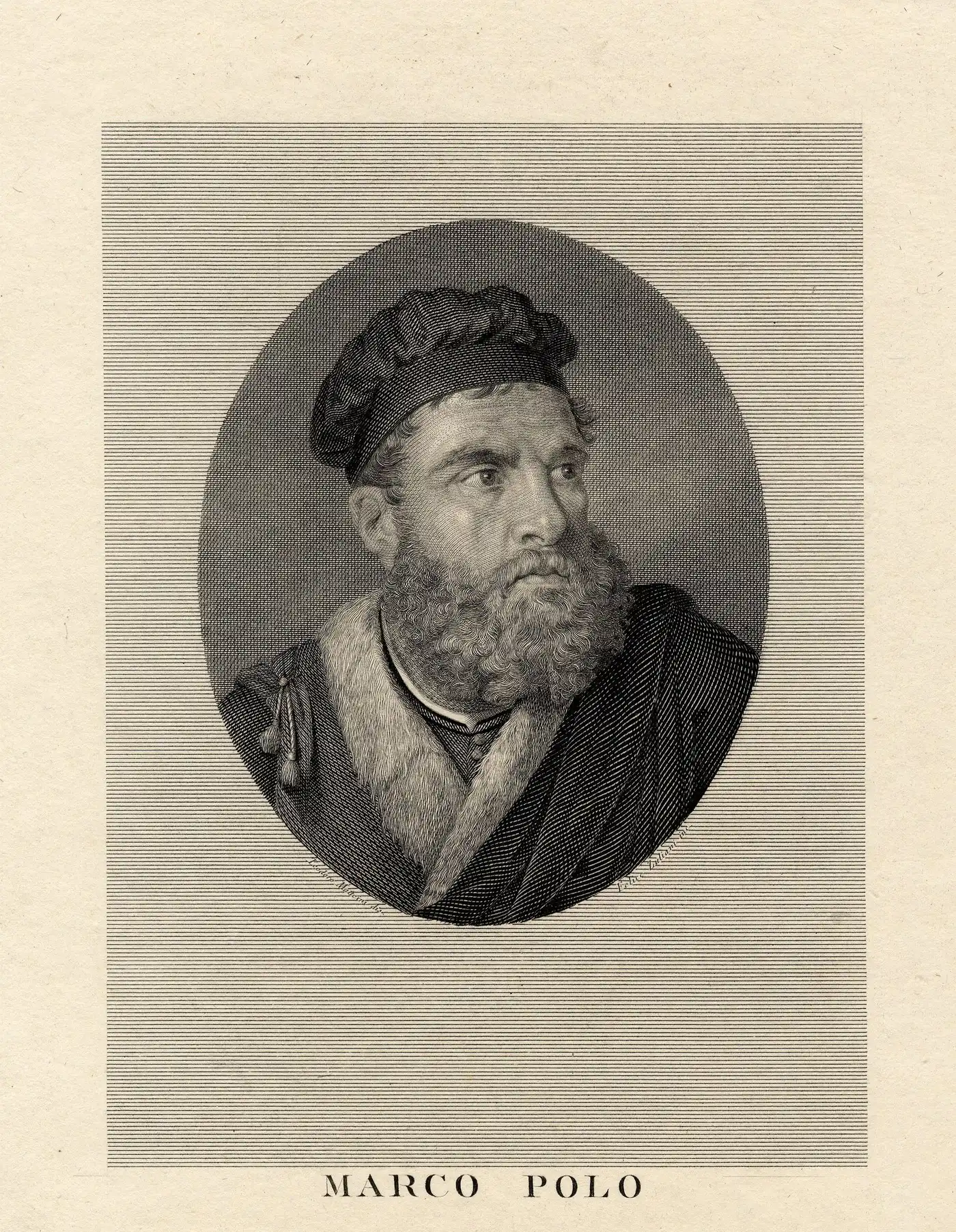
Marco Polo
Also known as: Il Milione, Monsieur Million
Birthday
September 15, 1254
Birth Sign
Virgo
Birthplace
Venice
Age
Died at 69
About
Marco Polo was a Venetian merchant, explorer, and writer whose journeys along the Silk Road to Asia between 1271 and 1295 fundamentally altered European understanding of the Eastern world. Born in Venice around September 1254 into a wealthy family connected to long-distance trade, he spent his early years preparing for a life of commerce before embarking on a journey that would last over two decades.
His service to the Mongol Empire defined his career success. For approximately seventeen years, Polo lived among the Mongols and traveled extensively throughout China, Southeast Asia, India, Myanmar, Indonesia, Sri Lanka, and Vietnam. He served as a diplomat and emissary for Kublai Khan, observing and documenting the geography, customs, and wealth of the Yuan dynasty. Upon returning to Venice after twenty-four years away, he was captured by Genoese forces during the Battle of Curzola in 1298. It was during his imprisonment in Genoa that he dictated his life story to Rustichello da Pisa, producing The Travels of Marco Polo.
This manuscript became a bestseller of its era, providing Europeans with their first detailed look at porcelain, gunpowder, paper money, and the vastness of the East. Following his release, Polo became a wealthy merchant, serving on the Venetian council until his death on January 8, 1324. He lies buried in the church of San Lorenzo in Venice.
Early Life & Background
Marco Polo's early life was shaped by the commercial ambitions of his family in Venice. Born around September 1254, he entered the world into a lineage deeply connected to long-distance trade. His father, Niccolò Polo, and his uncle, Maffeo Polo, were established merchants who had previously ventured east to sell goods and acquire new markets. They left Venice for Asia in the 1260s, leaving young Marco behind with his mother.
The family reunion occurred in 1269 when Niccolò and Maffeo returned to Venice after nearly a decade away. They brought back gifts and stories from the distant lands they had visited, sparking a sense of wonder in their nephew. Historical accounts suggest that while specific details of his formal education are scarce, Marco learned multiple languages including Latin, Greek, and Turkish. These skills proved essential for his later diplomatic roles and interactions with foreign dignitaries.
At the age of seventeen, in 1271, Marco departed Venice with his father and uncle. This departure marked the pivotal moment before his global recognition. The trio traveled via the Levant and Persia, eventually reaching the court of Kublai Khan in Cathay (modern-day China) around 1275. This journey was not a career break in the modern sense but the beginning of a twenty-four-year odyssey that would define his legacy. During these formative years, he adapted to the customs of the East and learned to navigate complex political landscapes far from home.
Career Growth
Marco Polo's career is defined by his service to the Mongol Empire. For approximately seventeen years, he lived among the Mongols and traveled extensively throughout China, Southeast Asia, India, Myanmar, Indonesia, Sri Lanka, and Vietnam. He served as a diplomat and emissary for Kublai Khan, observing and documenting the geography, customs, and wealth of the Yuan dynasty. In 1291, he played a key role in escorting the Mongol princess Kököchin to Persia to marry the Ilkhan Arghun, marking a significant diplomatic mission.
Around 1295, he returned to Venice after a twenty-four-year absence. Upon his return, Venice was at war with Genoa. Polo joined the Venetian fleet but was soon captured by Genoese forces during the Battle of Curzola in 1298. It was during his imprisonment in Genoa that he dictated his life story to Rustichello da Pisa, producing The Travels of Marco Polo (also known as Il Milione) around 1299. This manuscript became a bestseller of its era, providing Europeans with their first detailed look at porcelain, gunpowder, paper money, and the vastness of the East.
Following his release and return to Venice, Polo became a wealthy merchant, serving on the Venetian council and participating in the city's political life. He died on January 8, 1324, in Venice at the age of roughly 70. He lies buried in the church of San Lorenzo in Venice. His writings inspired future explorers like Christopher Columbus and reshaped European cartography through works such as the Catalan Atlas and the Fra Mauro map.
Career Timeline
Public Image & Style
Marco Polo is universally portrayed as the quintessential explorer, a bridge between East and West. His image is one of curiosity, bravery, and intellectual openness. Media portrayals emphasize his role as a witness to a civilization unknown to Europe, shaping the narrative of the "Age of Discovery." He is remembered not just for his travels but for his ability to document them with a level of detail that challenged European skepticism. His reputation as a diplomat and loyal servant to Kublai Khan adds a layer of political sophistication to his persona, distinguishing him from mere adventurers.
Fame & Fandom
iFANN has not yet collected fame data for this person. While he does not appear on modern "Greatest of All Time" lists in entertainment or sports, Marco Polo consistently ranks as a top historical figure in academic and general knowledge contexts. He is often listed among the top 10 greatest explorers in history by historians and encyclopedias.
There is no organized "fandom" in the modern pop-culture sense for Marco Polo. However, he has a dedicated following among historians, geographers, and enthusiasts of the Silk Road. Fan activities include academic conferences, reenactments of the Silk Road journey, and educational campaigns. The community is primarily scholarly rather than recreational, united by a shared interest in medieval history and exploration.
Interesting Facts and Legends
Europeans called him "Il Milione" (The Millionaire) because they thought he exaggerated the size and wealth of cities in Asia, claiming there were millions of inhabitants where there were far fewer. Christopher Columbus owned a copy of The Travels of Marco Polo and made marginal notes in it, using Polo's descriptions to plan his own voyage to the Indies. Polo is credited with describing paper money to Europeans, a concept that was revolutionary and initially met with skepticism in the West. He provided early Western accounts of gunpowder and its use in warfare. He reportedly spoke four languages fluently, which aided his diplomatic service to Kublai Khan. A famous anecdote suggests that when asked if he believed everything he wrote, Polo replied, "I have told only half of what I saw." The most iconic moment in his life occurred in 1298 while imprisoned in Genoa, where he dictated his entire life story to Rustichello da Pisa.
Notable Quotes
“I have told only half of what I saw.”
“There are many things in the world that men do not believe, because they have never seen them.”
Family & Personal Life
Marco Polo was married to Donata Badoer, the daughter of Vitale Badoer, a prominent Venetian nobleman. They married sometime after his return to Venice in 1295. The couple had three daughters: Fantina, Porosella, and Bellela. There are no records of other romantic relationships, engagements, or divorces in his life; his marriage to Donata appears to have been his only union. As of the date of his death in 1324, he was widowed by his own passing, having spent his final years with his wife and children. His father Niccolò and uncle Maffeo were central figures in his early life, guiding him into the world of international trade.
Notable Connections
Niccolò Polo, Maffeo Polo, Kublai Khan, Rustichello da Pisa, Donata Badoer, Christopher Columbus
Relationships & Dating History
Marco Polo was married to Donata Badoer, the daughter of Vitale Badoer, a prominent Venetian nobleman. They married sometime after his return to Venice in 1295. The couple had three daughters: Fantina, Porosella, and Bellela. There are no records of other romantic relationships, engagements, or divorces in his life; his marriage to Donata appears to have been his only union. As of the date of his death in 1324, he was widowed by his own passing, having spent his final years with his wife and children. No modern dating history applies as the subject is deceased.
- MarriedDonata Badoer1295 - 1324He married Donata after returning to Venice; they had three daughters together.
Death & Aftermath
Died
January 8, 1324 (aged 69)
Death Place
Venice
Cause of Death
Natural causes
Marco Polo died on January 8, 1324, in Venice at the age of roughly seventy. Contemporary records do not specify a medical cause for his passing, though historians generally attribute it to natural causes given his advanced age. He was laid to rest in the church of San Lorenzo in Venice, a site that remains a point of historical interest today. His death marked the end of a life that had fundamentally altered European perceptions of the world.
The immediate aftermath of his death saw little public fanfare compared to modern celebrity funerals, yet his legacy began to grow rather than fade. The Travels of Marco Polo, dictated during his imprisonment years earlier, remained a primary source of information about Asia for centuries. The book circulated among scholars and explorers, influencing cartography and inspiring future generations to seek out the East. Christopher Columbus famously owned a copy of the text, filling its margins with notes as he planned his own voyages to the Indies.
A persistent legend from his lifetime suggests that when asked if he believed everything he wrote, Polo replied, "I have told only half of what I saw." This comment led some contemporaries to dub him "il Milione" or "Monsieur Million," implying he exaggerated the wealth and size of Asian cities. Modern historians view this nickname less as an accusation of fraud and more as a reflection of how difficult it was for Europeans to comprehend the scale of the Mongol Empire. His writings continued to shape the Age of Discovery long after his burial, serving as a bridge between civilizations that would define global trade routes for centuries to come.
Net Worth (Estate Value)
$0
iFANN Editorial Team estimate
As a historical figure who died in 1324, Marco Polo has no current net worth. His estate value is not tracked in modern financial terms. During his lifetime, he returned to Venice as a wealthy man, owning property and engaging in trade, but specific figures of his wealth in ducats or florins are not precisely quantified in surviving records beyond general descriptions of his affluence. The economic impact of his travels and subsequent writings is immeasurable, having opened up trade routes and cultural exchanges that benefited Venice and Europe for centuries.
Awards & Accolades
View 8 records, honours and achievementsKnown For
The Travels of Marco Polo
1299 · Author
Silk Road Explorer
1271-1295 · Explorer
Keywords
Sources
Quick Facts
- Profession
- merchant, diplomat, ambassador
- Born
- September 15, 1254
- Birthplace
- Venice
- Died
- January 8, 1324
- Death Place
- Venice
- Gender
- Male
- Spouse
- Donata Badoer
- Birth Sign
- Virgo
Personal Details
- Spouse
- Donata Badoer
- Children
- Fantina · Porosella · Bellela
- Education
- Self-taught languages; informal merchant training
Frequently Asked Questions
Who was Marco Polo?
When was Marco Polo born and when did he die?
Did Marco Polo actually go to China?
What is Marco Polo famous for?
Who was Marco Polo's wife?
Similar People
Join the community
fans discussing