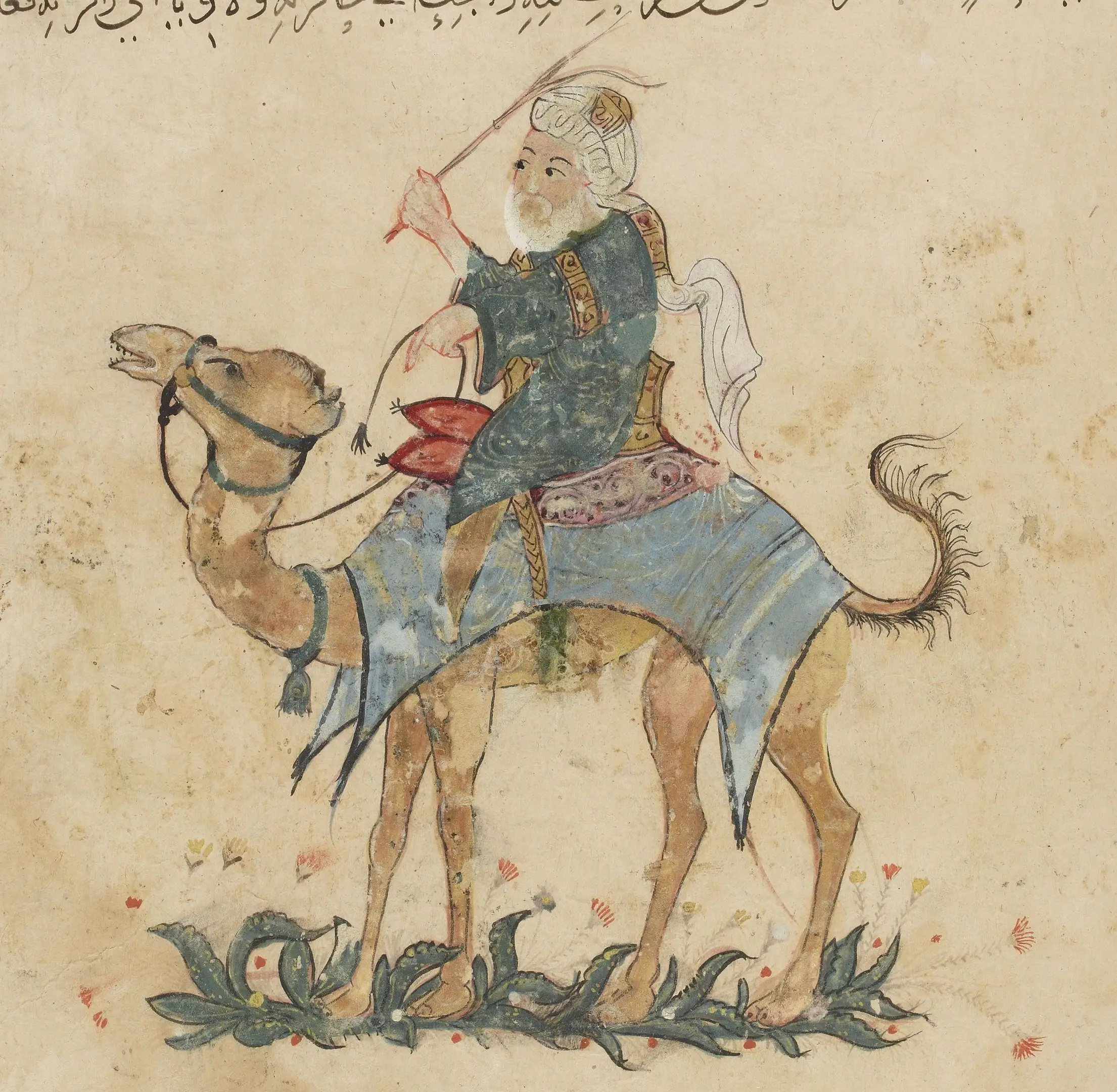
Ibn Battuta
 Morocco
Also known as: Muhammad ibn Abd Allah al-Lawati al-Tanji, Ibn Batutta
Birthday
February 24, 1304
Birth Sign
Sagittarius
Birthplace
Tangier, Morocco
Age
Died at 64
About
Abu Abdullah Muhammad ibn Abd Allah al-Lawati al-Tanji was a Maghrebi Muslim scholar, jurist, and explorer from Tangier in present-day Morocco. Born into a family of legal scholars, he left his home at age twenty-one to perform the Hajj pilgrimage and never returned. Over the next thirty years, he traversed more than 75,000 miles across Africa, Asia, and Europe, documenting the Islamic world in his memoir The Rihla. His journey took him through bustling trade hubs and remote villages where he served as a judge for sultans and met with commoners alike.
By the time he died around 1369 in Fez, Ibn Battuta had seen more of the medieval world than any other individual before or since. His accounts provide invaluable insights into the fourteenth-century Islamic civilization, covering diverse cultures from West Africa to China. He is widely recognized by historians as the greatest traveler of the pre-modern era, surpassing contemporaries like Marco Polo in both distance covered and the breadth of regions visited.
Early Life & Background
Ibn Battuta was born Muhammad ibn Abd Allah al-Lawati al-Tanji on February 24, 1304, in Tangier, a port city in northern Morocco. He came from a Berber family with a deep tradition of legal scholarship; his father, grandfather, and great-grandfather all served as qadis, or judges. This lineage shaped his early life, directing him toward academic pursuits rather than commerce or military service. From a young age, he immersed himself in the study of Islamic law within the Maliki school of jurisprudence, mastering the complex texts required to serve as a religious authority.
By the time he turned twenty-one in 1325, he had completed his rigorous education and was fully qualified to serve as a judge. The pivotal moment that launched his legendary career occurred when he departed Tangier on June 16, 1325, with the intention of performing the Hajj pilgrimage to Mecca. He did not plan to travel beyond the Arabian Peninsula, nor did he intend to return home permanently. What began as a standard religious journey evolved into a thirty-year odyssey that would redefine the boundaries of human exploration during the Middle Ages.
Career Growth
His career began in earnest in 1325 when he left Tangier for Mecca. During this initial phase, he visited North Africa, Egypt, the Levant, and the Hijaz, eventually returning to Mecca in 1326 to stay for several years while traveling extensively through Arabia, Yemen, and Iraq. In 1328, he crossed the Indian Ocean to visit East African cities like Zanzibar, Mombasa, and Kilwa before reaching India via the Maldives and Sri Lanka.
Arriving in Delhi in 1333, he entered the service of Sultan Muhammad bin Tughluq. For seven years, he served as a Qadi, a role that solidified his reputation as a legal authority and provided a stable base for further expeditions. During this tenure, he traveled to the Maldives as chief judge and subsequently reached China, arriving at the Yuan Dynasty capital of Khanbaliq (Beijing). After leaving China in 1342, he traversed Southeast Asia, visiting Sumatra and Java, before returning to the Middle East to explore Anatolia and the Crimea.
He spent time in the Golden Horde territories before making his way back to North Africa and Spain in 1349. Upon returning to Fez in 1354, he was commissioned by Sultan Abu Inan Faris to dictate his travelogue. Under the guidance of the scribe Ibn Juzayy, he composed The Rihla, a work that became one of the most significant travel books in history. His career concluded with the completion of this masterpiece, which remains a primary source for understanding the medieval Islamic world.
Career Timeline
Public Image & Style
Ibn Battuta is portrayed as the ultimate adventurer and a symbol of curiosity and resilience. His image is that of a humble scholar who sought knowledge above all else, navigating diverse political landscapes with grace. Media portrays him as a bridge between cultures, a man who could adapt to any society while maintaining his religious identity. He is often compared to Marco Polo, yet his legacy stands distinct for the sheer scale of his travels and the depth of his observations on the Islamic world.
Modern depictions emphasize his role as a judge and diplomat as much as his explorations. He is celebrated for his ability to navigate the complex social hierarchies of the medieval world, serving as an ambassador for the Sultan of Delhi to the court of the Mongol ruler in China. His story continues to inspire discussions on cultural exchange and the spirit of exploration in the modern era.
Fame & Fandom (iFAMOUS Rankings)
iFANN has not yet collected fame data for this person. While he is a globally recognized historical figure, the iFANN engine does not currently rank pre-modern figures in its live popularity metrics.
Enthusiasts refer to themselves as "Ibn Battuta followers" or simply history buffs, as there is no official fandom name. Fan culture includes reenactments of his route, educational projects in schools, and digital archives of his map. Since he is deceased, there is no direct fan interaction, but modern authors and historians frequently engage with fans to discuss his legacy. In 2026, his relevance continues to grow, with events like the unveiling of a complete English translation of The Rihla in Riyadh and the opening of the Benihana Ibn Battuta restaurant in Dubai celebrating his connection to global trade and cuisine.
Interesting Facts and Legends
Ibn Battuta spoke Arabic fluently and likely understood Persian, Turkish, and possibly Chinese due to his extensive travels. One of the most famous stories about him involves his time in the Maldives, where he was appointed as Chief Judge but was dismissed after refusing to accept bribes and criticizing local customs, leading to his exile. Another intriguing detail is the debate among historians regarding some sections of his account, particularly those describing China, where inconsistencies have led to theories that he may have exaggerated certain details or relied on second-hand accounts.
A widely retold legend centers on his psychological state upon returning home. After thirty years away, he reportedly felt estranged from his own land, a sentiment captured in his famous quote about finding a home in strange places only to become a stranger in his own. While modern records often cite him as the "most traveled person of the pre-modern era" with a Guinness World Record claim, the exact distance remains a subject of historical estimation, though it far exceeds the 15,000 to 24,000 miles attributed to Marco Polo.
Notable Quotes
“Traveling gives you home in a thousand strange places, then leaves you a stranger in your own land.”
“The world is a book, and those who do not travel read only one page.”
Family & Personal Life
Born into a family of Berber descent that held a tradition of legal scholarship, Ibn Battuta's father, grandfather, and great-grandfather all served as qadis (judges). He married multiple times during his travels, a practice customary for men of his status in the regions he visited. Historical accounts indicate he had at least two wives who accompanied him on parts of his journey, and he likely had others. In the Maldives, he contracted marriages as part of local customs, and in Delhi, he married the daughter of a nobleman.
He had several children, including sons who accompanied him on parts of his journey. One son named Muhammad is mentioned in the Rihla. As a historical figure from the 14th century, his personal life is documented primarily through his own writings and the biographical notes of his scribe. There are no modern dating histories or tabloid romances associated with him, as his relationships were governed by the customs of the Islamic world of the 1300s.
Notable Connections
Relationships & Dating History
Historical records indicate that Ibn Battuta married multiple times during his thirty-year journey, a practice customary for men of his status in the regions he visited. He married shortly after leaving Tangier or during his early travels in the Middle East. Details regarding his first wife are scarce, but she is noted in the Rihla, and they had children together.
While serving as a judge in the Maldives and later in Delhi, he contracted additional marriages. In the Maldives, he was required to adhere to local customs which included marriage, and he fathered children there. In Delhi, he married the daughter of a nobleman, though some sources suggest these unions were political or social necessities rather than romantic partnerships. He was widowed by his final wife upon his death in 1369.
- MarriedFirst Wife1325 - presentMarried shortly after leaving Tangier; had children together.
- MarriedMaldivian Wife1343 - 1348Married during his tenure as Chief Judge in the Maldives; fathered children there.
- MarriedDaughter of a Delhi Nobleman1334 - 1342Married in Delhi, likely for political or social reasons.
Death & Aftermath
Died
1369 (aged 64)
Death Place
Unknown
Cause of Death
Unknown
Net Worth (Estate Value)
As Ibn Battuta lived in the 14th century, the concept of net worth in modern currency does not apply to him. His wealth consisted of land, livestock, and the stipends provided by the sultans who employed him as a judge. There are no financial records of posthumous earnings in the modern sense such as royalties or licensing deals, as his works are in the public domain.
The value of his legacy is purely cultural and educational. The estate managed by his heirs and the state after his death generated no direct income streams comparable to modern celebrity estates. Today, his influence is measured by the enduring impact of his travelogue The Rihla and the institutions named in his honor, rather than any monetary valuation.
Awards & Accolades
View 8 records, honours and achievementsKnown For
The Rihla
1355 · Author
Keywords
Sources
Quick Facts
- Profession
- explorer, geographer, writer
- Born
- February 24, 1304
- Birthplace
- Tangier, Morocco
- Died
- 1369
- Death Place
- Fez, Morocco
- Gender
- Male
- Spouse
- Multiple wives
- Birth Sign
- Sagittarius
Personal Details
- Full Name
- Muhammad ibn Abd Allah al-Lawati al-Tanji
- Spouse
- Multiple wives including a daughter of a Delhi nobleman
- Children
- Several sons and daughters
- Education
- Islamic law (Sharia) in the Maliki school
Frequently Asked Questions
Who was Ibn Battuta?
How far did Ibn Battuta travel?
When did Ibn Battuta die?
What is the name of Ibn Battuta's travel book?
Did Ibn Battuta meet Marco Polo?
Similar People
Join the community
fans discussing