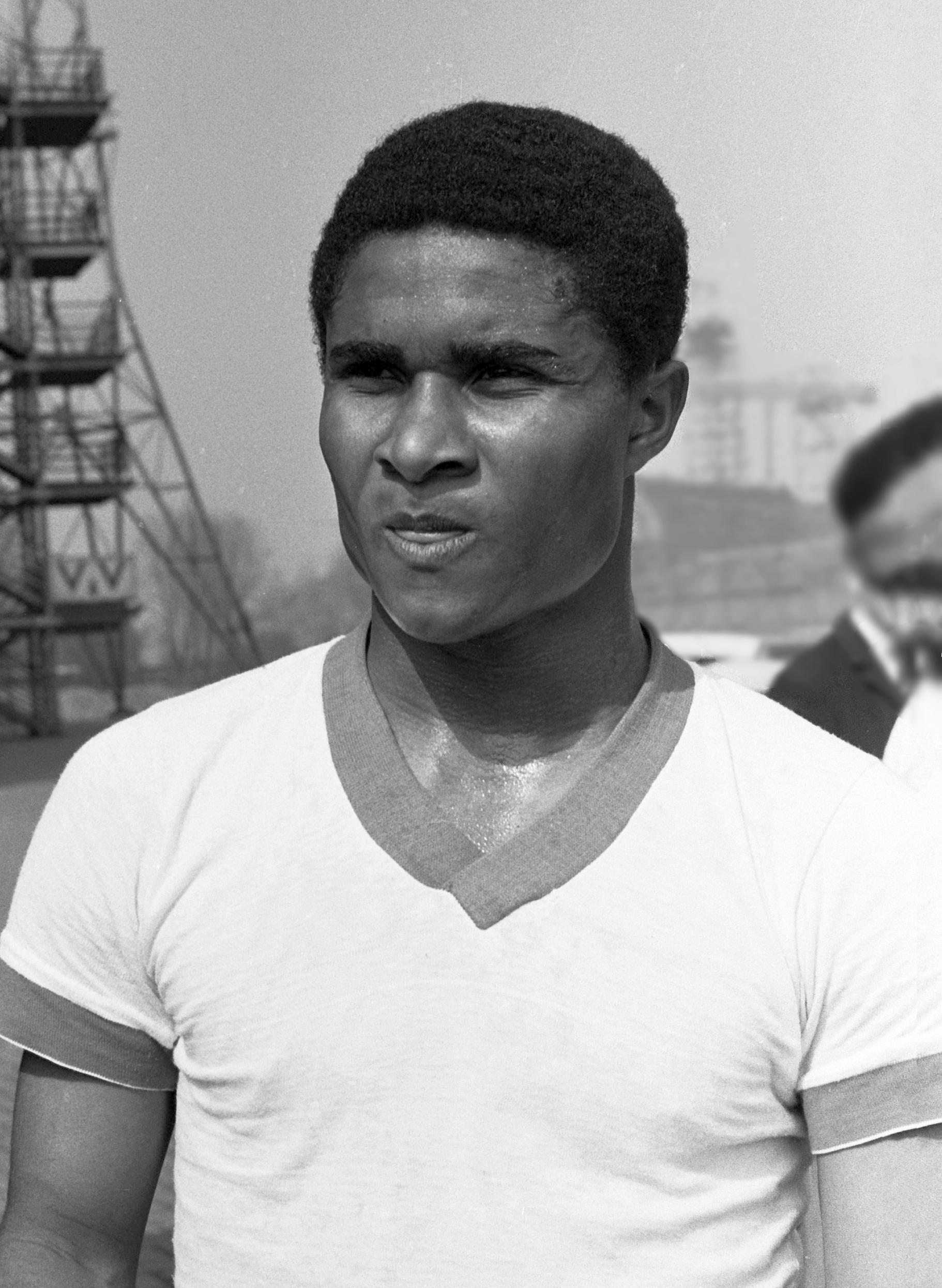
Eusébio
 Mozambique
association football player•athlete
Also known as: Black Panther, Black Pearl, O Rei
Birthday
January 25, 1942
Birth Sign
Aquarius
Birthplace
Maputo, Portuguese Mozambique (now Mozambique)
Age
Died at 71
Height
5 ft 9 in (175 cm)
About
Eusébio da Silva Ferreira was a Portuguese footballer widely regarded as one of the greatest strikers in history. Known for his explosive speed, powerful right-footed shot, and remarkable athleticism, he scored 733 goals in 745 career matches. Eusébio is Benfica's all-time top scorer with 473 goals in 440 competitive appearances and led Portugal to a third-place finish at the 1966 World Cup, winning the Golden Boot with nine goals. He won the Ballon d'Or in 1965 and was the first player to claim the European Golden Boot, which he won twice. His trophy haul includes 11 Primeira Liga titles and a European Cup with Benfica. After retiring, he served as a global ambassador for football and remains a beloved national hero in Portugal and an icon of African football. Fans and peers revere him as "O Rei" (The King).
Early Life & Background
Eusébio grew up in the Mafalala neighbourhood of Maputo, a poor suburb where he often played football barefoot with a sock stuffed with newspaper. His father, a white Portuguese railway worker, died when Eusébio was eight, leaving the family in poverty. He left school around age 12 to work odd jobs, including as a shoe-shiner and a mechanic's assistant, to support his mother. At 15, he joined the youth team of Sport Lourenço Marques, scoring 55 goals in his first season. In 1960, he was selected to represent Mozambique in a tournament in Brazil. Benfica scout José Carlos Bauer, originally sent to watch another player, was stunned by Eusébio's performance. Benfica president Maurício Vieira de Brito negotiated his transfer for about £7,500, and Eusébio arrived in Lisbon in December 1960, just before his 19th birthday.
Career Growth
Eusébio made his Benfica debut in a friendly against Santos on May 23, 1961, scoring a hat-trick. His official competitive debut came on June 1, 1961, against Belenenses. In the 1962 European Cup final, he scored twice to help Benfica beat Real Madrid 5–3 and retain the trophy. He won the Ballon d'Or in 1965, becoming the first Portuguese player to do so. At the 1966 World Cup, he scored nine goals in six matches, including four against North Korea in the quarter-finals, earning the Golden Boot. He won the first European Golden Boot in 1968 with 42 league goals and repeated the feat in 1973 with 40 goals. He won the Bola de Prata as Primeira Liga top scorer a record seven times. After 15 seasons at Benfica, he left in 1975, having scored 473 goals in 440 competitive matches. He later played for the Boston Minutemen, Monterrey, Toronto Metros-Croatia (winning the NASL championship in 1976), Las Vegas Quicksilver, and San Jose Earthquakes before retiring in 1978.
Career Timeline
Public Image & Style
Eusébio's playing style was defined by explosive speed, a powerful right-footed shot, and incredible athleticism. He typically wore a white Benfica kit with black shorts. The media portrayed him as a humble, generous, and deeply loyal figure, often calling him "O Rei" (The King). Benfica fans, known as Benfiquistas, hold him in near-saintly reverence; his number 13 shirt has been retired by the club, and his statue outside Estádio da Luz is a pilgrimage site. Fans sing his name during matches. Official social media accounts, managed by his estate, post historical footage and tributes in Portuguese and English. Eusébio is celebrated both as a Portuguese national hero and an icon of African football.
Fame & Fandom
Eusébio da Silva Ferreira is currently evaluated by the iFANN Global Fame Engine as holding no placement in the published rankings, a status that reflects his standing as a historical figure rather than a current trending entity. While he does not occupy a spot within the Global Top 1,000 or any scope-specific top-100 lists as of August 2026, his enduring presence remains anchored in the institutional memory of Portuguese football and the broader global consciousness of the sport's history. His fanbase lacks a single, globally recognized official name distinct from the clubs he served; supporters identify primarily through their allegiance to S.L. Benfica or the Portuguese national team. Within these groups, Eusébio is revered not merely as a player but as a cultural icon, often referred to collectively by his nicknames "O Rei" (The King) and "A Pantera Negra." The term "Black Panther" evokes a mythology surrounding his speed and ferocity, transcending sports to enter the Portuguese cultural lexicon. The club itself serves as the primary vessel for this fandom, with the Estádio da Luz functioning as a pilgrimage site where fans sing his name during matches. Posthumously, his legacy has been maintained through high-profile tributes initiated by state institutions and the club, including a prominent statue in Lisbon and an archive dedicated solely to his career at the Museu do Sport Lisboa e Benfica. A significant interaction occurred in 2026 when Cristiano Ronaldo surpassed Eusébio's World Cup goal record, sparking public discourse among fans who actively compared modern achievements against the benchmarks set by the late legend.
Interesting Facts and Legends
Eusébio's powerful right-footed shot was measured at 120 km/h (75 mph), a feat of physical capability that defined his era. He was the first African-born player to win the Ballon d'Or and scored a hat-trick on his Benfica debut against a Santos side featuring Pelé. In the 1966 World Cup quarter-final, Portugal trailed North Korea 3–0 after 25 minutes; Eusébio scored four goals to secure a 5–3 victory, a story fans still retell as the moment Portugal came of age on the world stage. He turned down a move to Real Madrid in 1965 to remain at Benfica and was never sent off in his entire professional career. A heavy smoker, he reportedly consumed two packs of cigarettes daily during his playing days. The nickname "Black Panther" was coined by French journalists following a match against Stade de Reims. Beyond his statistics, the narrative of his death and state funeral in 2014 solidified his transition from sporting hero to national saint, with millions lining Lisbon streets to bid him farewell. Recent discussions have also framed his legacy through the lens of colonial history, noting how he was celebrated while the realities of his birthplace were often softened in the national mythos.
Notable Quotes
“I never thought about records. I just wanted to play football and score goals.”
“Benfica is my life. I owe everything to this club.”
“When I played, I played for the love of the game. The money was secondary.”
“I am proud to be African, proud to be Portuguese, and proud to have represented both.”
Family & Personal Life
Eusébio was the fourth child of Laurindo António Ferreira, a white Portuguese railway worker, and Elisa Anissabeni, a Black Mozambican woman. His father died when he was eight. He married Flora Claudina Burheim, a Portuguese woman of German descent, on December 28, 1965. They had two children: Carlos, born in 1966, and Sandra, born in 1969. Eusébio and Flora remained married until his death in 2014. His son Carlos manages his estate and public image. The family lived in Lisbon, and Eusébio was known to be deeply devoted to his family.
Notable Connections
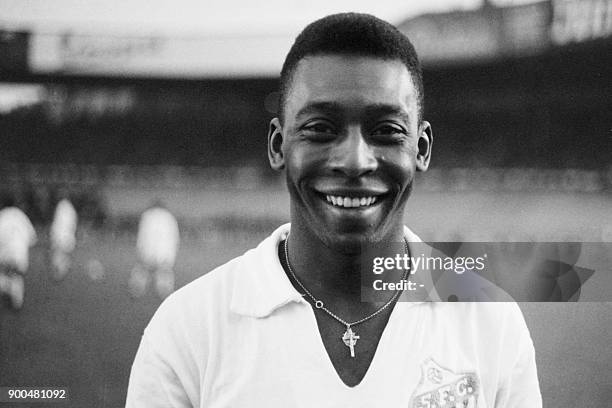
Eusébio shared a close friendship with Pelé, who called him "the greatest player I ever saw." His midfield partner at Benfica and Portugal was Mário Coluna, and his strike partner was José Torres. Coach Béla Guttmann signed him and led Benfica to the 1962 European Cup. Eusébio's son, Carlos Ferreira, manages his estate and public image.
Relationships & Dating History
Eusébio was married to Flora Claudina Burheim from December 28, 1965, until his death in 2014. They met through mutual friends in Lisbon and had a Catholic wedding ceremony. The couple had two children: Carlos (born 1966) and Sandra (born 1969). Their marriage lasted 48 years with no public reports of separation or divorce. As of 2026, Eusébio is deceased; at the time of his death, he was still married to Flora.
- MarriedFlora Claudina Burheim1965 - 2014Met through mutual friends in Lisbon; married in a Catholic ceremony; had two children together; remained married until Eusébio's death.
Death & Aftermath
Died
January 5, 2014 (aged 71)
Death Place
Lisbon, Portugal
Cause of Death
Heart failure
Eusébio da Silva Ferreira spent his final days receiving treatment for respiratory and cardiac complications at the Hospital de Santa Maria in Lisbon, having largely withdrawn from public view due to declining health. He passed away on January 5, 2014, at the age of 71, with official statements from his family and Benfica club officials confirming the event occurred following a period of hospitalization. The cause of death was reported as heart failure, a condition consistent with his long-standing health issues. Public reaction to his passing was immediate and global, characterized by an outpouring of grief from the football community, including tributes from FIFA, UEFA, Pelé, Franz Beckenbauer, and Cristiano Ronaldo.
The Portuguese government declared three days of national mourning, while fans gathered spontaneously outside the Estádio da Luz and the hospital to lay flowers and light candles. A moment of silence was observed during major football matches worldwide, honoring the man who led Portugal to a third-place finish at the 1966 World Cup. The funeral took place on January 8, 2014, in Lisbon as a state funeral held at the National Pantheon before his burial at the Cemitério dos Prazeres. The ceremony featured religious rites and eulogies attended by thousands of mourners, including President Aníbal Cavaco Silva and Prime Minister Pedro Passos Coelho, marked by a military honor guard and the playing of the national anthem.
Posthumously, the stadium where he played his entire club career was renamed the Estádio da Luz, Eusébio in 2015, and a statue now stands prominently outside the ground. The Eusébio Foundation continues to operate focusing on social projects and youth football development in Mozambique and Portugal, while several books and documentaries have been released analyzing his 1966 performance. His estate remains managed privately without public dispute.
Net Worth (Estate Value)
$10 Million
iFANN Editorial Team estimate
Per iFANN's editorial analysis, Eusébio da Silva Ferreira had an estimated net worth of $10 Million at the time of his death in 2014. This figure represents the accumulated value of his illustrious playing career, most notably his tenure with Benfica, where he earned substantial salaries and bonuses throughout his prime. Additionally, he benefited from various endorsement deals and public appearances, though specific figures from those contracts are not publicly detailed. Following his retirement, Eusébio served as a global ambassador for football, a role that provided ongoing income and sustained his financial standing until his passing. His net worth reflects a lifetime of achievement in the sport, with earnings derived from contracts, endorsements, and later ambassadorial roles contributing to his financial legacy.
Awards Won (20)
Eusébio won the Ballon d'Or in 1965 and was the first recipient of the European Golden Boot, which he claimed in 1968 and 1973. He earned the World Cup Golden Boot in 1966 with nine goals and was the European Cup top scorer three times. Domestically, he won the Bola de Prata a record seven times. He was named Portuguese Footballer of the Year six times. In 2003, UEFA named him the Golden Player of Portugal, and in 2004 he was included in the FIFA 100 list by Pelé.
1965 · Best Player
Benfica / Portugal
1973 · Top Scorer
Benfica
1968 · Top Scorer
Benfica
Known For
1966 FIFA World Cup
1966 · Portugal striker (9 goals, Golden Boot)
Benfica
1961 · Striker (all-time top scorer, 473 goals)
Ballon d'Or
1965 · Recipient
European Cup
1962 · Winning goalscorer in final
Keywords
Quick Facts
- Profession
- association football player, athlete
- Born
- +1942-01-25
- Birthplace
- Maputo
- Died
- +2014-01-05
- Death Place
- Lisbon
- Gender
- Male
- Spouse
- Flora Claudina Burheim
- Birth Sign
- Aquarius
Personal Details
- Full Name
- Eusébio da Silva Ferreira
- Height
- 5 ft 9 in (175 cm)
- Spouse
- Flora Claudina Burheim
- Children
- Carlos Ferreira (son, born 1966), Sandra Ferreira (daughter, born 1969)
Frequently Asked Questions
How old was Eusébio when he died?
What is Eusébio's net worth in 2026?
Was Eusébio married?
Why is Eusébio considered one of the greatest footballers of all time?
How many goals did Eusébio score at the 1966 World Cup?
Similar People

Join the community
fans discussing