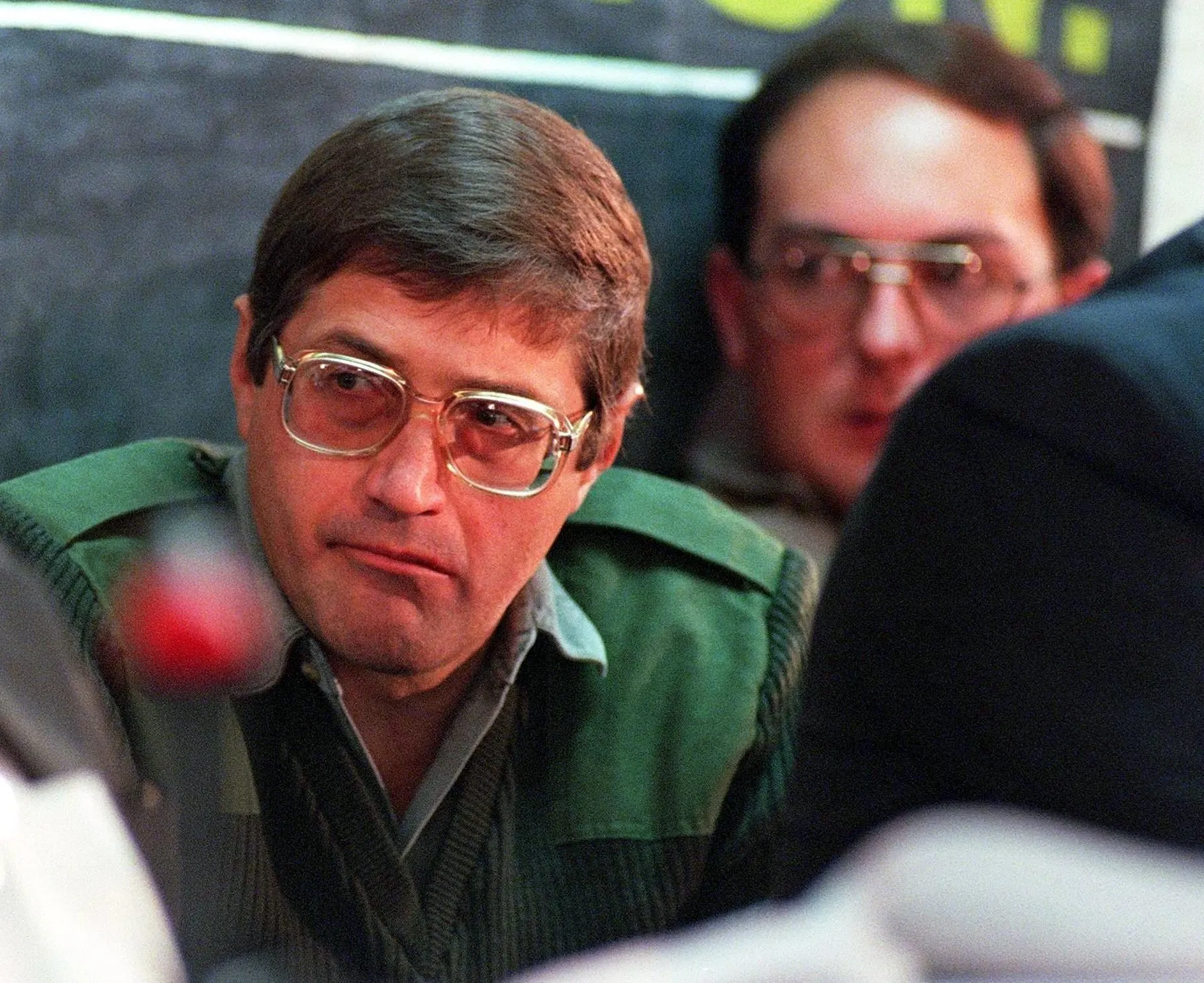
Eugene de Kock
 South Africa
Former South African Police colonel
Also known as: Prime Evil, Eugene Alexander de Kock
Birthday
January 29, 1949
Birth Sign
Aquarius
Birthplace
South Africa
Age
77 years old
About
Eugene Alexander de Kock is a former South African Police colonel who commanded the apartheid-era death squad C10, based at Vlakplaas. Known by the press moniker "Prime Evil," he oversaw operations that kidnapped, tortured, and killed anti-apartheid activists, many of them members of the African National Congress, from the 1980s into the early 1990s. His name has become synonymous with the brutality of the apartheid state's security apparatus.
After South Africa's transition to democracy, de Kock testified before the Truth and Reconciliation Commission, detailing his crimes and the suffering of victims' families. In 1996, he was convicted on 89 charges and sentenced to two concurrent life terms plus an additional 212 years in prison. He was granted parole in January 2015 after serving nearly two decades. As of 2026, he remains a controversial and ailing figure, testifying at inquests and facing renewed public scrutiny.
Early Life & Background
Eugene de Kock was born on 29 January 1949 in South Africa, into a white Afrikaner community during the height of apartheid's institutionalization. Details of his childhood and formal education are sparse, but he rose through the ranks of the South African Police (SAP), becoming deeply embedded in the state's counterinsurgency apparatus. His early career in the SAP likely involved routine policing before he was drawn into covert operations, eventually earning command of C10, a specialized unit tasked with eliminating anti-apartheid activists.
By the early 1980s, de Kock had become a key figure in the SAP's covert operations, leading cross-border raids and overseeing the interrogation and elimination of political opponents. His transformation from a police officer to a death-squad commander was gradual, shaped by the apartheid government's increasing reliance on extrajudicial methods to suppress dissent.
Career Growth
De Kock's career as commander of C10 at Vlakplaas defined his legacy. Under his direction, the unit conducted abductions, torture, and killings of anti-apartheid activists. One of the most notorious operations was the December 1985 Maseru raid in Lesotho, where Vlakplaas members shot and killed activists, including the sister of a victim who later testified. He was also implicated in the 1985 abduction and murder of the Cradock Four, though he has denied direct involvement in those specific killings.
After the transition to democracy, de Kock began revealing the extent of C10's operations, testifying before the Truth and Reconciliation Commission in 1996. His testimony implicated high-ranking officials, including former State President F. W. de Klerk, in sanctioning the unit's activities. In 1996, he was convicted on 89 charges, including murder, and sentenced to two life terms plus 212 years. He received a pardon for a bombing conviction in 1999 from the TRC, and was granted parole in January 2015.
In March 2026, de Kock testified at the Cradock Four inquest in the Gqeberha High Court, denying direct involvement in those murders and claiming that orders to kill came from former State President P. W. Botha. He also told the court that President Cyril Ramaphosa was named on an apartheid assassination list. His testimony was marked by his frail health, suffering from heart failure.
Career Timeline
Public Image & Style
Eugene de Kock's public image is overwhelmingly negative. He is described as a "torturer," "assassin," and "death-squad leader," with his name evoking the brutality of apartheid. Victims' families have spoken of being forced to relive the torture and extrajudicial killings through his social media posts, which have caused distress. He has no fandom; his legacy is one of infamy rather than admiration. In media coverage, he is often referred to as "Prime Evil," a moniker that encapsulates the public's perception of his role in the apartheid regime.
Fame & Fandom (iFAMOUS Rankings)
Eugene de Kock commands a singular and grim form of global attention, his notoriety persisting across decades as a definitive symbol of state-sanctioned brutality. Within the specific domain of historical criminality, he is the 60th most famous person in True Crime, a placement that has held steady through recent assessment cycles. This standing within the iFANN Global Fame Rankings reflects a consistent level of public engagement driven by ongoing legal proceedings, academic scrutiny, and the enduring trauma inflicted upon victims' families. His presence in media coverage remains intense, often triggered by new testimonies or social media activity that reopens historical wounds, ensuring his name remains prominent in discussions regarding apartheid-era crimes.
Despite this pervasive recognition, de Kock possesses no organized fanbase or fandom. There is no documented group of admirers, nor any formalized community dedicated to his legacy. The individuals who engage with his story do so through the lens of justice, historical analysis, or victim advocacy rather than admiration. No rituals, campaigns, or celebratory events exist in his honor; instead, his public interactions are characterized by confrontation and the demand for accountability. He remains an object of infamy rather than celebrity, with his reputation anchored entirely in the atrocities he committed and the subsequent revelations of the Truth and Reconciliation Commission.
Interesting Facts and Legends
The press moniker "Prime Evil" has adhered to Eugene de Kock throughout his imprisonment and subsequent parole, serving as a shorthand for his role as the commander of the C10 death squad at Vlakplaas. Journalist outlets have further characterized his trajectory as that of a "Judas goat," a metaphor for one who leads others to slaughter. Academic interest in his case persists, highlighted by a 2024 peer-reviewed article in English Studies in Africa titled "Uncanny Times: The Case of Eugene de Kock." A stage play featuring actor Matthew Marsh also dramatizes his life, cementing his place in cultural discourse beyond the courtroom. In 1999, he received a pardon from the Truth and Reconciliation Commission for a bombing conviction, joining former minister Adriaan Vlok and other officials in this controversial decision. His continued digital presence, specifically activity reported in July 2026, has been noted for causing renewed distress among victims' families.
Recent legal proceedings have added new layers to the historical record surrounding de Kock. During the March 2026 Cradock Four inquest in Gqeberha High Court, he testified under oath, denying direct involvement in the killings while admitting to facilitating cover-ups. In these hearings, he alleged that orders originated from former State President P.W. Botha and claimed that current President Cyril Ramaphosa was on an assassination list, assertions that drew large crowds of activists and survivors seeking truth. These testimonies revealed details about the secret kill chain of the apartheid regime, reinforcing his status as a central figure in the architecture of state terror rather than a mere footnote in history.
Notable Quotes
“Orders to kill came from PW Botha.”
“I am not directly involved in the Cradock Four murders.”
“President Cyril Ramaphosa was named on an apartheid assassination list.”
Family & Personal Life
Public records offer little about de Kock's family background, including his parents or siblings. His personal life has been overshadowed by his criminal career and imprisonment. As of 2026, no information is available about his spouse, children, or current household. His relationships, if any, have not been documented in the sources reviewed.
Notable Connections
Eugene de Kock is associated with several high-ranking apartheid officials. He implicated former State President F. W. de Klerk in sanctioning C10's activities, and identified P. W. Botha as the source of orders to kill. He was pardoned alongside former law and order minister Adriaan Vlok and former police chief Johan van der Merwe in 1999. In 2026, he testified that President Cyril Ramaphosa was named on an apartheid assassination list. Actor Matthew Marsh portrayed him in a stage play.
Relationships & Dating History
No public information is available about Eugene de Kock's dating history, marriages, or romantic relationships. His public profile has been dominated by his criminal and legal history, and the sources reviewed do not document any spouses, partners, or children. As of 2026, his relationship status is unknown.
Salary, Net Worth In 2026
As a former prisoner granted parole in 2015 and now an ailing elderly man testifying at inquests, he has no documented commercial ventures, endorsements, or business interests. His financial status is not a matter of public record, and no estimates are available from celebrity-net-worth sites or financial outlets.
Awards & Accolades
Known For
Command of C10 death squad at Vlakplaas
1980s-1990s · Commander
Conviction on 89 charges including murder
1996 · Defendant
Testimony at Cradock Four inquest
2026 · Witness
Keywords
Sources
Quick Facts
- Profession
- Former South African Police colonel
- Born
- January 29, 1949
- Birthplace
- South Africa
- Gender
- Male
- Birth Sign
- Aquarius
- Convicted
- 89 charges, 1996
- Paroled
- January 30, 2015
Personal Details
- Full Name
- Eugene Alexander de Kock
Frequently Asked Questions
Who is Eugene de Kock?
Why is Eugene de Kock called Prime Evil?
Is Eugene de Kock still in prison?
What did Eugene de Kock do?
How old is Eugene de Kock?
Similar People
Join the community
fans discussing