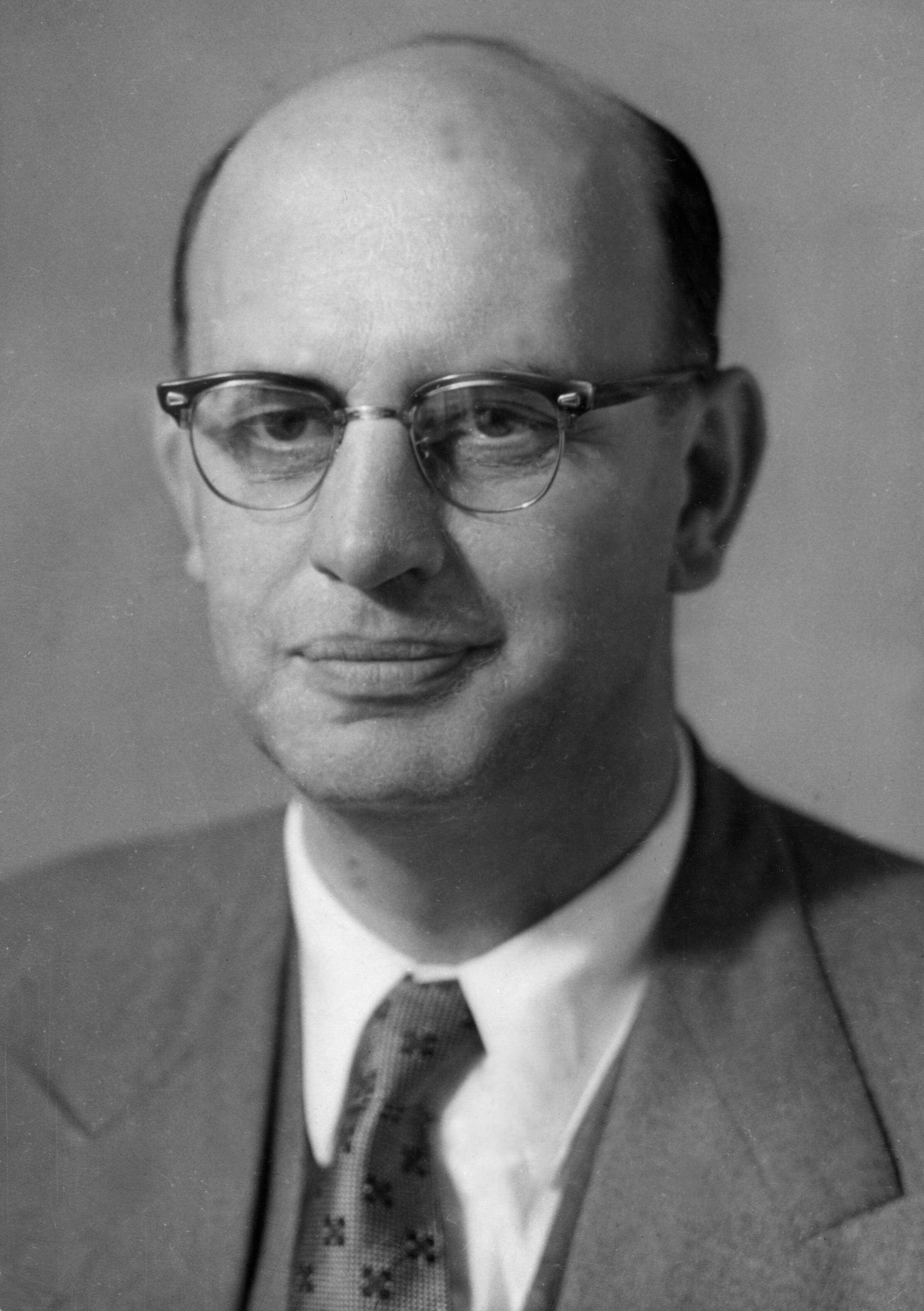
P. W. Botha
 South Africa
Birthday
+1916-01-12
Birth Sign
Capricorn
Birthplace
Paul Roux
Age
Died at 90
About
Pieter Willem Botha, born on 12 January 1916 on a small farm near Paul Roux in the Orange Free State, was a South African politician who served as the country's last Prime Minister from 1978 to 1984 and then as its first executive State President until his resignation in 1989. Nicknamed 'Die Groot Krokodil' (Afrikaans for 'The Big Crocodile') for his unyielding political stance, he is remembered as the final hardline leader of the apartheid era. Botha grew up in a conservative Afrikaner family with strong nationalist beliefs. He studied law at Grey University College but left before completing his degree to pursue a career in politics. He joined the National Party's youth wing and worked as a political organizer, quickly rising through the ranks. In 1939, he became a member of the Ossewabrandwag, an organization sympathetic to the German Nazi Party, but was expelled in 1941 after he began identifying as a Christian nationalist. In the 1948 general election, he won a seat in the House of Assembly representing George, a position he held for over four decades. His influence grew, and in 1958, Prime Minister Hendrik Verwoerd appointed him Deputy Minister of Internal Affairs. Three years later, he became Minister of Community Development and Coloured Affairs, overseeing forced removals, including the controversial clearance of District Six in Cape Town. In 1966, Prime Minister John Vorster made him Minister of Defence, a role in which he transformed the South African Defence Force, boosting military spending, implementing conscription, and launching covert operations against anti-apartheid movements. He also played a key part in South Africa's nuclear weapons program and its military interventions in Angola and Namibia during the Cold War. Botha took over as Prime Minister on 4 September 1978, following Vorster's resignation, and soon became known for his tough, uncompromising approach. He focused on maintaining apartheid through military expansion and internal security measures while introducing limited reforms, such as the Tricameral Parliament in 1983, which gave limited political representation to Coloured and Indian South Africans but excluded Black South Africans entirely. The 1983 referendum on this new parliament passed with white voters' support. In 1984, Botha became South Africa's first executive State President, consolidating executive power and continuing apartheid policies. His presidency faced mounting internal unrest, protests, and international sanctions. After suffering a stroke in January 1989, he resigned as leader of the National Party and later as State President, handing over to F. W. de Klerk. After leaving office, Botha remained a vocal opponent of the reforms initiated by de Klerk, particularly the negotiations to dismantle apartheid and the unbanning of the African National Congress. He advocated a 'no' vote in the 1992 referendum on continued reform. In the late 1990s, he faced legal challenges related to his role in apartheid-era policies, notably during the Truth and Reconciliation Commission hearings, where he was called to account but refused to cooperate fully. His health declined over the years, and he died on 31 October 2006 at the age of 90.
Fame & Fandom
P. W. Botha's legacy has never been the stuff of fan clubs or streaming campaigns. There is no organized fandom with a name, no annual commemorative events, no fan-produced tributes. What endures instead is a contested public memory: his nickname "Die Ou Krokodil" (The Old Crocodile) still circulates in South African political discourse, and a persistent movement in George, Western Cape, has repeatedly defeated attempts to rename PW Botha Boulevard, most recently in April 2026. That preservationist impulse, rather than any fan culture, keeps his name in public life.
In the broader landscape of global fame, Botha's historical footprint remains measurable. He is the 37th most famous person from South Africa, a placement that has held steady from the previous cycle, according to the iFANN Global Fame Rankings. That standing reflects the enduring weight of his role as the last hardline apartheid leader. No other ranking placements are documented for him.
Botha's fame is thus not the warmth of celebrity but the chill of historical notoriety, a figure whose name still provokes debate, whose street signs are fought over, and whose place in the global memory is fixed by the era he embodied.
Interesting Facts and Legends
Botha's most iconic moment remains the Rubicon Speech, delivered in 1985. The world expected sweeping reforms; instead, he delivered a defiant refusal to commit to change, triggering a rand collapse and tightened sanctions. A 2026 retrospective revealed he had suffered a secret stroke before the speech, adding a tragic layer to the story.
His blunt "Adapt or die" warning to white South Africans became a legendary encapsulation of his reform-to-preserve strategy, though its exact first usage is debated.
After his presidency, Botha refused to testify before the Truth and Reconciliation Commission, reportedly telling it to "go to hell." He was convicted of contempt in 1998, though the conviction was later overturned on a technicality, a final act of defiance that cemented his unrepentant image.
In March 2026, apartheid-era assassin Eugene de Kock claimed that orders to kill came directly from Botha, sparking renewed calls to remove his name from public spaces, though the claim remains contested.
Death & Aftermath
Died
+2006-10-31 (aged 90)
Death Place
George, Western Cape, South Africa
Cause of Death
Complications from a stroke
The passing of Pieter Willem Botha elicited a response defined by deep division rather than unified mourning, reflecting his status as the final hardline architect of apartheid. International media outlets such as The Guardian and the Los Angeles Times published obituaries characterizing him as an unapologetic leader who oversaw South Africa's worst racial violence, while tributes remained confined to the conservative Afrikaner community. Anti-apartheid activists and black South Africans viewed the event with little sentimentality, focusing instead on the end of an era for state-sanctioned segregation. Botha died peacefully at his home, Die Anker, near George in the Western Cape province on October 31, 2006, at the age of 90. A funeral service was held on November 7, 2006, at the Groote Kerk in Cape Town before burial at the Wolmaransstad Cemetery in the Northern Cape, attended by former government officials including President Thabo Mbeki.
The event combined state protocol with private observance but lacked the mass gatherings typical of state funerals for other leaders. Posthumous attention has focused almost entirely on the re-evaluation of his legacy rather than financial settlements or new works created in his honor. Recent reports indicate ongoing debates regarding the renaming of locations bearing his name, such as PW Botha Boulevard in George, driven by testimony from Eugene de Kock linking Botha to assassination orders against anti-apartheid activists.
Awards & Accolades
Keywords
Quick Facts
- Profession
- politician, minister
- Born
- +1916-01-12
- Birthplace
- Paul Roux
- Died
- +2006-10-31
- Death Place
- Wilderness
- Gender
- Male
- Spouse
- Anna Elizabeth Botha
- Birth Sign
- Capricorn
Personal Details
- Spouse
- Anna Elizabeth Botha
Join the community
fans discussing