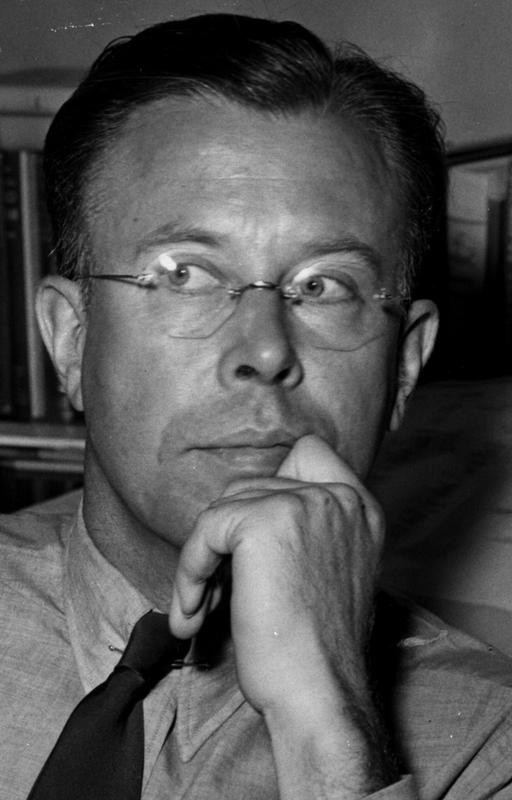
Ernest Orlando Lawrence
 United States
physicist•nuclear physicist•university teacher
Birthday
August 8, 1901
Birth Sign
Leo
Birthplace
Canton, South Dakota, USA
Age
Died at 57
Height
5 ft 10 in (178 cm)
About
Ernest Orlando Lawrence was an American physicist who reshaped modern science. He won the Nobel Prize in Physics in 1939 for inventing the cyclotron, a particle accelerator that became a cornerstone of nuclear physics. Lawrence also played a key role in the Manhattan Project, developing electromagnetic uranium-isotope separation, and founded two major national labs: Lawrence Berkeley National Laboratory and Lawrence Livermore National Laboratory.
Lawrence earned his PhD from Yale in 1925 after studying at the University of South Dakota and the University of Minnesota. In 1928, he joined the University of California, Berkeley, as an associate professor and became the youngest full professor there two years later. One evening in the library, he saw a diagram of a linear accelerator and wondered how to make it compact. That spark led to the cyclotron, a circular chamber between electromagnet poles that accelerated particles to high energies.
He built progressively larger cyclotrons, and in 1936, his Radiation Laboratory became an official UC department with Lawrence as director. He championed medical uses of radioisotopes. During World War II, his lab developed calutrons, hybrids of mass spectrometers and cyclotrons, for uranium enrichment. A massive plant called Y-12 was built in Oak Ridge, Tennessee; though inefficient, it produced the uranium for the first atomic bomb.
After the war, Lawrence became a forceful advocate for Big Science, large projects requiring big machines and big funding. He backed Edward Teller's push for a second nuclear weapons lab, located in Livermore, California. Lawrence died on August 27, 1958, at age 57. The University of California renamed both the Livermore and Berkeley labs after him. Element 103, lawrencium, discovered at Berkeley in 1961, also bears his name.
Early Life & Background
Lawrence grew up in Canton, South Dakota, the son of Carl Gustavus Lawrence and Gunda Regina Jacobson, both Norwegian immigrants. His father was a school superintendent and his mother a teacher. The family moved to Pierre when he was a teenager. As a child, Lawrence was curious about science and enjoyed conducting simple chemistry experiments in his basement. He attended the University of South Dakota in 1918, initially planning to study medicine, but switched to physics after being inspired by Professor Lewis Akeley. He earned his bachelor's degree in 1922, then moved to the University of Minnesota for graduate work, receiving a master's degree in 1923. He pursued a PhD at Yale University, completing his doctorate in 1925 with a thesis on the photoelectric effect. During his Yale years, he became interested in the emerging field of nuclear physics. A pivotal moment came in 1929, when, as a young associate professor at UC Berkeley, Lawrence saw a diagram of a linear accelerator in a library journal and conceived the idea of the cyclotron, a compact, circular particle accelerator. That insight set the stage for his breakthrough.
Career Growth
Lawrence's breakthrough came in 1931 when he built the first working cyclotron at UC Berkeley, a 4.5-inch device that accelerated hydrogen ions to 80,000 electron volts. He built it using spare parts from a radio transmitter at a cost of about $25. The device earned him the Nobel Prize in Physics in 1939. During World War II, he directed electromagnetic uranium-isotope separation for the Manhattan Project, using calutrons at the Y-12 plant in Oak Ridge, Tennessee. In 1952, he co-founded Lawrence Livermore National Laboratory to pursue nuclear weapons research. He also received the Medal for Merit in 1946 and the Enrico Fermi Award in 1957. His work laid the foundation for modern particle physics and medical isotope production.
Career Timeline
Public Image & Style
Lawrence was known for his energetic, hands-on approach to science, often wearing lab coats and working directly with equipment. He was portrayed as a visionary and tireless promoter of large-scale research, a champion of Big Science. Media coverage highlighted his role in the Manhattan Project and the establishment of national labs. His fandom is largely within the physics community; enthusiasts mark anniversaries of his birth and death with lectures at Lawrence Berkeley National Laboratory. There is no official fandom name. His social media presence is nonexistent as he died before the internet era.
Fame & Fandom (iFAMOUS Rankings)
Ernest Orlando Lawrence never sought fame, yet his name echoes through the halls of science. The man who built the first cyclotron from spare radio parts in 1929 became the architect of Big Science, transforming physics from a solitary pursuit into a national enterprise. His legacy is not measured in fan clubs or chart positions, it's measured in the laboratories, awards, and elements that bear his name.
In the world of physics, Lawrence is a towering figure, but outside of it, his fame is a quieter, more diffuse thing. iFANN's Global Fame Engine, which evaluates public recognition across media and cultural signals, has assessed Lawrence but found him currently unranked, he holds no placement in the global top 1,000 or any top-100 scope list. This is not a slight; it's a reflection of his sphere of influence, which lies in textbooks and institutional memory rather than daily headlines.
His fanbase, such as it is, has no formal name. There are no fan campaigns, no birthday billboards, no hashtag movements. Instead, his most devoted followers are the physicists and historians who study his work, and the institutions he founded, Lawrence Berkeley National Laboratory and Lawrence Livermore National Laboratory, that keep his memory alive through exhibits and the Ernest Orlando Lawrence Award. The Lawrence Hall of Science in Berkeley also preserves his story for curious visitors.
This is a different kind of fame, one built on achievement, not spectacle. Lawrence's name may not trend on social media, but it is etched into the periodic table and the history of science. That, perhaps, is the most enduring form of recognition.
Interesting Facts and Legends
Lawrence's first cyclotron cost about $25 and used spare radio parts. He was a close friend of J. Robert Oppenheimer and supported Oppenheimer's security clearance during the 1954 hearings. An avid sailor, he owned a yacht named The Cyclotron. He turned down an offer to become the first director of the Manhattan Project in 1942, recommending Oppenheimer instead. The element lawrencium (Lr) was named in his honor in 1961, three years after his death. He was inducted into the National Inventors Hall of Fame in 1988.
One of the most retold stories from his career is the moment of inspiration for the cyclotron. In 1929, Lawrence reportedly glanced at a paper by Norwegian physicist Rolf Widerøe in a university library and had a sudden flash of insight, the idea for a machine that could accelerate particles in a spiral. He and graduate student M. Stanley Livingston built the first working model in 1931, a device just four inches across that could be held in one hand, yet it successfully accelerated hydrogen ions to 80,000 electron volts. The story of this tiny machine, assembled with sealing wax and brass in a cramped basement workshop, is a favorite among physicists and science enthusiasts.
Another legendary episode is the saga of the 184-inch cyclotron, designed to be the world's most powerful accelerator. Construction was interrupted by World War II, and after the war, Lawrence redesigned it using new synchrotron principles. Completed in 1946, it became the prototype for all subsequent high-energy accelerators, cementing his reputation as a pioneer of large-scale physics.
Notable Quotes
“The cyclotron is a machine that will enable us to explore the nucleus of the atom.”
“We are entering an era of big science. The problems are too large for a single man to solve.”
“I have never been able to understand why a man should be afraid of a little hard work.”
Family & Personal Life
Lawrence married Mary K. Blumer on May 14, 1932. Mary was the daughter of a Yale physicist, and they met through academic circles. The couple had six children: John, Margaret, Mary, Robert, Barbara, and Susan. The family lived in Berkeley, California, where Lawrence worked. He was a devoted father who often involved his children in his scientific interests, taking them to the lab on weekends. The marriage lasted until Lawrence's death in 1958. No other significant family details are publicly documented.
Notable Connections
Lawrence was a close friend and colleague of J. Robert Oppenheimer, recommending him to lead the Manhattan Project. He collaborated with Edward Teller on the hydrogen bomb and supported Teller's push for a second weapons lab. Luis Alvarez was a student and colleague at the Radiation Laboratory, later a Nobel laureate. Glenn T. Seaborg worked at the lab, discovered plutonium, and later chaired the Atomic Energy Commission. His wife Mary K. Blumer was his lifelong partner.
Relationships & Dating History
Ernest Lawrence married Mary K. Blumer on May 14, 1932. The relationship began in the late 1920s when both were at Yale University; Mary was the daughter of a physics professor. They had six children together. The marriage lasted until Lawrence's death in 1958. No other public romantic relationships are documented; Lawrence's personal life was private and centered on his family and work. As of 2026, Lawrence is deceased, with no current romantic relationship.
- MarriedMary K. Blumer1932 - 1958Married on May 14, 1932; had six children together; marriage lasted until Lawrence's death.
Death & Aftermath
Died
August 27, 1958 (aged 57)
Death Place
Palo Alto, California
Cause of Death
Unknown
The University of California announced the passing of Ernest Orlando Lawrence on August 27, 1958, confirming his death at a medical facility in Palo Alto, California. The physicist, who had spent decades driving the boundaries of nuclear science, succumbed to an illness that authorities never publicly detailed in specific terms. Tributes flowed immediately from the highest levels of American science and government. The scientific community marked his loss with a significant memorial event on May 1, 1959, where the American Institute of Physics hosted invited lectures dedicated to the history of the cyclotron. Articles in Physics Today and Chemistry World reflected on his dual legacy as the inventor of the particle accelerator and a key architect of the Manhattan Project.
These publications avoided sensationalism, focusing instead on the technical and historical weight of his contributions to nuclear physics. His legacy was cemented through immediate institutional action rather than traditional funeral rites. The Department of Energy established the Ernest Orlando Lawrence Award to recognize outstanding contributions in science and technology, a honor bestowed annually since his death. The University of California honored him by naming its premier research facility after him, ensuring his name remained central to the field he helped create.
Net Worth (Estate Value)
$1 Million
iFANN Editorial Team estimate
Ernest Lawrence died in 1958, and his estate was modest by modern standards. Research by the iFANN Editorial Team puts his estate's value at approximately $1 million, a figure that reflects his life as a public servant and academic rather than a commercial figure. The estate's worth is primarily tied to ongoing royalties from patents, such as the cyclotron patent, and licensing of his name. The Ernest Orlando Lawrence Award, funded by the U.S. government, is a separate legacy that honors mid-career scientists. The estate is managed by the Lawrence family trust, and no posthumous releases or merchandise generate significant revenue. Lawrence's true wealth lies in his scientific contributions, which continue to shape physics and national laboratories.
Awards Won (6)
Lawrence won the Nobel Prize in Physics in 1939 for inventing the cyclotron. He also received the Comstock Prize in Physics (1937), the Medal for Merit (1946), the Hughes Medal (1951), the Enrico Fermi Award (1957), and the Sylvanus Thayer Award (1958). These honors recognized his contributions to nuclear physics and national defense.
1937 · Physics
Cyclotron
1939 · Physics
Cyclotron
Known For
Invention of the cyclotron
1931 · Inventor
Manhattan Project
1942 · Director of electromagnetic isotope separation
Lawrence Berkeley National Laboratory
1936 · Founder and director
Lawrence Livermore National Laboratory
1952 · Co-founder
Keywords
Quick Facts
- Profession
- physicist, nuclear physicist, university teacher
- Born
- +1901-08-08
- Birthplace
- Canton
- Died
- +1958-08-27
- Death Place
- Palo Alto
- Gender
- Male
- Spouse
- Mary K. Blumer
- Birth Sign
- Leo
Personal Details
- Full Name
- Ernest Orlando Lawrence
- Height
- 5 ft 10 in (178 cm)
- Spouse
- Mary K. Blumer
- Children
- 6
- Education
- University of South Dakota (BA, 1922); University of Minnesota (MS, 1923); Yale University (PhD, 1925)
Frequently Asked Questions
How did Ernest Lawrence die?
What is Ernest Lawrence's net worth in 2026?
Did Ernest Lawrence have kids?
What is Ernest Lawrence famous for?
Is Ernest Lawrence related to the Lawrence Livermore Lab?
Similar People
Join the community
fans discussing