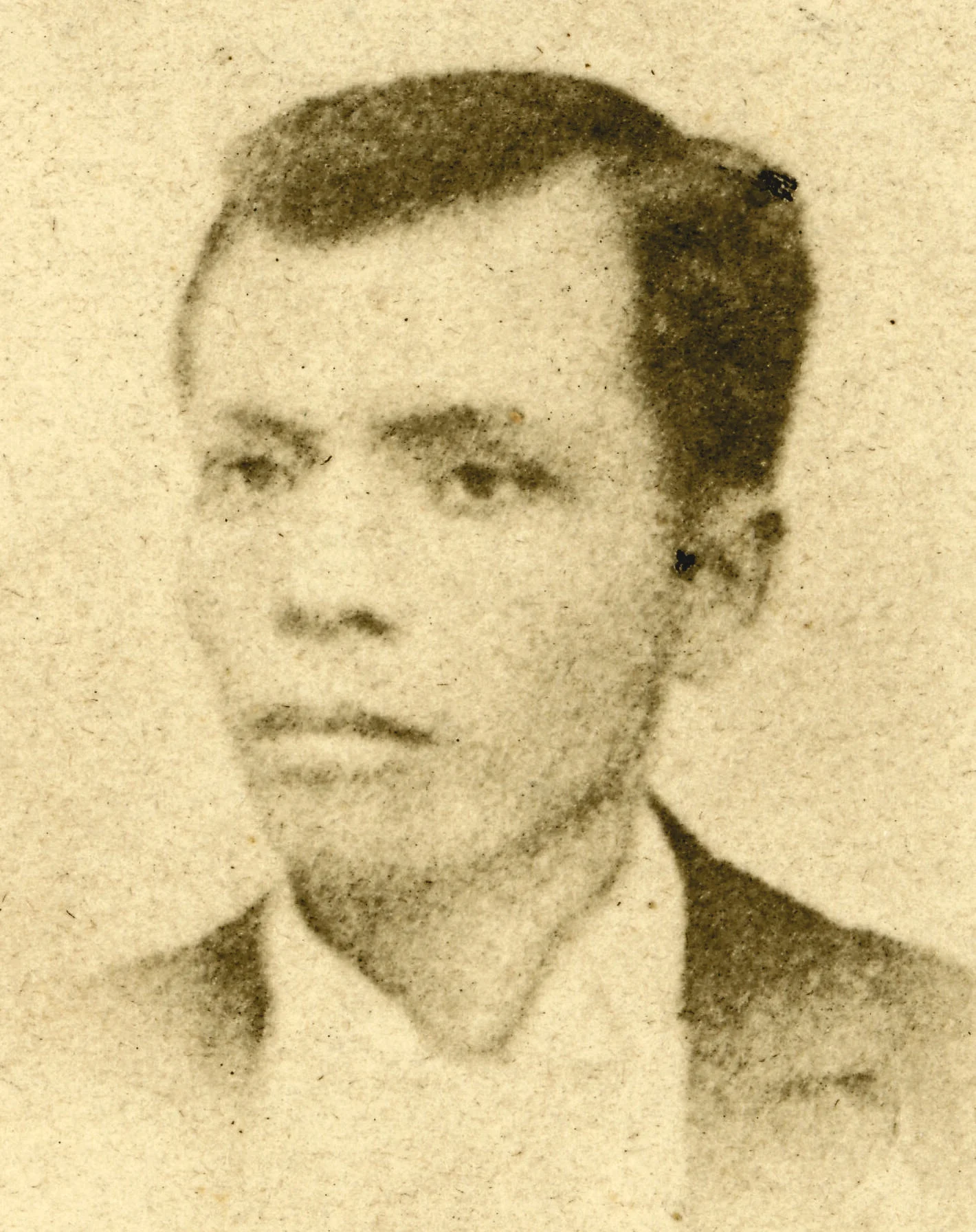
Andrés Bonifacio
 Philippines
Revolutionary leader•President of the Tagalog Republic
Also known as: Supremo, May pag-asa, Father of the Philippine Revolution
Birthday
November 30, 1863
Birth Sign
Sagittarius
Birthplace
Tondo, Manila, Philippines
Age
Died at 33
About
Andrés Bonifacio was a Filipino revolutionary leader who founded the Katipunan and sparked the Philippine Revolution against Spanish colonial rule. Known as the Father of the Philippine Revolution, he is a national hero in the Philippines, celebrated for his unwavering commitment to independence. Bonifacio rose from a working-class background in Tondo to become the Supremo of a secret society that grew to 100,000 members, leading the armed struggle that began in 1896. His leadership and vision for a sovereign nation changed the course of Philippine history, and his legacy endures through monuments, a national holiday, and the naming of Bonifacio Global City.
Bonifacio's revolutionary fervor and charismatic leadership inspired thousands to join the cause, but internal conflicts soon plagued the movement. Rivalries with other revolutionary leaders, particularly Emilio Aguinaldo, led to a power struggle that culminated in Bonifacio's arrest and trial. A military court found him guilty of sedition and treason, and he was executed on May 10, 1897, at the age of 33. Despite his tragic end, Bonifacio is remembered as a passionate advocate for freedom and equality, and his birthday, November 30, is a national holiday in the Philippines.
Early Life & Background
Born in Tondo, Manila, on November 30, 1863, Andrés Bonifacio was the eldest of six children. His father, Santiago, was a tailor, local politician, and boatman; his mother, Catalina de Castro, was a Spanish mestiza who worked in a cigarette factory. The family struggled financially, and when both parents died, his mother of tuberculosis in 1881 and his father the following year, Bonifacio, at just 19, became the sole breadwinner for his five younger siblings.
Bonifacio had little formal schooling, attending only a private school run by Guillermo Osmeña, where he learned English while working as a clerk-messenger for a British firm. Despite this, he was exceptionally well-read, devouring José Rizal's novels, the Bible, and a history of the French Revolution. He worked as a broker for J.M. Fleming & Co., trading raw materials like tar and rattan, then as a warehouse keeper for Fressell & Co. He also made canes and paper fans to sell, and even acted in Tagalog plays, playing the mythical hero Bernardo Carpio. These early experiences shaped his deep empathy for the working class and his belief in armed revolution as the path to freedom.
Career Growth
Bonifacio's revolutionary path began with his involvement in La Liga Filipina, a reformist group founded by José Rizal. Unlike Rizal, who sought reform within Spanish rule, Bonifacio concluded that only armed revolution could achieve independence. On July 7, 1892, the day after Rizal's deportation, Bonifacio and others founded the Katipunan, a secret society modeled on Masonic rituals. He rose through its ranks, becoming its third Supremo in 1895. Under his leadership, the Katipunan grew to an estimated 100,000 members across Luzon and the Visayas.
In August 1896, Bonifacio launched the revolution, beginning with the famous Cry of Pugad Lawin, where he and his followers tore their tax certificates as a symbol of defiance. Although his forces were defeated in early battles, he reorganized the Katipunan into a revolutionary government, declaring himself president of the Sovereign Tagalog Nation. This move positioned him as the first leader of a Filipino revolutionary government, though it also fueled rivalry with Emilio Aguinaldo, who was elected president at the Tejeros Convention in March 1897. Bonifacio refused to recognize the result, leading to his arrest and execution on charges of treason in May 1897.
Career Timeline
Public Image & Style
In Philippine culture, Bonifacio is portrayed as the passionate, working-class revolutionary, the Supremo who rose from poverty to lead a national movement. Unlike the intellectual reformist José Rizal, Bonifacio represents the radical, action-oriented path to independence. He is often depicted with a bolo and the Katipunan flag, symbols of armed struggle. His image is that of a man of action, celebrated for his unwavering commitment to complete independence. In schools, he is taught as a national hero whose sacrifice inspires patriotism. His birthday, November 30, is a national holiday, and monuments like the Bonifacio Monument in Caloocan and the Bonifacio Global City in Taguig honor his memory.
Fame & Fandom
Andrés Bonifacio remains a towering figure in Philippine history, his legacy cemented not by modern marketing but by the enduring weight of national identity. The iFANN Global Fame Rankings confirm his stature as the 7th most famous person in Philippines, a position he has held steady across recent cycles. His influence extends beyond borders, marking him as the 28th most famous person from Philippines and placing him at the 60th most famous person in Southeast Asia. These rankings reflect a collective reverence that transcends typical celebrity worship, tracking global attention through decades of historical scholarship, state-sponsored education, and cultural production.
Unlike modern stars with organized fan clubs, Bonifacio is revered by the entire citizenry of the Philippines rather than a specific fandom. There is no official name for his followers; instead, the nation itself acts as his audience through institutionalized remembrance. Annual observances like Bonifacio Day transform civic duty into a unified national rally, while productions such as the Philippine Ballet Theatre's "Andres KKK" serve as cultural rites of passage. His story is kept alive not by streaming campaigns or subway ads, but by government speeches, school curricula, and the continued honor bestowed upon him by Freemasons worldwide. This unique form of fandom operates as a solemn commitment to sovereignty, ensuring his image as the Supremo remains vibrant long after his execution in 1897.
Interesting Facts and Legends
Andrés Bonifacio was a skilled Freemason whose organizational methods were heavily influenced by Masonic practices. Within the secret society, he operated under the pseudonym 'May pag-asa,' which translates to 'There is Hope.' Before dedicating his life to revolution, he worked as a poster maker for business firms, a trade skill inherited from his family. Recent historical research suggests the Katipunan may have been founded as early as January 1892, challenging the traditional July date often cited. He was also an avid reader of the French Revolution, which deeply shaped his ideological framework, and possessed a talent for theater, notably playing the role of Bernardo Carpio in Tagalog mythology performances.
Legends surrounding him transform verified events into cultural mythology. One iconic moment involves the Cry of Balintawak, where he led the tearing of cedulas, symbolizing the rejection of Spanish authority. While the exact location remains debated, the image of him shouting 'Long live the Philippines!' has become a staple of national iconography. Another defining narrative centers on the Tejeros Convention, where his refusal to accept election results favoring Emilio Aguinaldo painted him as a principled hero betrayed by his own men. His final legend is rooted in his execution at Maragondon in May 1897, where folklore claims he shouted revolutionary slogans until the end, cementing his status as a martyr for sovereignty.
Notable Quotes
“Kalayaan! (Freedom!)”
“Pag-ibig sa tinubuang lupa, ito'y dakila at banal. (Love for one's native land is great and sacred.)”
Family & Personal Life
Bonifacio was the eldest of six children. His father, Santiago, was a tailor and local politician; his mother, Catalina de Castro, was a Spanish mestiza. After their deaths in 1881 and 1882, Bonifacio raised his five younger siblings, including brothers Ciriaco, Procopio, and Troadio, who all joined the Katipunan. He married Gregoria de Jesús in 1893 or 1894, and they had one son, also named Andrés, born in 1896. The child died of smallpox in infancy. Bonifacio had no surviving children at his death. His wife, known as 'Oriang,' was a Katipunera and continued to be active in the revolution after his death.
Notable Connections
José Rizal, whose writings influenced Bonifacio, advocated reform rather than revolution, setting the two on different paths. Emilio Aguinaldo, a fellow revolutionary, became Bonifacio's rival and ultimately ordered his execution. Gregoria de Jesús, his wife, was a Katipunera and supported the revolution. Teodoro Plata, a friend, introduced Bonifacio to Gregoria. Deodato Arellano and Roman Basa preceded Bonifacio as heads of the Katipunan. General Mariano Noriel led the council that convicted him, and Major Lázaro Macapagal carried out the execution.
Relationships & Dating History
Bonifacio's first marriage is not well-documented; he was a widower by 1892, and that marriage produced no surviving children. In 1892, he met Gregoria de Jesús, then 18, through his friend Teodoro Plata, her cousin. Her parents initially disapproved because Bonifacio was a Freemason, but they eventually accepted the match. They married in a Catholic ceremony at Binondo Church in March 1893 or 1894, with Katipunan rites held later that day. They had one son, Andrés, born in 1896, who died of smallpox in infancy. Bonifacio was married to Gregoria at the time of his death in 1897.
- MarriedUnknown first wifeFirst wife, died before 1892; no surviving children.
- MarriedGregoria de Jesús1893 - 1897CurrentMarried in 1893 or 1894; had one son who died in infancy.
Death & Aftermath
Died
May 10, 1897 (aged 33)
Death Place
Mount Buntis, Maragondon, Cavite, Philippines
Cause of Death
Execution by firing squad
Andrés Bonifacio died on May 10, 1897, in the mountains of Mount Buntis in Maragondon, Cavite. He was executed by a firing squad alongside his brother Procopio following a military tribunal convened by the Magdalo faction led by Emilio Aguinaldo. The Council of War had sentenced him to death for treason and sedition on May 6, though initial reports suggested a commutation to exile before the order was reversed. Witnesses like Colonel Vicente de Jesus recorded the event, yet the exact location remains debated between Mount Buntis, Mount Tala, and Mount Palay-Palay. His body was reportedly left unburied or hastily interred in an unmarked grave at the site, with the precise location lost to history until oral traditions and later archaeological efforts identified the general area.
The execution deepened the rift between the Magdiwang and Magdalo factions, weakening the unified front against Spanish colonial rule during the revolution. Decades later, Bonifacio's legacy was reclaimed as he was officially declared a National Hero of the Philippines. Modern commemorations include Bonifacio Day on November 30 and the erection of the Bonifacio Shrine in Maragondon and the Bonifacio Monument in Caloocan. Institutions named after him, such as Barangay Andres Bonifacio in Baguio, and scholarships offered through the Andres Bonifacio Foundation continue to honor his memory.
Net Worth (Estate Value)
As a 19th-century revolutionary from a poor working-class family, Bonifacio had no significant personal wealth. He worked as a clerk, broker, and warehouse keeper, earning modest wages. His estate has no documented monetary value. However, his legacy holds substantial cultural and symbolic value in the Philippines. He is commemorated through national holidays, monuments, street names, and his image on currency and postage stamps. The Philippine government manages his legacy as part of national heritage, with revenue limited to tourism and cultural events. No monetary estate value can be reliably estimated.
Awards Won (1)
Bonifacio did not receive formal awards during his lifetime, but he has been posthumously honored as a national hero of the Philippines. He is widely called the Father of the Philippine Revolution and the Father of the Katipunan. His birthday, November 30, is a national holiday, and his 160th birth anniversary was commemorated by the Philippine Embassy in Spain in 2023.
National Honor
Philippine Revolution
Known For
Katipunan
1892 · Founder and Supremo
Philippine Revolution
1896 · Leader
Cry of Pugad Lawin
1896 · Instigator
Keywords
Sources
Quick Facts
- Profession
- Revolutionary leader, President
- Born
- November 30, 1863
- Birthplace
- Tondo, Manila
- Died
- May 10, 1897
- Death Place
- Maragondon, Cavite
- Gender
- Male
- Spouse
- Gregoria de Jesús
- Birth Sign
- Sagittarius
Personal Details
- Full Name
- Andrés Bonifacio y de Castro
- Spouse
- Gregoria de Jesús
- Children
- One son (died in infancy)
- Education
- Attended Guillermo Osmeña's private school
Frequently Asked Questions
How did Andres Bonifacio die?
Why is Andres Bonifacio called the Father of the Philippine Revolution?
Did Andres Bonifacio have children?
What was the Katipunan?
Who killed Andres Bonifacio?
Similar People
Join the community
fans discussing