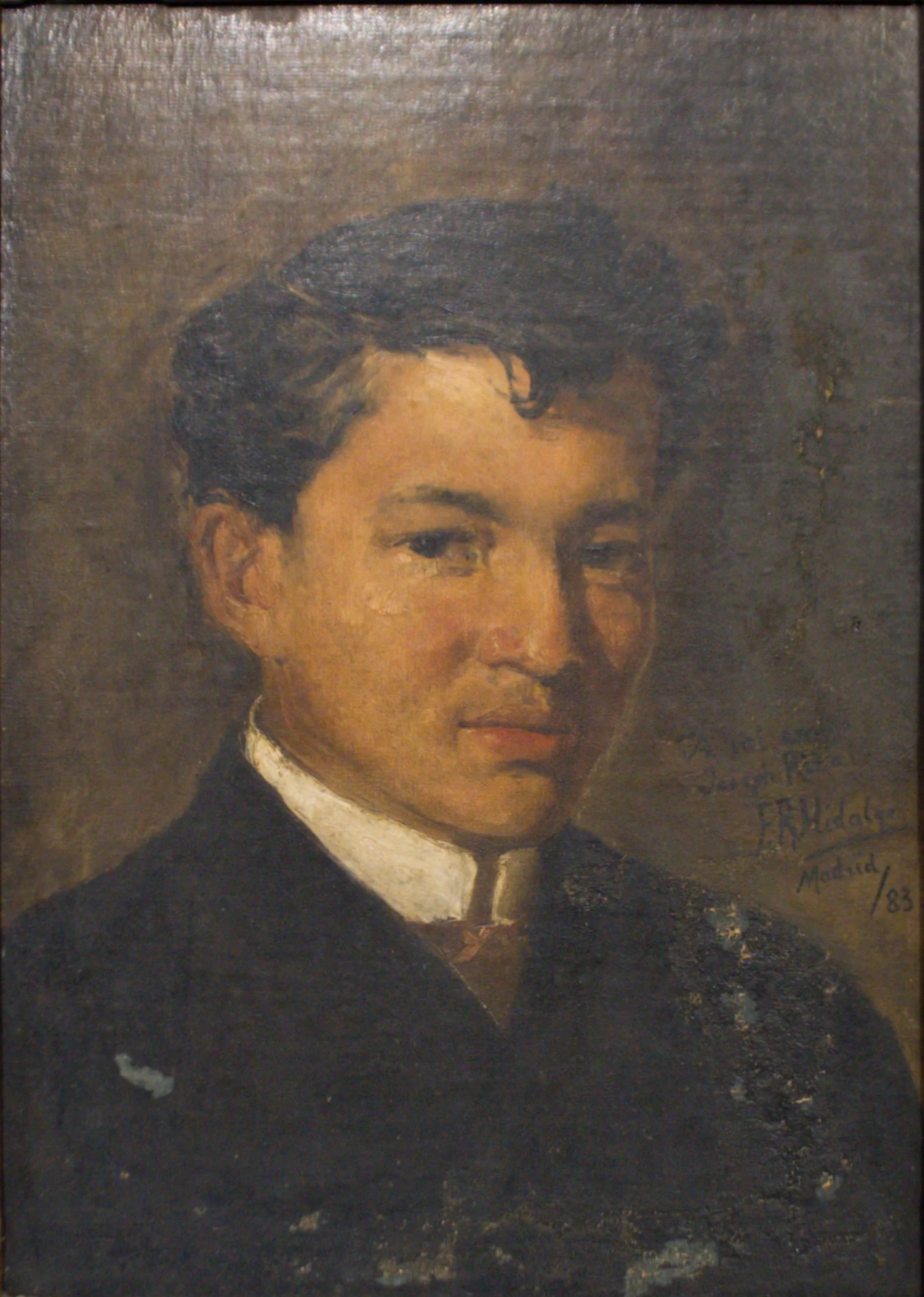
José Rizal
 Philippines
writer•linguist•ophthalmologist
Also known as: Dimasalang, Laong Laan, José P. Rizal, José Protasio Rizal
Birthday
June 19, 1861
Birth Sign
Gemini
Birthplace
Calamba, Laguna, Philippines
Age
Died at 35
Height
5 ft 4 in (1.63 m)
About
José Rizal, born on June 19, 1861, in Calamba, Philippines, was a writer, linguist, and ophthalmologist whose works ignited a revolution. A polymath fluent in over ten languages, he became the intellectual heart of the Filipino Propaganda Movement in the 1880s, pushing for political reforms under Spanish rule. His novels, Noli Me Tángere (1887) and El filibusterismo (1891), exposed colonial injustices and are now considered the national epic of the Philippines. Rizal also penned numerous poems and essays that stirred national consciousness. Though he never held official political office, his writings made him a towering figure in the fight for independence. In 1892, after founding the secret society La Liga Filipina, he was arrested and exiled to Dapitan, where he practiced medicine and continued his scholarly pursuits. He met Josephine Bracken there, an Irish woman who became his common-law wife. In August 1896, with permission from Governor General Ramón Blanco, Rizal left for Cuba to serve as a doctor, but the outbreak of the Philippine Revolution led to his arrest in Barcelona. He was executed by firing squad on December 30, 1896, for rebellion, despite having no direct role in the uprising. His death galvanized the revolution he had inspired through his writing. Today, Rizal is widely regarded as the Philippines' national hero, though no official proclamation declares him as such. His life and works remain a cornerstone of Filipino identity, studied and celebrated across the archipelago.
Early Life & Background
Jose Rizal entered the world on June 19, 1861, in the town of Calamba within the province of Laguna. He was the seventh child of Francisco Rizal Mercado, a prosperous Chinese-Filipino farmer and landowner, and Teodora Alonso y Quintos, a woman of mixed heritage known for her intelligence and literary talents. The family environment was steeped in education and culture, with Teodora serving as his first teacher. She instilled in him a love for reading and writing from a very young age, often recounting stories of injustice and bravery that shaped his early worldview. By the time he was ten, he could already read and write in both Spanish and Tagalog.
His childhood was marked by a significant trauma that deeply influenced his future path. In 1872, he witnessed the public execution of three Filipino priests, Mariano Gomez, Jose Burgos, and Jacinto Zamora, who were falsely accused of sedition against the Spanish colonial government. This event, known as the Gomburza tragedy, fueled his growing sense of patriotism and resentment toward the oppressive regime. These formative experiences drove him to excel academically. He enrolled at the Ateneo Municipal de Manila in 1872, where he distinguished himself not only in his studies but also in athletics and the arts. He graduated summa cum laude in 1877 with a degree in philosophy and letters, earning multiple gold medals for his academic achievements.
Rizal initially pursued medicine at the University of Santo Tomas but soon transferred to the Universidad Central de Madrid in Spain in 1882. His decision to leave home was driven by a dual purpose: to complete his medical studies and to understand the conditions plaguing his homeland. During this period, he traveled extensively across Europe, working in Berlin, Paris, London, and Brussels. He completed his specialty in ophthalmology under Professor Otto Becker in Berlin, ensuring he could treat his mother's eye condition upon his return. His early literary efforts included composing poetry and essays, with his work A La Juventud Filipina winning a gold medal in a literary contest in 1879 when he was just eighteen. This early recognition signaled his emergence as a voice for the youth and set the stage for his future revolutionary writings.
Career Growth
Rizal's career was defined by his dual role as a physician and a revolutionary writer. After completing his medical degree in Madrid in 1884, he traveled across Europe, working in Berlin, Paris, London, and Brussels. In Berlin, he completed his specialty in ophthalmology under Professor Otto Becker. During this period, he wrote his two seminal novels: Noli Me Tángere (Touch Me Not) published in Berlin in 1887, and El filibusterismo (The Reign of Greed) published in Ghent, Belgium, in 1891. The novel exposed the abuses of the Spanish friars and the colonial government, becoming an instant sensation among Filipino expatriates and sparking the Propaganda Movement.
His career milestones include traveling and writing in Europe from 1882 to 1887, establishing connections with other reformists like Marcelo H. del Pilar and Graciano López Jaena. In 1892, he returned to the Philippines and founded La Liga Filipina (The Philippine League) in Manila, aiming for peaceful reforms through education and economic development. He was arrested four days later and exiled to Dapitan. While in exile in Dapitan from 1892 to 1896, he established a school, a hospital, and a water system, practicing medicine and continuing his scholarly work. He also engaged in scientific research, including mapping the region and studying local flora and fauna. Despite his exile, he was accused of complicity in the Philippine Revolution. He left Dapitan under a promise to serve as a doctor in Cuba but was arrested in Barcelona en route. He was tried in Manila and executed on December 30, 1896.
Career Timeline
Public Image & Style
Rizal is remembered as a man of refined intellect and gentle demeanor, often described as slender and delicate in build. He was known for his cosmopolitan style, frequently wearing European-style suits and glasses, reflecting his extensive education abroad. His public persona was that of a rational reformer rather than a violent revolutionary, a distinction that made his eventual martyrdom all the more powerful. Media portrayals consistently highlight his multilingual abilities, his artistic talents, and his dedication to science and literature. The image of Rizal as a tragic hero who sacrificed his life for his country has become a central part of Filipino national identity, with his likeness appearing on currency, monuments, and in classrooms across the archipelago.
Fame & Fandom
José Rizal stands as the 2nd most famous person in Philippines, holding steady from the previous cycle, while also ranking as the 7th most famous person from Philippines and the 8th most famous person in Southeast Asia, both also holding steady. These placements reflect his enduring status within the iFANN Global Fame Rankings, which track global attention across media coverage, search, and consumption signals worldwide. His influence transcends mere historical interest, securing him a prominent spot among the world's most recognized figures.
Unlike modern entertainers, Rizal does not have a formal fandom with a specific name or organized fanbase. There are no groups calling themselves "Rizalites" or engaging in chart pushes and birthday billboards. Instead, reverence for him is civic and patriotic, maintained through state-sponsored education, public monuments, and cultural institutions rather than fan organizations. Recent activities, such as the co-naming of Woodside Street in New York City and renovations to the Dr. Jose Rizal Bridge in Seattle, reflect community stewardship and civic pride rather than fan-driven campaigns. The annual observance of his execution on December 30, 1896, remains a solemn national holiday, marking the transition of a reformist writer into a martyr who inspired the Philippine Revolution against Spanish colonial rule.
Interesting Facts and Legends
Rizal was a polymath fluent in over twenty languages, including Latin, Greek, Hebrew, French, German, and Japanese, which allowed him to read original texts and translate works across cultures. He practiced ophthalmology even during exile, treating patients in Dapitan before his eventual arrest and execution. His final poem, Mi Último Adiós (My Last Farewell), was written secretly on paper hidden inside an alcohol stove before he was executed by firing squad at Bagumbayan Field. This document became a cornerstone of Filipino literature and national identity, symbolizing his sacrifice for independence. The power of his novels, Noli Me Tángere and El filibusterismo, is legendary; it is widely believed that these books alone ignited the revolutionary spirit of the Filipinos, transforming him from a quiet intellectual into a towering figure in the fight for freedom. Even today, his life story is adapted in media like the Netflix title Watch Jose Rizal and the documentary José Rizal: The Philippines' Reluctant Revolutionary, ensuring new generations encounter his legacy. While some stories about his death are framed as folklore, the core events of his trial and execution remain verified historical facts that shaped the nation's destiny.
Notable Quotes
“It is better to die young, in the prime of life, when one's duty is done, than to live long and see one's country perish.”
“The youth is the hope of our future.”
“I do not know what the future holds, but I know that the Philippines will be free.”
Family & Personal Life
Rizal was born into a wealthy and educated family. His father, Francisco Rizal Mercado, was a Chinese-Filipino farmer and landowner, while his mother, Teodora Alonso y Quintos, was a mestiza known for her intelligence and literary talents. He was the seventh of eleven children. His early education began at home with private tutors before he enrolled at the Ateneo Municipal de Manila in 1872, where he excelled academically. He remained close to his family throughout his life, maintaining a deep bond with his mother and siblings, many of whom suffered imprisonment and hardship due to his activities. His mother, Teodora, was imprisoned for several years due to her son's alleged involvement in the revolution, yet she maintained her dignity and faith throughout the ordeal.
Notable Connections
Josephine Bracken, Leonor Rivera, Marcelo H. del Pilar, Graciano López Jaena, Andrés Bonifacio, Francisco Rizal Mercado, Teodora Alonso
Relationships & Dating History
Rizal never legally married, though he had significant romantic relationships. His most notable relationship was with Josephine Bracken, an Irish woman whom he met in Dapitan in 1892. They lived together as common-law spouses from 1892 until his death in 1896. They did not have a formal marriage ceremony because the Catholic Church refused to bless their union due to Bracken's status as an illegitimate child and her refusal to convert fully or renounce her Protestant faith. There were no children from this relationship. Bracken accompanied Rizal to his trial and was present at his execution. She survived him, later returning to Ireland and living out her days in relative obscurity until her death in 1902.
Other rumored relationships include Leonor Rivera, his childhood sweetheart to whom he was formally engaged. Their engagement ended in 1887 when she married another man, a decision made under pressure from her family and Rizal's own belief that she should secure a stable future. Rizal remained close to his family throughout his life, maintaining a deep bond with his mother and siblings, many of whom suffered imprisonment and hardship due to his activities.
- EngagedLeonor Rivera1877 - 1887Childhood sweetheart; engagement ended when she married another man under family pressure.
- DatedJosephine Bracken1892 - 1896Common-law partner; lived together in Dapitan until his execution; present at his death.
Death & Aftermath
Died
December 30, 1896 (aged 35)
Death Place
Bagumbayan Field (now Luneta Park), Manila, Philippines
Cause of Death
Execution by firing squad
The Spanish colonial government announced the execution of José Rizal following a military tribunal that concluded with a guilty verdict on December 26, 1896. On the morning of December 30, 1896, at 7:03 AM, the 35-year-old writer and ophthalmologist walked calmly from Fort Santiago to Bagumbayan Field in Manila, where he faced a firing squad of ten Spanish soldiers. He requested to be shot facing the sea so his final sight would be the horizon, a wish granted by the authorities before the official cause of death was recorded as execution by firing squad. His body was immediately interred in an unmarked grave at Paco Cemetery to prevent it from becoming a shrine, though the site would later be lost until rediscovered decades later.
Public reaction across the Philippines shifted instantly from shock to galvanization, transforming Rizal from a reformist intellectual into a martyr who unified disparate factions of the Katipunan. Although Spanish officials attempted to suppress news of the event, the execution intensified the Philippine Revolution against Spain. In the years that followed, tributes poured in from institutions worldwide, and he was officially named the national hero of the Philippines during the American colonial period. A formal reburial ceremony took place in 1912 after his remains were identified and exhumed from Paco Cemetery, leading to their transfer to the Rizal Monument in Luneta Park.
Posthumously, Rizal became the central figure of Philippine literature and nationalism, with his novels Noli Me Tángere and El filibusterismo remaining required reading in schools. Legislative action solidified his legacy through the Rizal Law of 1956, which mandates the study of his life and works, while communities globally continue to honor his ideals through memorials and educational programs.
Net Worth (Estate Value)
$0
iFANN Editorial Team estimate
As a historical figure who died in 1896, José Rizal does not have a net worth in the modern sense. However, his estate and legacy generate value through cultural tourism, educational materials, and licensing. The National Historical Commission of the Philippines manages his intellectual property and oversees the sale of books, documentaries, and merchandise related to his life. Revenue associated with his name comes from the use of his image and writings in educational contexts, film adaptations, and commemorative events. While there is no public record of a monetary estate value today, the "value" of his legacy is measured in cultural capital rather than liquid assets. The iFANN Editorial Team estimates that the economic impact of his legacy, including tourism to Rizal-related sites and sales of authorized publications, generates millions annually, though this is institutional rather than personal wealth.
Awards & Accolades
View 7 records, honours and achievementsKnown For
Noli Me Tángere
1887 · Author
El filibusterismo
1891 · Author
Mi Último Adiós
1896 · Poet
Keywords
Sources
Quick Facts
- Profession
- writer, linguist, ophthalmologist
- Born
- June 19, 1861
- Birthplace
- Calamba, Laguna
- Died
- December 30, 1896
- Death Place
- Manila
- Gender
- Male
- Spouse
- Josephine Bracken
- Birth Sign
- Gemini
Personal Details
- Full Name
- José Protasio Rizal Mercado y Alonso Realonda
- Height
- 5 ft 4 in (1.63 m)
- Spouse
- Josephine Bracken
- Children
- Education
- Ateneo Municipal de Manila, University of Santo Tomas, Universidad Central de Madrid
Frequently Asked Questions
Who is José Rizal?
When did José Rizal die?
Was José Rizal married?
What is the significance of Mi Último Adiós?
Why is José Rizal considered the national hero?
Similar People
Join the community
fans discussing