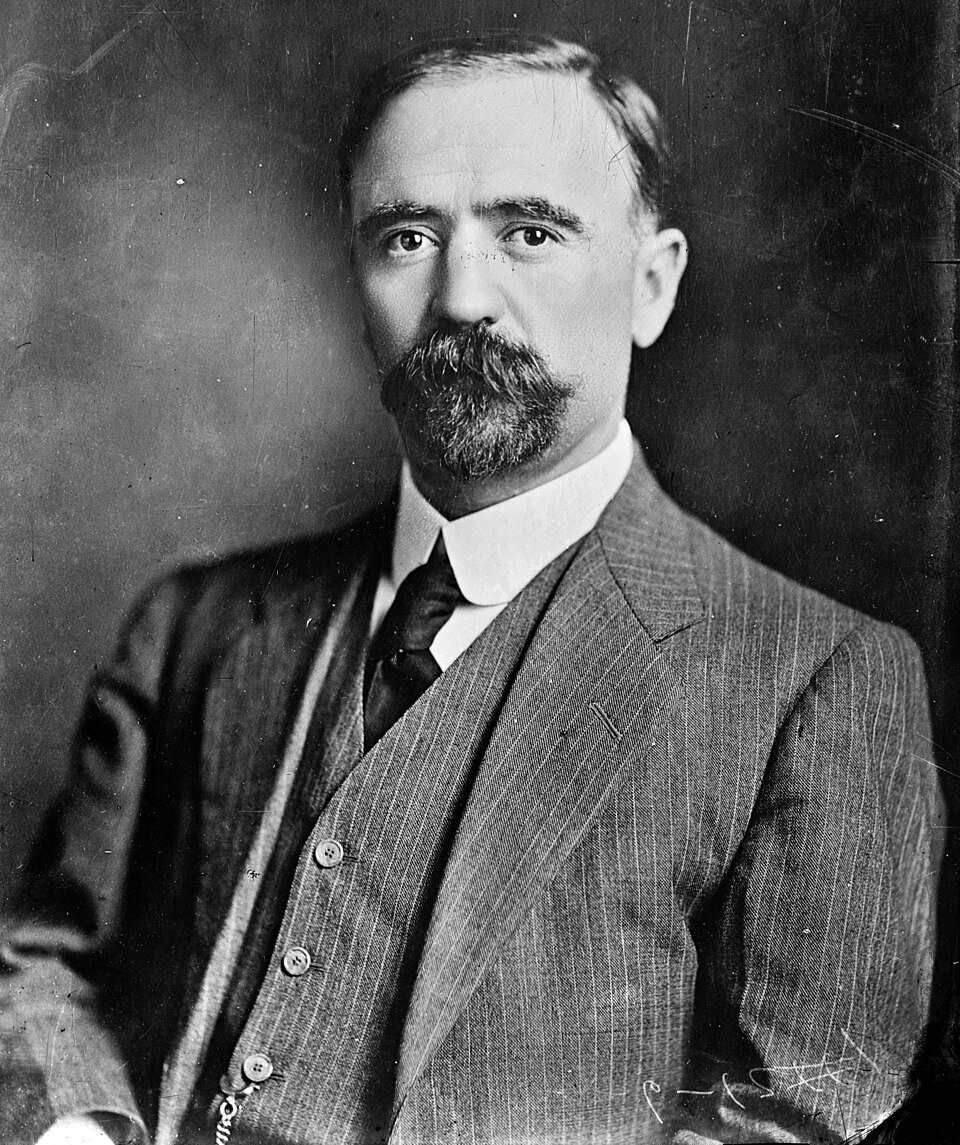
Francisco I. Madero
 Mexico
Also known as: Francisco Indalecio Madero, Apóstol de la Democracia
Birthday
October 30, 1873
Birth Sign
Scorpio
Birthplace
Parras de la Fuente, Coahuila, Mexico
Age
Died at 39
About
Francisco I. Madero was a Mexican revolutionary, writer, and the 33rd president of Mexico, whose call for democratic elections ignited the Mexican Revolution and toppled a three-decade dictatorship. Born into one of the wealthiest families in the country, he used his privilege to champion social justice, publishing the influential book The Presidential Succession in 1910 and later issuing the Plan of San Luis Potosí that launched the revolution. His brief presidency, from November 1911 to February 1913, was marked by intense opposition from both conservatives and radical revolutionaries, and he was assassinated during a coup led by General Victoriano Huerta.
Madero is remembered as the “Apostle of Democracy” and the father of the Mexican Revolution. His martyrdom turned him into a symbol of the struggle against military despotism, and his legacy continues to shape Mexican political identity. Today, his image appears on Mexican currency, and his writings remain in print as historical documents.
Early Life & Background
Francisco Indalecio Madero González was born on October 30, 1873, at the Hacienda de El Rosario in Parras de la Fuente, Coahuila, into one of Mexico's most affluent families. His grandfather, Evaristo Madero, had built a fortune through wagon trains, haciendas, textile factories, wine distilleries, copper mines, and banking, amassing one of the ten largest fortunes in Mexico by 1910. Francisco was the first of his father's eleven children.
A sickly and small child, Madero studied at a Jesuit school in Saltillo before heading to Mount St. Mary's College in Baltimore at age thirteen. In 1887, he and his brother Gustavo sailed to France, where he attended the Lycée Hoche in Versailles and later the École des Hautes Études Commerciales in Paris. A year of agricultural study at the University of California, Berkeley followed, where he was exposed to new ideas that influenced his later vegetarianism.
Returning to Mexico in 1893, Madero took charge of the family hacienda in San Pedro de las Colonias. There he introduced modern farming methods, built schools, a hospital, and soup kitchens for workers, and even practiced homeopathy to treat them. His political awakening came in January 1903, when Governor Bernardo Reyes brutally suppressed a demonstration in Monterrey. That same year he married Sara Pérez Romero and began funding newspapers and supporting journalists who opposed the regime of Porfirio Díaz.
Career Growth
Madero's 1908 book, La sucesión presidencial en 1910, became a national sensation. In it, he praised Díaz but blamed his advisors, the científicos, for Mexico's problems, and called for free elections. When Díaz reneged on his promise not to run again, Madero formed the National Antireelectionist Party and was nominated for president in April 1910. Díaz had him arrested on election day, but Madero escaped to San Antonio, Texas, where he issued the Plan of San Luis Potosí on October 5, 1910, declaring the election null and calling for revolution.
The uprising spread rapidly, and after Díaz resigned in May 1911, Madero was overwhelmingly elected president in November. His presidency, however, was besieged from all sides. Emiliano Zapata rebelled with the Plan of Ayala, demanding land reform, while Pascual Orozco and Bernardo Reyes led uprisings that Madero's forces suppressed. In February 1913, a coup by Félix Díaz and Reyes culminated in the Ten Tragic Days, during which Madero appointed General Victoriano Huerta to defend the government. Huerta betrayed him, arrested Madero and Vice President Pino Suárez, and had them shot on February 22, 1913.
Career Timeline
Public Image & Style
Madero is remembered in Mexico as the “Apostle of Democracy” and the father of the Mexican Revolution. His physical frailty, high-pitched voice, and vegetarianism set him apart in the macho world of Mexican politics, but his idealism and martyrdom transformed him into a symbol of revolutionary unity. Historians often portray him as a well-meaning but unprepared leader caught between the old regime and the revolutionaries he unleashed. Modern media tends to emphasize his tragic end and the irony that his assassination united the revolutionary factions against Huerta.
Fame & Fandom (iFAMOUS Rankings)
Francisco I. Madero commands a reverence that transcends modern fan culture, though his adherents lack a formal collective name or organized campaigns typical of contemporary celebrities. His legacy is sustained not by chart-topping albums or viral social media trends, but through state-sponsored commemorations and the enduring political mythology of Mexico. While he never engaged in meet-and-greets or responded to fan mail during his lifetime, his memory persists as a foundational pillar of national identity, honored annually by government institutions rather than grassroots fandoms. In the realm of global recognition, the iFANN Global Fame Rankings place him with notable consistency. He stands as the 21st most famous person in Mexico, a position held steady from the previous cycle. His standing among his countrymen remains robust at the 72nd most famous person from Mexico, also holding steady. Furthermore, within the broader context of Latin America, he is ranked as the 39th most famous person in Latin America, a placement that has remained stable. These placements reflect a historical footprint measured across decades of media coverage and consumption signals worldwide. The rankings confirm that while he does not possess a named fandom, his influence remains a significant metric of cultural weight in the hemisphere.
Interesting Facts and Legends
Madero was a skilled musician who played the piano alongside his political duties. During a semester at UC Berkeley in 1897, he and his brother Gustavo appeared in the Golden Book of California. A devout vegetarian and teetotaler, he practiced homeopathy to treat workers on his hacienda. He also believed he channeled the spirit of former President Benito Juárez through spiritualism. His middle initial officially stood for Ignacio, not Indalecio, according to his birth certificate. Beyond these biographical details, Madero is central to the legend of the Plan of San Luis Potosí, the document that ignited the Mexican Revolution against Porfirio Díaz. This event is widely retold as the spark that ended thirty years of dictatorship, cementing his title as the Apostle of Democracy. Another defining narrative surrounds La Decena Trágica, the ten-day coup in February 1913 that led to his arrest and assassination. This tragedy is often cited as the ultimate betrayal of democracy, where an idealist leader was overthrown and killed. The story of his martyrdom serves as a cautionary tale about the complexities of revolution, framing him as a well-meaning but unprepared figure caught between old regimes and radical forces.
Notable Quotes
“Sufragio efectivo, no reelección.”
“The needs and demands of democratic governance and restoration to its 1857 Constitution.”
Family & Personal Life
Francisco was the first-born son of Francisco Ignacio Madero Hernández and Mercedes González Treviño. His grandfather, Evaristo Madero, built the family fortune and founded the first bank in northern Mexico. Francisco had ten siblings, including his brother Gustavo, who became his closest political ally and was brutally murdered during the coup. In January 1903, Madero married Sara Pérez Romero in both civil and religious ceremonies. Sara was his partner in promoting social change and supported his activism. The couple had no children. Madero's family background gave him the financial independence to pursue politics and philanthropy.
Notable Connections
Madero is associated with Porfirio Díaz, the dictator he opposed; his wife Sara Pérez Romero; his brother Gustavo A. Madero; revolutionary leaders Emiliano Zapata and Pascual Orozco; conservative generals Bernardo Reyes and Félix Díaz; and Victoriano Huerta, who betrayed and ordered his assassination. He also supported the Flores Magón brothers, journalists who published Regeneración.
Relationships & Dating History
Madero's documented personal life centers on one relationship. He married Sara Pérez Romero in January 1903 in both civil and religious ceremonies. Sara was his partner in promoting social and political change, supporting his activism throughout his career. The couple had no children. Sara was widowed upon Madero's assassination on February 22, 1913.
- MarriedSara Pérez Romero1903 - 1913Married in January 1903; she was his partner in activism. No children.
Death & Aftermath
Died
February 22, 1913 (aged 39)
Death Place
Mexico City, Mexico
Cause of Death
Homicide by gunshot wounds
The official finding established that Francisco I. Madero and Vice President José María Pino Suárez were executed by gunshot wounds on February 22, 1913, following a forced resignation ceremony during the Ten Tragic Days. While being transported from the Palacio Nacional to the General Prison in Mexico City, the two men were ambushed by soldiers loyal to General Victoriano Huerta near the palace gates; Madero reportedly attempted to flee before succumbing to two shots fired into his chest and abdomen. Public reaction immediately shifted from shock to outrage, galvanizing opposition forces including Venustiano Carranza and Pancho Villa who viewed the murder as a betrayal of democratic ideals and declared Madero a martyr for liberty.
The funeral was conducted as a private affair under strict security, with both leaders interred in an unmarked grave within the Panteón Civil de Dolores to suppress any display of mourning that might incite rebellion against Huerta's forces. In the decades that followed, Madero has been honored through numerous tributes including memorial murals, landmarks, and dedications of cities and institutions, while his estate was largely dissolved during the chaos of the revolution leaving his family facing significant financial hardship.
Net Worth (Estate Value)
As a historical figure who died in 1913, Madero's personal net worth is not tracked by modern sources. However, he came from one of the wealthiest families in Mexico, with his grandfather Evaristo amassing one of the ten largest fortunes in the country by 1910. The family wealth derived from wagon trains, haciendas, textiles, wine, copper mines, refineries, and banking.
Madero's estate is now part of Mexico's national heritage. His writings remain in print, and his image appears on Mexican currency. The estate generates cultural and educational value rather than commercial revenue.
Awards & Accolades
View 3 records, honours and achievementsKnown For
Mexican Revolution
1910 · Leader
President of Mexico
1911 · President
Keywords
Sources
Quick Facts
- Profession
- Politician, writer, musician
- Born
- October 30, 1873
- Birthplace
- Parras de la Fuente, Coahuila, Mexico
- Died
- February 22, 1913
- Death Place
- Mexico City
- Gender
- Male
- Spouse
- Sara Pérez Romero
- Birth Sign
- Scorpio
Personal Details
- Full Name
- Francisco Indalecio Madero González
- Spouse
- Sara Pérez Romero
- Education
- Mount St. Mary's College, Lycée Hoche, HEC Paris, University of California, Berkeley
Frequently Asked Questions
What did Francisco I. Madero do?
How did Francisco Madero die?
Was Francisco Madero a good president?
Did Francisco Madero have children?
What was Francisco Madero's relationship with Emiliano Zapata?
Similar People
Join the community
fans discussing