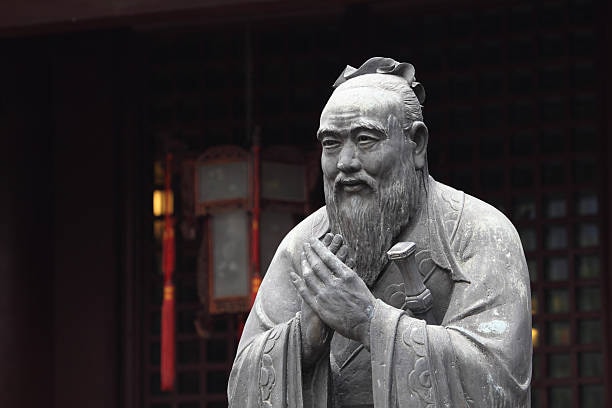
Confucius
 Luxembourg
Also known as: Kong Qiu, Kong Zhongni, Master Kong, Kong Fuzi
Birthday
September 28, 551 BCE
Birth Sign
Libra
Birthplace
Zou, near Qufu, state of Lu (modern-day Shandong Province, China)
Age
Died at 72
About
Confucius is the Latinized name of Kong Qiu, a Chinese philosopher born in 551 BCE in Qufu, whose teachings have shaped East Asian civilization for over 2,500 years. He developed a system of ethics centered on personal virtue, social harmony, and righteous governance, known as Confucianism. His ideas, collected in the Analects by his disciples, emphasize filial piety, ritual propriety, and the cultivation of ren, or benevolence. Though he found little political success during his lifetime, Confucianism later became the official state ideology under Emperor Wu of Han and evolved through Neo-Confucianism and New Confucianism. Today, his influence permeates Chinese social structures, education, and government, and he is consistently ranked among the most influential thinkers in world history.
Early Life & Background
Confucius was born into a noble family that had fallen into poverty. His father, Kong He, died when he was three, leaving his mother, Yan Zhengzai, to raise him in modest circumstances. Despite financial hardship, she encouraged his education, and he showed remarkable academic zeal from an early age. Rather than playing with toys, he staged elaborate ancestral rites for his deceased father. He studied the Chinese classics, music, mathematics, and history, and became entranced by the early Zhou dynasty, which he saw as a golden age. To support his family, he took menial jobs, including managing granaries and overseeing livestock for the state of Lu. These roles exposed him to corruption and social injustice, deepening his resolve to develop a moral philosophy. He eventually settled on teaching as a career, breaking with tradition by accepting students from all social classes.
Career Growth
Confucius began teaching around 522 BCE, attracting disciples with his emphasis on ethics and self-cultivation. He served as a counselor in Lu, reportedly rising to Minister of Crime, but became disillusioned with corrupt politics. In 497 BCE, he left Lu and began a 14-year exile, traveling through states like Wei, Song, Chen, and Cai, seeking a ruler who would implement his ideas. During these travels, he refined his core concepts, including ren and shu, or empathy. He returned to Lu at age 67 and spent his final years editing classical texts, including the Five Classics. His disciples compiled his sayings into the Analects after his death. Under Emperor Wu of Han (141–87 BCE), Confucianism gained state sanction and became the bedrock of Chinese governance. During the Tang and Song dynasties, Neo-Confucianism emerged, and in the 20th century, New Confucianism adapted his philosophy to modern contexts. Today, Confucius Institutes worldwide promote Chinese language and culture.
Career Timeline
Public Image & Style
Confucius is typically depicted as an elderly man with a long beard, wearing traditional scholar's robes and holding a scroll. His image conveys wisdom, dignity, and moral authority. In media, he is portrayed as the archetypal Chinese sage, featured in documentaries like BBC's "Genius of the Ancient World." His teachings are aphoristic and practical, often shared as quotes on social media. Adherents of Confucianism are called Confucians, and annual ceremonies are held at the Temple of Confucius in Qufu. Study groups and academic conferences continue to explore his philosophy. His social media presence consists of quote accounts and educational pages with substantial followings.
Fame & Fandom
The concept of a modern fandom does not apply to Confucius, as organized fan clubs, social media campaigns, or collective titles for his adherents never emerged in the Spring and Autumn period. His followers are historically identified simply as Confucians, while his influence persists through institutional channels like the global network of Confucius Institutes rather than through the fervor of a celebrity fanbase. Despite this lack of contemporary adulation metrics, his historical stature remains immense within the digital record of human achievement. According to the August 2026 iFANN Global Fame Rankings, Confucius is currently the 21st most famous person in Books & Literature, a position he has held steady from the previous cycle. This placement reflects enduring engagement with his texts across academic and cultural spheres worldwide. While no specific fan rituals define his modern reception, the sheer volume of references to his work ensures his continued prominence in the global consciousness.
Interesting Facts and Legends
The name "Confucius" is a Latinized form of "Kong Fuzi" (Master Kong), coined by 16th-century Jesuit missionaries. Confucius's family tree is one of the longest continuously recorded genealogies, spanning over 80 generations with millions of living descendants. An ancient text claims he was 9'6" tall, but this is likely an exaggeration. He did not write the Analects himself; it was compiled by his disciples after his death. The character for ren combines the characters for "person" and "two," emphasizing relationships. He served as a granary manager and livestock overseer early in his career. A persistent story from antiquity suggests that even Confucius possessed significant physical strength, challenging the stereotype of the frail scholar and highlighting how ancient China valued martial capability alongside intellectual virtue. Another foundational legend describes his life as a paragon of virtue who sought to restore order through moral rectitude during a chaotic era, a narrative that has become central to East Asian cultural mythology. These stories are widely retold in educational contexts, though they often blend historical fact with later embellishments.
Notable Quotes
“Do not do unto others what you do not want done to yourself.”
“At 15, I set my heart on learning; at 30, I stood firm; at 40, I had no doubts; at 50, I knew the will of heaven; at 60, my ear was attuned; at 70, I followed my heart's desire without overstepping the line.”
“It does not matter how slowly you go as long as you do not stop.”
“Our greatest glory is not in never falling, but in rising every time we fall.”
“I hear and I forget. I see and I remember. I do and I understand.”
Family & Personal Life
Confucius's father, Kong He (also known as Shuliang He), was an elderly commandant of the Lu garrison who died when Confucius was three. His mother, Yan Zhengzai, was Kong He's second wife and his primary caregiver. The family traced its ancestry through the dukes of Song to the Shang dynasty. Confucius married Qiguan Shi in 517 BCE, and they had one son, Kong Li, born around 515 BCE. Some later texts suggest a separation, but this is disputed. Kong Li's descendants continued the family line, which remains one of the world's longest recorded genealogies.
Notable Connections
Confucius's disciples, including Zigong, Zilu, Yan Hui, and Zengzi, transmitted his teachings. Later Confucian philosophers Mencius and Xunzi expanded his ideas. Neo-Confucian scholar Zhu Xi synthesized Confucian thought in the 12th century. Emperor Wu of Han made Confucianism the state ideology. His family includes father Kong He, mother Yan Zhengzai, wife Qiguan Shi, and son Kong Li.
Relationships & Dating History
Confucius married Qiguan Shi (also rendered Qi Guan) in 517 BCE when he was about 34 years old. She was from the state of Song. They had one son, Kong Li, born around 515 BCE. Traditional accounts provide minimal detail about their relationship. Some later texts suggest Confucius divorced or separated from her, but this is disputed among scholars. No records indicate the date or circumstances of her death. As of 2026, Confucius died in 479 BCE and was widowed at the time of his death.
- MarriedQiguan Shi-517 - presentMarried in 517 BCE; had one son, Kong Li. Some accounts suggest separation, but this is disputed.
Net Worth (Estate Value)
Confucius died in 479 BCE and has no personal net worth. His legacy generates significant cultural and economic value through Confucius Institutes, which have received hundreds of millions of dollars in Chinese government investment since 2004. The Temple of Confucius, Cemetery, and Kong Family Mansion in Qufu attract substantial tourism revenue. His image and name are used in educational materials and branding, but no centralized estate manages these assets for profit. As of 2026.
Awards & Accolades
View 8 records, honours and achievementsKnown For
Analects
-479 · Subject
Five Classics
-500 · Editor
Confucianism
-500 · Founder
Keywords
Sources
Quick Facts
- Profession
- philosopher, teacher, writer
- Born
- September 28, 551 BCE
- Birthplace
- Zou, near Qufu, state of Lu
- Died
- 479 BCE
- Death Place
- Si River
- Gender
- Male
- Spouse
- Qiguan Shi
- Birth Sign
- Libra
Personal Details
- Full Name
- Kong Qiu
- Spouse
- Qiguan Shi
- Children
- Kong Li (son)
- Education
- Studied Chinese classics, music, mathematics, history, and ritual under various tutors
Frequently Asked Questions
What is Confucius most famous for?
Was Confucius a religious figure?
How tall was Confucius?
Did Confucius write the Analects?
How many descendants does Confucius have?
Similar People
Join the community
fans discussing