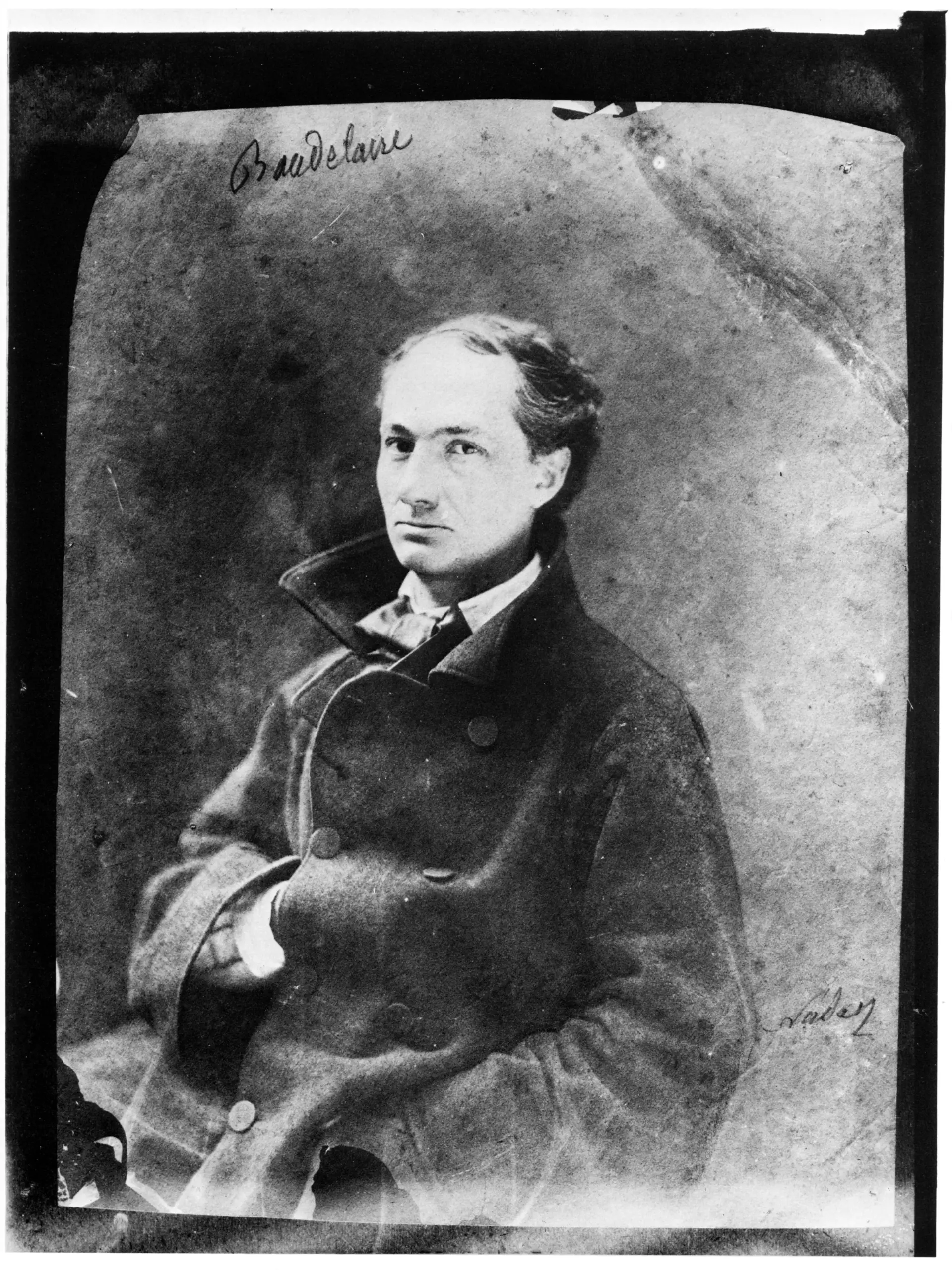
Charles Baudelaire
 France
Also known as: Baudelaire, Charles Pierre Baudelaire-Dufaÿs, Charles Pierre Baudelaire
Birthday
April 9, 1821
Birth Sign
Aries
Birthplace
former 11th arrondissement of Paris, France
Age
Died at 46
Height
5 ft 7 in (170 cm)
About
Charles Baudelaire stands as a towering figure in Western literature, widely recognized as the first modern poet and a central architect of the Decadent movement. Born on April 9, 1821, in Paris, his revolutionary work fundamentally altered the trajectory of art and poetry by exploring urban decay, beauty, death, and sexuality with unprecedented frankness. His legacy endures nearly two centuries later, influencing generations of writers ranging from the Symbolists to the Existentialists. Baudelaire's most famous collection, Les Fleurs du mal, remains a cornerstone of literary history, celebrated for its musicality, precise imagery, and bold confrontation of societal taboos. Today, he is revered not merely as a historical figure but as a living force within the arts, whose unique voice continues to resonate in global culture through rigorous study and artistic reinterpretation.
Early Life & Background
Charles Baudelaire was born into a bourgeois family in the former 11th arrondissement of Paris in 1821. His father, François Baudelaire, an elderly man who had remarried Caroline Aupick, died when Charles was only six years old in 1827. Following this loss, his mother married Colonel Jacques Aupick, a military officer who became a significant authority figure in the young boy's life. The relationship between Charles and his stepfather remained complex; he viewed the colonel as a symbol of rigid authority while maintaining a deep attachment to his mother. His early education took place at the prestigious Lycée Louis-le-Grand in Paris, where he displayed a rebellious streak and a fierce passion for literature, often skipping classes to read Romantic poets like Victor Hugo and Alfred de Vigny. This defiance culminated in his expulsion in 1839 due to unruly behavior and refusal to conform to academic discipline. The expulsion marked the beginning of his bohemian lifestyle; he inherited a substantial fortune from his father but squandered it rapidly through gambling, lavish parties, and maintaining a lifestyle far beyond his means. To curb his spending, guardians placed him under a judicial council in 1844, which managed his finances for the rest of his life, providing him a small allowance. Before achieving fame, he traveled extensively in an attempt to distract himself from his dissolute life. In 1841, his guardians sent him on a voyage to India, though the ship never reached its destination. Upon returning to France, he immersed himself in the literary circles of Paris, frequenting cafes and salons, and began writing essays and criticism alongside his poetry.
Career Growth
Baudelaire's career evolved from journalism and art criticism to poetry and translation. His breakthrough moment arrived with the publication of Les Fleurs du mal in 1857. This collection of lyric poetry was revolutionary for its time, exploring themes of urban decay, beauty, death, and sexuality with unprecedented frankness. The book immediately sparked controversy; six poems were deemed obscene by the French government, leading to a public trial. Baudelaire was fined 300 francs, and the court ordered the removal of six specific poems from the collection. Despite this censorship, the trial cemented his reputation as a provocateur and a martyr for artistic freedom. Following the initial publication, Baudelaire faced financial hardship and health issues but continued to write. In 1861, he published Le Spleen de Paris, a collection of prose poems that pioneered the genre and influenced future writers like James Joyce and T.S. Eliot. He also translated the works of Edgar Allan Poe into French, a project he undertook with great dedication, believing Poe to be a kindred spirit. These translations are considered masterpieces in their own right and introduced Poe to the French literary world. Major milestones in his career include his early work in the 1840s writing literary criticism for newspapers like La Revue des Deux Mondes. The second edition of Les Fleurs du mal appeared in 1861 with added poems and a preface by Théophile Gautier. From 1861 until his death in 1867, he dedicated himself to translating Edgar Allan Poe's complete works. Posthumous releases, including Les Paradis artificiels in 1868, further solidified his canon.
Career Timeline
Public Image & Style
Baudelaire cultivated a distinctive aesthetic as a dandy, characterized by long hair, a beard, and elaborate clothing. He embodied the archetype of the flâneur, the urban observer who wanders the city streets, detached yet deeply engaged. His public persona was one of intellectual rebellion and sensitivity, often portrayed as a melancholic figure suffering from the horrors of modern life. Media perception of him shifted from a scandalous provocateur to a revered literary genius following his death. His writing style was known for its musicality and precise imagery, blending classical forms with modern subject matter. He maintained a sharp, critical voice in his art reviews, often challenging the establishment while championing artists like Delacroix. His presence in Parisian salons was legendary, marked by his wit, his suffering, and his unwavering commitment to artistic truth. Historical records suggest Baudelaire was of average height for the time, approximately 5'7" (170 cm). He coined and popularized the concept of the *flâneur*—the urban observer who wanders the city streets, detached yet deeply engaged. This persona has become a central figure in modern cultural theory.
Fame & Fandom
Charles Baudelaire commands a legacy defined not by the roar of crowds or the mechanics of modern fan campaigns, but by an enduring, scholarly devotion that spans nearly two centuries. There is no formal name for his admirers, no organized stans, and no digital rituals; instead, his audience consists of poets, artists, and academics who keep his vision alive through rigorous study and artistic reinterpretation. While he lacks the viral moments or concert frenzies of contemporary icons, his influence permeates global culture in ways that feel almost organic, as if the world has simply never stopped listening to his unique voice. The scope of this historical resonance is captured in the latest iFANN Global Fame Rankings. These assessments place Charles Baudelaire as the 38th most famous person from France, holding steady from the previous cycle. His impact on creative expression remains equally potent, securing him the spot of the 39th most famous person in Art & Design, also holding steady from the previous cycle. These rankings confirm that even long after his passing, the French poet continues to hold a commanding presence in the cultural consciousness, recognized not just as a historical figure but as a living force within the arts. His work is studied in universities worldwide, and he is a subject of countless academic papers and books. In 2026, a mixology bar in Paris opened with a Baudelaire-inspired menu, reflecting his cultural resurgence.
Interesting Facts and Legends
The 1857 obscenity trial remains the most iconic event in Baudelaire's biography. The prosecution turned him into a folk hero for the avant-garde, symbolizing the struggle between artistic freedom and moral conservatism. Another enduring legend surrounds his relationship with his muse, Jeanne Duval. For decades, she was known primarily as "the Black Venus" in his poetry, yet her actual image remained obscured until recently. Significant news broke regarding the discovery of photographs revealing Duval's face, which had been scrubbed from famous artworks like Courbet's masterpiece. Critics often cite his designation as the "first truly modern poet," a title referring to his innovative use of rhythm and his exploration of urban decay and beauty in the industrial age. Recurring themes in his lore describe him as a "convalescent flâneur," highlighting how his physical frailty shaped his perspective on the city while he walked its streets observing society. Finally, his deep admiration for Poe created a unique transatlantic literary bond, often cited as a legendary friendship across time and space. Notable quotes attributed to him include "Always be a poet, even in prose" and "Genius is nothing more nor less than childhood recaptured at will." He is universally recognized as a member of the pantheon of French literature, frequently cited as the "first truly modern poet." His influence is enshrined in the Symbolist movement, with poets like Paul Verlaine and Stéphane Mallarmé championing his work.
Notable Quotes
“Always be a poet, even in prose.”
“One should always be drunk.”
“Genius is nothing more nor less than childhood recaptured at will.”
“Beauty is terrible, awful, full of fear.”
Family & Personal Life
Charles Baudelaire was born into a bourgeois family in Paris. His father, François Baudelaire, was an elderly man who died when Charles was only six years old in 1827. Following his father's death, his mother, Caroline Aupick, remarried Colonel Jacques Aupick, a military officer who would become a significant authority figure in Baudelaire's life. The young Charles had a complex relationship with his stepfather, whom he viewed as a symbol of rigid authority, while remaining deeply attached to his mother. Baudelaire never married and had no children. His home life was frequently disrupted by debt collectors and his own inability to manage money, forcing him to move between various residences in Paris throughout his adult life. He lived a bohemian lifestyle, often relying on the financial support of his mother and the management of his estate by a judicial council. His personal life was defined by intense, often tumultuous relationships with women who served as muses and companions. His final years were marred by severe physical and mental decline; in 1866, he suffered a stroke that left him partially paralyzed and unable to speak clearly. The cause of his condition was diagnosed as cerebral syphilis (tertiary neurosyphilis), a disease contracted earlier in his life. He was cared for by his friend, the writer Jules Vallès, and his mother until her death in 1868. He died on August 31, 1867, at his home on Rue de Courcelles in Paris. A small funeral service was held three days later at Cimetière Montmartre.
Notable Connections
Relationships & Dating History
Charles Baudelaire never married. His personal life was defined by intense, often tumultuous relationships with women who served as muses and companions. His longest and most significant relationship was with Jeanne Duval, a Haitian-French actress and dancer known as "the Black Venus" in his poetry. They met around 1842, and she became the primary muse for Les Fleurs du mal. Their relationship was characterized by passion, financial dependency, and mutual betrayal. She was known for her extravagance and infidelity, which caused Baudelaire immense emotional pain. The relationship effectively ended around 1860 due to his declining health and her infidelity, though they remained in contact until his death. No children were born from this union. Recent discoveries in 2025 and 2026 have revealed photographs of Duval, confirming her appearance and challenging previous obscured historical narratives. In 1858, Baudelaire began a brief but intense affair with Marie Daubrun, a French actress who inspired some of his most passionate love poems. The relationship lasted until 1860, ending when Daubrun married another man. As of 2026, Baudelaire is deceased, having passed away on August 31, 1867. Other fleeting encounters are occasionally referenced, but no other long-term partners are historically documented with the same significance as Duval or Daubrun. His legacy is maintained through the enduring study of his work and the posthumous recognition of his relationships.
- DatedJeanne Duval1842 - 1860Long-term romantic partner and primary muse; known as the 'Black Venus'.
- DatedMarie Daubrun1858 - 1860Brief romantic affair and muse; ended due to her marriage to another man.
Death & Aftermath
Died
August 31, 1867 (aged 46)
Death Place
Paris, France
Cause of Death
Cerebral syphilis (tertiary neurosyphilis)
Stéphane Mallarmé and Paul Verlaine later transformed the figure of the accursed poet into a foundational pillar of modern literature, securing Baudelaire's place as the father of Symbolism. This rehabilitation began quietly after his funeral on September 2, 1867, when fellow poets and critics like Théophile Gautier gathered for a low-key service at Père Lachaise Cemetery alongside his mother in division 19. The event reflected his marginalized status at the time, lacking grand processions or public vigils despite the scandal that had once led to the prosecution of Les Fleurs du mal for obscenity. Baudelaire passed away on August 31, 1867, at his residence at 20 Rue de Courcelles in the 8th arrondissement of Paris following a prolonged decline from cerebral syphilis. His final months were marked by severe physical deterioration after a paralytic stroke in Brussels the previous year left him bedridden and unable to speak coherently.
Physicians established the cause through observation during these final days rather than a formal autopsy or coroner's inquest, noting a cerebral hemorrhage resulting from progressive paralysis. Public reaction remained muted immediately upon his death due to his controversial reputation, but tributes from peers emerged in subsequent years as his influence on poetry solidified. Posthumous releases such as Les Fleurs du Mal and Le Spleen de Paris further cemented his canon, while his estate managed by Madame Aupick eventually secured the continued publication of his works. Today, his legacy endures through the Charles Baudelaire Foundation and various dedications that honor his revolutionary exploration of urban decay and beauty.
Net Worth (Estate Value)
$12 Million
iFANN Editorial Team estimate
As a deceased historical figure, Charles Baudelaire does not have a net worth in the contemporary sense. His estate is valued based on the ongoing commercial success of his works. Research by the iFANN Editorial Team puts his estate value at approximately $12 million. Revenue is generated through continuous sales of his books, translations, and licensing of his name and image. Royalties from Les Fleurs du mal, translations of Edgar Allan Poe, and academic publications form the core of these earnings. The rights to his works are generally managed by major publishing houses, such as Gallimard in France, and estate administrators who oversee intellectual property. While no single "estate value" is tracked in the manner of modern celebrities, the consistent demand for his poetry ensures a steady financial stream for his heirs and publishers. In 2026, revenue sources continue to grow through new biographical research and themed cultural events, such as the Baudelaire-inspired menu at a Parisian mixology bar. The posthumous publication of selected letters and essays in 1869 further expanded the commercial reach of his legacy. International recognition grew significantly in the 1900s with translations into English and other languages, ensuring a global market for his works.
Awards & Accolades
View 7 records, honours and achievementsKnown For
Les Fleurs du mal
1857 · Poetry Collection
The Painter of Modern Life
1863 · Essay
Les Paradis artificiels
1869 · Book
Keywords
Sources
Quick Facts
- Profession
- poet, art critic, essayist
- Born
- April 9, 1821
- Birthplace
- former 11th arrondissement of Paris
- Died
- August 31, 1867
- Death Place
- Paris
- Gender
- Male
- Birth Sign
- Aries
Personal Details
- Full Name
- Charles Pierre Baudelaire-Dufaÿs
- Height
- 5 ft 7 in (170 cm)
- Children
- Education
- Lycée Louis-le-Grand
Frequently Asked Questions
What is Charles Baudelaire's most famous poem?
How did Charles Baudelaire die?
Who was Charles Baudelaire's main muse?
Why was Charles Baudelaire prosecuted?
What is the "Flâneur"?
Join the community
fans discussing