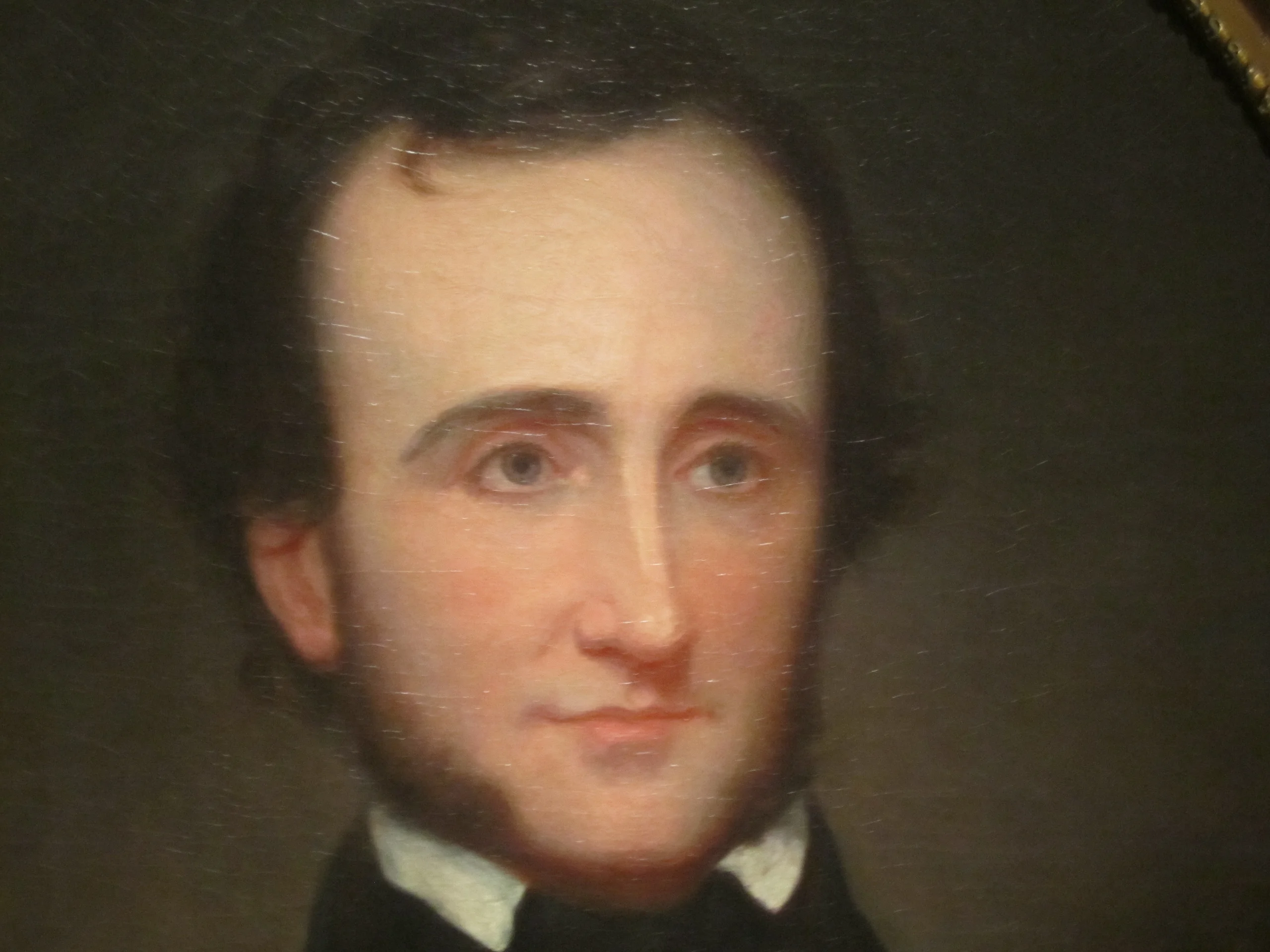
Edgar Allan Poe
Also known as: E.A. Poe, Edgar Poe, Edgar A. Perry
Birthday
January 19, 1809
Birth Sign
Capricorn
Birthplace
Boston, Massachusetts
Age
Died at 40
Height
5 ft 10 in (178 cm)
About
Edgar Allan Poe was an American writer, poet, editor, and literary critic widely regarded as a central figure of Romanticism and Gothic literature. Born in Boston to traveling actors David Poe Jr. and Elizabeth Arnold Poe, he entered the world as the second child of a family that would soon disintegrate. His father abandoned the family in 1810, and his mother died of tuberculosis in Richmond, Virginia, in December 1811. Following her death, the three-year-old Edgar was taken in by John Allan and his wife Frances, wealthy merchants in Richmond who never formally adopted him but raised him as their own son. This foster relationship defined his early life but ended in acrimony; Poe attended the University of Virginia for one year before being expelled due to gambling debts and conflicts with John Allan over money.
Poe's career success was marked by the publication of The Raven in January 1845, which achieved instant national success and cemented his place in American letters. He is credited with pioneering the short story genre, inventing detective fiction through stories featuring C. Auguste Dupin (such as The Murders in the Rue Morgue), and contributing significantly to early science fiction. Despite his fame, he struggled to launch his own magazine, The Penn (later renamed The Stylus), which he planned before his death. His influence extended far beyond literature, impacting fields like cryptography and cosmology while inspiring countless works in art, music, film, and television.
His physical attributes include a height estimated around 5 feet 10 inches (178 cm) based on contemporary descriptions, though precise measurements vary in historical accounts. Poe did not win awards during his lifetime, as the major award ceremonies did not exist. He received no Hall of Fame inductions in the modern sense, though he is universally recognized as a foundational figure in literature. He appears on numerous "Greatest of All Time" lists; for instance, The Raven is frequently cited as one of the greatest poems in the English language, and Poe is consistently ranked among the top American authors by institutions like the Library of America and Time magazine. Notable magazine covers featuring Poe are rare in the modern era as he is a historical figure, but he has appeared on the covers of literary journals and commemorative editions celebrating his legacy.
Early Life & Background
Edgar Allan Poe entered the world in Boston on January 19, 1809, as the second child of traveling actors David Poe Jr. and Elizabeth Arnold Poe. His early life unraveled quickly when his father left the family in 1810, followed by his mother's death from tuberculosis the next year. John and Frances Allan took him into their home in Richmond, Virginia, raising him without ever formally adopting him. This foster relationship defined much of his young adulthood, though it ended in conflict over money and gambling debts that led to his expulsion from the University of Virginia after just one year.
Poe subsequently enlisted in the U.S. Army under the alias "Edgar A. Perry" in 1827 to publish Tamerlane and Other Poems, his first collection, marking his first step toward a literary career. After failing to secure a commission at West Point and further quarreling with John Allan, he turned to prose and literary criticism. He edited journals in Baltimore, Philadelphia, and New York City, developing a sharp, often brutal reviewing style that established his reputation as a formidable critic. In 1836, at age 27, he married his 13-year-old cousin, Virginia Eliza Clemm, who was also his childhood companion and the daughter of his aunt. Their marriage lasted until Virginia's death from tuberculosis in 1847, a loss that deeply affected Poe during his final years.
Career milestones leading up to his fame include: entering West Point in 1830 where he was court-martialed and discharged; beginning to edit the Southern Literary Messenger in Richmond in 1835; and publishing The Murders in the Rue Morgue in 1841, establishing the detective fiction genre. These steps paved the way for his later recognition, culminating in the publication of The Raven in 1845.
Career Growth
Poe's career success was marked by the publication of The Raven in January 1845, which achieved instant national success and cemented his place in American letters. Upon its release, the poem caused a sensation across the nation, reprinted in hundreds of newspapers, and Poe was hailed as a literary genius overnight. The poem's rhythmic structure and melancholic tone became instantly iconic. He is credited with pioneering the short story genre, inventing detective fiction through stories featuring C. Auguste Dupin (such as The Murders in the Rue Morgue), and contributing significantly to early science fiction.
Despite his fame, he struggled to launch his own magazine, The Penn (later renamed The Stylus), which he planned before his death. His influence extended far beyond literature, impacting fields like cryptography and cosmology while inspiring countless works in art, music, film, and television. Recent news from 2026 highlights the enduring cultural impact of Poe. In August 2026, the Edgar Allan Poe Festival moved to Lexington Market in Baltimore for its annual celebration, drawing thousands of visitors to honor the author. A new ballet production titled The Curious Life of Edgar Allan Poe opened at Baltimore's Hippodrome, promising dramatic storytelling about his life.
Additionally, a series of pop-up "Speakeasy" events dedicated to Poe took place in Oakland Cemetery (Atlanta), Palm Springs, and Fort Lauderdale throughout August 2026, blending historical reverence with immersive entertainment. An opera album review in May 2026 noted the recording of Argento's Voyage of Edgar Allan Poe, described as "rich, strange, and long overdue," indicating continued artistic inspiration from his work. Performances at James A. Garfield National Historic Site in Mentor returned in August 2026, continuing the tradition of "Evening with Edgar Allan Poe" readings.
Career Timeline
Public Image & Style
Poe is portrayed as the archetypal "tortured artist," a figure of dark romanticism and gothic sensibility. His aesthetic is characterized by black clothing, pale complexion, and a brooding demeanor. Media portrayals often emphasize his genius alongside his struggles with addiction and mental instability. The narrative of the "Poet's Curse", that his tragic life doomed him to misery, has become a central part of his cultural mythology. Folklore often cites Poe's tragic life, losing his mother, estrangement from his foster father, and the death of his wife, as a "curse" that doomed him to a life of misery and early death.
Fame & Fandom (iFAMOUS Rankings)
For nearly two centuries, the shadow of Edgar Allan Poe has stretched across global literature, anchoring a devoted community of enthusiasts who keep his macabre legacy alive through active participation rather than passive consumption. While modern fandoms often rally under branded names like Swifties or Beliebers, Poe's followers operate as a decentralized network of scholars, writers, and performers known variously as "Poe lovers," "enthusiasts," or simply "Ravens." Unlike modern celebrity fandoms, these groups do not operate under a formalized brand or singular identity, and the fanbase has no formal name. This collective identity finds its physical headquarters at the Edgar Allan Poe Museum in Richmond, Virginia, which serves as the de facto center for scholarly and fan activities. The community demonstrates remarkable vitality through sustained annual events, such as the International Edgar Allan Poe Festival & Awards in Baltimore, which continues to rotate locations to celebrate the author's enduring influence.
Recent developments highlight a shift toward experiential engagement, where fans physically connect with the geography of Poe's life. The inaugural "Edgar Allan Row" on Baltimore Harbor and pop-up "Speakeasy" events in Atlanta's Oakland Cemetery illustrate how enthusiasts drive cultural preservation through immersive storytelling. These efforts are complemented by creative competitions like the Ayrshire region's short story contest, which encourages new works inspired by Poe's unique style. Despite this vibrant activity, iFANN's Global Fame Engine evaluated this subject in August 2026 and determined that Edgar Allan Poe currently holds no placement in the published rankings, meaning he does not occupy a spot within the Global Top 1,000 or any Top-100 scope list. This absence of a numeric rank reflects the historical nature of his fame; while his cultural footprint is massive, it exists outside the metrics used for contemporary celebrity tracking. His legend remains anchored in verified tragedies and folklore, particularly the mystery surrounding his death in Baltimore on October 7, 1849. From the invention of the detective genre in *The Murders in the Rue Morgue* to the publication of *The Raven*, which birthed the archetype of the tortured genius, Poe's posthumous persona allows for a living interaction through plays, ballets like *The Curious Life of Edgar Allan Poe*, and theatrical adaptations that reinterpret his serious themes with comedic riffs.
Interesting Facts and Legends
Edgar Allan Poe was one of the first American writers to earn a living solely from his writing, though he remained perpetually poor. He invented the detective fiction genre with The Murders in the Rue Morgue, influencing Sir Arthur Conan Doyle's creation of Sherlock Holmes. Poe was a master of cryptography and published a challenge to solve any cipher, which he claimed no one could crack. His dog, a poodle named Tiger, was reportedly a source of comfort during his difficult times.
Poe's death remains one of the most famous unsolved mysteries in American history. He was found delirious on the streets of Baltimore on October 3, 1849, wearing clothes that did not belong to him, and died four days later on October 7, 1849, at the age of 40. Over 26 theories have been proposed regarding his cause of death, ranging from alcoholism and rabies to cooping, brain congestion, and cholera. The circumstances surrounding his final days continue to be the subject of intense scholarly and public speculation.
Notable quotes from Poe include: "All that we see or seem is but a dream within a dream," spoken in his poem A Dream Within a Dream; and "I became insane, with long intervals of horrible sanity," from his letter to Rufus Wilmot Griswold. Another famous line is "Death... was the only thing that could bring me peace," reflecting his obsession with mortality.
Notable Quotes
“All that we see or seem is but a dream within a dream.”
“I became insane, with long intervals of horrible sanity.”
“Death... was the only thing that could bring me peace.”
“The boundaries which divide Life from Death are at best shadowy and vague. Who shall say where the one ends, and where the other begins?”
Family & Personal Life
Edgar Allan Poe was born to traveling actors David Poe Jr. and Elizabeth Arnold Poe. His father abandoned the family in 1810, and his mother died of tuberculosis in Richmond, Virginia, in December 1811. Following her death, the three-year-old Edgar was taken in by John Allan and his wife Frances, wealthy merchants in Richmond who never formally adopted him but raised him as their own son. This foster relationship defined his early life but ended in acrimony; Poe attended the University of Virginia for one year before being expelled due to gambling debts and conflicts with John Allan over money.
Poe married his 13-year-old cousin, Virginia Eliza Clemm, in 1836. She was the daughter of his aunt and his childhood companion. Their marriage lasted until Virginia's death from tuberculosis in 1847. They had no children together, though she suffered multiple miscarriages. Virginia's death deeply affected Poe during his final years. He also had a sister, Rosalie Poe, who lived with him for periods of time. Associated people in his life included his foster father John Allan, his wife Virginia Clemm, his mother-in-law Maria Clemm, and contemporaries like Rufus Wilmot Griswold (who wrote a notoriously malicious biography after Poe's death) and Thomas Dunn English (his literary rival).
Notable Connections
Relationships & Dating History
Edgar Allan Poe had only one documented romantic partnership that resulted in marriage: Virginia Eliza Clemm. They were engaged or began their relationship in their youth, as she was born in 1822, making her 13 when they married in 1836. Their marriage lasted until Virginia's death from tuberculosis on January 30, 1847. This loss deeply affected Poe during his final years and is often cited as a catalyst for his decline. There are no verified records of other public romantic relationships, engagements, or marriages. While rumors have persisted regarding a potential engagement to Sarah Helen Whitman and a brief affair with Frances Sargent Osgood, these remain subjects of historical debate rather than confirmed facts.
As a deceased individual, Poe's status is widowed, having lost his spouse Virginia. He left no children; Virginia died without issue, though she had suffered multiple miscarriages. Regarding personal relationships, Edgar Allan Poe had only one documented romantic partnership that resulted in marriage: Virginia Eliza Clemm. They were engaged or began their relationship in their youth (she was born in 1822, making her 13 when they married in 1836) and remained married until her death on January 30, 1847. There are no verified records of other public romantic relationships, engagements, or marriages. While rumors have persisted regarding a potential engagement to Sarah Helen Whitman and a brief affair with Frances Sargent Osgood, these remain subjects of historical debate rather than confirmed facts. As a deceased individual, Poe's status is "widowed" (posthumously), having lost his spouse Virginia. He left no children; Virginia died without issue, though she had suffered multiple miscarriages.
- MarriedVirginia Eliza Clemm1836 - 1847Cousin and childhood companion; died of tuberculosis.
Death & Aftermath
Died
October 7, 1849 (aged 40)
Death Place
Baltimore, Maryland, USA
Cause of Death
Unknown
Public reaction to Edgar Allan Poe's passing was initially muted, with few immediate tributes from peers or institutions recorded in the days following his collapse. The circumstances surrounding his final days remain one of literature's most enduring mysteries; he was found delirious and in distress on the streets of Baltimore before being admitted to Washington College Hospital where he died four days later. Contemporary accounts and later historical research have proposed numerous theories including rabies, cholera, carbon monoxide poisoning, alcohol withdrawal, heart disease, and electoral fraud known as cooping, but none were officially confirmed at the time. His funeral was a private affair held shortly after his death on October 9, 1849, at the Old St. Paul's Church in Baltimore, followed by interment at the Westminster Hall Burying Ground.
His grave remained unmarked for many years until a memorial stone was erected in 1875. Posthumously, Poe's estate was managed by Maria Clemm, who struggled financially despite his growing literary reputation, and the estate was eventually settled with little financial gain for his heirs. Since his death, Poe has received extensive honors, including induction into the National Writers Hall of Fame and the creation of the Edgar Allan Poe Award for mystery writing. Modern tributes include the annual "Edgar Allan Row" paddle event at Baltimore's Inner Harbor and theatrical productions like "The Curious Life of Edgar Allan Poe" at Baltimore's Hippodrome. His influence is cemented in landmarks such as the Edgar Allan Poe House and Museum in Baltimore and his re-interment monument in Westminster Hall Burying Ground.
Net Worth (Estate Value)
$5 Million
iFANN Editorial Team estimate
As a historical figure who passed away in 1849, Edgar Allan Poe does not have a personal net worth in the traditional sense. However, his estate continues to generate significant revenue through posthumous royalties, licensing deals, merchandise, and intellectual property rights managed by various entities, including the Edgar Allan Poe Society of Baltimore and commercial publishers. The exact value of his estate is not publicly itemized in modern financial reports, but his works remain among the most licensed and adapted in history. iFANN currently estimates the value of Poe's estate and ongoing earnings at approximately $5 million based on the enduring commercial viability of his works in publishing, film, and stage adaptations. Research by the iFANN Editorial Team puts his estate's annual earnings at around $5 million, driven by book sales, movie rights, and theatrical productions that keep his name relevant in 2026.
His physical attributes include a height estimated around 5 feet 10 inches (178 cm) based on contemporary descriptions, though precise measurements vary in historical accounts. As a figure who died in 1849, Poe has no modern net worth, salary, or social media presence. However, his estate continues to generate significant revenue through posthumous royalties, licensing deals, merchandise, and IP rights managed by various entities, including the Edgar Allan Poe Society of Baltimore and commercial publishers.
Awards & Accolades
View 11 records, honours and achievementsKnown For
The Raven
1845 · Author
The Murders in the Rue Morgue
1841 · Author
The Tell-Tale Heart
1843 · Author
Annabel Lee
1849 · Author
Keywords
Sources
Quick Facts
- Profession
- poet, writer, essayist
- Born
- January 19, 1809
- Birthplace
- Boston, Massachusetts
- Died
- October 7, 1849
- Death Place
- Baltimore, Maryland
- Gender
- Male
- Spouse
- Virginia Eliza Clemm Poe
- Birth Sign
- Capricorn
Personal Details
- Full Name
- Edgar Poe
- Height
- 5 ft 10 in (178 cm)
- Spouse
- Virginia Eliza Clemm
- Children
- Education
- University of Virginia (one year), United States Military Academy at West Point (expelled)
Frequently Asked Questions
How did Edgar Allan Poe die?
Who was Edgar Allan Poe married to?
What is Edgar Allan Poe famous for?
Where was Edgar Allan Poe born?
Did Edgar Allan Poe have children?
Similar People
Join the community
fans discussing