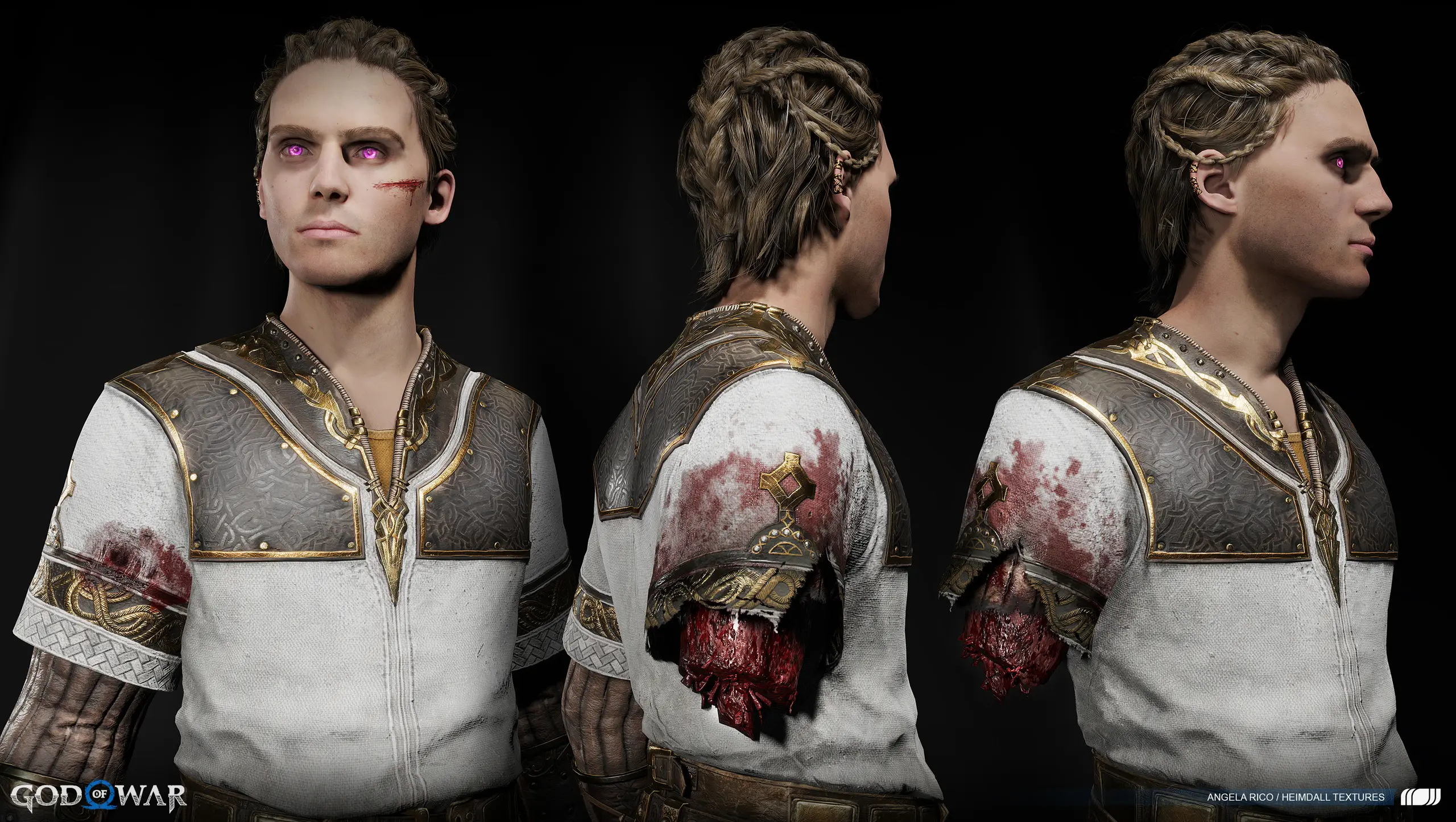
Heimdall
Appears In
Marvel Comics, Marvel Cinematic Universe, God of War
Species
Asgardian / Primordial Deity
First Appearance
Journey into Mystery #85 (October 1962)
Occupation
Gatekeeper of Asgard, Guardian of the Bifröst
Creator
Stan Lee, Jack Kirby (Comics)
Overview
Origin Story
In Norse mythology, Heimdallr holds a unique origin story that sets him apart from other deities. He was born to nine mothers who were often described as wave maidens or sisters of the sea, making him a child of both the earth and the ocean. This lineage gifted him with white skin and white hair, earning him the epithet "the whitest of the gods." Before his birth, the gods endowed him with extraordinary senses specifically designed for his role as the watchman.
When adapted into the Marvel Comics universe in 1962 by Stan Lee and Jack Kirby, Heimdall became the all-seeing guardian of the Asgardian throne room and the Bifröst bridge. He serves as the first line of defense for the Nine Realms, standing vigil against any threat that seeks to breach the gates of Asgard. His existence is defined by an unyielding duty to protect the realm, often placing him in direct opposition to chaotic forces like Loki.
Personality
Heimdall embodies stoicism and unwavering loyalty. He rarely shows emotion but possesses a deep sense of justice and a fierce protective instinct toward Asgard and its people. While he maintains a professional distance, he shares a genuine bond of friendship with Thor and respects Odin's authority while remaining willing to challenge it if necessary. His vigilance borders on paranoia in some interpretations, particularly when faced with threats he cannot predict, yet this trait ultimately saves the realms from destruction.
The character struggles with the burden of knowing too much. In the MCU, this manifests as a quiet sorrow over the inevitable fate of Asgard, whereas in God of War: Ragnarök, it twists into a desperate obsession with preventing the future he sees. Despite these variations, his core drive remains the same: to ensure the safety of the Nine Realms at any cost.
Story Arc
Throughout comic history, Heimdall has served as a constant anchor for the Asgardian court, often acting as the voice of reason against Loki's schemes. A significant portion of his narrative involves his rivalry with Loki, where their opposing natures highlight the tension between order and chaos. He has faced numerous cosmic threats including Surtur and Malekith, sometimes dying and being resurrected to demonstrate his resilience.
In the Marvel Cinematic Universe, his arc culminates in Avengers: Infinity War. Facing Thanos's invasion, Heimdall makes the ultimate sacrifice by using the Bifröst to send Hulk back to Earth to warn the Avengers, knowing the effort will kill him. This act transforms him from a silent guardian into a tragic hero whose death marks the only permanent loss in that film. Conversely, in God of War: Ragnarök, his journey takes a darker turn as he becomes a paranoid antagonist obsessed with seeing the future and stopping Ragnarök, leading to a fatal confrontation with Kratos.
Powers & Abilities
All-Seeing Vision across dimensions
Supernatural Hearing (can hear grass growing)
Bifröst Control and Activation
Master Swordsman
Superhuman Strength and Durability
Longevity and Near Immortality
Cosmic Awareness
Equipment & Signature Items
Gjallarhorn
Hlidskjalf (Sword)
Relationships

Thor
FriendA close ally and confidant bound by mutual respect and shared duty.
Odin
MentorHis king whom he serves with implicit trust and absolute loyalty.

Loki
RivalAn adversarial relationship defined by Heimdall's constant monitoring of Loki's schemes.
Valkyrie
AllyShares a respectful dynamic acknowledging her warrior skills in the MCU.
Hela
EnemyFought to stop her return to Asgard during the events of Ragnarok.
Kratos
EnemyThe son of Zeus who kills him in God of War: Ragnarök.
Memorable Quotes
“I am Heimdall, the All-Father's eyes.”
“The Bifröst is open. Go!”
“You cannot hide from me.”
“I see everything.”
“For Asgard!”
Portrayed By
Key Appearances
Journey into Mystery #85
Thor (2011)
The Avengers (2012)
Thor: The Dark World (2013)
Thor: Ragnarok (2017)
Avengers: Infinity War (2018)
God of War: Ragnarök (2022)
God of War (TV Series) (Upcoming)
Reception & Legacy
Fan reception to Heimdall has shifted significantly across different media portrayals. Idris Elba's performance in the MCU elevated the character from a minor background figure to a beloved fan favorite known for his commanding presence and emotional depth. His sacrifice in Infinity War resonated deeply with audiences, cementing his status as a true hero who prioritized the Nine Realms over his own life.
The depiction in God of War: Ragnarök introduced a grittier, more complex side to the god that surprised many players accustomed to the MCU version. This darker iteration sparked intense debate among fans regarding the character's potential for redemption versus his role as a villain. Despite these variations, Heimdall remains a cornerstone of Asgardian lore, celebrated for themes of vigilance and the inevitable passage of time.
Interesting Facts and Legends
In Norse mythology, Heimdallr is uniquely born of nine mothers, often interpreted as nine wave maidens.
He is described as having white skin and hair, earning him the nickname 'the whitest of the gods'.
The Gjallarhorn he wields can be heard throughout the cosmos to signal the start of Ragnarök.
Heimdall is the only character in Avengers: Infinity War who dies permanently without resurrection.
Christopher Judge voiced the aggressive version of Heimdall in God of War: Ragnarök.
Max Parker was cast to play Heimdall in the upcoming live-action God of War series scheduled for 2026.
Frequently Asked Questions
Who is Heimdall?
Does Heimdall die in the MCU?
Who plays Heimdall in the movies?
Is Heimdall a villain?
How many mothers did Heimdall have in mythology?
Keywords
Sources
Character Info
- First Comic Appearance
- October 1962
- Creator
- Stan Lee, Jack Kirby
- Notable Weapon
- Gjallarhorn
- Unique Origin
- Born of nine mothers
Join the community
fans discussing