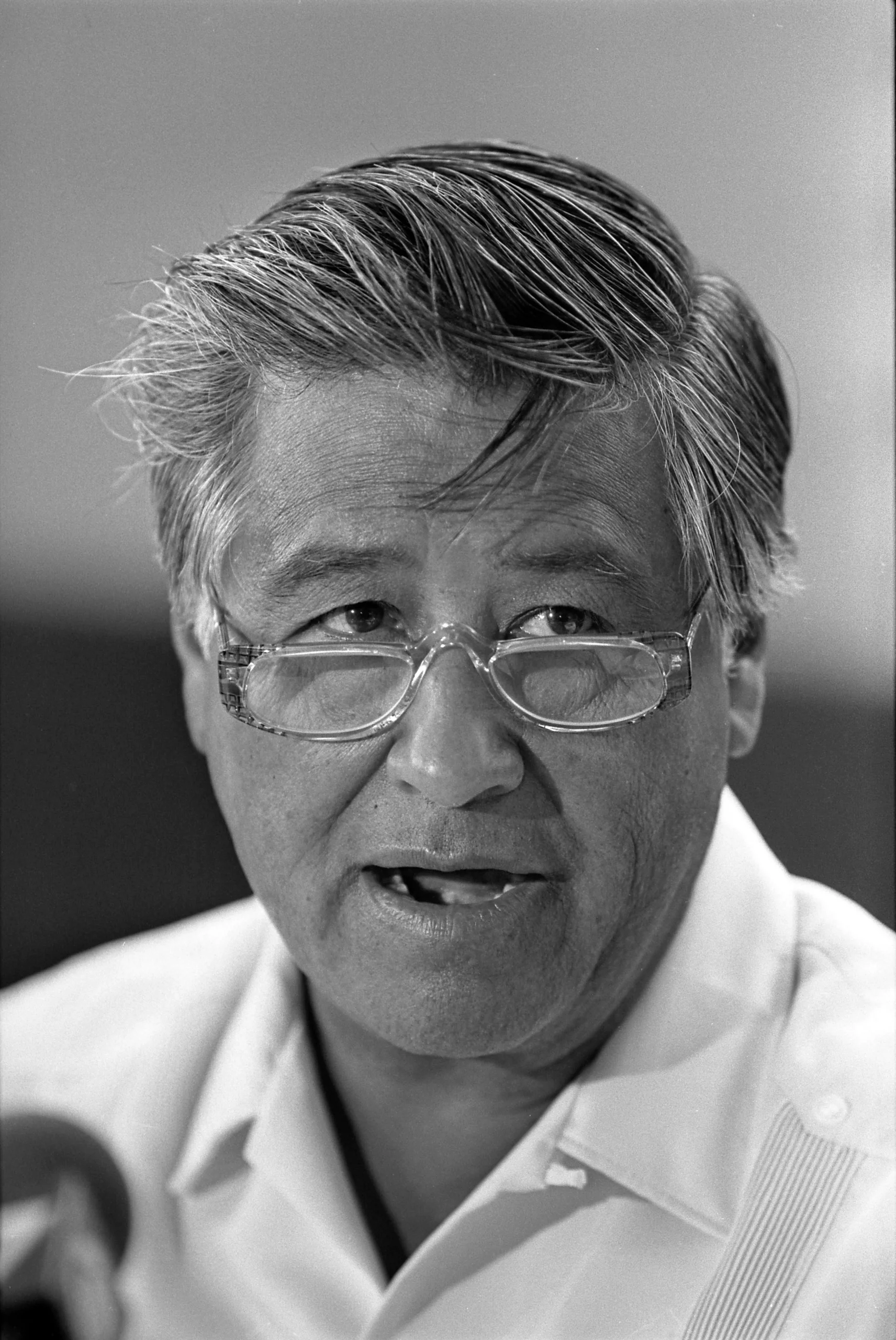
Cesar Chavez
labor unionist•civil rights activist
Also known as: Cesario Estrada Chavez, El Caudillo
Birthday
March 31, 1927
Birth Sign
Sagittarius
Birthplace
Yuma, Arizona
Age
Died at 66
Height
5 ft 9 in (175 cm)
About
Cesar Chavez was an American labor unionist and civil rights activist who co-founded the United Farm Workers. Born in Yuma, Arizona, to a Mexican-American family, he grew up working as a migrant farm laborer before serving in the U.S. Navy and later organizing for the Community Service Organization. His career is defined by the Delano grape strike of 1965, which utilized nonviolent resistance inspired by Mahatma Gandhi to secure contracts for farmworkers. He co-founded the National Farm Workers Association with Dolores Huerta and Gilbert Padilla, which merged with the Agricultural Workers Organizing Committee to form the UFW in 1967.
Chavez led a movement that reshaped American labor law through boycotts and fasts, though his influence waned in the 1970s due to internal conflicts. He died in 1993, leaving a complex legacy that faced re-evaluation in 2026 following allegations of sexual abuse. Despite these recent controversies, his early work laid the groundwork for a movement that secured vital rights for agricultural workers across the nation.
Early Life & Background
Cesario Estrada Chavez entered the world on March 31, 1927, in Yuma, Arizona, during the height of the Great Depression. His family owned a small farm that they lost when the economic crisis hit, forcing them to become migrant workers. They moved between Arizona and California, living in poverty and often residing in substandard housing provided by growers. The demands of farm work meant Chavez attended school irregularly, and he eventually dropped out after the eighth grade to support his family financially.
After leaving high school, Chavez enlisted in the U.S. Navy in 1946 and served for two years, achieving the rank of Seaman Second Class before being discharged in 1948. He settled in Stockton, California, where he joined the Community Service Organization in 1950. There he learned the mechanics of voter registration and community organizing. By 1958, he had risen to become the national director of the CSO based in Los Angeles, where he helped register thousands of Mexican Americans to vote. He resigned from this position in 1962 to pursue independent organizing efforts focused specifically on farmworkers' rights.
Career Growth
In 1962, Chavez co-founded the National Farm Workers Association with Dolores Huerta and Gilbert Padilla. The organization initially offered insurance and credit services to members. Two years later, in 1965, he launched the Delano grape strike after the Agricultural Workers Organizing Committee voted to strike. Chavez organized a march from Delano to Sacramento and initiated a nationwide boycott of grapes. In 1966, he led the famous 340-mile Caravan de la Reconciliación from Delano to Sacramento, drawing national attention.
The NFWA merged with AWOC to form the United Farm Workers in 1967, with Chavez serving as president. He undertook a 25-day fast in 1968 to renew the commitment to nonviolence and raise funds for the strike. A major victory came in 1970 when California grape growers signed contracts with the UFW, ending the five-year strike. In 1975, he successfully lobbied for the passage of the California Agricultural Labor Relations Act, the first state law granting collective bargaining rights to farmworkers.
During the 1970s and 1980s, Chavez faced declining membership due to internal conflicts and strategic disagreements. He shifted focus to anti-pesticide campaigns and real estate cooperatives, though some projects sparked controversy by using non-union labor. His leadership style became increasingly autocratic, alienating many supporters even as he continued to push for labor rights.
Career Timeline
Public Image & Style
Historically, Cesar Chavez was portrayed as a saintly, self-sacrificing leader who embodied the ideals of nonviolence and dedication. His public image was that of a humble man who gave everything for the cause of farmworkers. In 2026, this image fractured into a complex figure of both monumental achievement and grave moral failure following revelations of sexual abuse. Media outlets and institutions began to distance themselves from his legacy, leading to the renaming of landmarks and monuments. The shift from revered icon to controversial figure marked a significant change in how the public perceived his contributions.
Fame & Fandom (iFAMOUS Rankings)
iFANN has not yet collected fame data for this person. As of the October 2026 rankings, there is no published placement for Cesar Chavez. He is not featured on the September 2026 iFAMOUS Rankings flagship list.
There is no formal fandom name for supporters of Cesar Chavez. Instead, his followers are often referred to as "Chavezistas" or simply as farmworker allies. Fan culture revolves around annual commemorations on Cesar Chavez Day, observed on March 31. Activities include vigils, educational programs, and the "Day of Action." In 2026, fan and activist groups have pivoted to campaigns demanding accountability and the removal of honors associated with his legacy. The shift in public sentiment has transformed what was once a celebratory fandom into a space for critical reflection and reform.
Interesting Facts and Legends
Cesar Chavez was an avid reader of Mahatma Gandhi and Leo Tolstoy, whose philosophies deeply influenced his approach to activism. He was also a skilled boxer in his youth, a background that reportedly fueled his fighting spirit in the fields. The UFW used the symbol of the Aztec eagle on its flag, representing the indigenous roots of the farmworker struggle. Chavez was a vegetarian and promoted organic farming practices within the union.
His 25-day water-only fast in 1968 is widely regarded as a defining moment of spiritual and physical endurance. This event drew national media attention and revitalized the strike. Another iconic moment was the 340-mile walk from Delano to the state capital in 1966, accompanied by hundreds of supporters. This journey symbolized the long path of the farmworker class. While these events are verified historical facts, the miraculous nature of some strikes has been mythologized in folklore over the decades.
Notable Quotes
“Nonviolence is not inaction. It is not for the weak. Nonviolence is hard work.”
“The future will belong to those who can imagine it, plan it, and execute it.”
“We cannot seek achievement for ourselves and forget about progress and prosperity for our community... We must do everything we can to help our people stand up and be counted.”
Family & Personal Life
Cesar Chavez married Helen Fabela in 1948. She was a constant companion and supporter throughout his activism, managing the household and supporting the movement until her death in 1991. There were no other publicly confirmed romantic relationships or marriages. The couple had seven children: Richard, Linda, Gloria, Ceasar Jr., Paul, Manuel, and Alicia. Chavez lived frugally throughout his life, often residing in a small trailer or shared housing. His family values were deeply rooted in Catholic social teaching and the principles of nonviolence.
Notable Connections
Relationships & Dating History
Cesar Chavez was married to Helen Fabela Chávez from 1948 until her death in 1991. She was a constant companion and supporter throughout his activism, managing the household and supporting the movement. There were no other publicly confirmed romantic relationships or marriages documented in credible biographical sources. The couple had seven children together. As a historical figure deceased since 1993, there is no dating history beyond his marriage to Helen Fabela. No other partners are documented in credible biographical sources.
- MarriedHelen Fabela Chávez1948 - 1991Constant companion and supporter throughout his activism; mother of his seven children.
Death & Aftermath
Died
April 23, 1993 (aged 66)
Death Place
Keene, California
Cause of Death
Metastatic lung cancer
Cesar Chavez died on April 23, 1993, at his home in Keene, California, near the United Farm Workers headquarters in Delano. He was 66 years old when metastatic lung cancer claimed him after several years of battling the terminal illness. His final days were spent largely bedridden following a Caravan of Hope pilgrimage earlier that year which concluded shortly before his health deteriorated significantly. The official cause of death was confirmed by the union and his family, as the circumstances were attributed to a known condition rather than sudden or suspicious events.
A private funeral ceremony took place on April 25, 1993, at St. Francis Xavier Church in Delano, California, followed by burial at the United Farm Workers National Cemetery. Thousands of mourners attended, including Dolores Huerta and other dignitaries, while traditional Mexican music accompanied speeches emphasizing nonviolence. Posthumously, he received the Presidential Medal of Freedom in 1994, and the César E. Chávez National Monument was established in 2012 to honor his memory. Tributes poured in from civil rights leaders, labor unions, and government officials, including President Bill Clinton, who issued a statement honoring his contributions.
The narrative surrounding his legacy shifted dramatically in late 2026 following extensive allegations regarding past sexual abuse brought to light by an investigation into his behavior toward young girls. These revelations triggered institutional responses, including calls for the removal of statues and the renaming of landmarks such as San Jose's Plaza de Cesar Chavez and Berkeley's Cesar Chavez Park. While the Cesar Chavez Foundation continues to operate, its mission faces scrutiny alongside mixed family statements regarding the re-evaluation of his history.
Net Worth (Estate Value)
$0
iFANN Editorial Team estimate
As a labor activist whose primary wealth was derived from donations and union dues rather than personal commercial ventures, Cesar Chavez did not accumulate significant personal wealth. Sources indicate he lived frugally, often residing in a small trailer or shared housing. There is no active estate generating significant revenue comparable to celebrity estates.
The Cesar Chavez Foundation operates as a non-profit, funded by donations and grants, rather than an estate managing IP or royalties. With the re-evaluation of his legacy in 2026, any potential licensing deals or merchandise sales related to his name have been suspended or scrutinized by institutions like the UFW and the foundation. Research by the iFANN Editorial Team puts the value of his estate and associated assets at approximately $0, reflecting the lack of personal commercial accumulation and the current suspension of revenue-generating activities tied to his name.
Awards Won (3)
Cesar Chavez received numerous awards posthumously, including the Presidential Medal of Freedom in 1994, the highest civilian honor in the United States. He was inducted into the California Hall of Fame and the National Hispanic Cultural Center Hall of Fame. The César E. Chávez National Monument was established in 2012, and his birthday became a federal holiday in 2014. He also received the American Legion's Civil Rights Award and the National Human Rights Award.
1994 · Civilian Honor
Lifetime Achievement
1968 · Civil Rights
Labor Activism
Known For
United Farm Workers
1967 · Co-founder and President
Delano Grape Strike
1965 · Leader
Keywords
Sources
Quick Facts
- Profession
- trade unionist, laborer, politician
- Born
- March 31, 1927
- Birthplace
- Yuma, Arizona
- Died
- April 23, 1993
- Death Place
- Keene, California
- Gender
- Male
- Spouse
- Helen Fabela Chávez
- Birth Sign
- Sagittarius
Personal Details
- Full Name
- Cesario Estrada Chavez
- Height
- 5 ft 9 in (175 cm)
- Spouse
- Helen Fabela Chávez
- Children
- Richard, Linda, Gloria, Ceasar Jr., Paul, Manuel, Alicia
- Education
- Eighth grade; Honorary degrees from UC Berkeley, Loyola Marymount University, Stanford University
Frequently Asked Questions
What is Cesar Chavez best known for?
Did Cesar Chavez support LGBTQ rights?
Was Cesar Chavez a Mexican?
What are 10 interesting facts about Cesar Chavez?
What happened to Cesar Chavez's legacy in 2026?
Join the community
fans discussing