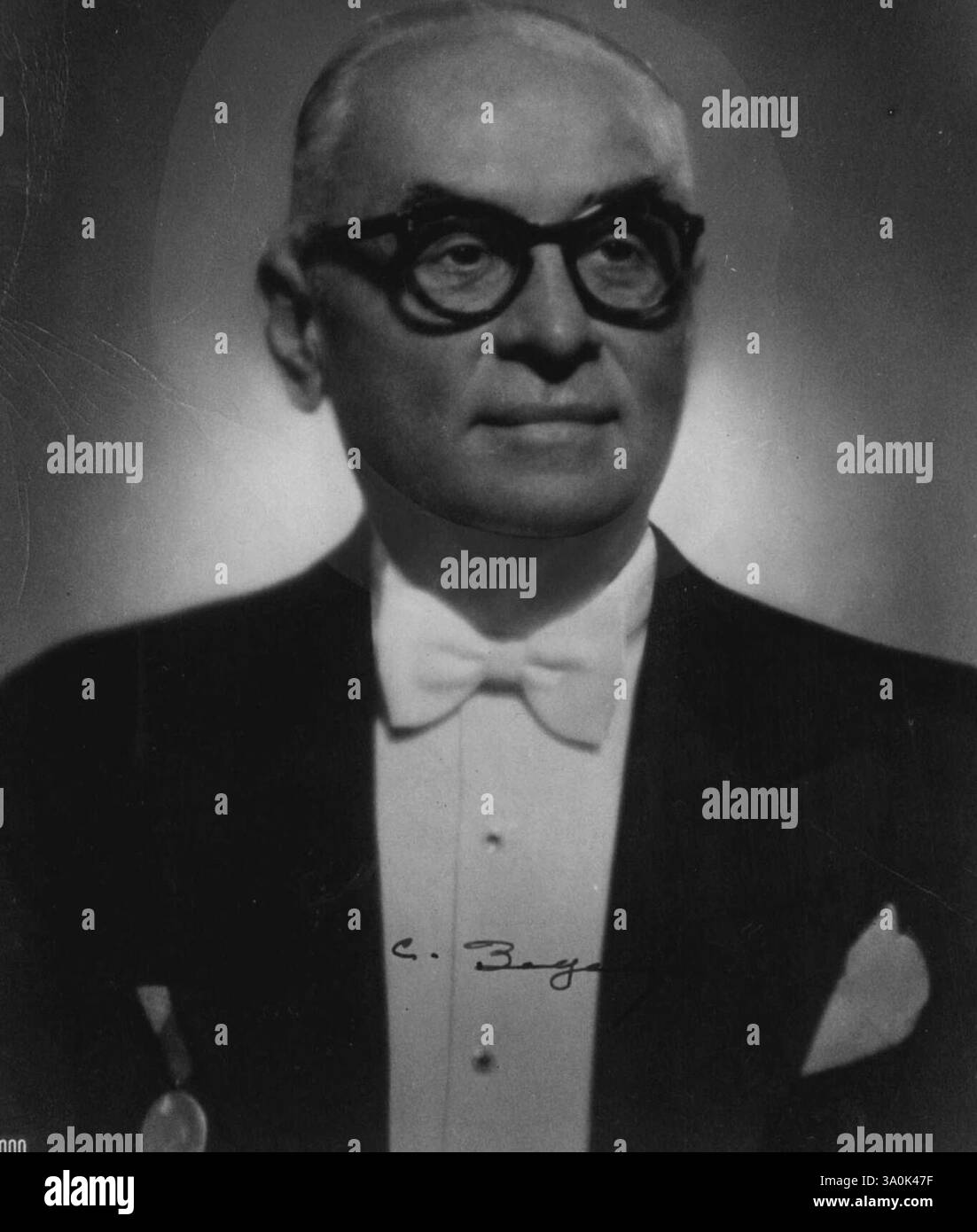
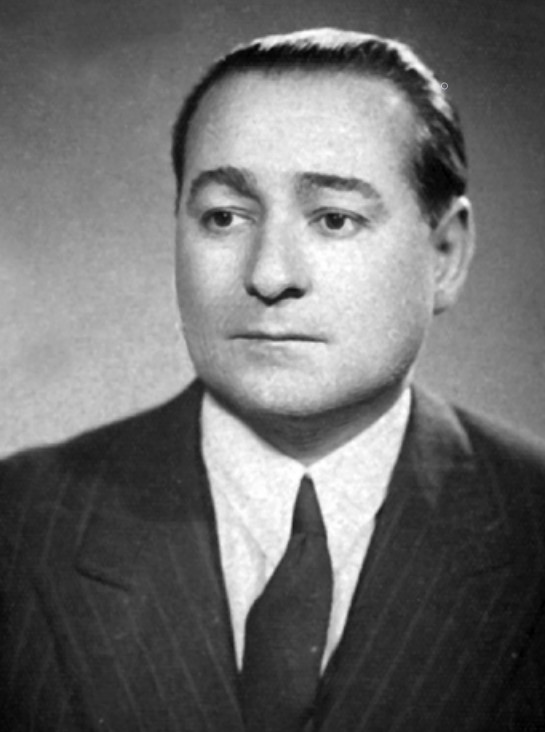
Celâl Bayar
 Turkey
Also known as: Mahmut Celâlettin Bayar, Mahmut Celal Bayar
Birthday
May 16, 1883
Birth Sign
Taurus
Birthplace
Umurbey, Bursa, Ottoman Empire
Age
Died at 103
About
Celâl Bayar was a Turkish economist and politician who served as the third president of the Republic of Turkey from 1950 to 1960. He was a central figure in the nation's transition from single-party rule to a multi-party democracy, and his presidency marked a period of significant economic growth and closer ties with the West. Bayar is remembered for his role in establishing İş Bankası, Turkey's first national bank, and for his advocacy of liberal economic policies during the early years of the republic.
Before his presidency, Bayar held key positions in the Ottoman and early republican governments, including prime minister under Mustafa Kemal Atatürk. He co-founded the Democrat Party in 1946, which won the landmark 1950 election and ended the Republican People's Party's long monopoly on power. As president, he worked closely with Prime Minister Adnan Menderes to modernize the country's infrastructure and agriculture.
Bayar's life was marked by extraordinary longevity; he lived to be 103, making him one of the longest-lived heads of state in history. Even after his presidency ended in the 1960 military coup and a subsequent imprisonment, he remained a vocal advocate for democratic rights. He is honored today through institutions like Celal Bayar University in Manisa.
Early Life & Background
Mahmut Celâlettin Bayar was born on May 16, 1883, in the village of Umurbey, near Bursa, in the Ottoman Empire. His father, Abdullah Fehmi Efendi, was a religious scholar and teacher who migrated from Bulgaria. The family was of modest means, and Bayar grew up in a conservative, religious household. He attended a local primary school and later a French school in Bursa, where he gained fluency in French, a skill that would serve him in his later diplomatic and political career.
Bayar's first job was as a clerk in a bank, but he soon became involved in politics. He joined the Committee of Union and Progress (CUP), a revolutionary organization advocating for constitutional reform in the Ottoman Empire. He played a key role in establishing CUP branches in İzmir and Bursa, and his organizational skills caught the attention of party leaders. During the Balkan Wars and World War I, Bayar worked in various administrative and intelligence roles for the CUP, gaining a reputation as a capable and pragmatic operator.
After the Ottoman defeat in World War I and the subsequent Turkish War of Independence, Bayar aligned himself with Mustafa Kemal Atatürk's nationalist movement. He was elected to the last Ottoman parliament and then to the new Grand National Assembly of Turkey in 1920. His early political career was marked by a focus on economic matters, and he quickly became one of Atatürk's trusted advisors on financial policy.
Career Growth
Bayar's breakthrough came in 1924 when he founded İş Bankası, Turkey's first national bank, with the backing of Atatürk. This institution was designed to finance the new republic's industrial projects and became a cornerstone of its economic development. Bayar served as its general manager until 1932, building a reputation as a shrewd banker and proponent of private enterprise.
In 1932, Atatürk appointed him minister of economy, a position he held until 1937. In this role, Bayar implemented policies that balanced state intervention with private initiative, laying the groundwork for Turkey's mixed economy. He was appointed prime minister in 1937, succeeding İsmet İnönü, but his tenure was cut short by Atatürk's death in 1938 and the subsequent political realignment under İnönü. Bayar resigned in 1939, partly due to policy disagreements.
After a period of relative political quiet, Bayar co-founded the Democrat Party in 1946 with Adnan Menderes and others. The party's victory in the 1950 general election was a watershed moment in Turkish history, as it marked the first peaceful transfer of power. Bayar was elected president and served for ten years, overseeing a period of rapid economic expansion, infrastructure projects, and closer alignment with NATO and the United States. His presidency ended with the 1960 military coup, which led to his imprisonment and trial. He was sentenced to death but the sentence was commuted to life imprisonment due to his age. He was released in 1964 and later fully pardoned in 1966.
Career Timeline
Public Image & Style
Bayar was often portrayed as a dignified, statesmanlike figure, with a calm demeanor and a sharp intellect. He was known for his formal attire and his careful, measured public speaking style. In the press, he was sometimes called "the old fox" for his political astuteness. His image as a founding father of modern Turkey was complicated by his association with the 1960 coup and the execution of his prime minister, but many Turks remember him as a champion of democracy who peacefully transferred power. In recent years, his legacy has been revisited by historians, with some praising his economic liberalization and others critiquing his government's authoritarian tendencies.
Fame & Fandom
Celâl Bayar's legacy is not measured in trending hashtags or viral dance challenges, but in the enduring weight of a century-spanning life and the complex architecture of a nation. As one of the longest-serving heads of state in history, his public image remains that of a dignified statesman who navigated Turkey from the Ottoman twilight into a modern republic. There is no formal fandom name for his supporters; engagement with his memory occurs through academic institutions like Manisa Celâl Bayar University and historical archives rather than organized fan clubs or charity drives. His story is one of civic duty, marked by a dramatic shift from liberal economic pioneer to political prisoner after the 1960 coup, a narrative that resonates deeply within Turkish historical discourse rather than global pop culture charts. While he never cultivated a celebrity following comparable to modern entertainers, his presence in national consciousness remains absolute. This enduring relevance places him firmly within the pantheon of influential figures tracked by the iFANN Global Fame Rankings. Current data positions him as the 89th most famous person in Turkey, a ranking that has slipped slightly from the 86th spot in the previous cycle. On a broader scale regarding his origin, he stands as the 78th most famous person from Turkey, moving down from the 73rd position last cycle. These placements reflect a stable, high-level recognition rooted in historical significance rather than transient media spikes.
Interesting Facts and Legends
Celâl Bayar maintained a personal library exceeding 5,000 books, favoring French literature alongside his extensive political writings. Even while holding the highest office in the land, he adhered to a frugal lifestyle, rejecting luxury in favor of simple meals and avoiding alcohol and tobacco entirely. His intellect was sharp enough to survive a 1935 assassination attempt where a bomb was thrown at his car during an Ankara visit, yet he survived to play passionate games of chess with fellow politicians. A remarkable chapter of his life involves his unprecedented longevity; born in 1883 and dying in 1986, he lived to be 103 years old, making him one of the oldest heads of state ever recorded. Another defining moment occurred during his 1954 state visit to the United States, where he addressed the United Nations and met with NBC executives in New York, cementing early Cold War ties. Decades later, a facility named after him in Manisa became a symbol of sustainable energy, powered by solar panels as noted in 2013 reports. His post-presidency drama included a life sentence following the 1960 military coup, though age and health eventually led to his release, leaving behind a complicated legacy of democratic transition and political martyrdom.
Notable Quotes
“The bank is not a shop; it is a trust.”
“Democracy is not a luxury; it is a necessity.”
“I have lived for my country, and I will die for it.”
Family & Personal Life
Bayar married Reşide Bayar in 1903, and the couple had three children: a son, Nilüfer, and two daughters, Refia and Türkan. His family was a source of stability throughout his turbulent political career. Reşide was known for her quiet support and often accompanied him during his presidency. After Bayar's imprisonment in 1960, his family campaigned for his release, and his wife remained a steadfast companion until her death in 1974. Bayar lived with his daughter Nilüfer's family in his final years, enjoying time with his grandchildren.
Notable Connections
Celâl Bayar worked closely with Mustafa Kemal Atatürk, who appointed him prime minister, and with Adnan Menderes, his prime minister during his presidency. He was a contemporary of İsmet İnönü, his predecessor and political rival. Bayar also had a notable relationship with U.S. President Harry Truman, meeting him during an official visit to Washington in 1954.
Relationships & Dating History
Celâl Bayar married Reşide Bayar in 1903, and they remained together for over 70 years until her death in 1974. Their marriage was a strong partnership, with Reşide providing support during his political career and his imprisonment. They had three children together. There are no records of any other significant romantic relationships in Bayar's life. As of 2026, Bayar is deceased, and he was married to Reşide at the time of her death.
- MarriedReşide Bayar1903 - 1974Married for over 70 years until her death.
Death & Aftermath
Died
August 22, 1986 (aged 103)
Death Place
Ankara, Turkey
Cause of Death
Natural causes associated with extreme old age
The restoration of his birth house in Manisa, which opened to the public decades later, and the enduring presence of Celal Bayar University stand as the primary monuments to a life that outlasted the republic he helped build. On August 22, 1986, the final chapter closed in Ankara at the age of 103. He passed away from natural causes associated with extreme old age within the capital city, marking the end of an era for the generation that founded modern Turkey. The New York Times obituary published the following day hailed him as a "Father of the Turkish Republic," reflecting the immediate national mourning and the recognition of his pivotal role in the nation's transition to multi-party democracy.
Tributes poured in from Turkish officials who remembered his ten-year presidency and the historic first peaceful transfer of power under his leadership. He was laid to rest in Cebeci Asri Cemetery in Ankara, joining other prominent politicians and military leaders in a state funeral befitting his status., the event signaled a collective farewell to the last surviving architect of the early republic. His legacy continues through the museum dedicated to him and the university named in his honor in Manisa. The estate was handled according to standard probate laws.
Net Worth (Estate Value)
$10 Million
iFANN Editorial Team estimate
As a statesman and banker, Celâl Bayar accumulated a modest personal fortune, primarily derived from his long tenure in public service and strategic investments. Research by the iFANN Editorial Team puts his net worth at death in 1986 at $10 Million, a figure reflecting his role in founding İş Bankası and his subsequent career choices. Unlike many contemporaries who expanded their wealth through aggressive business ventures after leaving office, Bayar remained relatively quiet financially, relying on his established assets and salary. His estate, managed by descendants, includes property and bank shares that have appreciated significantly over the decades since his passing. The financial discipline he practiced throughout his life ensured that his wealth grew steadily without the volatility often associated with high-profile political figures.
Awards Won (1)
Celâl Bayar received several honors during his lifetime, including the Turkish Medal of Independence for his role in the War of Independence. He was also awarded honorary doctorates from a number of universities. However, he did not accumulate a large number of formal awards, as his recognition largely came through his political offices and the naming of institutions in his honor.
1923 · Military
Turkish War of Independence
Known For
Third President of Turkey
1950 · President
Founder of İş Bankası
1924 · Founder
Co-founder of Democrat Party
1946 · Co-founder
Keywords
Sources
Quick Facts
- Profession
- politician
- Born
- May 16, 1883
- Birthplace
- Umurbey, Bursa
- Died
- August 22, 1986
- Death Place
- Istanbul
- Gender
- Male
- Spouse
- Reşide Bayar
- Birth Sign
- Taurus
Personal Details
- Full Name
- Mahmut Celâlettin Bayar
- Spouse
- Reşide Bayar
Frequently Asked Questions
Who was Celâl Bayar?
When was Celâl Bayar born and when did he die?
What was Celâl Bayar's most significant political contribution?
What happened to Celâl Bayar after his presidency?
What institutions were founded or significantly influenced by Celâl Bayar?
Join the community
fans discussing