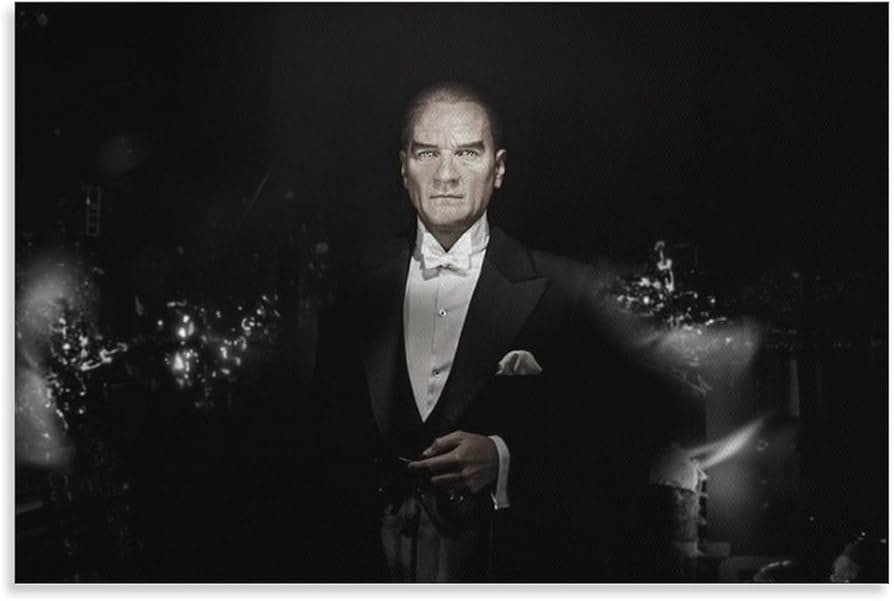
Mustafa Kemal Atatürk
 Greece
politician•statesperson•writer
Also known as: Kemal Atatürk, Mustafa Kemal Pasha, Kamâl Atatürk
Birthday
1881
Birth Sign
Capricorn
Birthplace
Thessaloniki, Ottoman Empire (now Greece)
Age
Died at 57
Height
5 ft 7 in (170 cm)
About
Mustafa Kemal Atatürk was a Turkish field marshal, statesperson, and writer who founded the Republic of Turkey and served as its first president. He is celebrated for leading the Turkish National Movement to victory in the War of Independence and establishing a modern, secular nation. His reforms, including the abolition of the caliphate and the introduction of a secular civil code and Latin-based alphabet, transformed Turkey into a Western-facing industrializing country. He also granted Turkish women equal civil and political rights. His ideology, Kemalism, emphasizing secularism, republicanism, and nationalism, continues to deeply influence Turkey's political culture. The Turkish Parliament granted him the surname Atatürk, meaning "Father of the Turks," in 1934. Today, he is remembered as a pivotal figure in 20th-century history, inspiring anti-colonial movements, though his legacy is also debated for its authoritarian aspects and assimilationist policies.
Early Life & Background
Mustafa Kemal Atatürk, born Mustafa around 1881 in Thessaloniki, Ottoman Empire (now Greece), spent his earliest years in a three-storey pink house situated on Islahhane Street in the Kocakasim District of Salonika. His father, Ali Rıza Efendi, initially served as a military officer before transitioning into a timber merchant. However, his business ventures, particularly a salt enterprise, proved unsuccessful, leading to financial hardship and a period of heavy drinking before his untimely death from tuberculosis. In the wake of this loss, his mother, Zübeyde Hanım, made the difficult decision to sell their home. She then moved the family to her brother's farm located just outside Salonika, where young Mustafa developed a strong physique, contributing to the farm work before eventually returning to the city to complete his primary education.
Mustafa's formal schooling began at the modern Şemsi Efendi School, after which he enrolled in the Salonika Junior High School for Civil Servants. Despite this civilian path, he felt a profound calling towards a military career. This led to a significant change in 1893 when he transferred to the Military Junior High School. It was during this period that his mathematics teacher, also named Mustafa, recognized his exceptional academic abilities and bestowed upon him the additional name "Kemal," meaning "perfection." From 1896 to 1899, Mustafa Kemal further honed his skills at the Monastir Military Senior High School, located in present-day Bitola, North Macedonia. There, he forged a notable friendship with Ali Fethi Okyar, who would later become an important collaborator in his life.
His dedication to military studies continued to propel him forward. In March 1899, Mustafa Kemal gained admission to the prestigious Ottoman War College in Istanbul. He successfully completed his rigorous training there, graduating in 1902 with the rank of lieutenant. Driven by a desire for advanced strategic knowledge, he proceeded to the Ottoman War Academy, where he further distinguished himself. His intensive studies culminated in his graduation in 1905 as a Staff Captain , a pivotal achievement that marked the completion of his formal military education and his official entry into the ranks of the Ottoman military establishment.
Career Growth
After graduating, Atatürk was posted to Damascus, Syria, where he co-founded the secret society "Homeland and Freedom" to oppose Sultan Abdul Hamid II's despotism. He participated in the 1908 Young Turk Revolution and fought in the Italo-Turkish War in Libya from 1911 to 1912. During the Balkan Wars, he served in Albania and as military attaché in Sofia, Bulgaria.
World War I made him a national hero. In 1915, during the Gallipoli Campaign, he commanded Ottoman forces and famously ordered his troops: "I don't order you to attack, I order you to die." This defense prevented Allied landings. After the Ottoman defeat, he arrived in Samsun on May 19, 1919, to organize the Turkish National Movement. He convened congresses in Erzurum and Sivas and opened the Grand National Assembly in Ankara on April 23, 1920, establishing a rival government. His military leadership at the Battle of Sakarya in 1921 turned the tide. By 1922, he had abolished the Ottoman sultanate and defeated Greek forces. The Treaty of Lausanne on July 24, 1923, confirmed Turkish sovereignty, and on October 29, 1923, he proclaimed the Republic of Turkey and was elected its first president.
During his 15-year presidency, Atatürk enacted a series of radical reforms. He abolished the Islamic Caliphate in 1924, replacing religious courts with a secular legal system based on the Swiss Civil Code. In 1925, he banned the fez and closed religious schools. He adopted new civil, criminal, and commercial codes in 1926. The Latin-based Turkish alphabet replaced the Arabic script in 1928, and he personally taught the new letters to citizens. Women gained the right to vote in municipal elections in 1930 and full political rights by 1934. The Surname Law of 1934 gave every Turkish citizen a surname; Parliament granted him the name Atatürk, meaning "Father of the Turks." He also pursued foreign rapprochement, helping create the Balkan Pact with Greece, Romania, and Yugoslavia.
Career Timeline
Public Image & Style
Atatürk is typically depicted in military uniform or a Western-style suit, often with a stern but charismatic expression. His portrait is ubiquitous in Turkey, displayed in schools, government buildings, public squares, and private homes. He inspires a quasi-religious reverence; his death date is marked by a national moment of silence, and his birthday is celebrated as the Commemoration of Atatürk, Youth and Sports Day. Supporters are called "Atatürkçü" or "Kemalist." Western media historically presented him as a progressive reformer, while critics highlight his authoritarian methods and assimilationist policies toward minorities. The phrase "Ne mutlu Türküm diyene" (How happy is the one who says I am a Turk) is closely associated with his legacy.
Fame & Fandom (iFAMOUS Rankings)
Mustafa Kemal Atatürk does not command a fandom in the modern pop-culture sense. There are no fan clubs, no organized voting drives, and no viral hashtags chasing his legacy. Instead, his relationship with the public is defined by state-sanctioned reverence and national patriotism. The closest equivalent to a fan ritual occurs annually on November 10th, when traffic halts across Turkey at 9:05 AM for a minute of silence marking his death. This mandatory civic moment transcends voluntary celebration, functioning as a collective national prayer rather than a fan gathering. His mausoleum in Ankara, Anıtkabir, serves as a pilgrimage site where millions visit to honor the founder of the Republic, often joined by foreign dignitaries seeking to engage with his secular vision.
While he lacks a named fanbase like those seen in music or film, his influence remains absolute through official institutions that maintain his image in schools and government buildings. He stands as a historical giant whose reach extends far beyond borders. According to the iFANN Global Fame Rankings, he holds the position of the 399th most famous person in the world, holding steady from the previous cycle. He ranks as the 2nd most famous person from Greece, holding steady from the previous cycle. Within his specific field, he is identified as the 60th most famous person in Politics, holding steady from the previous cycle.
Interesting Facts and Legends
Atatürk maintained a massive personal library exceeding 4,000 books and enjoyed swimming, dancing, and music alongside his dog, Fox. From 1935 to 1937, he briefly adopted the Old Turkic name "Kamâl," meaning fortification, before settling on his title. His mother, Zübeyde Hanım, was unusually educated for her era and could read and write. While some sources suggest his father may have been ethnically Albanian, others trace the family to nomads from Konya. A legendary moment from the War of Independence involves his command during the Battle of Sakarya, where he told troops, "Your line is the front line," transforming every soldier into a frontline defender. Another foundational story surrounds the Surname Law of 1934, when the Assembly bestowed the name "Atatürk" upon him, seen as a divine seal of approval on his reforms. He personally traveled to villages to teach the new Latin alphabet, symbolizing his dedication to literacy. Upon his death from liver disease at Dolmabahçe Palace, the sudden outpouring of grief created a mythos of a leader who gave everything until his last breath.
A pervasive story from the War of Independence features his declaration, "My soldiers! Your destination is the Mediterranean; your goal is freedom!" This moment is widely cited as the turning point that liberated Anatolia. Another legend recounts his walk among peasants in a small Anatolian village, where he listened to grievances without guards and solved local disputes personally. These verified events have been woven into the national psyche as foundational myths of Turkish identity.
Notable Quotes
“I don't order you to attack, I order you to die.”
“Peace at home, peace in the world.”
“How happy is the one who says I am a Turk.”
“A nation that does not know its past cannot build its future.”
“Sovereignty belongs unconditionally to the nation.”
Family & Personal Life
Atatürk's mother, Zübeyde Hanım, was from a farming family in Langaza and could read and write, which was rare for women of her era. His father, Ali Rıza Efendi, died of tuberculosis in 1888 when Mustafa was a boy. Five of his siblings died in early childhood; only his sister Makbule Atadan survived to adulthood, passing away in 1956. Atatürk had no biological children but adopted 12 daughters and one son. Among them were Afet İnan, a historian and sociologist, and Sabiha Gökçen, who became Turkey's first female combat pilot. His adopted daughter Ülkü Adatepe was particularly close to him.
Notable Connections
Atatürk worked closely with İsmet İnönü, his prime minister and successor as president. He was friends with Ali Fethi Okyar from military school and Ali Fuat Cebesoy from the War College. His adopted daughter Sabiha Gökçen became Turkey's first female combat pilot.
Relationships & Dating History
Atatürk had two notable relationships. Fikriye Hanım, a distant relative of a close friend, lived in his Ankara residence during the War of Independence and served as a companion. When Atatürk married Latife Uşşakî in 1923, Fikriye became distraught and died by suicide in 1924, though circumstances remain debated. Atatürk married Latife Uşşakî, daughter of a wealthy Izmir merchant, on January 29, 1923. The marriage was stormy due to his demanding schedule and her strong personality. They divorced amicably on August 5, 1925, with no children. Latife never remarried and lived until 1975. Atatürk was divorced at the time of his death and had no surviving spouse.
- DatedFikriye Hanım1921 - 1923Rumored romantic companion; lived in his Ankara residence during the War of Independence.
- MarriedLatife Uşşakî1923 - 1925Married on January 29, 1923; divorced amicably on August 5, 1925. No children.
Death & Aftermath
Died
November 10, 1938 (aged 57)
Death Place
Istanbul, Turkey
Cause of Death
Reported liver cirrhosis due to chronic alcoholism
Flags lowered to half-mast across the nation as citizens gathered in streets to weep, marking a moment of profound grief that rippled from Istanbul to the smallest villages. The Grand National Assembly declared three days of mourning while heads of state sent formal condolences and ordered moments of silence. This immediate outpouring transformed into a surge of printed speeches and writings that became bestsellers overnight, alongside the rapid erection of memorial murals and statues in public squares. The end came at 09:05 AM on November 10, 1938, within the Dolmabahçe Palace in Istanbul, following a period of rapid decline that began with his visible frailty during a May trip to Samsun.
By September, acute respiratory distress and jaundice had confined him to bed, where physicians confirmed liver cirrhosis resulting from chronic alcoholism and long-term health issues. While rumors of poisoning or assassination by foreign agents circulated among dissidents, no police investigation, trial, or legal ruling ever opened to support these claims. The official medical bulletin remained the sole public statement regarding his passing. A procession carried his body from the palace to the Cebeci Military Cemetery in Ankara, accompanied by the entire government and representatives from over forty nations. Radio broadcasts filled the airwaves with the national anthem as thousands attended services before his temporary interment at the Ethnography Museum until the Mausoleum of the Republic was completed in 1953.
His estate transferred entirely to the Turkish Republic, supporting his adopted family through state pensions, while his name became legally protected against commercial use or insult. Decades later, foundations, scholarships, and cultural centers like the Atatürk Cultural Centre remain focal points of political and historical discourse.
Net Worth (Estate Value)
$10 Million
iFANN Editorial Team estimate
As a historical figure who died in 1938, Atatürk held no personal wealth comparable to modern figures. He was a career military officer and later president of a developing republic. He did not accumulate personal fortune from his positions. The Turkish state manages his legacy, including his properties such as the room in Dolmabahçe Palace and his birthplace in Thessaloniki, which are maintained as museums. His image and name are protected by Turkish Law No. 5816, limiting commercial exploitation. Royalties from books and documentaries typically go to publishers. Per iFANN's editorial analysis, Atatürk's estate is estimated at $10 Million in 2026, primarily consisting of the value of his personal belongings and historical artifacts held by the state.
Awards Won (2)
Atatürk received numerous military decorations from the Ottoman Empire for service in the Italo-Turkish War, Balkan Wars, and World War I. As founder of the Republic, he was the first recipient of the Turkish Medal of Independence. He also received foreign decorations from Germany and Afghanistan.
1923 · National
Founding of the Republic
1916 · Military
Gallipoli Campaign
Known For
Founding the Republic of Turkey
1923 · Founder and first President
Gallipoli Campaign
1915 · Ottoman commander
Turkish War of Independence
1919 · Leader of the Turkish National Movement
Keywords
Sources
Quick Facts
- Profession
- politician, statesperson, writer
- Born
- 1881
- Birthplace
- Thessaloniki
- Died
- 1938-11-10
- Death Place
- Dolmabahçe Palace
- Gender
- Male
- Spouse
- Latife Uşşakî
Personal Details
- Full Name
- Mustafa
- Height
- 5 ft 7 in (170 cm)
- Spouse
- Latife Uşşakî
- Children
- 12 adopted daughters, 1 adopted son
- Education
- Monastir Military Senior High School, Ottoman War College, Ottoman War Academy
Frequently Asked Questions
What did Atatürk die of?
Was Atatürk a dictator?
Did Atatürk have children?
How tall was Atatürk?
Why is Atatürk so important to Turkey?
Similar People
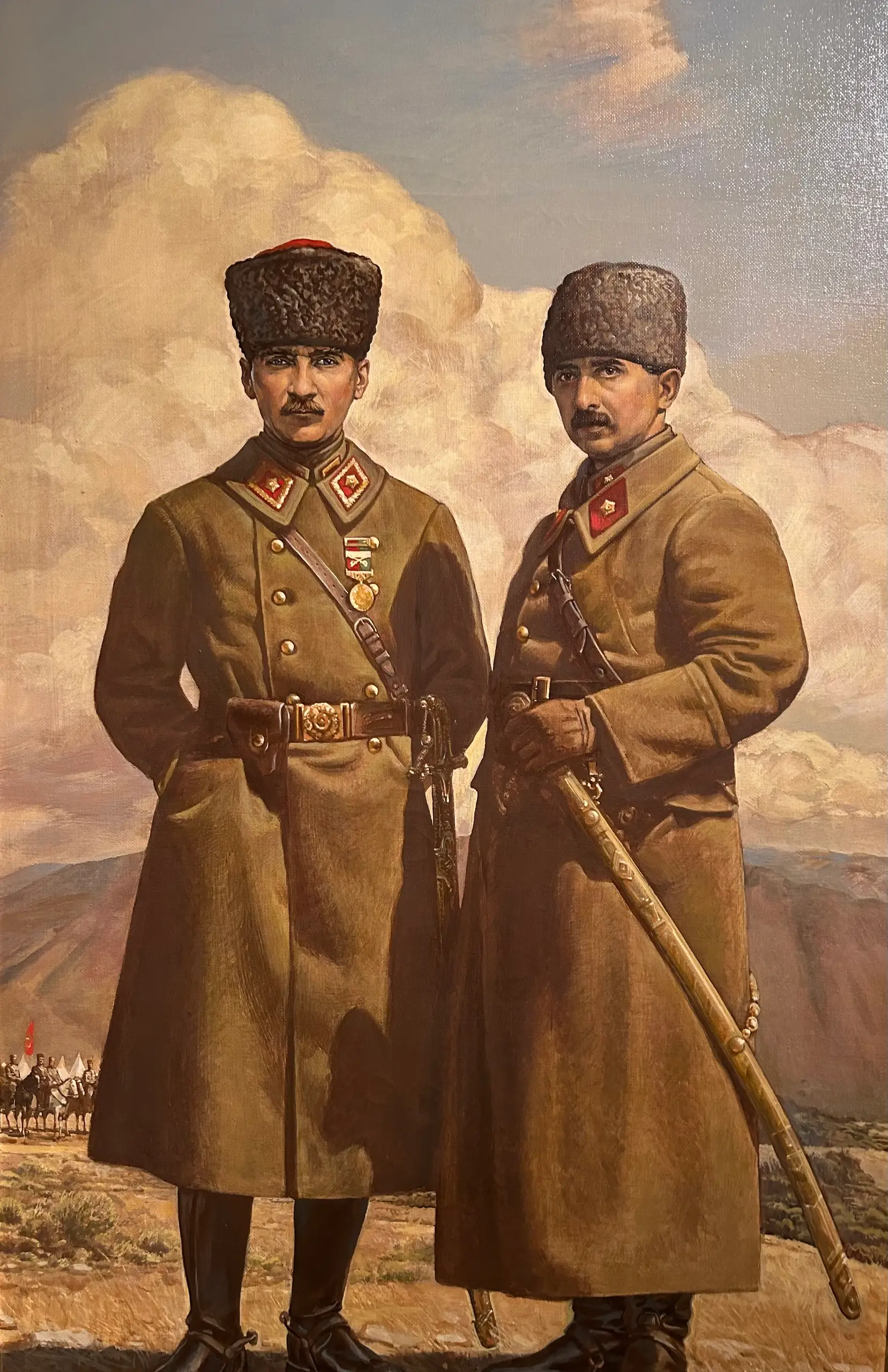
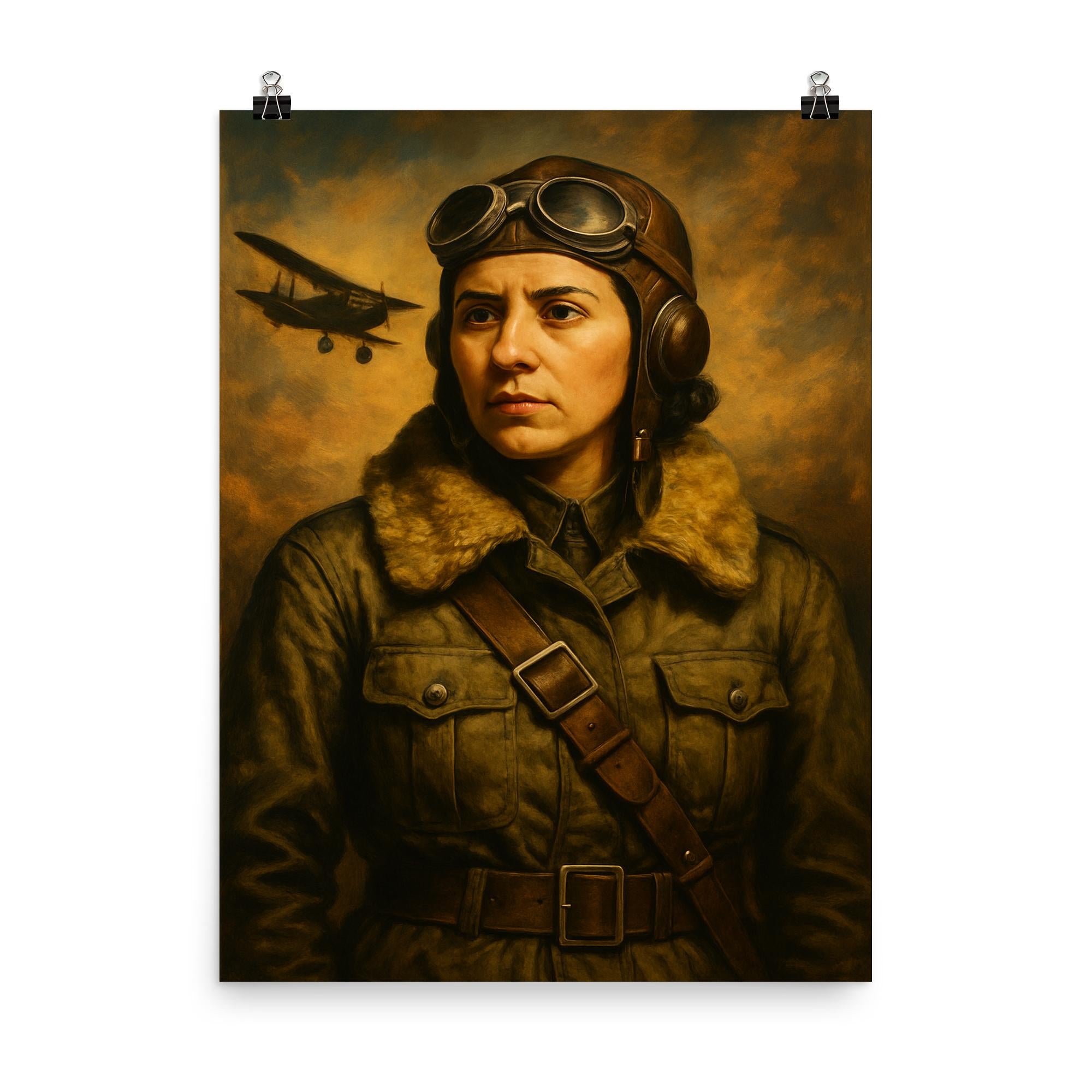
Join the community
fans discussing