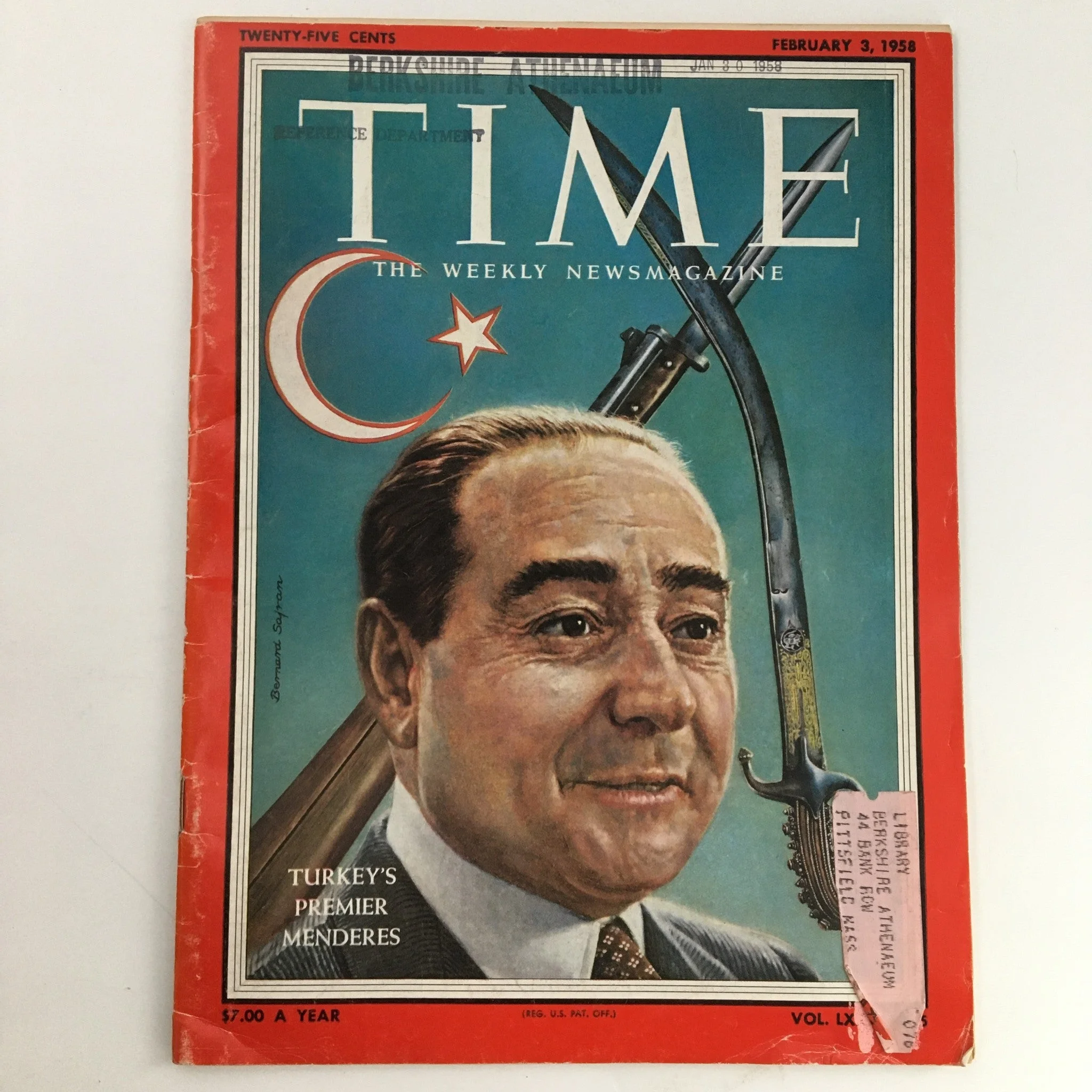
Adnan Menderes
 Turkey
Also known as: Ali Adnan Ertekin Menderes, Adnan Menderes Pasha
Birthday
January 1, 1899
Birth Sign
Capricorn
Birthplace
Kuşadası, Aydın Province, Turkey
Age
Died at 62
About
Adnan Menderes was the ninth Prime Minister of Turkey, serving from 1950 until his deposition by a military coup in 1960. Born Ali Adnan Ertekin Menderes in Kuşadası, he began his career as a lawyer before entering politics. He co-founded the Democrat Party in 1946, which ended 27 years of single-party rule by the Republican People's Party. His leadership marked a significant shift toward economic liberalization and closer ties with the West, including Turkey's admission to NATO in 1952.
His tenure as Prime Minister is often remembered for rapid economic growth and infrastructure development, known as the "Turkish Miracle" of the 1950s. However, his government also faced criticism for authoritarian tendencies and press suppression. After being overthrown in a coup on May 27, 1960, he was tried by a military tribunal and executed by hanging in 1961. Despite his controversial end, he remains a pivotal figure in Turkish political history as the first democratically elected Prime Minister.
Early Life & Background
Adnan Menderes entered the world on January 1, 1899, in Kuşadası, a coastal town in the Aydın Province of western Turkey. He was born into a family of local notables and wealthy landowners, which provided him with the social standing necessary to pursue higher education during the late Ottoman era. His father, Mehmed Nuri Bey, was a respected figure in the region, and this background allowed young Adnan to access quality schooling early on. The family's agricultural interests exposed him to the struggles of rural farmers, a theme that would later define his political career.
He moved to Ankara to attend the Faculty of Law at Ankara University, graduating in 1923 shortly after the establishment of the Republic of Turkey. Upon returning to Aydın, he established himself as a prominent lawyer, gaining a reputation for defending the rights of small farmers against powerful landowners and the entrenched bureaucracy. His legal practice gave him deep insight into the economic hardships facing the countryside, fueling his dissatisfaction with the strict statist policies of the ruling Republican People's Party. By the mid-1940s, his disillusionment with the CHP's rigid control over the economy and politics led him to break ranks and advocate for multi-party democracy.
Career Growth
The turning point for Adnan Menderes arrived in 1946 when he co-founded the Democrat Party (DP) alongside Celal Bayar and Refik Koraltan. This move challenged the decades-long monopoly of the Republican People's Party and introduced the first legal multi-party system in Turkish history. The DP quickly gained traction among the rural population and the urban middle class, who felt marginalized by the CHP's centralized policies.
In the general election of May 1950, Menderes led the Democrat Party to a landslide victory, securing 52.7% of the popular vote and winning 398 out of 487 parliamentary seats. This triumph ended 27 years of single-party rule and ushered in what historians call the "Menderes Era." As Prime Minister, he implemented sweeping economic reforms that abandoned strict state control in favor of private enterprise and foreign investment. His administration focused on expanding agriculture, building highways, and establishing new universities to modernize the country. These efforts contributed to a period of rapid economic growth often referred to as the "Turkish Miracle" of the 1950s.
On the international stage, Menderes strengthened Turkey's alliance with the West. Under his leadership, Turkey joined NATO in 1952 and participated in the Korean War alongside United Nations forces. Despite these successes, his tenure became increasingly contentious due to accusations of authoritarianism, censorship, and electoral manipulation. Tensions escalated throughout the late 1950s, culminating in a military coup on May 27, 1960, which deposed his government.
Career Timeline
Public Image & Style
Adnan Menderes projected an image of a pragmatic leader who championed the common man against the elite. His rhetoric emphasized freedom, democracy, and economic opportunity, resonating deeply with voters who felt neglected by the previous regime. Media portrayals of him varied widely; supporters saw him as a visionary statesman who modernized Turkey, while critics viewed him as an authoritarian figure who undermined democratic institutions. His style was characterized by direct communication and a focus on tangible results like infrastructure projects and agricultural subsidies. Even after his death, his image has remained polarizing, representing both the promise of democracy and the dangers of military intervention.
Fame & Fandom (iFAMOUS Rankings)
In the current cycle of global attention, Adnan Menderes is the 55th most famous person from Turkey, a position holding steady from the previous measurement. This ranking within the iFANN Global Fame Rankings reflects a consistent, deep-rooted resonance rather than fleeting viral spikes. The data tracks how historical memory persists across media coverage and consumption signals worldwide, proving that political martyrdom can sustain fame decades after death.
Unlike modern pop stars, Menderes commands no organized fan club with a specific name or ritualistic birthday campaigns. His supporters are not called "Menderes Army" or any similar moniker; they are defined by their alignment with the Democrat Party he founded in 1946. The closest equivalent to fandom behavior occurs annually on September 17, when followers gather to commemorate his execution. They lay wreaths at his tomb on İmralı island, treating the site as a place of pilgrimage rather than a concert venue. This remembrance is a solemn act of political reflection, marking the anniversary of his hanging alongside two ministers in 1961. While President Recep Tayyip Erdoğan has publicly lauded Menderes' role during these anniversaries, the engagement remains rooted in state-sanctioned commemoration and historical reverence. There are no subway ads funded by fans or chart pushes for his biography. The audience consists of historians, political sympathizers, and citizens who view him as a foundational statesman and a tragic hero who broke the monopoly of the old elite in the 1950 landslide victory.
Interesting Facts and Legends
Adnan Menderes holds the unique distinction of being the only Turkish Prime Minister to be executed by a military junta. His execution on September 17, 1961, transformed him into a symbol of martyrdom for democratic forces in Turkey. The date of his death is now observed annually by his supporters as a day of remembrance for democracy.
Despite his execution, his political party, the Democrat Party, continues to exist and remains a significant force in Turkish politics today. His son, Sinan Menderes, followed in his footsteps and served as a member of parliament, keeping the family's political legacy alive. A persistent narrative in Turkish oral history suggests that external forces, including potential CIA involvement, played a role in the political turmoil leading up to the 1960 coup, though this remains a subject of debate among historians.
Notable Quotes
“The people should be the master of their own destiny.”
“Democracy is not a luxury; it is a necessity.”
Family & Personal Life
Adnan Menderes was married to Berrin Menderes, and their union produced several children, including Sinan, Süheyl, and Ayşe. While details about his private life were less publicized than his political career, he maintained a traditional household centered around his role as a statesman. His wife supported him throughout his political rise and remained a steadfast presence during the turbulent final years of his life. The family lived in Ankara during his time as Prime Minister, but they also maintained strong ties to their hometown of Kuşadası. After his execution, his wife and children faced significant hardship, with their assets seized by the state until the Constitutional Court ruled in their favor in 1990.
Notable Connections
Relationships & Dating History
Adnan Menderes was married to Berrin Menderes, and their relationship remained stable throughout his life. They shared a long partnership that spanned his entire political career, from his early days as a lawyer to his time as Prime Minister. Berrin Menderes supported her husband through the highs of his political victories and the lows of his imprisonment and eventual execution. There are no records of other marriages, engagements, or public romances outside of his union with Berrin. As he passed away in 1961, his relationship status at the time of death was married. Their children, including Sinan Menderes, continued to be involved in Turkish politics, carrying forward the family's legacy.
- MarriedBerrin Menderes1925 - 1961Remained married until his execution; had three children together.
Death & Aftermath
Died
September 17, 1961 (aged 62)
Death Place
İmralı Island, Sea of Marmara, Turkey
Cause of Death
Execution by hanging
On the morning of September 17, 1961, Adnan Menderes walked to the gallows on İmralı Island in the Sea of Marmara. He was executed alongside two of his ministers, Hasan Polatkan and Hürrem Sobacı, following a conviction by the Yassıada High Court for treason and constitutional violations related to the May 27, 1960 military coup. The trial had concluded just two days prior, and despite international appeals for clemency, the sentence was carried out under martial law. Reports from the time describe a somber scene where Menderes refused to wear a blindfold, choosing to face his end with dignity. His body was buried immediately in the island cemetery without a public funeral service.
The execution sent shockwaves through Turkey and drew sharp condemnation from Western allies, yet it solidified Menderes' status as a martyr for democracy among conservative and democratic forces. For decades, his supporters viewed the event as a tragic betrayal of the will of the people who elected him in 1950. In 1990, the Constitutional Court of Turkey annulled the Yassıada trials, ruling that the proceedings had been unjust. This decision restored his civil rights and returned his assets to his heirs. Following this legal victory, his remains were exhumed and reburied in Izmir, where he now rests in a mausoleum. Today, an airport in Izmir bears his name, and his death is commemorated annually on September 17 with wreath-laying ceremonies and speeches that honor his role in ending single-party rule.
Net Worth (Estate Value)
$0
iFANN Editorial Team estimate
As a politician who died in 1961, Adnan Menderes did not accumulate personal wealth in the manner of modern celebrities or business tycoons. His estate was largely frozen and seized by the state following his execution, leaving his family with minimal financial resources. The iFANN Editorial Team estimates that the value of his estate, including any remaining assets and posthumous compensation, is negligible in modern terms, effectively $0. The Constitutional Court's 1990 ruling restored his civil rights and returned some assets to his heirs, but no significant fortune was ever amassed. His legacy is measured in political influence rather than financial gain.
Awards & Accolades
View 6 records, honours and achievementsKnown For
Prime Minister of Turkey
1950 · Political Leader
Founder of the Democrat Party
1946 · Politician
Execution by Hanging
1961 · Historical Event
Keywords
Sources
Quick Facts
- Profession
- politician
- Born
- January 1, 1899
- Birthplace
- Kuşadası, Aydın Province, Turkey
- Died
- September 17, 1961
- Death Place
- İmralı Island, Sea of Marmara, Turkey
- Gender
- Male
- Spouse
- Berrin Menderes
- Birth Sign
- Capricorn
Personal Details
- Full Name
- Ali Adnan Ertekin Menderes
- Spouse
- Berrin Menderes
- Children
- Sinan Menderes · Süheyl Menderes · Ayşe Menderes
- Education
- Ankara University Faculty of Law (graduated 1923)
Frequently Asked Questions
Who was Adnan Menderes?
How did Adnan Menderes die?
Where was Adnan Menderes born?
What happened to Adnan Menderes' remains?
Why is Adnan Menderes important?
Join the community
fans discussing