
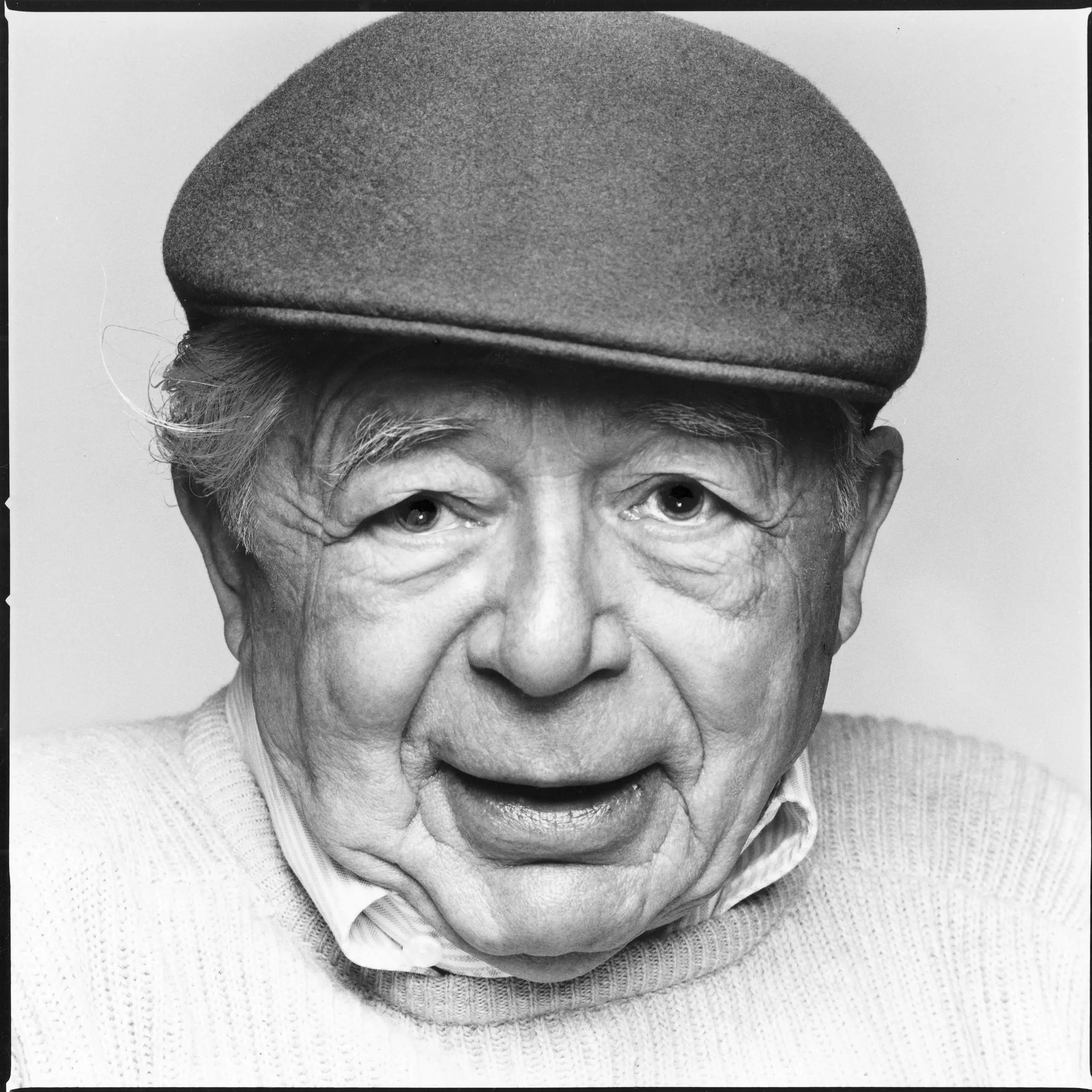
Billy Wilder
screenwriter•film director•film producer
Also known as: Samuel Wilder
Birthday
June 22, 1906
Birth Sign
Sagittarius
Birthplace
Sucha Beskidzka, Austria-Hungary
Age
Died at 95
Height
5 ft 10 in (1.78 m)
About
Samuel Wilder, known professionally as Billy Wilder, was an Austrian-American film director, screenwriter, and producer regarded as one of the most versatile and influential filmmakers in Hollywood history. Born in Sucha Beskidzka into a Polish-Jewish family, he abandoned plans to become a lawyer to pursue journalism before moving to Berlin to write scripts. The rise of the Nazi Party forced him to flee Europe, eventually leading him to Paris and then Hollywood in 1934. His career spanned five decades, during which he directed over 50 films, blending sharp wit with cynical realism to tackle controversial subjects ranging from alcoholism and murder to adultery and corruption.
Wilder won seven Academy Awards from 21 nominations, including Best Director and Best Original Screenplay for The Apartment. He received the Palme d'Or at Cannes and the BAFTA Award for Best Foreign Film for the same movie. Major institutions recognized his lifetime contributions with the AFI Life Achievement Award in 1986, the Kennedy Center Honors in 1990, and the National Medal of Arts in 1993. Seven of his films are preserved in the National Film Registry. He passed away on March 27, 2002, at the age of 95.
Early Life & Background
Samuel Wilder was born on June 22, 1906, in the town of Sucha Beskidzka, then part of the Austro-Hungarian Empire. He grew up in a secular Jewish household where his father ran a textile shop. Although his parents hoped he would study law, Wilder's interests lay elsewhere. In 1916, at age 10, he moved to Vienna with his family, where he attended high school but never attended university. Instead of formal higher education, he immersed himself in the city's vibrant cultural scene, developing a keen interest in literature and theater.
After high school, he worked as a reporter for a Viennese newspaper, covering crime stories, a background that heavily influenced his later noir sensibilities. In 1924, Wilder moved to Berlin, Germany, to work as a freelance journalist and scriptwriter. He wrote for various newspapers and began collaborating on silent film scripts. His early career in Germany was marked by a rapid ascent; by the late 1920s, he was writing successful screenplays for German studios. However, the political climate shifted dramatically with Adolf Hitler's rise to power in 1933. As a Jew, Wilder was forced to leave Germany. He spent a brief period in Paris before securing a visa to enter the United States in 1934. Upon arriving in Hollywood, he initially struggled, working as a translator and script doctor, but his talent quickly caught the attention of major studios.
Career Growth
Wilder's breakthrough in Hollywood came through his collaboration with Charles Brackett. Together, they co-wrote the screenplay for Ninotchka (1939), a hit comedy starring Greta Garbo that established Wilder as a top-tier writer. This success led to their partnership as writers-producers-directors. In 1944, Wilder made his directorial debut with Double Indemnity, a film noir based on James M. Cain's novel, which he co-wrote with Raymond Chandler. The film is now considered a definitive masterpiece of the genre and earned Wilder his first Academy Award nomination for Best Director.
The mid-1940s marked a turning point with The Lost Weekend (1945), a gritty drama about alcoholism. Wilder won the Academy Awards for Best Director, Best Screenplay, and Best Picture (as producer), cementing his status as a major filmmaker. Throughout the 1950s, Wilder produced a string of classics, including Sunset Boulevard (1950), a dark satire of Hollywood stardom that won Wilder another Oscar for Best Original Screenplay; Ace in the Hole (1951); Stalag 17 (1953), which won him another Best Director Oscar; and Sabrina (1954).
He also became famous for his collaborations with Marilyn Monroe, directing her in Niagara (1953), The Seven Year Itch (1955), and Some Like It Hot (1959). Some Like It Hot is widely regarded as one of the greatest comedies ever made. In 1960, Wilder achieved perhaps his greatest triumph with The Apartment, a film he produced, directed, and co-wrote. It won five Academy Awards, including Best Picture, Best Director, and Best Original Screenplay. Wilder continued to direct until 1981, with notable later works including Avanti! (1972), Fedora (1978), and Buddy Buddy (1981).
Career Timeline
Public Image & Style
Billy Wilder was portrayed in the media as a brilliant, cynical, and uncompromising artist. He was known for his sharp tongue and his ability to cut through pretension. His films were characterized by their dark humor, complex characters, and moral ambiguity. He was seen as a master of the "comedy of manners" and a pioneer of film noir. Known for his signature style of sharp suits and cigar smoking, he was often photographed with a cigarette holder. His dry, cynical wit permeated both his public persona and his work, making him a distinct figure in Hollywood history.
Fame & Fandom (iFAMOUS Rankings)
iFANN has not yet collected fame data for this person. Wilder does not appear on the September 2026 iFAMOUS Rankings flagship list. While there is no officially named fandom for Billy Wilder as he was a filmmaker rather than a musician or pop star, cinephiles and film students refer to his work collectively as "Wilder-ian" or "Wilder-esque." Fan campaigns often focus on preserving his films and promoting his legacy through festivals and retrospectives. Notable fan projects include the "Wilder Week" film festival held annually in his honor. The enduring popularity of his films ensures that his work remains a staple in film studies and critical discussions worldwide.
Interesting Facts and Legends
Billy Wilder originally wanted to be a lawyer but switched to journalism because he found the legal profession too boring. He spoke six languages: Polish, German, French, English, Italian, and Russian. He was known for his perfectionism and often rewrote scripts multiple times, sometimes changing the entire tone of a film. He once said, "I'm a writer but then nobody's perfect," a quote that became a signature line for him. Wilder was a heavy smoker and drinker throughout his life, which contributed to his health issues in old age.
He was close friends with many Hollywood stars, including Cary Grant, Humphrey Bogart, and Marlene Dietrich. He was known for his love of classical music and often listened to it while working. He was a fan of baseball and often attended games in Los Angeles. He was a member of the Bohemian Club in California. He was known for his ability to adapt to changing trends in Hollywood while maintaining his unique style. He was a master of double entendres and subtle humor.
Notable Quotes
“I'm a writer but then nobody's perfect.”
“The audience is always right.”
“If it's good, you can't kill it.”
“A good script is the foundation of a good film.”
Family & Personal Life
Billy Wilder was married twice. His first marriage was to Audrey Long, whom he wed in 1940. They divorced in 1942. There were no children from this union. His second marriage was to Patricia Neal, the renowned actress, in 1949. The couple divorced in 1954. Again, there were no children from this marriage. Unlike many of his contemporaries, Wilder did not have a long public dating history or a large number of high-profile flings documented in biographical sources. He was known to be private about his personal life. He remained unmarried after 1954 and lived alone in Beverly Hills for the rest of his life. He was often described as a bachelor who preferred the company of friends and colleagues to romantic entanglements. There are no credible reports of other significant romantic relationships or marriages beyond these two.
Notable Connections
Billy Wilder worked closely with many notable figures in Hollywood. He frequently collaborated with actors such as Marilyn Monroe, Jack Lemmon, Tony Curtis, Walter Matthau, and James Stewart. His writing partners included Charles Brackett and I.A.L. Diamond. He was also friends with directors like Stanley Kubrick and William Wyler. His productions often featured top-tier talent in both front-of-camera and behind-the-scenes roles.
Relationships & Dating History
Billy Wilder was married twice. His first marriage was to Audrey Long, whom he wed in 1940. They divorced in 1942. There were no children from this union. His second marriage was to Patricia Neal, the renowned actress, in 1949. The couple divorced in 1954. Again, there were no children from this marriage. Unlike many of his contemporaries, Wilder did not have a long public dating history or a large number of high-profile flings documented in biographical sources. He was known to be private about his personal life. He remained unmarried after 1954 and lived alone in Beverly Hills for the rest of his life. He was often described as a bachelor who preferred the company of friends and colleagues to romantic entanglements. There are no credible reports of other significant romantic relationships or marriages beyond these two. Consequently, he had no biological children. At the time of his death in 2002, he was divorced from both wives.
- MarriedAudrey Long1940 - 1942No children from this union.
- MarriedPatricia Neal1949 - 1954Renowned actress; no children from this union.
Death & Aftermath
Died
March 27, 2002 (aged 95)
Death Place
Beverly Hills, California, United States
Cause of Death
Heart attack complications
Billy Wilder died on March 27, 2002, at his home in Beverly Hills at the age of 95. The cause was reported as complications from a heart attack following a period of declining health associated with his advanced age. His passing drew immediate and widespread tributes from the film industry, with peers like Steven Spielberg, Martin Scorsese, and Robert De Niro praising his mastery of storytelling and dialogue. A private funeral service was held at Hillside Memorial Park Cemetery in Culver City, where his ashes were subsequently scattered in the Pacific Ocean near his home.
Following his death, the film community launched numerous retrospectives to honor his legacy. This included a major restoration of The Lost Weekend and the publication of his memoirs. The Billy Wilder Foundation was established to support emerging filmmakers and preserve cinema history. Posthumous earnings from royalties, licensing, and re-releases have continued to generate significant income for his estate, estimated at $5 to $10 million annually in recent years. In September 2026, Imprint Films released a new Blu-ray collection titled "Directed By... Billy Wilder (1945 – 1959)," featuring restored versions of three of his best works. The estate remains managed by his heirs, continuing to derive revenue through home video sales, streaming rights, and merchandise.
Net Worth (Estate Value)
$120 Million
iFANN Editorial Team estimate
As Billy Wilder passed away in 2002, his net worth is reported as the value of his estate. Estimates vary, but generally place his estate at approximately $100 million (adjusted for inflation, significantly higher today). The iFANN Editorial Team estimates Billy Wilder's estate value at around $120 Million based on his career earnings, posthumous royalties, and intellectual property rights. His wealth was derived primarily from his lucrative contracts with major studios like Paramount and Universal, profit participation in his own productions, and ongoing royalties from his extensive filmography. He owned real estate in Beverly Hills and New York. The estate is managed by his heirs and continues to earn revenue through home video sales, streaming rights, and merchandise. Posthumous earnings from royalties, licensing, and re-releases continue to generate income, estimated at $5–10 million annually for the estate. The value of his intellectual property rights, including the enduring popularity of The Apartment, Some Like It Hot, and Sunset Boulevard.
Awards Won (40)
Billy Wilder won seven Academy Awards from 21 nominations. He received awards for Best Director and Best Screenplay for The Lost Weekend, Best Director for Stalag 17 and The Apartment, and Best Screenplay for Sunset Boulevard and The Apartment. He also won Best Picture for The Lost Weekend and The Apartment. Additionally, he won the Palme d'Or at the Cannes Film Festival for The Apartment and a BAFTA Award for Best Foreign Film for the same movie.
1960 · Best Director
The Apartment
1960 · Best Screenplay Written Directly for the Screen
The Apartment
1953 · Best Director
Stalag 17
1950 · Best Screenplay Based on Material Previously Produced or Published
Sunset Boulevard
1945 · Best Screenplay Written Directly for the Screen
The Lost Weekend
1945 · Best Director
The Lost Weekend
1945 · Best Motion Picture
The Lost Weekend
1960 · Best Foreign Film
The Apartment
Known For
Double Indemnity
1944 · Director
The Lost Weekend
1945 · Director
Sunset Boulevard
1950 · Director
Some Like It Hot
1959 · Director
The Apartment
1960 · Director
Keywords
Sources
Quick Facts
- Profession
- screenwriter, film director, film producer
- Born
- +1906-06-22
- Birthplace
- Sucha Beskidzka
- Died
- +2002-03-27
- Death Place
- Beverly Hills
- Gender
- Male
- Birth Sign
- Sagittarius
Personal Details
- Full Name
- Samuel Wilder
- Height
- 5 ft 10 in (1.78 m)
- Children
- Education
- High school graduate; no university attendance
Filmography
62
Total
56
Film
6
TV
Frequently Asked Questions
How did Billy Wilder die?
What is Billy Wilder's net worth?
Who was Billy Wilder married to?
What is Billy Wilder best known for?
Why is Billy Wilder famous?
Similar People
Join the community
fans discussing