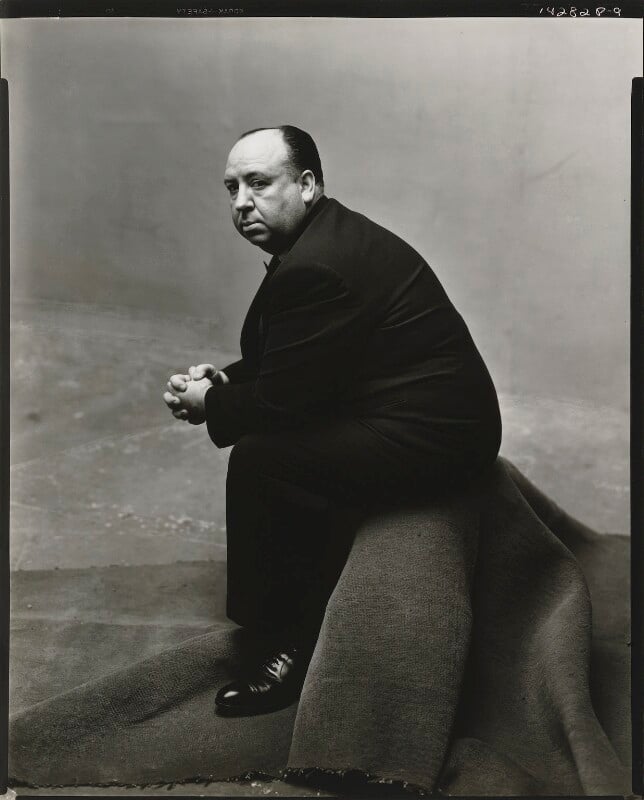
Alfred Hitchcock
 United Kingdom
film director•film producer•actor
Also known as: Hitch, Master of Suspense
Birthday
August 13, 1899
Birth Sign
Leo
Birthplace
Leytonstone, Essex, England
Age
Died at 80
Height
5 ft 7 in (170 cm)
About
Alfred Joseph Hitchcock was an English film director, producer, and occasional actor whose name became practically synonymous with cinematic suspense. Throughout his six-decade career, he directed 53 feature films, moving from silent pictures to groundbreaking sound films and vibrant color thrillers. His distinctive directorial style, characterized by psychological tension, dramatic irony, and a meticulous approach to visual storytelling, earned him the nickname "Master of Suspense."
Beyond his work behind the camera, Hitchcock became a familiar face to audiences through his signature cameo appearances in 39 of his own films and as the dry-witted host of the popular television anthology series Alfred Hitchcock Presents. While he received five Academy Award nominations for Best Director, he never personally won that particular statuette, though his films collectively garnered 46 Oscar nominations and six wins. Many of his works, including Psycho, Vertigo, and Rear Window, are frequently cited among the greatest films ever made, continuing to be studied and enjoyed by new generations of film lovers.
His influence remains deeply embedded in popular culture, from the term "MacGuffin" he popularized to the distinctive "Hitchcockian" aesthetic that persists in thrillers today. He was recognized with prestigious accolades such as the BAFTA Fellowship in 1971, the AFI Life Achievement Award in 1979, and was knighted by Queen Elizabeth II just days before his passing in 1980.
Early Life & Background
Growing up in Leytonstone, Essex, Alfred Hitchcock's early life was marked by a strict Catholic upbringing. Born the youngest of three to greengrocer and poulterer William Hitchcock and Emma Jane Whelan, he attended the Jesuit-run St. Ignatius College in Stamford Hill. He often recounted a childhood incident where his father sent him to a police station with a note, asking the constable to lock him in a cell for five minutes as a lesson. This experience profoundly shaped his fascination with fear and the theme of wrongful accusation, which would later define his films.
After his father's death in 1914, a 14-year-old Hitchcock left school to work as a technical clerk at the Henley Telegraph and Cable Company. During this time, he also pursued evening studies in engineering and drawing at the University of London, cultivating an interest in design and storytelling. His creative inclinations led him to write short stories for the company's internal magazine. A significant turn came in 1919 when he responded to an advertisement for Famous Players-Lasky, the American film studio opening a London branch. He secured a job as a title card designer for silent films, a role that immersed him directly in the mechanics of film production and allowed him to learn the craft from the ground up.
Career Growth
Alfred Hitchcock's journey from title card designer to celebrated director began with a steady ascent through the ranks, moving into scriptwriting and assistant directing. He gained valuable experience co-directing The Blackguard in Germany in 1924, where he absorbed the visual language of German Expressionism. His official directorial debut came with the British-German co-production The Pleasure Garden in 1926. The next year, 1927, saw the release of The Lodger: A Story of the London Fog, a thriller that truly showcased his emerging style and introduced themes like the innocent man on the run, setting the stage for his future work.
He then directed Blackmail in 1929, which became Britain's first successful sound film and a major cinematic milestone. The 1930s brought him international recognition with films like The 39 Steps (1935), a fast-paced chase thriller that became a prototype for the genre, and The Lady Vanishes (1938), a commercial and critical triumph that ultimately led to his move to Hollywood. His first American film, Rebecca (1940), won the Academy Award for Best Picture. He continued to craft classics like Suspicion (1941), which earned Joan Fontaine an Oscar, and the technically ambitious Lifeboat (1944), filmed entirely on a single set.
The 1950s and 1960s were a period of immense creativity and commercial success. He experimented with 3D in Dial M for Murder (1954) and delivered universally praised films like Rear Window (1954), Vertigo (1958), and the espionage thriller North by Northwest (1959). In 1955, he launched the hugely popular television series Alfred Hitchcock Presents, which further cemented his public persona. His revolutionary horror film Psycho (1960), shot in black-and-white for a modest $800,000, became a cultural touchstone and grossed over $50 million. He continued with other major hits like The Birds (1963), known for its innovative special effects, and his final film, Family Plot, released in 1976.
Career Timeline
Public Image & Style
Alfred Hitchcock cultivated a distinctive public persona as the corpulent, droll "Master of Suspense," often appearing in silhouette or delivering dry, macabre introductions to his television series. His signature style involved dark suits, a precise demeanor, and a penchant for sardonic wit. He was known for his meticulous control over every aspect of his films, from script to final cut, earning him a reputation as an auteur.
Audiences connected with his ability to craft narratives that tapped into universal fears: paranoia, wrongful accusation, and hidden dangers in everyday life. He famously favored a specific aesthetic for his leading ladies, often casting elegant, cool blondes like Grace Kelly, Tippi Hedren, and Janet Leigh, which became known as the "Hitchcock blonde." His public image was one of a brilliant, if somewhat eccentric, orchestrator of fear, whose mind was always several steps ahead, crafting intricate cinematic puzzles for viewers to unravel.
Fame & Fandom (iFAMOUS Rankings)
The audience surrounding Alfred Hitchcock lacks a formal, named organization, operating instead as a dispersed collective of enthusiasts who gather annually to mark his birthday on August 13th. This tradition sees cultural institutions and media outlets hosting tributes that celebrate the legacy of the man often called the father of the thriller, rather than engaging in the organized campaigns or fan-funded projects seen in modern pop culture. His connection with viewers was historically direct, established through his signature cameo appearances and his role as the host of *Alfred Hitchcock Presents*, creating a rapport that persists decades after his passing. Within this enduring landscape of retrospective appreciation, he maintains a significant position in global fame metrics. According to the iFANN Global Fame Rankings, he is currently the 78th most famous person in United Kingdom and stands as the 57th most famous person from United Kingdom, holding these positions steady from the previous cycle. These placements reflect his sustained presence across media coverage and consumption signals worldwide, confirming that his work remains a primary reference point for cinematic suspense. The authority of these figures rests on the comprehensive tracking of attention across diverse platforms, ensuring that his status as an auteur is measured with precision.
Interesting Facts and Legends
Alfred Hitchcock never won an Academy Award for Best Director despite receiving five nominations throughout his career. He made cameo appearances in 39 of his 53 films, often appearing only as a fleeting glimpse of a passerby or a figure in a crowd. A peculiar phobia of eggs defined his personal life, leading him to describe them as revolting and never consuming them. He popularized the term MacGuffin to describe a plot device that drives the story but is ultimately unimportant, such as the stolen government secrets in *North by Northwest*. He strictly forbade smoking on his film sets, a rule considered unusual for the era. Beyond these verified facts, several legends have taken root in his mythology. It is widely retold that the eerie bird sounds in *The Birds* were created using the Trautonium, a pioneering electronic instrument, rather than natural recordings. Another persistent story concerns the Vandamm house from *North by Northwest*; while the film featured a specific location, recent reporting clarifies that the house never existed as a single site until fans or developers constructed their own versions inspired by the movie. Additionally, while folklore long suggested he was a difficult figure regarding actresses, recent scholarship published in 2026 offers a more nuanced view, suggesting the master of suspense was not the creep some narratives claimed, particularly regarding his relationship with Tippi Hedren.
Notable Quotes
“There is no terror in the bang, only in the anticipation of it.”
“A good film is when the price of the popcorn is worth it.”
“I'm a great admirer of the police. If I weren't, I'd be a criminal.”
“Television has brought murder back into the home where it belongs.”
“Revenge is sweet and not fattening.”
“The ideal actor is a blank page upon which I can write.”
Family & Personal Life
Alfred Hitchcock was the youngest of three children born to William and Emma Jane Hitchcock in Leytonstone, England. His father was a greengrocer and poulterer, providing a modest but stable environment. He had an older brother, William, and an older sister, Eileen. The family's strict Catholic faith heavily influenced his upbringing, particularly his education at the Jesuit-run St. Ignatius College.
On December 2, 1926, Alfred married Alma Reville, a talented film editor and screenwriter whom he met while they both worked at Famous Players-Lasky. Alma became his most trusted collaborator, offering invaluable creative input on nearly all his films. They welcomed their only child, daughter Patricia Hitchcock, on July 7, 1928. Patricia later followed in her father's footsteps, appearing in several of his films, including Strangers on a Train and Psycho. The family resided in Bel Air, California, for many years.
Notable Connections
Alfred Hitchcock's career was marked by significant collaborations and influences. His wife, Alma Reville, was a constant presence and creative partner, contributing to scripts and editing. He frequently cast a core group of actors, including Cary Grant, James Stewart, Ingrid Bergman, and Grace Kelly, who became closely associated with his cinematic style. The visual aesthetics of German Expressionism, which he encountered early in his career, profoundly shaped his use of light, shadow, and distorted perspectives to create suspense. He also had a long-standing creative partnership with composer Bernard Herrmann, whose scores became integral to the tension in films like Psycho and Vertigo.
Relationships & Dating History
Alfred Hitchcock's most important personal and professional relationship was with Alma Reville, a talented film editor and screenwriter. They met while working at Famous Players-Lasky in London in the early 1920s and married on December 2, 1926. Alma became his closest confidante and collaborator, reading all his scripts and providing critical feedback on his films. Their daughter, Patricia, was born in 1928. Their marriage was a deep partnership that lasted until his death in 1980.
Throughout his Hollywood career, Hitchcock developed intense professional relationships with several of his leading actresses, which sometimes led to public speculation. He directed Ingrid Bergman in Spellbound (1945), Notorious (1946), and Under Capricorn (1949), and while he was reportedly infatuated with her, Bergman maintained their relationship was strictly professional. Similarly, he directed Grace Kelly in Dial M for Murder (1954), Rear Window (1954), and To Catch a Thief (1955). He was known to be obsessed with her elegance and talent, and her decision to retire from acting to become Princess of Monaco reportedly devastated him professionally, though there is no evidence of a romantic affair.
Later, Hitchcock discovered Tippi Hedren and cast her in The Birds (1963) and Marnie (1964). Hedren later publicly alleged that he made unwanted sexual advances and psychologically tormented her on set after she rejected him, effectively hindering her career. These allegations cast a shadow over his posthumous reputation. As of 2026, Alfred Hitchcock is deceased, having been married to Alma Reville until his passing in 1980.
- MarriedAlma Reville1926 - 1980They met working in film, married in 1926, and she was his lifelong creative partner and wife until his death. They had one daughter, Patricia.
- RumouredIngrid Bergman1945 - 1949Hitchcock directed Bergman in three films and was reportedly infatuated, but she maintained their relationship was professional.
- RumouredGrace Kelly1954 - 1955He directed Kelly in three films and was reportedly obsessed with her, but there is no evidence of a romantic affair.
- RumouredTippi Hedren1961 - 1964Hitchcock discovered Hedren and cast her in two films; she later alleged he sexually harassed her after she rejected his advances.
Death & Aftermath
Died
April 29, 1980 (aged 80)
Death Place
Bel Air, Los Angeles, California
Cause of Death
Heart failure
Alfred Hitchcock died on April 29, 1980, at his home in Bel Air, Los Angeles, California. The personal physician Dr. Robert G. L. Smith ruled the cause of death as heart failure following a period of declining health marked by chronic heart disease and anemia. Tributes poured in from peers and institutions worldwide, including a special memorial held by the Academy of Motion Picture Arts and Sciences and moments of silence observed in the British film industry. A private funeral service took place shortly after his death at Holy Cross Cemetery in Culver City, attended by close family members and colleagues such as James Stewart and Tippi Hedren before his ashes were interred. Posthumous recognition continued with critical re-evaluation of works like Shadow of a Doubt. The Roar Foundation established by actress Tippi Hedren in 1983 remains active as a sanctuary for big cats, while the estate continues to manage intellectual property without public financial disclosure.
Net Worth (Estate Value)
$235 Million
iFANN Editorial Team estimate
Alfred Hitchcock passed away in 1980, yet his estate continues to generate substantial income under the stewardship of his granddaughter, Tere Carrubba. Per iFANN's editorial analysis, the estate's value in 2026 is estimated at approximately $235 Million. This considerable wealth stems primarily from the enduring popularity and widespread licensing of his extensive filmography, which includes 53 feature films and the beloved *Alfred Hitchcock Presents* television series. Major revenue streams include royalties from streaming services like Netflix and Amazon Prime, which regularly license his films for their platforms, alongside television syndication and home video sales. The Hitchcockian brand serves as a valuable asset, with intellectual property licensed for various merchandise such as *Psycho*-themed items and adaptations like the *Alfred Hitchcock – Vertigo* video game released in 2021. The estate retains control over Shamley Productions, his original production company. Although the Hitchcock family home in Bel Air was sold in 2012, the ongoing commercial life of his cinematic works forms the core of the estate's financial trajectory, ensuring continued earnings decades after his death.
Awards Won (43)
Alfred Hitchcock received extensive recognition for his contributions to cinema throughout his career. While he never won a competitive Academy Award for Best Director, his film Rebecca won Best Picture in 1940. He was honored with the Irving G. Thalberg Memorial Award in 1967, an honorary Oscar for his consistent high-quality productions. He also received the Golden Globe's Henrietta Award in 1960 and the Cecil B. DeMille Award for lifetime achievement in 1972. His directorial prowess was acknowledged with two Emmy Awards for episodes of Alfred Hitchcock Presents and a Directors Guild of America Lifetime Achievement Award in 1973. Early in his career, the Venice Film Festival awarded him Special Prizes for Best Director for several of his British films.
1940 · Best Picture
Rebecca
1971 · Highest Honor
Career
Known For
Psycho
1960 · Director, Producer
Vertigo
1958 · Director, Producer
Rear Window
1954 · Director, Producer
North by Northwest
1959 · Director, Producer
The Birds
1963 · Director, Producer
Keywords
Quick Facts
- Profession
- film director, film producer, actor
- Born
- August 13, 1899
- Birthplace
- Leytonstone, Essex, England
- Died
- April 29, 1980
- Death Place
- Bel Air, Los Angeles, California, United States
- Gender
- Male
- Spouse
- Alma Reville
- Birth Sign
- Leo
Personal Details
- Full Name
- Alfred Joseph Hitchcock
- Height
- 5 ft 7 in (170 cm)
- Spouse
- Alma Reville
- Children
- Patricia Hitchcock
- Education
- St. Ignatius College · University of London (night school)
Filmography
73
Total
53
Film
20
TV
Frequently Asked Questions
How old was Alfred Hitchcock when he died?
What is Alfred Hitchcock's estate net worth in 2026?
Is Alfred Hitchcock still considered an influential director?
Why is Alfred Hitchcock called the 'Master of Suspense'?
Did Alfred Hitchcock ever win an Oscar for Best Director?
Social Media
Similar People
Join the community
fans discussing