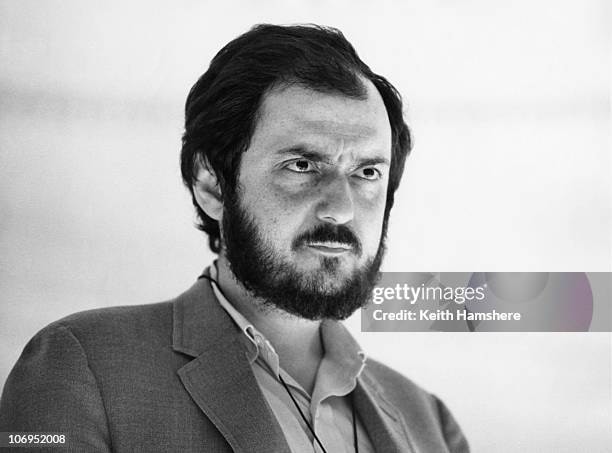
Stanley Kubrick
 United States
film director•cinematographer•photographer
Birthday
July 26, 1928
Birth Sign
Leo
Birthplace
The Bronx, New York, USA
Age
Died at 70
Height
5 ft 7 in (170 cm)
About
Stanley Kubrick was an American film director, cinematographer, and photographer, widely considered one of the most influential filmmakers in cinema history. Over a career spanning 46 years, Kubrick directed 13 feature films, each distinct in genre yet unified by a meticulous visual style, dark humor, and an obsessive attention to detail. His work includes the science fiction landmark 2001: A Space Odyssey (1968), the dystopian A Clockwork Orange (1971), the horror classic The Shining (1980), and the Vietnam War film Full Metal Jacket (1987). Kubrick earned 13 Academy Award nominations and won one for Best Visual Effects. He pioneered technical innovations such as the Steadicam shot and front-projection effects. His films are known for their symmetrical compositions, ambiguous endings, and psychological depth. Kubrick's perfectionism became legendary; he often required dozens of takes and spent years developing each project. Despite his reclusive nature, his influence on directors like Steven Spielberg, David Lynch, and Christopher Nolan is profound. Kubrick died in 1999 at his home in England, just days after completing his final film, Eyes Wide Shut.
Early Life & Background
Stanley Kubrick was born on July 26, 1928, in The Bronx, New York, USA. He grew up in a Jewish family there, where his father worked as a doctor. From an early age, Kubrick displayed diverse interests, although his academic performance was not stellar; he was a mediocre student at William Howard Taft High School. During these formative years, he developed a profound passion for chess and jazz, pursuits that honed his strategic thinking and appreciation for rhythm and composition. A pivotal moment occurred when he was 13: his father gave him a Graflex camera, which immediately sparked his interest in photography and set him on a path of visual exploration.
After graduating from William Howard Taft High School in 1945, Kubrick briefly enrolled at the City College of New York but soon dropped out, opting instead to pursue his artistic inclinations. At just 17, his talent for photography began to emerge professionally when he successfully sold a striking photograph of a newsdealer mourning Franklin D. Roosevelt's death to Look magazine. Impressed by his work, Look hired him as an apprentice photographer. From 1946 to 1950, Kubrick honed his craft by capturing a wide array of subjects for the magazine, including dynamic boxing matches, vibrant jazz clubs, and intimate scenes of everyday New York life. This extensive experience as a photojournalist provided a solid foundation for his eventual transition to filmmaking.
Driven by an evolving vision, Kubrick ventured into cinema, funding his first short film, Day of the Fight (1951), a documentary about boxer Walter Cartier, with $3,900 of his own money. This initial success was quickly followed by two more short films, Flying Padre (1951) and The Seafarers (1953). His ambition then led him to direct his first feature-length project, Fear and Desire (1953), a self-financed war film that he later disowned. The year 1953 proved crucial for his career when he met producer James B. Harris. Their collaboration led to the formation of Harris-Kubrick Pictures, and their inaugural joint effort, the crime noir Killer's Kiss (1955), marked a significant step forward by catching the attention of United Artists.
Career Growth
Kubrick's first major studio film was The Killing (1956), a heist film with a non-linear narrative. It established him as a rising talent. Paths of Glory (1957), an anti-war film starring Kirk Douglas, was a critical success despite censorship in Europe. Kubrick replaced director Anthony Mann on Spartacus (1960) at Douglas's request; the historical epic was a commercial hit and won four Academy Awards. Dissatisfied with studio interference, Kubrick moved to England in 1961. There he made Lolita (1962) and Dr. Strangelove (1964), the latter a Cold War satire that earned him his second Oscar nomination for Best Director. His next film, 2001: A Space Odyssey (1968), revolutionized science fiction with its realistic depiction of space travel and groundbreaking special effects; it won his only competitive Oscar. A Clockwork Orange (1971) sparked intense controversy for its portrayal of violence; Kubrick withdrew it from UK circulation after death threats. Barry Lyndon (1975) won four Oscars, including Best Cinematography. The Shining (1980) used the Steadicam for iconic tracking shots. Full Metal Jacket (1987) divided critics but performed well at the box office. His final film, Eyes Wide Shut (1999), starring Tom Cruise and Nicole Kidman, was released posthumously.
Career Timeline
Public Image & Style
Kubrick's public persona is that of a reclusive genius and relentless perfectionist. He was notoriously private, rarely granting interviews and avoiding Hollywood. His films are characterized by symmetrical compositions, slow pacing, and ambiguous endings. Fans, sometimes called Kubrickians, engage in intense analysis of his work, uncovering hidden meanings and codes. The official estate manages a Facebook page with 1.2 million followers and an Instagram account with 450,000 followers, maintaining a formal, reverent tone. His reputation for demanding hundreds of takes and his exacting control over every aspect of production have become part of his legend.
Fame & Fandom (iFAMOUS Rankings)
Stanley Kubrick remains a towering figure in global cinema, commanding attention from film scholars and casual viewers alike decades after his passing. His influence permeates the industry, yet iFANN's Global Fame Engine has evaluated this person without assigning them a placement in the published rankings, meaning they do not currently hold a position within the Global Top 1,000 or any Top-100 scope list. This absence of a specific numeric rank reflects the unique nature of his legacy rather than a lack of recognition; he is an icon whose fame transcends standard celebrity metrics. The community surrounding his work is generally referred to as Kubrickians, though no formal, officially recognized fandom name exists in the data. Unlike modern pop stars with organized clubs driving chart pushes, these supporters engage through academic rigor and obsessive analysis, treating his films as puzzle boxes to be deconstructed. While there are no fan-funded projects for new content, the group has driven significant efforts to preserve his legacy through high-definition restorations and streaming availability on platforms like HBO Max and Criterion Channel. Fan culture is defined by deep dives into production notes and the enduring meme of the "Kubrick Stare," which originated in Full Metal Jacket but has become ubiquitous in internet parodies. The cultural mythology built around his perfectionism, such as the use of NASA lenses for Barry Lyndon, continues to fuel endless debates about works like 2001: A Space Odyssey. Recent initiatives, including the 2026 TCM series Plot Thickens dedicated to him, confirm that while he avoided direct engagement, his artistic output generated a self-sustaining ecosystem of reverence that evolves with each new generation.
Interesting Facts and Legends
Stanley Kubrick was a master chess player who often played on set between takes. He never flew after the 1960s, preferring travel by ship or train due to a phobia of germs and spiders. Despite a career spanning 46 years, he directed only 13 feature films, turning down major projects like The Exorcist and Star Wars to focus on his own vision. A devoted cat lover, he kept several felines at his English estate. The Shining was initially screened continuously for 24 hours in theaters, and 2001: A Space Odyssey was originally titled Journey Beyond the Stars. Legends of his production style persist, particularly the story that he used custom-made Zeiss lenses designed for NASA to shoot interior scenes by candlelight in Barry Lyndon, achieving lighting effects previously thought impossible. Another widely retold anecdote involves the Overlook Hotel maze in The Shining; fans still discuss how Kubrick insisted on building a maze that was never actually constructed for the film, creating confusion about the ending that became part of the lore despite being a fabrication. These stories highlight the intense scrutiny his work receives, where every detail is analyzed as if it were a code waiting to be cracked.
Notable Quotes
“If it can be written, or thought, it can be filmed.”
“The screen is a magic medium. It has such power that it can retain interest as it conveys emotions and moods that no other art form can hope to tackle.”
“I think the biggest challenge is to make a film that is both entertaining and profound.”
“I don't think that writers or actors or directors are important anymore. The film is the thing.”
Family & Personal Life
Kubrick was born to Jacob Leonard Kubrick, a doctor, and Gertrude Perveler. He had a younger sister, Barbara. He was married three times. His first wife was Toba Metz (1948–1951), a high school sweetheart. His second wife was dancer Ruth Sobotka (1955–1961). His third wife, German actress Christiane Kubrick (née Harlan), married him in 1958 and remained with him until his death. They had two daughters: Anya (born 1959) and Vivian (born 1960). Kubrick also adopted Christiane's daughter from a previous marriage, Katharina. The family lived reclusively at Childwickbury Manor in Hertfordshire, England, where Kubrick kept cats and played chess.
Notable Connections
Kubrick frequently collaborated with a core group of actors and crew. Kirk Douglas starred in Paths of Glory and Spartacus. Jack Nicholson starred in The Shining. Tom Cruise and Nicole Kidman led Eyes Wide Shut. Malcolm McDowell played the lead in A Clockwork Orange. Peter Sellers appeared in Dr. Strangelove and Lolita. Cinematographer John Alcott worked on several films. Producer James B. Harris was an early partner on The Killing and Paths of Glory.
Relationships & Dating History
Kubrick's first relationship was with Toba Metz, his high school sweetheart. They married in 1948 and divorced in 1951 amicably as his career began. He then married dancer Ruth Sobotka in 1955; they divorced in 1961, partly due to his affair with Christiane Harlan. Kubrick met Christiane on the set of Paths of Glory in Munich, where she played a small role. They married in 1958 and remained together until his death. Christiane was his lifelong artistic confidante. The marriage was notably stable and devoted. As of his death, he was married to Christiane.
- MarriedToba Metz1948 - 1951High school sweethearts; divorced amicably.
- MarriedRuth Sobotka1955 - 1961Dancer and set designer; marriage ended due to Kubrick's affair.
- MarriedChristiane Kubrick1958 - 1999CurrentMet on set of Paths of Glory; remained together until his death.
Death & Aftermath
Died
March 7, 1999 (aged 70)
Death Place
Childwickbury, Hertfordshire, England
Cause of Death
heart attack
The official finding regarding Stanley Kubrick's passing came from his physician, who ruled the cause as a heart attack following a private review of the filmmaker's condition at Childwickbury Manor. Kubrick had been managing minor health issues while continuing to work on projects until shortly before March 7, 1999, when he passed away at age 70 in Hertfordshire, England. His final public appearance occurred just weeks prior during a brief screening of Eyes Wide Shut in London, though reports suggest illness may have limited his participation in other scheduled events. Tributes flowed immediately from peers and institutions worldwide, with the Academy of Motion Picture Arts and Sciences holding moments of silence to honor the director's legacy.
Fan vigils emerged globally, particularly in New York City and London, where admirers gathered outside former homes and filming locations to pay respects. Sales of his films and books surged in the weeks following his death, with Eyes Wide Shut experiencing a significant boost in box office returns and home video sales due to its recent release status. A documentary titled Stanley Kubrick: A Life in Pictures was produced in 2001 to offer insights into his life and work, while the Stanley Kubrick Foundation was established to manage his estate and preserve his legacy through educational initiatives.
Kubrick's funeral took place on March 12, 1999, at St. Mary's Church in Childwickbury, a private ceremony attended only by close family members and trusted friends. His wife Christiane Kubrick and their children were present, and his ashes were interred in the churchyard. The estate remains under the stewardship of his family, ensuring that his artistic contributions are protected and celebrated.
Net Worth (Estate Value)
$20 Million
iFANN Editorial Team estimate
Per iFANN's editorial analysis, Stanley Kubrick's estate is valued at approximately $20 million as of 2026. The primary sources of revenue include royalties from film screenings, television broadcasts, and streaming rights. Licensing deals for merchandise, posters, and memorabilia also contribute significantly to the total. Posthumous restorations, such as the 4K restoration of 2001: A Space Odyssey in 2018 and Barry Lyndon in 2023, have generated substantial income. The estate continues to earn from documentaries and books about Kubrick's life, which require estate approval for publication. Management of these assets is handled by his widow Christiane and their children.
Awards Won (32)
Kubrick won one competitive Academy Award for Best Visual Effects for 2001: A Space Odyssey. He received two BAFTA Awards for Best Film and Best Direction. He was awarded the Cecil B. DeMille Award at the Golden Globes. He also won the D.W. Griffith Award from the Directors Guild of America and the Career Golden Lion at Venice. His films earned numerous technical awards.
1969 · Best Visual Effects
2001: A Space Odyssey
1999 · Cecil B. DeMille Award
Known For
2001: A Space Odyssey
1968 · Director, Writer, Producer
A Clockwork Orange
1971 · Director, Writer, Producer
The Shining
1980 · Director, Writer, Producer
Dr. Strangelove
1964 · Director, Writer, Producer
Full Metal Jacket
1987 · Director, Writer, Producer
Keywords
Quick Facts
Personal Details
- Full Name
- Stanley Kubrick
- Height
- 5 ft 7 in (170 cm)
- Spouse
- Christiane Kubrick
- Children
- Anya Kubrick, Vivian Kubrick, Katharina Kubrick (adopted)
- Education
- William Howard Taft High School; City College of New York (dropped out)
Filmography
16
Total
13
Film
0
TV
Frequently Asked Questions
Is Stanley Kubrick still alive?
How many movies did Stanley Kubrick direct?
Was Stanley Kubrick a perfectionist?
Who was Stanley Kubrick married to?
What is Stanley Kubrick's most famous film?
Social Media
Similar People
Join the community
fans discussing