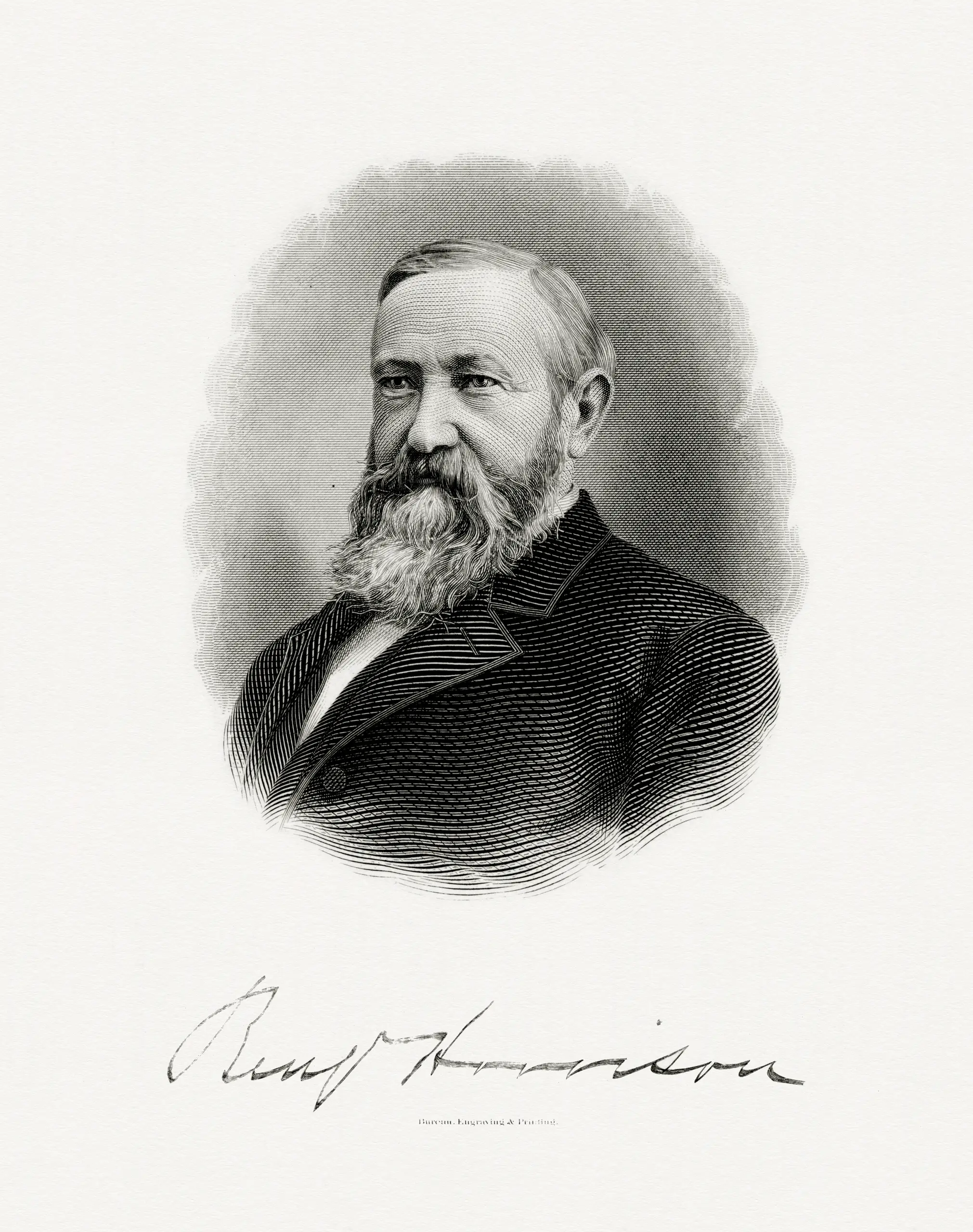
Benjamin Harrison
politician•military officer•lawyer
Also known as: Ben Harrison, The Human Iceberg, Major Ben
Birthday
August 20, 1833
Birth Sign
Leo
Birthplace
North Bend, Ohio
Age
Died at 67
Height
5 ft 9 in (175 cm)
About
Benjamin Harrison stands as the 23rd president of the United States, serving a single term from 1889 to 1893. A Republican hailing from Indiana, he holds the unique distinction of being the only U.S. president elected directly from that state and the first to be succeeded by his immediate predecessor, Grover Cleveland. Standing at 5 feet 9 inches with a lean, wiry build typical of his era, Harrison projected an image of dignified intellect and stern principle. His presidency is historically significant for its legislative output, including the landmark Sherman Antitrust Act of 1890 and the McKinley Tariff, alongside the admission of six new western states: North Dakota, South Dakota, Montana, Washington, Idaho, and Wyoming. Beyond domestic policy, his administration established the Department of Agriculture as a cabinet-level department and created the first federal retirement system for government employees.
Harrison's legacy extends beyond his four years in the White House. He is ranked consistently in the middle tier of historical presidents, placing 22nd in the 2021 C-SPAN survey and 24th in the 2022 Siena College Research Institute rankings. His post-presidential career was marked by international acclaim when he successfully arbitrated a boundary dispute between Venezuela and the United Kingdom in Paris. Today, his physical presence is remembered through the Benjamin Harrison Presidential Site in Indianapolis, which continues to operate as a non-profit museum. Recent developments in 2026 include the launch of an interactive exhibit celebrating America's 250th anniversary and the maintenance of the Benjamin Harrison Memorial Bridge in Richmond, Virginia, ensuring his memory remains an active part of the American landscape.
Early Life & Background
Born on August 20, 1833, at a farm near North Bend, Ohio, within the Northwest Territory, Benjamin Harrison entered a world steeped in political history. He was the grandson of William Henry Harrison, the ninth president, and the great-grandson of Founding Father Benjamin Harrison V, who signed the Declaration of Independence. His father, John Scott Harrison, later served as a U.S. Representative from Ohio, setting a high bar for public service. Harrison attended common schools in his hometown before enrolling at Miami University in Oxford, Ohio, where he graduated in 1852. During his college years, he joined the Delta Kappa Epsilon fraternity and was deeply involved in the campus literary society.
Following graduation, he moved to Indianapolis, Indiana, in 1854 to study law under the tutelage of Theodore C. Hinds. Admitted to the bar that same year, he quickly established himself as a skilled attorney. Before entering national politics, Harrison became a leader in the Presbyterian Church, serving as a deacon and teaching Sunday school for many years. He also immersed himself in local civic affairs, eventually becoming a key organizer for the Indiana Republican Party. In 1876, he ran for governor of Indiana but lost narrowly, though his reputation as a powerful orator led to his election to the U.S. Senate by the Indiana General Assembly in 1881. These formative years laid the groundwork for his transition from private practice to public service.
Career Growth
Harrison's rise to national prominence began with his military service during the Civil War. Despite having no prior experience, he raised the 70th Indiana Infantry Regiment and served as its colonel. He fought with distinction in the Western Theater, participating in the Atlanta Campaign and General William Tecumseh Sherman's march to the sea. For his bravery at the Battle of Resaca and the capture of Atlanta, he was promoted to brevet brigadier general in 1865. After the war, he resumed his law practice and gained national attention prosecuting the high-profile murder trial of Nancy Clem in 1866, a case that captivated the nation.
His political career accelerated when the Indiana General Assembly elected him to the U.S. Senate in 1881. As a senator, he became a leading voice on civil rights, advocating for federal protection of African American voting rights through the Federal Elections Bill of 1890. He also championed the Sherman Antitrust Act and the McKinley Tariff. In 1888, Harrison launched a revolutionary "front-porch" campaign from his Indianapolis home, defeating incumbent President Grover Cleveland to win the presidency despite losing the popular vote. His administration oversaw the admission of six western states and signed landmark legislation limiting monopolies. Although he lost his re-election bid in 1892 due to economic recession following the Panic of 1893, his legacy endured through his diplomatic work representing Venezuela in Paris and his continued influence in American politics.
Career Timeline
Public Image & Style
Historical portraits depict Benjamin Harrison as a dignified, intellectual, and somewhat stern leader. Standing 5 feet 9 inches tall with a lean build, his physical appearance matched his reserved nature and deep religious faith, contributing to an image of steady principle during a time of rapid industrialization. The media of his era often portrayed him as a man of integrity who maintained traditional values. His distinctive "front porch" campaign style reinforced this perception of a grounded, approachable yet serious statesman. Even after leaving office, he was viewed as a respected elder statesman whose diplomatic efforts earned him international admiration. Magazine covers like those in *Harper's Weekly* and *Puck* often depicted him in formal portraits or caricatures related to his Indianapolis roots, cementing his identity as a man of the Midwest who rose to the highest office in the land.
Fame & Fandom
While there is no organized fandom in the modern pop-culture sense, a dedicated community of historians, genealogists, and preservationists actively maintains the Benjamin Harrison Presidential Site. These enthusiasts organize educational programs around his birthday and presidency, advocate for funding and restoration of his home and monuments, and frequently publish academic papers analyzing his policies. Their activities mirror fan-like devotion to preserving his legacy and ensuring his contributions to American history remain accessible to future generations. In 2026, this community celebrated his 193rd birthday with a wreath-laying ceremony at his gravesite and collaborated with Purdue University on an interactive exhibit. The site's official social media accounts on Facebook, Twitter (X), and Instagram serve as digital hubs, sharing historical content and event updates, while recent board game releases like "There at the Founding: Indiana" engage visitors with the state's history in innovative ways.
Interesting Facts and Legends
Benjamin Harrison was the first president to have electricity installed in the White House, though he and his family reportedly feared touching the switches due to concerns about electrocution. He is one of only two pairs of grandfathers and grandsons to both become president, the other being George H.W. Bush and George W. Bush. Before entering politics full-time, he prosecuted the famous Nancy Clem murder case which captivated the nation. Harrison spoke French fluently and used this skill during his later diplomatic efforts in Paris. Historical accounts sometimes confuse him with other individuals named Benjamin Chambers or Benjamin Ball due to search algorithm errors, but these are distinct people unrelated to the president. He is also known for the "Fuzzy Jr." confusion in some 2026 obituaries, where search algorithms mistakenly link him to unrelated names. Additionally, he received the Benjamin Harrison Medallion from Miami University, recognizing distinguished alumni and community leaders.
Notable Quotes
“I am not a candidate for the Presidency... I am a candidate for the people.”
“The Constitution is the supreme law of the land.”
“We must not forget that the Constitution is the result of a compromise.”
Family & Personal Life
Benjamin Harrison was married twice, leaving a lasting impact on his family life. His first wife was Elizabeth Ann "Libby" Irwin, whom he married in 1853. They had two children: Russell Benjamin Harrison (born 1854) and Mary "Mamie" Scott Harrison (born 1858). Libby died of tuberculosis in 1866, just three days after their thirteenth wedding anniversary. Harrison wore black for the rest of his life following her death. He met Caroline Lavinia Scott, the daughter of his former pastor, fourteen years later and they married on October 20, 1880. Caroline played an active role as First Lady, inaugurating the tradition of the White House Christmas tree. They had two more children together, including a son named John Scott Harrison who died in infancy, and a daughter named Elizabeth "Bess" Harris Harrison. Caroline passed away in 1892 shortly before the presidential election. Harrison spent his final years in Indianapolis living with his daughter Bess and son Russell, who served as his private secretary.
Notable Connections
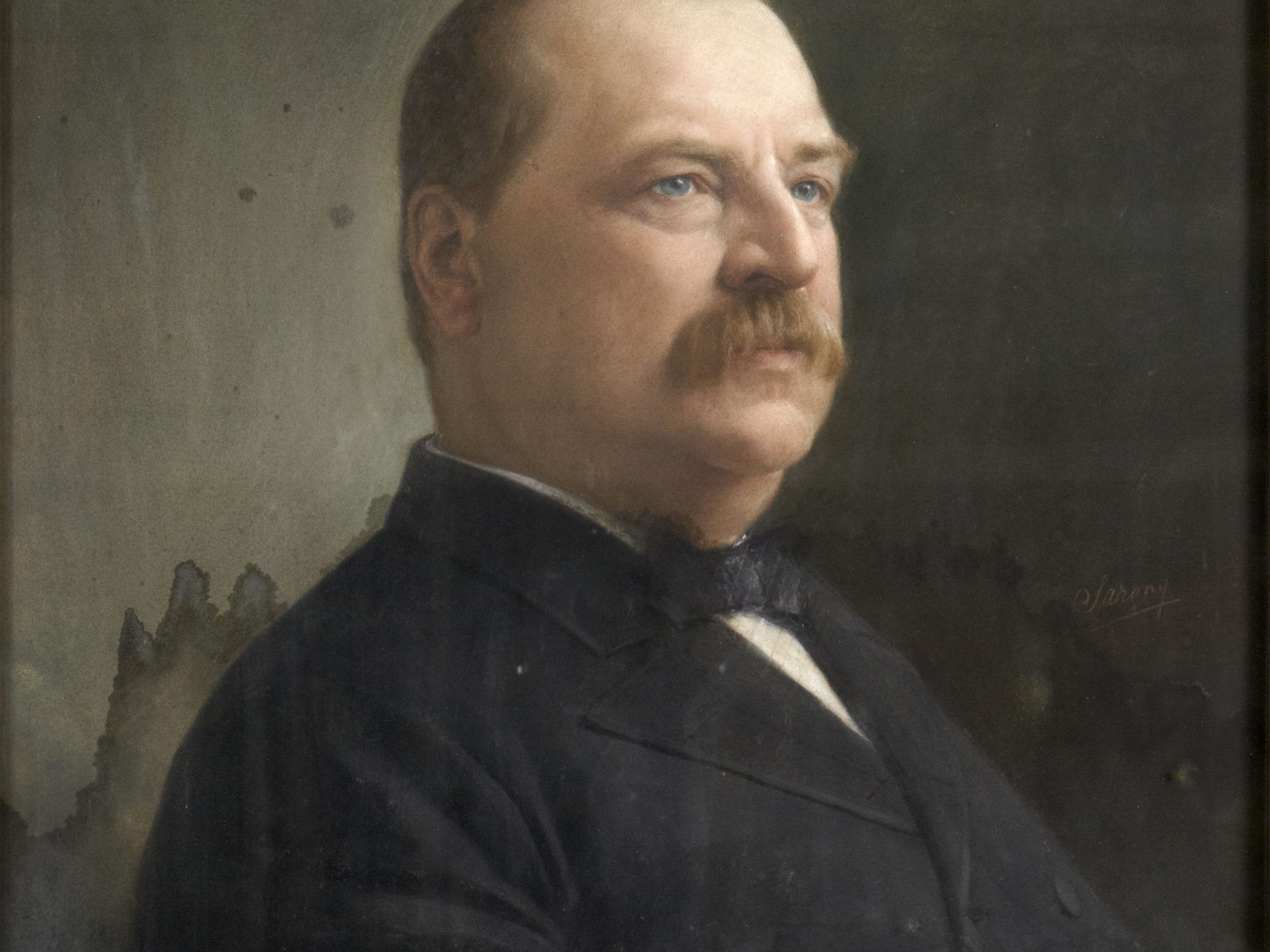
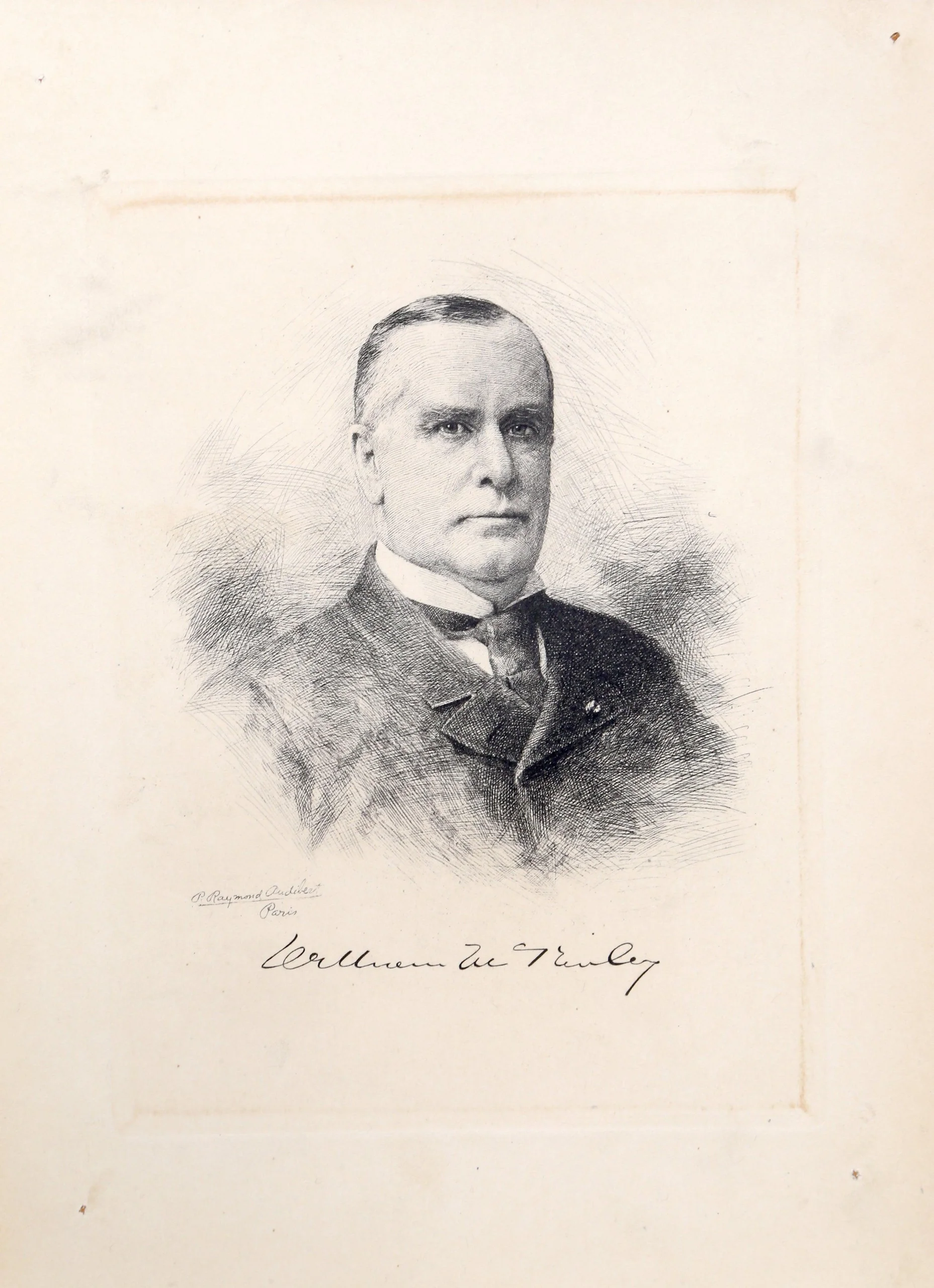
Elizabeth Ann Irwin Harrison, Caroline Lavinia Scott, William Henry Harrison, John Scott Harrison, Grover Cleveland, William McKinley, Russell Benjamin Harrison, Evan Thomas.
Relationships & Dating History
Benjamin Harrison's romantic life was defined by two profound marriages. He first married Elizabeth Ann "Libby" Irwin on October 20, 1853, in Cincinnati, Ohio. Libby was the daughter of a prominent physician and a cousin of future President William McKinley. The couple shared a happy marriage until tragedy struck on October 25, 1866, when Libby died of tuberculosis just three days after their thirteenth wedding anniversary. Her death devastated Harrison, who reportedly wore black for the remainder of his life.
For nearly fourteen years, Harrison remained a widower. He then met Caroline Lavinia Scott, the daughter of his former pastor and a friend of his late wife, during a visit to Oxford, Ohio. They married on October 20, 1880, exactly fourteen years to the day after Libby's death. Caroline was a well-educated woman who became an active First Lady, known for starting the White House Christmas tree tradition and organizing the first official Easter Egg Roll. She served as First Lady throughout his entire term until her death on October 25, 1892, from complications of tuberculosis. After Caroline's passing, Harrison did not remarry. He lived out his remaining years in Indianapolis with his daughter Bess and son Russell, maintaining a quiet domestic life until his own death in 1901. There are no records of other romantic relationships or dating history outside of these two marriages.
- MarriedElizabeth Ann Irwin1853 - 1866Died of tuberculosis; Harrison wore black for the rest of his life.
- MarriedCaroline Lavinia Scott1880 - 1892First Lady who introduced the White House Christmas tree; died of tuberculosis.
Death & Aftermath
Died
March 13, 1901 (aged 67)
Death Place
Indianapolis, Indiana
Cause of Death
Complications from influenza and heart failure
Benjamin Harrison passed away on March 13, 1901, at his home located at 1239 Massachusetts Avenue in Indianapolis. His final days were marked by a rapid decline following an illness with influenza that began in February of that year. Medical records from the era attribute his death to complications arising from the flu combined with heart failure, a conclusion reached without the need for further investigation or legal proceedings given the natural causes involved. He was surrounded by family members during his last moments.
The nation responded with deep respect for the former president. Tributes poured in from across the country, highlighting his integrity and dedication to public service throughout his career. A funeral service was held at his Indianapolis residence before a procession carried his body to Crown Hill Cemetery. There he was interred alongside his two wives, Elizabeth and Caroline. Additional memorial services took place at the National City Christian Church in Washington, D.C., allowing dignitaries and citizens to pay their respects.
In the years following his death, Harrison's legacy has been preserved through the establishment of the Benjamin Harrison Presidential Site in Indianapolis. This location maintains his home and serves as a museum dedicated to his life and administration. While there are no modern estate revenue streams comparable to contemporary celebrity fortunes, the site continues to generate support through tourism and educational programs managed by non-profit organizations. Various monuments and bridges across the Midwest and Virginia bear his name, ensuring his memory remains part of the American landscape. Recent honors include his induction into the National Hall of Fame for Great Americans and the ongoing maintenance of the Benjamin Harrison Memorial Bridge in Richmond, Virginia, which underwent repairs in July 2026.
Net Worth (Estate Value)
$3 Million
iFANN Editorial Team estimate
As a deceased historical figure from the 19th century, Benjamin Harrison does not possess a net worth in the modern sense of liquid assets or investment portfolios. Research by the iFANN Editorial Team estimates the value of his estate at approximately $3 million in 2026 dollars, adjusted for inflation from the original valuation of roughly $50,000 to $100,000 at the time of his death. His wealth accumulated primarily through his successful law practice, his salary as a senator ($5,000 per year), and his presidential salary ($50,000 per year). He also inherited assets from his prominent family line, which included real estate and modest savings typical of a 19th-century politician.
Today, the financial legacy of Benjamin Harrison is managed through the Benjamin Harrison Presidential Site in Indianapolis. This historic property operates as a non-profit organization rather than a personal estate. It generates revenue through tourism, educational programs, and merchandise sales, including the 2026 release of the "There at the Founding: Indiana" board game. While no individual heirs control a massive fortune, the site ensures his legacy continues to support itself and educate the public. The estate's trajectory reflects the enduring interest in his life and presidency rather than traditional wealth accumulation, with ongoing maintenance projects like the 2026 bridge repairs in Virginia further sustaining his memorial infrastructure.
Awards Won (3)
Benjamin Harrison received numerous honors for his public service and leadership. He was promoted to brevet brigadier general for gallantry in the Union Army during the Civil War. His induction into the National Hall of Fame for Great Americans recognized his lasting impact on American history. Posthumously, he has been honored with various monuments, including the Benjamin Harrison Memorial Bridge in Richmond, Virginia. The Benjamin Harrison Medallion awarded by Miami University continues to recognize distinguished alumni and leaders.
1865 · Military Honor
Union Army Service
1900 · Hall of Fame Induction
Lifetime Achievement
Known For
Presidency of the United States
1889-1893 · 23rd President
Civil War Service
1862-1865 · Colonel and Brevet Brigadier General
Sherman Antitrust Act
1890 · Signed into Law
Venezuela Boundary Dispute
1899 · Arbitrator
Keywords
Sources
Quick Facts
- Profession
- politician, military officer, lawyer
- Born
- August 20, 1833
- Birthplace
- North Bend, Ohio
- Died
- March 13, 1901
- Death Place
- Indianapolis, Indiana
- Gender
- Male
- Spouse
- Elizabeth Ann Irwin, Caroline Lavinia Scott
- Birth Sign
- Leo
Personal Details
- Full Name
- Benjamin Harrison
- Height
- 5 ft 9 in (175 cm)
- Spouse
- Elizabeth Ann Irwin, Caroline Lavinia Scott
- Children
- Russell Benjamin Harrison, Mary Scott Harrison, Elizabeth Harris Harrison, John Scott Harrison
- Education
- Miami University
Frequently Asked Questions
Who was Benjamin Harrison?
How did Benjamin Harrison die?
Did Benjamin Harrison have any children?
What was Benjamin Harrison's nickname?
Why is Benjamin Harrison famous?
Social Media
Join the community
fans discussing