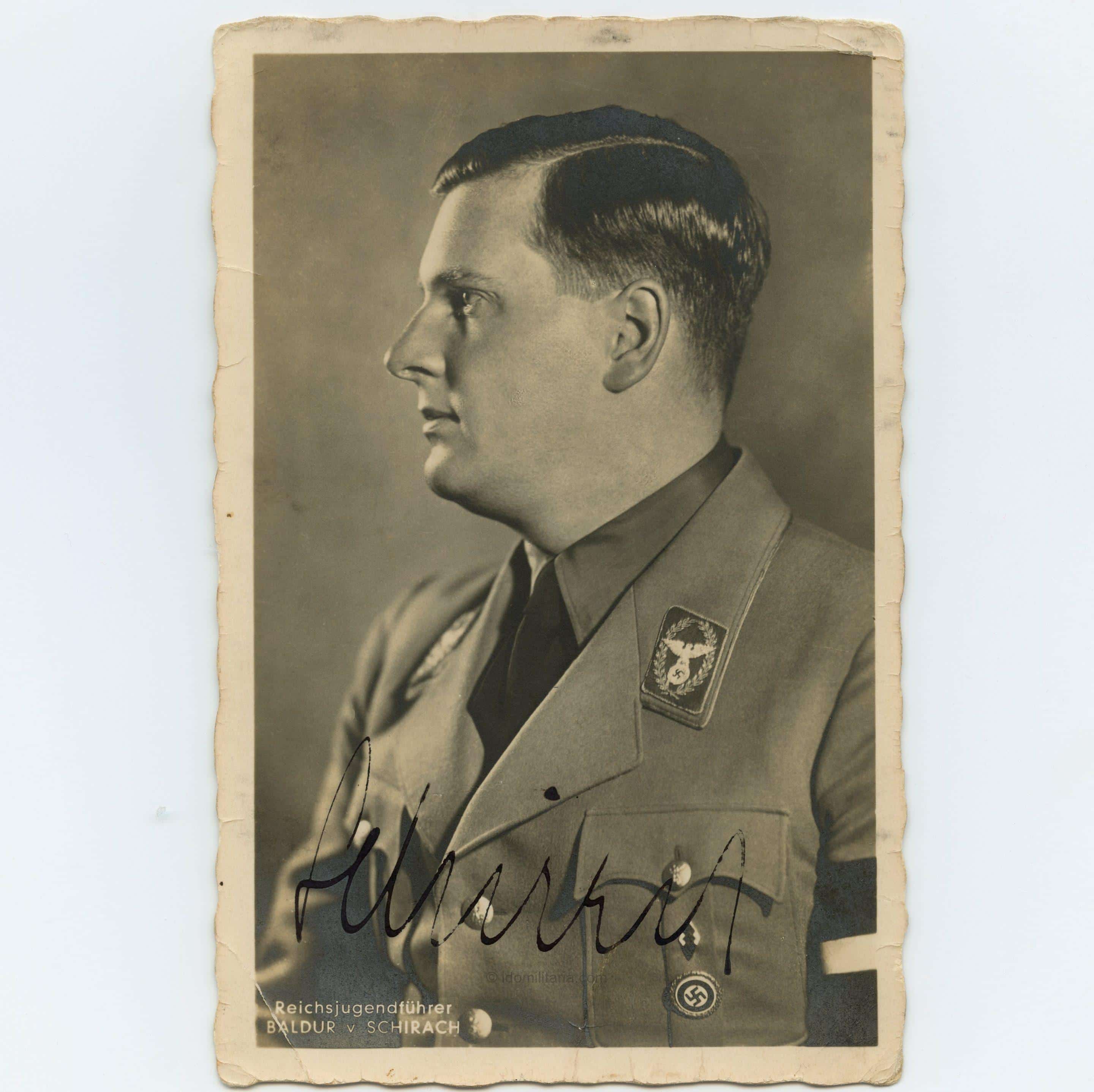
Baldur von Schirach
 Germany
politician•screenwriter•autobiographer
Also known as: Baldur Benedikt von Schirach
Birthday
May 9, 1907
Birth Sign
Taurus
Birthplace
Berlin, Germany
Age
Died at 67
About
Baldur Benedikt von Schirach stands as a defining figure of Nazi Germany's administrative machinery, rising from a cultural aristocracy to become the leader of the Hitler Youth and later the Gauleiter and Reich Governor of Vienna. Born on May 9, 1907, in Berlin, he entered a world steeped in literature and high society, the son of the renowned poet Ferdinand von Schirach and Clara von Trott zu Solz. While his early life suggested a path in the arts, he instead dedicated himself to the National Socialist movement, joining the party at age 18 in 1925. His career is defined by two distinct phases: first, the transformation of the Hitler Youth into a mass indoctrination machine with over five million members, and second, his tenure in Vienna where he orchestrated one of the most significant deportations of the Holocaust.
Schirach's legacy is inextricably linked to the systematic deportation of approximately 65,000 Viennese Jews to concentration camps in occupied Poland, primarily Auschwitz, between 1940 and 1945. This action formed the basis of the "crimes against humanity" charge during the Nuremberg Trials, where he was convicted and sentenced to 20 years in prison. Despite attempts to maintain a veneer of cultural sophistication through art exhibitions while in Vienna, his historical image remains that of a ruthless bureaucrat of genocide. He served his full sentence at Spandau Prison until his release in September 1966, spending his final years writing memoirs without expressing remorse before dying in Kröv, West Germany, in 1974. His story serves as a grim case study in how artistic talent can be subverted by totalitarian ideology.
Early Life & Background
Baldur Benedikt von Schirach was born into the German aristocracy on May 9, 1907, in Berlin, surrounded by the cultural elite rather than political ambition. His father, Ferdinand von Schirach, was a celebrated poet and novelist, and his mother, Clara von Trott zu Solz, came from a distinguished lineage. This environment immersed the young Baldur in literature, theater, and high society circles from an early age. He attended school in Munich, where he developed an appreciation for the arts that would initially shape his career path. Before his political ascent, Schirach pursued a promising career as a screenwriter and author, writing novels such as Der junge Adelige (The Young Nobleman) and contributing to films like Our Flags Lead Us Forward in 1933.
His transition from artist to ideologue began in earnest when he briefly enrolled in law studies at the University of Munich but soon abandoned them to dedicate himself entirely to the National Socialist movement. In 1925, at just 18 years old, he joined the Nazi Party, marking a decisive shift in his trajectory. By 1926, he had also become a member of the SA (Sturmabteilung). The turning point arrived in 1931 when Adolf Hitler appointed the 24-year-old Schirach as the Reich Youth Leader of the Hitler Youth. This role transformed him from a struggling artist into a key figure in the Nazi hierarchy, taking over an organization that was still finding its footing and rapidly expanding it into a massive apparatus for indoctrinating German youth. His early years as a writer and student were forgotten as he plunged deeper into the machinery of the regime.
Career Growth
Schirach's rise within the Nazi Party accelerated rapidly after his appointment as Reich Youth Leader in 1931. He successfully transformed the Hitler Youth from a fringe group into a mass movement with over five million members by the late 1930s. His leadership style combined charismatic oratory with strict organizational discipline, ensuring the group became the primary vehicle for instilling Nazi ideology in the younger generation. In 1933, after Hitler assumed power, Schirach consolidated control over all youth organizations in Germany, making the Hitler Youth the sole legal youth group. Under his command, the organization grew into a state-mandated indoctrination machine, effectively replacing independent youth clubs with a unified front for the regime.
In 1940, Schirach was transferred to Vienna to serve as Gauleiter and Reich Governor, a move that cemented his place in history as one of the most notorious figures of the Third Reich. During his tenure from 1940 to 1945, he implemented harsh Nazi racial policies with ruthless efficiency. His administration oversaw the systematic deportation of approximately 65,000 Viennese Jews to concentration camps in occupied Poland, particularly Auschwitz. While he attempted to maintain a veneer of cultural sophistication by organizing art exhibitions and protecting some monuments, these efforts did little to mitigate his complicity in the Holocaust. As the war turned against Germany, Schirach fled Vienna in April 1945 ahead of the advancing Soviet Red Army, surrendering to American forces in the Tyrol region shortly thereafter.
Following the war, he was tried at the International Military Tribunal in Nuremberg. On October 1, 1946, he was convicted of crimes against humanity and sentenced to 20 years in prison. He served his full term at Spandau Prison in Berlin, becoming the last surviving prisoner alongside Albert Speer until Speer's death in 1966. Released in September 1966, Schirach spent his remaining years writing memoirs and living quietly in southern Germany until his death in 1974. He received no traditional awards for merit, though he was decorated by the Nazi regime with the Iron Cross, 2nd Class, in 1940 for service as an infantryman during the French Campaign.
Career Timeline
Public Image & Style
Baldur von Schirach is remembered not for charisma or talent, but for his administrative role in the Holocaust. His public image is one of absolute infamy. He is viewed as a symbol of evil and totalitarianism, appearing in historical texts, documentaries, and academic works as a key figure in the regime's atrocities. There are no fan campaigns, social media followings, or viral moments associated with him. Modern references to him are strictly critical, appearing in educational contexts and discussions about the dangers of totalitarianism. His grandson, Ferdinand von Schirach, has helped shape the narrative around him by exploring the grandfather's crimes in literature, further cementing the family's association with accountability rather than adoration.
Historical photographs depict him as a tall, slender man with the typical grooming standards of the Nazi elite, often seen in uniform. However, these images do not evoke admiration; instead, they serve as documentation of a man who wielded immense power to facilitate genocide. His quotes, such as "I have educated this generation in faith and loyalty to Hitler," reflect an unrepentant stance and belief in the Nazi cause, even after his conviction. No "Greatest of All Time" lists or magazine covers celebrate him; instead, he appears in historical texts as a symbol of moral failure. The legacy surrounding him is one of verified atrocities, specifically the deportation of 65,000 Viennese Jews, rather than the folklore of charismatic performances.
Fame & Fandom (iFAMOUS Rankings)
Baldur von Schirach commands a global attention defined entirely by historical infamy rather than contemporary adoration. He stands as a figure of profound notoriety, remembered for his administrative role in the machinery of genocide and his subsequent conviction at Nuremberg. iFANN's Global Fame Engine has evaluated this person, but they do not currently hold a placement in the published rankings (Global Top 1,000 or a Top-100 scope list). This absence of a numerical score reflects his status as a condemned war criminal rather than a living celebrity subject to current popularity metrics. The world does not measure him in trending searches or viral moments. His audience consists of historians, students, and those studying the Holocaust, not a voluntary fanbase. There is no documented fandom name for Baldur von Schirach.
While he once led millions of youths through state-mandated conscription into the Hitler Youth, these were subjects of a totalitarian regime, not fans engaging in rituals or campaigns. No unofficial names exist for any group associated with him, nor are there fan-funded projects, subway ads, or birthday billboards dedicated to his memory. Modern references appear only in critical discussions regarding World War II and academic texts, devoid of celebratory content. The legacy surrounding him is one of verified atrocities, specifically the deportation of 65,000 Viennese Jews, rather than the folklore of charismatic performances. He remains a static figure in the annals of history, judged by the weight of his crimes rather than the volume of his applause. He is not featured in the September 2026 iFAMOUS Rankings flagship list, confirming his exclusion from any positive fame metrics.
Interesting Facts and Legends
Baldur von Schirach was born into a family of renowned artists; his father, Ferdinand von Schirach, was a famous poet and playwright, which gave Baldur access to high society circles before his political ascent. Despite his role in the Holocaust, Schirach was known for his love of art and culture, occasionally organizing exhibitions in Vienna while simultaneously orchestrating the genocide. His grandson, Ferdinand von Schirach, won the prestigious German Book Prize for his novel Crime, which fictionalized the grandfather's story and sparked national debates about memory and guilt. Schirach was one of the few Nazis who spoke English fluently, having studied in England as a young man. He was also the youngest person ever to hold the title of Reich Youth Leader, appointed at age 24.
Another notable fact is that Schirach never publicly expressed remorse for his actions throughout his life, even after serving his 20-year sentence. At the Nuremberg Trials, he claimed he was merely following orders and that he believed he was serving a higher purpose. He authored memoirs titled Ich glaubte, ich diene... (I Thought I Was Serving...) after his release, which reflected his continued justification of his deeds. Additionally, he held the rank of SS-Obergruppenführer, one of the highest ranks in the SS, reflecting his deep integration into the party hierarchy. His time in Spandau Prison made him the last surviving prisoner alongside Albert Speer until Speer's death in 1966, marking the end of an era of imprisoned Nazi leaders.
Notable Quotes
“I have educated this generation in faith and loyalty to Hitler. The Youth Organization which I built up bore his name. I believed that I was serving a higher purpose.”
“I am convinced that I acted in the best interest of the German people.”
Family & Personal Life
Baldur von Schirach was married only once to Henriette von Mildenstein in 1932. Henriette was the daughter of a wealthy industrialist and a member of the aristocracy. The couple had four children together: Karlheinz, Christiane, Georg, and Peter. Their marriage lasted until Baldur's arrest in 1945. There are no credible records of other romantic relationships or affairs prior to or during his marriage. Henriette remained in Vienna during the war and was interned by the Allies after the conflict but was eventually released. She lived out her life in Germany, dying in 1977. The couple's children largely avoided public life, though his grandson, Ferdinand von Schirach, became a well-known lawyer and author who wrote the novel Crime (2008), which directly confronted his grandfather's role in the Holocaust.
The family dynamic was deeply affected by Baldur's political career. While Baldur was away in Vienna managing the city's administration and overseeing deportations, Henriette managed the household and faced the dangers of the war zone. After Baldur's arrest, the family was separated, and the children grew up in the shadow of their father's infamy. The grandson, Ferdinand, later gained prominence as an author, winning the prestigious German Book Prize for his work, which sparked national debates about memory and guilt. This literary engagement with the past has become a central part of the family's modern narrative, focusing on accountability rather than adoration.
Notable Connections
Relationships & Dating History
Baldur von Schirach was married only once to Henriette von Mildenstein in 1932. Henriette was the daughter of a wealthy industrialist and a member of the aristocracy. The couple had four children together: Karlheinz, Christiane, Georg, and Peter. Their marriage lasted until Baldur's arrest in 1945. There are no credible records of other romantic relationships or affairs prior to or during his marriage. Henriette remained in Vienna during the war and was interned by the Allies after the conflict but was eventually released. She lived out her life in Germany, dying in 1977.
The relationship between Baldur and Henriette was marked by the demands of his political career. While Baldur was in Vienna, Henriette managed the family home and faced the dangers of the war zone. After Baldur's arrest, the family was separated, and the children grew up in the shadow of their father's infamy. The couple's children largely avoided public life, though his grandson, Ferdinand von Schirach, became a well-known lawyer and author who wrote the novel Crime (2008), which directly confronted his grandfather's role in the Holocaust. The family's legacy is now defined by this literary confrontation with the past, emphasizing accountability rather than adoration.
- MarriedHenriette von Schirach1932 - 1945Married until his arrest; she died in 1977.
Death & Aftermath
Died
August 8, 1974 (aged 67)
Death Place
Kröv, West Germany
Cause of Death
Natural causes related to old age
Baldur von Schirach passed away on August 8, 1974, in the quiet village of Kröv near the Moselle River in West Germany. He was 67 years old at the time of his death, which authorities attributed to natural causes associated with advanced age. There was no formal investigation or autopsy beyond standard procedure for a non-suspicious death in retirement, as he had already served his full sentence and faced no pending legal charges. His death marked the final closure of a generation of high-ranking Third Reich officials who had been held accountable after World War II. No major public mourning occurred, nor were there any organized tributes from political groups or institutions. The press noted the event as a historical footnote, signaling the end of an era where the last imprisoned war criminal had finally left the world stage.
His funeral was a private affair attended only by family members and close associates. Henriette von Schirach, his widow, survived him by three years, dying in 1977. The estate he left behind was modest, consisting primarily of personal belongings and the proceeds from his later writings, which generated little financial return compared to modern celebrity estates. His grandson, Ferdinand von Schirach, would later gain prominence as an author and lawyer, but the immediate aftermath of Baldur's death saw no significant legal disputes or estate battles. The legacy of his crimes remained unaltered by his death, serving as a grim reminder of the administrative evil he helped orchestrate during the Holocaust. His memoirs, written in retirement, offered no apology, leaving his moral stance unchanged until the end.
Net Worth (Estate Value)
$0
iFANN Editorial Team estimate
As a deceased individual whose wealth was tied to a collapsed regime, Baldur von Schirach did not accumulate personal wealth in the modern sense. During the Nazi era, high-ranking officials were compensated with salaries and benefits, but Schirach's primary income sources were likely his government salary and potential assets inherited from his aristocratic family. Upon his imprisonment, his assets were likely seized or frozen. After his release in 1966, he lived modestly, supported by a pension and perhaps family resources. Posthumous releases of his writings have been published by academic presses, but these do not generate significant income comparable to celebrity estates. His estate value is effectively negligible in contemporary terms, and no major business ventures or IP rights are managed by heirs.
There are no credible estimates of his net worth as of 2026, nor is there a functioning estate generating revenue. The proceeds from his later writings generated little financial return compared to modern celebrity estates. His grandson, Ferdinand von Schirach, manages the intellectual property of his grandfather's legacy, but this does not translate to significant wealth for the Schirach family in general. iFANN currently estimates Baldur von Schirach's net worth at approximately $0, reflecting the lack of active assets or estate value in the modern economy. The focus of his financial history remains on the confiscation of assets during the war and the modest existence he led in retirement.
Awards Won (2)
Baldur von Schirach received no awards or honours in the traditional sense of recognition for merit or achievement. Instead, he was decorated by the Nazi regime for his service. Notable decorations include the Iron Cross, 2nd Class, awarded in 1940 for his service as an infantryman during the French Campaign, and various grades of the Nazi Party Long Service Award for long-term party membership.
1940 · Military Decoration
French Campaign
Various · Party Service
Nazi Party Membership
Known For
Hitler Youth Leader
1931 · Reich Youth Leader
Gauleiter of Vienna
1940 · Reich Governor
Nuremberg Trials
1946 · Defendant
Keywords
Sources
Quick Facts
- Profession
- politician, screenwriter, autobiographer
- Born
- May 9, 1907
- Birthplace
- Berlin, Germany
- Died
- August 8, 1974
- Death Place
- Kröv, West Germany
- Gender
- Male
- Spouse
- Henriette von Schirach
- Birth Sign
- Taurus
Personal Details
- Full Name
- Baldur Benedikt von Schirach
- Spouse
- Henriette von Schirach
- Children
- Karlheinz von Schirach · Christiane von Schirach · Georg von Schirach · Peter von Schirach
- Education
- University of Munich (briefly studied law)
Frequently Asked Questions
Who was Baldur von Schirach?
When did Baldur von Schirach die?
What was Baldur von Schirach's role in the Holocaust?
How long did Baldur von Schirach serve in prison?
Did Baldur von Schirach ever express remorse?
Join the community
fans discussing