“The series is a genuinely sophisticated story about war, genocide, and imperialism, with characters who grow and change in ways that feel earned, not manipulative.”
Emily Nussbaum
The New Yorker
 Singapore
"Water. Earth. Fire. Air."
User Score
4,873 votes
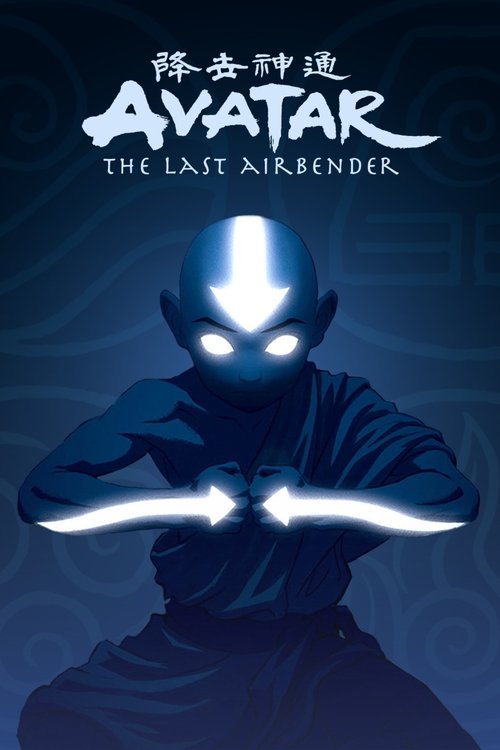
In 2005, Nickelodeon launched a show that looked like a kids' cartoon but turned out to be something far more ambitious. Avatar: The Last Airbender dropped viewers into a world where certain people can manipulate water, earth, fire, or air through martial arts moves. Only one person, the Avatar, can master all four elements. The problem: the Avatar has been missing for a hundred years, and the Fire Nation has spent that century conquering everything in sight.
The series follows Aang, a 12-year-old airbender who wakes up from a hundred-year nap inside an iceberg. He teams up with siblings Katara and Sokka from the Southern Water Tribe. Together they travel the world so Aang can learn the other three elements and stop Fire Lord Ozai from burning down the Earth Kingdom. Along the way they pick up Toph, a blind earthbending prodigy, and face enemies like the exiled Prince Zuko and his terrifying sister Azula.
What made the show stick was how seriously it took its own world. The characters wrestled with real moral questions, honor, genocide, redemption, the cost of war, without talking down to its audience. The animation blended anime influences with American storytelling, and the martial arts choreography was grounded in actual Chinese styles. By the time the finale aired in July 2008, the show had built a devoted fanbase that only grew larger when it hit streaming services years later.
Availability and pricing can change. Confirm on the provider's site before purchasing.
The world of Avatar: The Last Airbender is split into four nations: the Water Tribes, the Earth Kingdom, the Fire Nation, and the Air Nomads. In each nation, certain people called benders can control their native element through precise martial arts movements. The Avatar is the only person who can bend all four, and their job is to keep balance between the nations and between the human and spirit worlds. When the Avatar dies, they reincarnate into the next nation in the cycle.
A hundred years before the story begins, Fire Lord Sozin started a war to spread Fire Nation rule across the world. He wiped out the Air Nomads in a genocide meant to kill the Avatar before they could grow up. But the young Avatar, an airbender boy named Aang, escaped by flying his sky bison Appa into a storm and freezing himself in the ocean. He stayed frozen for a century while the Fire Nation conquered more and more territory.
The series opens when siblings Katara and Sokka from the Southern Water Tribe find Aang and Appa trapped in an iceberg. Katara is the last waterbender in her tribe, desperate to learn more. Sokka is a non-bender who fancies himself a warrior but has a lot to learn. Together they set out to find a waterbending master at the North Pole so Aang can begin his training.
Book One: Water covers their journey north while being hunted by Prince Zuko, the exiled son of Fire Lord Ozai. Zuko believes capturing the Avatar will restore his honor and let him go home. Also on Aang's trail is Commander Zhao, a ruthless Fire Navy admiral who wants the glory for himself. The season takes the group through Earth Kingdom villages, Fire Navy ships, and the Spirit World. It ends with a massive battle at the Northern Water Tribe where Aang merges with the ocean spirit to drive back the Fire Nation fleet.
Book Two: Earth shifts the quest to finding an earthbending teacher. The group meets Toph Beifong, a blind 12-year-old from a wealthy family who ran away to become the world's greatest earthbender. She joins the team as Aang's teacher. Meanwhile, Zuko's sister Azula enters the picture. She's a firebending prodigy who is also cold, calculating, and dangerously unstable. The season follows the group through the Earth Kingdom as they try to reach the secret city of Ba Sing Se. But Azula gets there first and uses political manipulation to bring the city under Fire Nation control. The season ends with Aang being shot by Azula's lightning and the Earth Kingdom falling.
Book Three: Fire starts with Aang recovering on a Fire Nation island while the world thinks he's dead. The group goes undercover in the Fire Nation to plan their next move. Zuko, now welcomed back as a hero, slowly realizes that his father's approval is hollow. He makes a choice that changes everything: he joins Aang and becomes his firebending teacher. The season builds toward the Day of Black Sun, a solar eclipse that takes away firebending power, and then the return of Sozin's Comet, which supercharges it. The heroes must stop Ozai before he uses the comet to burn down the entire Earth Kingdom.
Avatar The Last Airbender 15th Anniversary Trailer [4K]
Critical Consensus
Avatar: The Last Airbender is widely regarded as one of the greatest animated series ever made. Critics praise its mature storytelling, complex character arcs, rich world-building, and seamless blend of Eastern philosophy with Western animation. It transcends its children's network origins to deliver a narrative that resonates with all ages.
“The series is a genuinely sophisticated story about war, genocide, and imperialism, with characters who grow and change in ways that feel earned, not manipulative.”
Emily Nussbaum
The New Yorker
“Avatar: The Last Airbender is one of the best TV series of the 2000s, period. It's a show that understands that the best fantasy is about real-world issues, wrapped in a compelling adventure.”
Todd VanDerWerff
The A.V. Club
“The series demonstrates a surprising emotional depth and narrative sophistication for a kids' show, with a richly imagined world and characters who evolve in meaningful ways.”
Brian Lowry
Variety
“The series is a rarity: a children's show that adults can watch without irony, and that rewards close attention with complex plotting and genuine moral ambiguity.”
Mike Hale
The New York Times
“Avatar: The Last Airbender remains a masterpiece of animated storytelling, proving that genre fiction aimed at young audiences can tackle themes of trauma, redemption, and colonialism with grace and power.”
Liz Shannon Miller
IndieWire
Zach Tyler Eisen
Aang (voice)
Mae Whitman
Katara (voice)
Jack De Sena
Sokka (voice)
Dante Basco
Zuko (voice)
Michaela Jill Murphy
Toph Beifong (voice)
Mako Iwamatsu
Uncle Iroh (voice)
Grey DeLisle
Azula (voice)
Mark Hamill
Fire Lord Ozai (voice)
Dee Bradley Baker
Appa / Momo (voice)
Directors
Giancarlo Volpe, Lauren MacMullan, Anthony Lioi, Ethan Spaulding, Dave Filoni, Michael Dante DiMartino, Bryan Konietzko
Writers
Michael Dante DiMartino, Bryan Konietzko, Aaron Ehasz, John O'Bryan, Elizabeth Welch Ehasz, Tim Hedrick, Joshua Hamilton, Lauren MacMullan, May Chan, James Eagan
Composers
Jeremy Zuckerman, Benjamin Wynn
Producers
Michael Dante DiMartino, Bryan Konietzko
Primetime Emmy Award (2007)
Outstanding Individual Achievement in Animation: Won
Primetime Emmy Award (2008)
Outstanding Individual Achievement in Animation: Won
Peabody Award (2008)
Excellence in Storytelling: Won
Genesis Award (2007)
Outstanding Children's Programming: Won
Pulcinella Award (2005)
Best Action/Adventure TV Series: Won
Pulcinella Award (2005)
Best TV Series for All Audiences: Won
Join the community
fans discussing