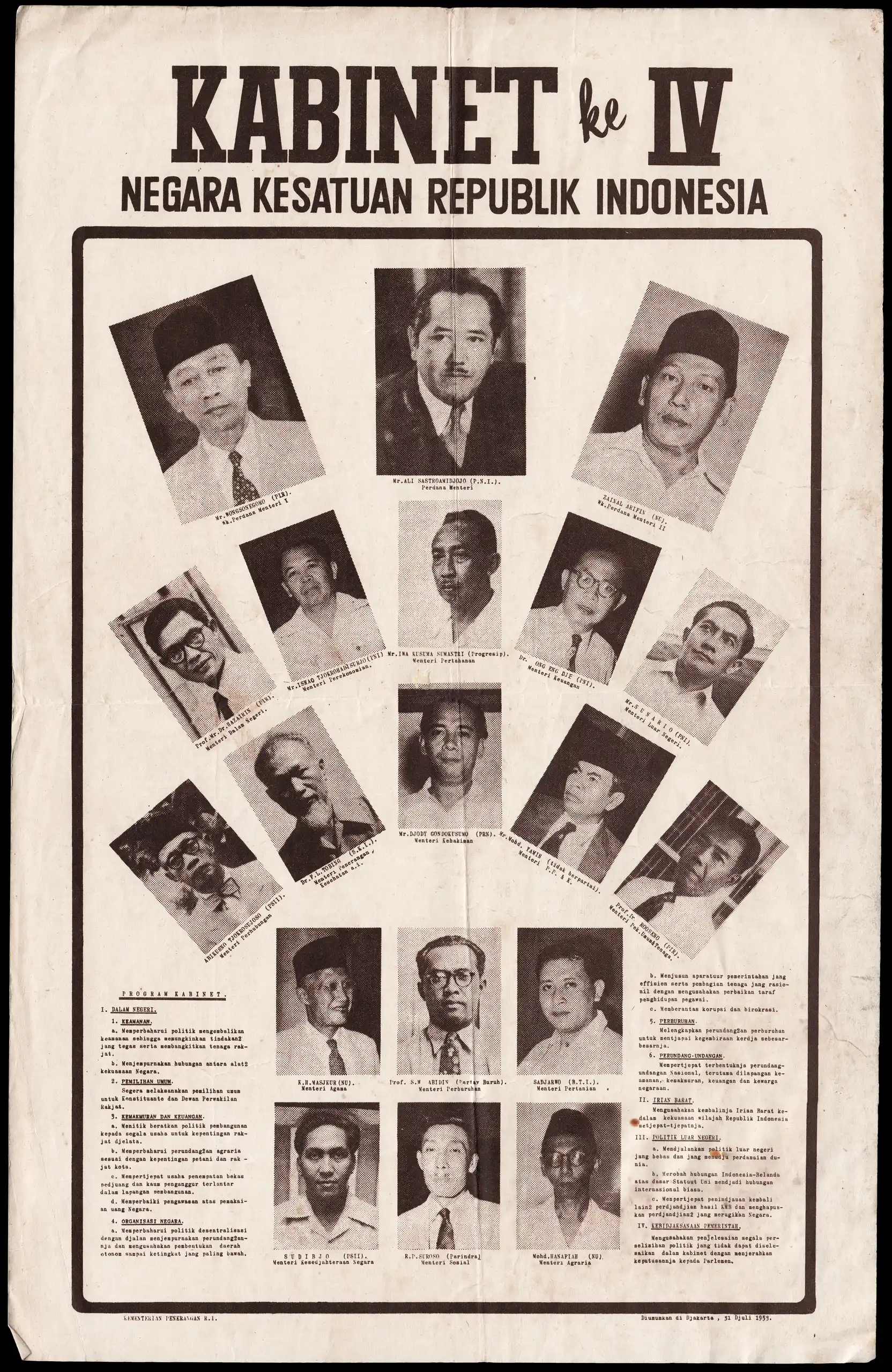
Ali Sastroamidjojo
 Indonesia
Also known as: Mr. Raden Ali Sastroamidjojo, Ali Sastroamijoyo
Birthday
May 21, 1903
Birth Sign
Sagittarius
Birthplace
Grabag, Magelang, Central Java, Dutch East Indies
Age
Died at 71
About
Ali Sastroamidjojo was a towering figure in Indonesian history, serving as the eighth and tenth Prime Minister of Indonesia during the era of Liberal Democracy. Born into an aristocratic family in Grabag, Magelang, he studied law at Leiden University in the Netherlands before becoming a pivotal statesman and diplomat. He is best remembered for his leadership in the historic Asian-African Conference and his navigation of Indonesia's complex early post-colonial politics. His career spanned from the struggle for independence against the Dutch to establishing Indonesia's voice on the global stage during the Cold War. As a young man, he joined youth organizations like Jong Java and Perhimpoenan Indonesia, which led to his arrest by Dutch colonial authorities in 1927. After his release, he returned to Indonesia to practice law and publish nationalist magazines. Following independence in 1945, he held key government positions including Deputy Minister of Education and Minister of Education. His diplomatic skills were crucial in securing international recognition for the young republic, leading to his appointment as Indonesia's first ambassador to the United States, Canada, and Mexico. Sastroamidjojo's political career peaked when he formed his first cabinet in 1953 and later his second in 1956. Even after his premiership ended, he remained active as Chairman of the Indonesian National Party until the fall of President Sukarno. He was arrested in 1967 but released without trial, living in retirement until his death in 1975.
Early Life & Background
Raden Ali Sastroamidjojo entered the world on May 21, 1903, in Grabag, Magelang, within the Dutch East Indies. Born into the Javanese nobility, his aristocratic background provided him with access to high-level education that would shape his future. He pursued higher studies in the Netherlands, enrolling at Leiden University where he focused on law. It was during his time in Europe that his political awakening truly began. He became deeply involved in the Indonesian independence movement, joining youth organizations such as Jong Java and Perhimpoenan Indonesia. These groups served as incubators for nationalist ideas and resistance against colonial rule. His activism was not without risk. In 1927, Dutch colonial authorities arrested him for his involvement in nationalist activities. This event solidified his reputation as a committed freedom fighter and marked a turning point in his life. Despite the arrest, he continued his studies and eventually returned to Indonesia to practice law. Upon his return, he settled in Surakarta, where he founded and published the magazine Djanget. This publication became a platform for spreading nationalist ideas and critiquing colonial policies. He also joined the Indonesian Nationalist Party (PNI), aligning himself with the broader movement for independence. When the Dutch dissolved the PNI, he transitioned to the Indonesian People's Movement (Gerindo), continuing his advocacy for sovereignty. These early years in journalism and party politics prepared him for the challenges ahead.
Career Growth
Following the proclamation of Indonesian independence in 1945, Ali Sastroamidjojo immediately entered government service as Deputy Minister of Education in the first cabinet under President Sukarno. From 1947 to 1948, he served as Minister of Education under Prime Minister Amir Syarifuddin and subsequently in the Hatta Cabinet, focusing on educational reform during the revolutionary struggle against Dutch re-occupation. A pivotal moment came in 1949 when he served as deputy chairman of the Indonesian delegation at the Round Table Conference in The Hague, which resulted in the formal recognition of Indonesian sovereignty by the Netherlands. From 1950 to 1955, he served as Indonesia's first Ambassador to the United States, Canada, and Mexico. In this role, he worked tirelessly to secure international recognition and support for the young republic. On August 1, 1953, he formed his first cabinet, becoming the Prime Minister of Indonesia. His administration focused on stabilizing the economy and addressing regional agrarian issues, such as the East Sumatra problem. His tenure ended on July 24, 1955, following a vote of no confidence. In 1955, he played the central organizing role in the Asian-African Conference held in Bandung. As host and key negotiator, he brought together 29 nations, laying the groundwork for the Non-Aligned Movement and establishing the "Bandung Spirit" of solidarity among developing nations. On March 26, 1956, President Sukarno called upon him again to form a coalition government, marking the beginning of his second term as Prime Minister. This cabinet was the first elected government in Indonesia's history. However, his second term was short-lived, ending in March 1957 due to political instability and rising regional rebellions. After his premiership, he remained active in politics, serving as Chairman of the Indonesian National Party (PNI) starting in July 1960 at its ninth annual congress. He was instrumental in negotiating the Sino-Indonesian Dual Nationality Treaty. In 1967, following the fall of President Sukarno and the rise of General Suharto's New Order regime, Sastroamidjojo was arrested. He was detained but released without trial after a period of incarceration. He lived in relative retirement until his death in 1975.
Career Timeline
Public Image & Style
Ali Sastroamidjojo is portrayed as a "simple minister" with sharp diplomatic wit. Media depictions focus on his role in managing Cold War tensions between the US and Soviet Union while maintaining Indonesia's non-aligned stance. He is remembered for his humble demeanor despite his aristocratic roots, which sometimes complicated his relationship with more radical elements of the independence movement. His image as a dignified statesman with a professional demeanor typical of the era's diplomats has been reinforced by contemporary accounts and historical exhibitions. Recent displays in 2025 have highlighted his diplomatic sketches, further cementing his reputation as a thoughtful and effective leader who prioritized national unity and international cooperation.
Fame & Fandom (iFAMOUS Rankings)
Ali Sastroamidjojo commands a legacy defined not by the fervor of a modern fanbase, but by the enduring weight of his diplomatic achievements and the formal recognition of state institutions. Unlike contemporary celebrities who cultivate dedicated followings with specific names and ritualistic campaigns, his supporters are historians, government bodies, and the Indonesian public who view him as a foundational statesman rather than an idol. There is no documented fandom name for his adherents; instead, he is revered through political designations such as "national hero" candidate, with commemorative efforts driven by academic proposals and official state initiatives rather than grassroots fan projects or digital movements. The absence of a self-organized community reflects his status as a historical figure whose influence was exercised through governance and international diplomacy during the Liberal Democracy era. While recent exhibitions in 2025 have highlighted his "simple minister" persona and diplomatic sketches, these events remain focused on historical reflection rather than fan interaction. Consequently, Ali Sastroamidjojo is currently evaluated by iFANN's Global Fame Engine but does not hold a placement in the published rankings, including the Global Top 1,000 or any Top-100 scope list.
Interesting Facts and Legends
Born into an aristocratic family in Magelang, Ali Sastroamidjojo studied law at Leiden University before becoming a pivotal figure in Indonesia's independence movement. His early activism led to a brief arrest by Dutch authorities in 1927, an event that cemented his reputation as a committed freedom fighter. He later served two terms as Prime Minister, from 1953 to 1955 and again from 1956 to 1957, navigating a complex political landscape. A defining moment in his career was hosting the Asian-African Conference in Bandung in 1955, an event that brought together 29 nations and laid the groundwork for the Non-Aligned Movement. This conference is often mythologized as the birthplace of global solidarity among developing nations, with its "Bandung Spirit" remaining a cornerstone of Indonesian foreign policy. Another notable aspect of his lore involves his sharp diplomatic wit during the Cold War, where he skillfully managed relations between major powers like the United States and the Soviet Union. In May 1951, he was urgently recalled from New York to Jakarta, underscoring his critical role in US-Indonesia relations. Even decades after his death in 1975, efforts continue to recognize him as a National Hero, with recent proposals in 2021 and 2022 highlighting his under-appreciated contributions to the nation. Notably, in May 1951, he was so critically needed in Jakarta that he was urgently recalled from his post in New York, underscoring the volatility of US-Indonesia relations at the time. Before entering full-time politics, he founded and edited Djanget magazine in Surakarta, using it as a platform for nationalist ideas. Despite his later populist appeal, he was born into the Javanese aristocracy, a fact that sometimes complicated his relationship with the more radical elements of the independence movement. He is often credited as one of the primary "godfathers" of the Non-Aligned Movement, working alongside leaders like Nehru, Nasser, and Tito. Specific verbatim quotes from Ali Sastroamidjojo are scarce in English-language sources, but his diplomatic philosophy is captured in his memoirs and speeches. One recurring theme in his work is the necessity of unity among Asian and African nations to counteract neo-colonialism. While exact phrasing is difficult to isolate without access to the original Indonesian texts of his speeches, his sentiment is best summarized by the "Bandung Spirit," which he championed as a call for mutual respect and independence from great power domination. Specific height measurements are not recorded in available historical sources, but he is described in contemporary accounts as a dignified statesman with a professional demeanor typical of the era's diplomats. Articles from 2025 discuss the enduring relevance of the "Bandung Spirit" in the context of the Global South's search for leadership. In 2026, celebrations and retrospectives continue to highlight the 70th anniversary of the conference, reaffirming his historical importance.
Notable Quotes
“The necessity of unity among Asian and African nations to counteract neo-colonialism.”
Family & Personal Life
Ali Sastroamidjojo was married to Kurnianingrat, and their marriage was a long-term union that lasted until his death. They were married during his early political career, though specific dates are not widely publicized in available historical records. There is no public record of divorce or separation, and they remained partners throughout his tumultuous political life. While details about their children are scarce in major biographical summaries, some sources suggest they had a family unit. His personal life was kept relatively private compared to modern standards, reflecting the norms of a prominent statesman of the mid-20th century. He is buried at the Kalibata Heroes' Cemetery in Jakarta, where he rests alongside other national heroes.
Notable Connections
Soekarno, Mohammad Hatta, Nehru, Nasser, Tito.
Relationships & Dating History
Ali Sastroamidjojo was married to Kurnianingrat, and their union lasted until his death in 1975. There is no public record of divorce or separation, indicating a stable and enduring partnership throughout his political career. Specific dates of their marriage are not widely publicized in available historical records, though they were married during his early political career. Details about their children are scarce, with no specific names consistently cited in major biographical summaries. Their relationship remained private, consistent with the norms of prominent statesmen of the mid-20th century. As of the time of his death, he was widowed, having lost his wife prior to his own passing. No other romantic relationships or flings are documented in credible sources.
- MarriedKurnianingrat? - 1975Married until his death; no public record of divorce or separation.
Death & Aftermath
Died
March 13, 1975 (aged 71)
Death Place
Jakarta, Indonesia
Cause of Death
Natural causes
Dr. Ali Sastroamidjojo passed away in Jakarta on March 13, 1975, at the age of 71, bringing an end to a life defined by decades of service to Indonesia's independence and sovereignty. While no detailed medical report or autopsy findings were made public at the time, authorities and family sources attributed his death to natural causes following a period of retirement from active politics. He had stepped back from the political spotlight nearly two decades earlier after his second term as Prime Minister ended in 1957, spending his final years in relative quiet away from the volatile currents of the Sukarno era and the subsequent New Order regime. The news of his death was reported internationally by outlets like The New York Times, which noted his status as a key leader of the independence movement. His funeral took place with full state honors, and he was laid to rest at the Kalibata Heroes' Cemetery in Jakarta, a resting place reserved for national figures who shaped the country's history. This burial site cemented his standing among the nation's most revered leaders, alongside other founding fathers. His legacy endured through his memoirs, titled Milestones on My Journey, which remain a primary resource for understanding his role in the historic Asian-African Conference and the formation of the Non-Aligned Movement. Decades after his passing, recognition of his contributions continued to grow. Proposals in 2021 and 2022 highlighted his work, reaffirming his status as a National Hero candidate. Exhibitions in 2025 further celebrated his "simple minister" persona and diplomatic sketches, ensuring that the "Bandung Spirit" he championed remains a cornerstone of Indonesian foreign policy and global solidarity among developing nations.
Net Worth (Estate Value)
$0
iFANN Editorial Team estimate
As a historical political figure who died in 1975, Ali Sastroamidjojo does not have a current net worth or estate valuation in the manner of modern celebrities. His wealth was derived from his salary as a government official and diplomat during the mid-20th century. Any assets he held would have been managed by his heirs or the state, and no public financial records exist regarding his personal fortune or estate value today. Research by the iFANN Editorial Team confirms that there are no verifiable figures for his estate, as his life preceded the modern era of celebrity wealth tracking. His financial legacy is measured not in dollars but in the enduring impact of his policies and the respect he commanded as a statesman.
Awards & Accolades
View 5 records, honours and achievementsKnown For
Asian-African Conference
1955 · Host and Organizer
Prime Minister of Indonesia
1953 · Head of Government
Non-Aligned Movement
1955 · Key Architect
Keywords
Sources
Quick Facts
- Profession
- politician, head of government
- Born
- May 21, 1903
- Birthplace
- Grabag, Magelang, Central Java
- Died
- March 13, 1975
- Death Place
- Jakarta
- Gender
- Male
- Spouse
- Kurnianingrat
- Birth Sign
- Sagittarius
Personal Details
- Full Name
- Raden Ali Sastroamidjojo
- Spouse
- Kurnianingrat
- Children
- Education
- Leiden University (Law)
Frequently Asked Questions
Who was Ali Sastroamidjojo?
When did Ali Sastroamidjojo die?
What was Ali Sastroamidjojo's most famous achievement?
Was Ali Sastroamidjojo married?
Why was Ali Sastroamidjojo arrested in 1967?
Join the community
fans discussing