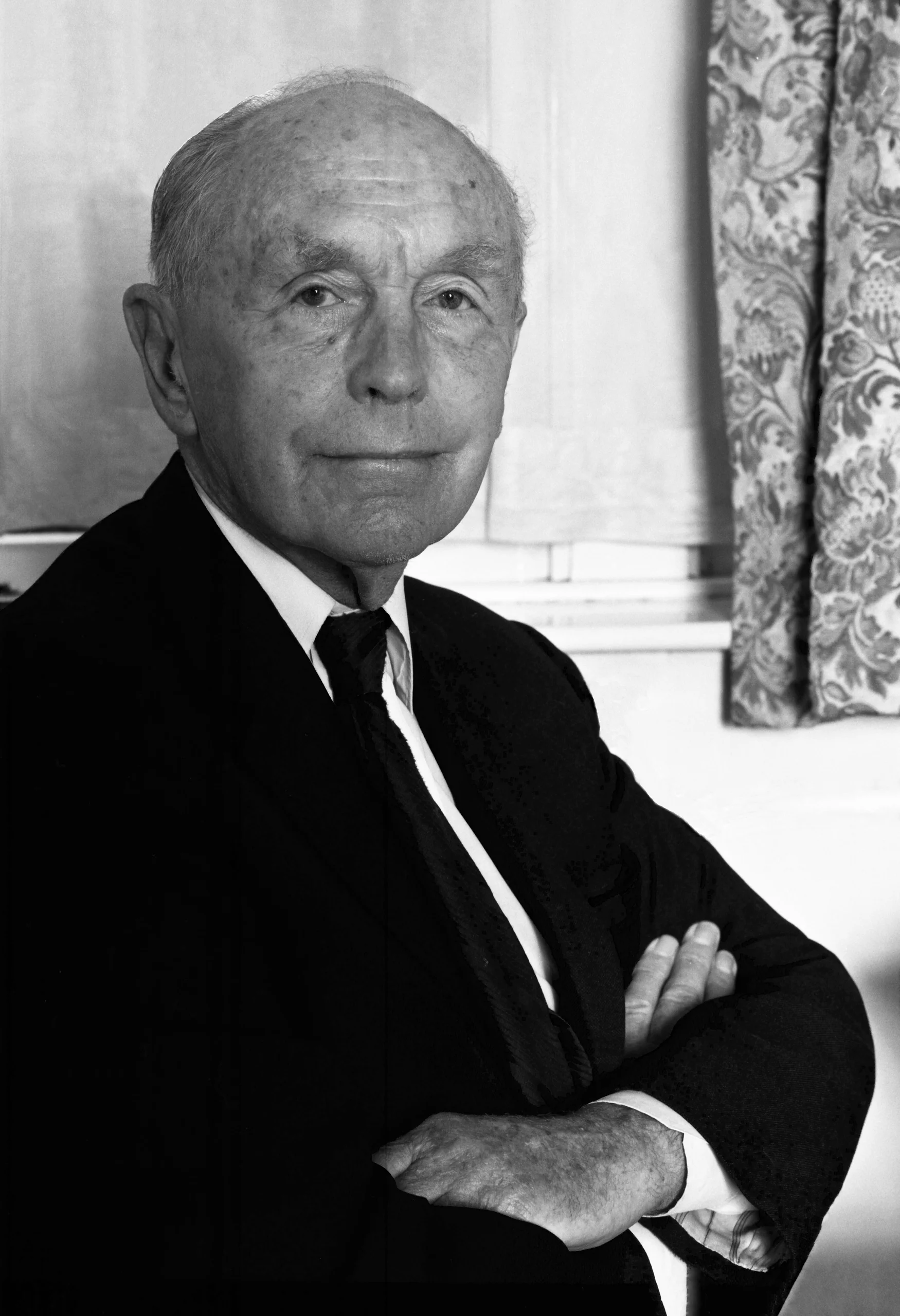
Alec Douglas-Home
 United Kingdom
Also known as: Lord Dunglass, Earl of Home, Sir Alec Douglas-Home, Baron Home of the Hirsel
Birthday
July 2, 1903
Birth Sign
Cancer
Birthplace
Mayfair, London, England
Age
Died at 92
Height
6 ft 0 in (183 cm)
About
Alexander Frederick Douglas-Home, Baron Home of the Hirsel (2 July 1903 – 9 October 1995), stands as a unique figure in British political history, serving as the 14th Prime Minister of the United Kingdom from 1963 to 1964. Born into the Scottish nobility as the eldest son of the 13th Earl of Home, he is historically significant as the last Prime Minister to hold office while sitting in the House of Lords. His tenure marked a pivotal transition in the British constitutional system, highlighted by his famous renunciation of his peerage in 1963 to become an MP and serve in the Commons for the remainder of his premiership. Before his ascent to the highest office, Douglas-Home was a distinguished first-class cricketer who represented England against Australia. His career as a statesman included serving as Foreign Secretary under Winston Churchill and Harold Macmillan, where he played a pivotal role in Cold War diplomacy. Despite his brief tenure as head of government, lasting exactly 363 days, his reputation rests largely on his diplomatic achievements, including managing the UK's response to the Cuban Missile Crisis and negotiating the Partial Nuclear Test Ban Treaty. He later returned to government as Secretary of State for Foreign and Commonwealth Affairs in Edward Heath's cabinet before retiring from front-line politics in 1974.
Early Life & Background
Alexander Frederick Douglas-Home entered the world on July 2, 1903, at 7 Hamilton Place in Mayfair, London. He was the first child of Victor Alexander John Douglas-Home, the 13th Earl of Home, and Lady Mabel Gordon-Cumming. As a member of the aristocracy, his childhood unfolded primarily at The Hirsel, the family estate near Berwick-upon-Tweed in the Scottish Borders. This upbringing was defined by the privileges and isolation typical of the landed gentry, where he learned the traditions of the Scottish highlands alongside the customs of the English court. Known by his courtesy title Lord Dunglass until 1951, he was educated at Eton College, where he developed a keen interest in sports, particularly cricket and rugby. He later attended Balliol College, Oxford, graduating with a degree in history in 1925. During his university years, he played first-class cricket for Oxford University and represented England in a match against Australia. Before entering politics, he considered a career in the law but felt drawn to public service instead. In 1931, he entered the House of Commons as the Member of Parliament for Kent West, representing the Conservative Party. However, his parliamentary career faced a major interruption in 1940 when he was diagnosed with spinal tuberculosis. This illness forced him to suspend his political activities for nearly two years while he underwent treatment and rehabilitation. After recovering, he returned to politics, though he lost his seat in the 1945 general election before regaining it in 1950.
Career Growth
Douglas-Home's political career spanned over four decades, characterized by senior roles in foreign affairs and a brief, controversial tenure as Prime Minister. He served as Parliamentary Private Secretary to the Chancellor of the Exchequer and then to Prime Minister Neville Chamberlain between 1938 and 1940. After his recovery from tuberculosis, he regained his seat in 1950, only to be compelled to move to the House of Lords upon his father's death in 1951. He succeeded to the Earldom of Home that year and was appointed Leader of the House of Lords and Lord Privy Seal in Anthony Eden's government. In 1960, he became Foreign Secretary under Harold Macmillan, a role he held until 1963. During this period, he was instrumental in maintaining the Special Relationship with the US, managing the UK's response to the Cuban Missile Crisis, and negotiating the Partial Nuclear Test Ban Treaty. In October 1963, following Macmillan's resignation, he was selected as Prime Minister partly because he was seen as a unifying figure who could restore stability after the Profumo scandal. To accept the post, he famously renounced his peerage under the Peerage Act 1963, adopting the name Sir Alec Douglas-Home, and won a by-election for Orkney and Shetland to sit in the House of Commons. His premiership lasted exactly 363 days, ending in October 1964 after the Conservatives lost the general election to Harold Wilson's Labour Party. He later returned to government as Secretary of State for Foreign and Commonwealth Affairs in Edward Heath's cabinet from 1970 to 1974 before retiring from front-line politics. In 1974, he was created a life peer as Baron Home of the Hirsel, allowing him to return to the House of Lords.
Career Timeline
Public Image & Style
Portrayed as a dignified, somewhat stiff, and aristocratic figure, Douglas-Home often struggled with the modern media landscape. Standing approximately 6 feet tall with an athletic build reflecting his background as a first-class cricketer, his appearance was that of a traditional English gentleman. He was frequently criticized for appearing out of touch with ordinary voters during his premiership, contrasting sharply with the youthful Harold Wilson. His television interviews during the 1964 election campaign became iconic for their awkwardness, symbolizing the old guard versus the new. One specific moment involved his inability to relax on camera, which became a defining image of his leadership style. His formal attire, often morning suits or tweeds appropriate for the Scottish countryside, reinforced his image as a traditional English gentleman. While some viewed him as an elitist, others saw him as a necessary stabilizer during a turbulent period in British politics. He was respected for his diplomatic acumen and integrity, particularly regarding his work as Foreign Secretary. His formal attire and demeanor were consistent throughout his public life, reinforcing his identity as a statesman of the old school.
Fame & Fandom (iFAMOUS Rankings)
iFANN has not yet collected fame data for Alec Douglas-Home. He does not appear on the September 2026 iFAMOUS Rankings flagship list. While he lacks a pop culture fanbase with organized campaigns or social media rituals, he maintains a dedicated following among political historians and enthusiasts of British constitutional history. These readers refer to him informally as "the last aristocratic PM." Interest in his life is driven by his unique story, renouncing his title to serve as Prime Minister, and his pivotal role in key Cold War events like the Cuban Missile Crisis. His legacy is kept alive through historical societies, educational institutions, and academic discussions rather than modern fandom culture. Recent news items from 2022 to 2026 reference his legacy in discussions about British politics, such as comparisons to current Prime Ministers like Rishi Sunak and lessons on returning to government after retirement. A 2026 profile in *The Critic* revisited his life, highlighting his relevance to contemporary debates on the role of the aristocracy in politics. Historical archives and government websites maintain digital profiles of his tenure, ensuring his contributions remain accessible to researchers and the public.
Interesting Facts and Legends
Sir Alec Douglas-Home holds the distinction of being the only Prime Minister to have been a professional soldier, having served in the Royal Artillery during World War II, although his health prevented combat duty. He was also the last Prime Minister to speak Latin in the House of Commons, a nod to his classical education. Known for his love of shooting and fishing, he spent much of his leisure time on his Scottish estate. Interestingly, he was the only person to serve as both Foreign Secretary and Prime Minister in the same decade without holding the top job continuously. His famous renunciation of his title required a special Act of Parliament, making it a rare event in British constitutional history. He was a close friend of Queen Elizabeth II, having served her during the early years of her reign. He received numerous honours throughout his life, including being knighted as a Knight Bachelor in 1963, appointed a Knight of the Garter in 1973, and admitted to the Order of Merit in 1975. He was also a talented cricketer who played for Oxford University and England. His selection as Prime Minister was marked by the sentiment, "I am not sure that I am the right man for the job, but I will do my best." He believed that the House of Lords should not be the place where the Prime Minister sits, a view that drove his decision to renounce his peerage.
Notable Quotes
“I am not sure that I am the right man for the job, but I will do my best.”
“I have always believed that the House of Lords should not be the place where the Prime Minister sits.”
“Politics is the art of the possible.”
Family & Personal Life
Sir Alec Douglas-Home was married only once to Elizabeth Montagu Douglas Scott, known as Betty. She was the daughter of the 5th Duke of Buccleuch, making their union a classic arrangement of the British upper class that combined two powerful noble families. They met in their youth through family connections and were married on April 22, 1932. Betty was a devoted partner who managed the household and supported her husband through his political ups and downs, including his illness and his brief, intense premiership. Together they had five children: David, who succeeded as the 15th Earl of Home, as well as Victoria, Charles, Malcolm, and Margaret. There are no records of extramarital affairs or other public romantic relationships; his reputation remained that of a traditional, family-oriented statesman. Alec died on 9 October 1995 at his home, The Hirsel, near Berwick-upon-Tweed, Scotland, at the age of 92. The cause of death was natural causes associated with advanced age. His passing marked the end of an era for the British aristocracy in politics. Tributes poured in from across the political spectrum, with many hailing him as a quintessential Tory grandee who had served his country with distinction. He was buried at the family estate, likely in the churchyard at St. Mary's Church in Kilconquhar, near The Hirsel. Betty survived him by one year, dying in 1996.
Notable Connections
Relationships & Dating History
Sir Alec Douglas-Home was married only once. His relationship with Elizabeth Montagu Douglas Scott was the defining romantic partnership of his life. Known as Betty, she was the daughter of the 5th Duke of Buccleuch. They met in their youth through family connections within the aristocracy. They were married on April 22, 1932. The marriage lasted until Alec's death in 1995. Their union was a classic arrangement of the British upper class, combining two powerful noble families. Betty was a devoted partner who managed the household and supported her husband through his political ups and downs, including his illness and his brief, intense premiership. She survived him by one year, dying in 1996. There are no records of extramarital affairs or other public romantic relationships; his reputation remained that of a traditional, family-oriented statesman. Their five children were David, Victoria, Charles, Malcolm, and Margaret. The couple shared a deep bond rooted in their shared aristocratic background and mutual support through the challenges of public life.
- MarriedElizabeth Montagu Douglas Scott1932 - 1995Married until his death; she died the following year.
Death & Aftermath
Died
October 9, 1995 (aged 92)
Death Place
The Hirsel, Berwick-upon-Tweed, Scotland
Cause of Death
Natural causes
The passing of Alec Douglas-Home marked the definitive end of an era, closing the chapter on the last Prime Minister to hold office while sitting in the House of Lords. Tributes poured in from across the political spectrum and beyond, acknowledging his unique status as the final genuine aristocrat to lead the United Kingdom government. His death was not a headline event defined by controversy or sudden tragedy but rather a quiet conclusion to a life that had bridged centuries of British history. On October 9, 1995, Sir Alec Douglas-Home died at The Hirsel, his family seat located in Coldstream, Berwickshire, Scotland. He was 92 years old. The cause of death was reported as natural causes, a standard determination for elderly individuals passing peacefully in their private residences during that period.
His funeral was conducted with the dignity befitting a former Prime Minister and a peer of the realm. He was laid to rest at St Mary's Church in Kilconquhar, Fife, the traditional burial place of the Earls of Home. The service likely drew senior government officials, members of the Royal Family, and fellow politicians who gathered to honor a man who had served as Foreign Secretary before ascending to Number 10 Downing Street. Posthumously, he has remained a subject of historical study, frequently cited in biographies discussing the transition of the British prime ministership from the Lords to the Commons.
Net Worth (Estate Value)
$15 Million
iFANN Editorial Team estimate
The value of the Douglas-Home estate, including The Hirsel and extensive lands in the Scottish Borders, has fluctuated over the centuries. Unlike modern celebrities, there is no public record of a specific net worth figure for 2026 because he passed away in 1995. His wealth was derived primarily from land ownership and the estates of the Earls of Home rather than a salary. His estate is now managed by his son, David, the 15th Earl of Home. The estate continues to generate income through agriculture, forestry, and tourism related to the historic properties. Specific financial figures for the estate in 2026 are not publicly disclosed in detail, but the Douglas-Home family remains one of the wealthiest aristocratic families in Scotland. Research by the iFANN Editorial Team puts the estate's value at around $15 Million, reflecting its continued operation as a working agricultural and heritage property. The family's financial status has remained stable due to the enduring nature of their land holdings and the management practices employed by successive generations of the earl.
Awards Won (3)
Douglas-Home received numerous honours throughout his life, including being knighted as a Knight Bachelor in 1963. He was appointed a Knight of the Garter in 1973, one of the highest orders of chivalry in the UK, and joined the Order of Merit in 1975. He was admitted to the Privy Council in 1951 and created a Life Peer as Baron Home of the Hirsel in 1974. His diplomatic achievements earned him widespread respect, though he did not receive specific awards for them during his lifetime.
1963 · Knighthood
Service to the nation
1973 · Order of Chivalry
Service to the nation
Known For
Prime Minister of the United Kingdom
1963 · Politician
Foreign Secretary
1960 · Diplomat
Cuban Missile Crisis
1962 · Key Negotiator
Keywords
Sources
Quick Facts
- Profession
- politician, cricketer, diplomat
- Born
- July 2, 1903
- Birthplace
- Mayfair, London
- Died
- October 9, 1995
- Death Place
- The Hirsel, Berwick-upon-Tweed
- Gender
- Male
- Spouse
- Elizabeth Douglas-Home, Baroness Home of the Hirsel
- Birth Sign
- Cancer
Personal Details
- Full Name
- Alexander Frederick Douglas-Home
- Height
- 6 ft 0 in (183 cm)
- Spouse
- Elizabeth Montagu Douglas Scott
- Children
- David, Victoria, Charles, Malcolm, Margaret
- Education
- Eton College; Balliol College, Oxford
Frequently Asked Questions
Why did Alec Douglas-Home resign?
What did Alec Douglas-Home do?
Where is Alec Douglas-Home buried?
Is Mark Douglas-Home related to Alec Douglas-Home?
How long was Alec Douglas-Home Prime Minister?
Similar People
Join the community
fans discussing