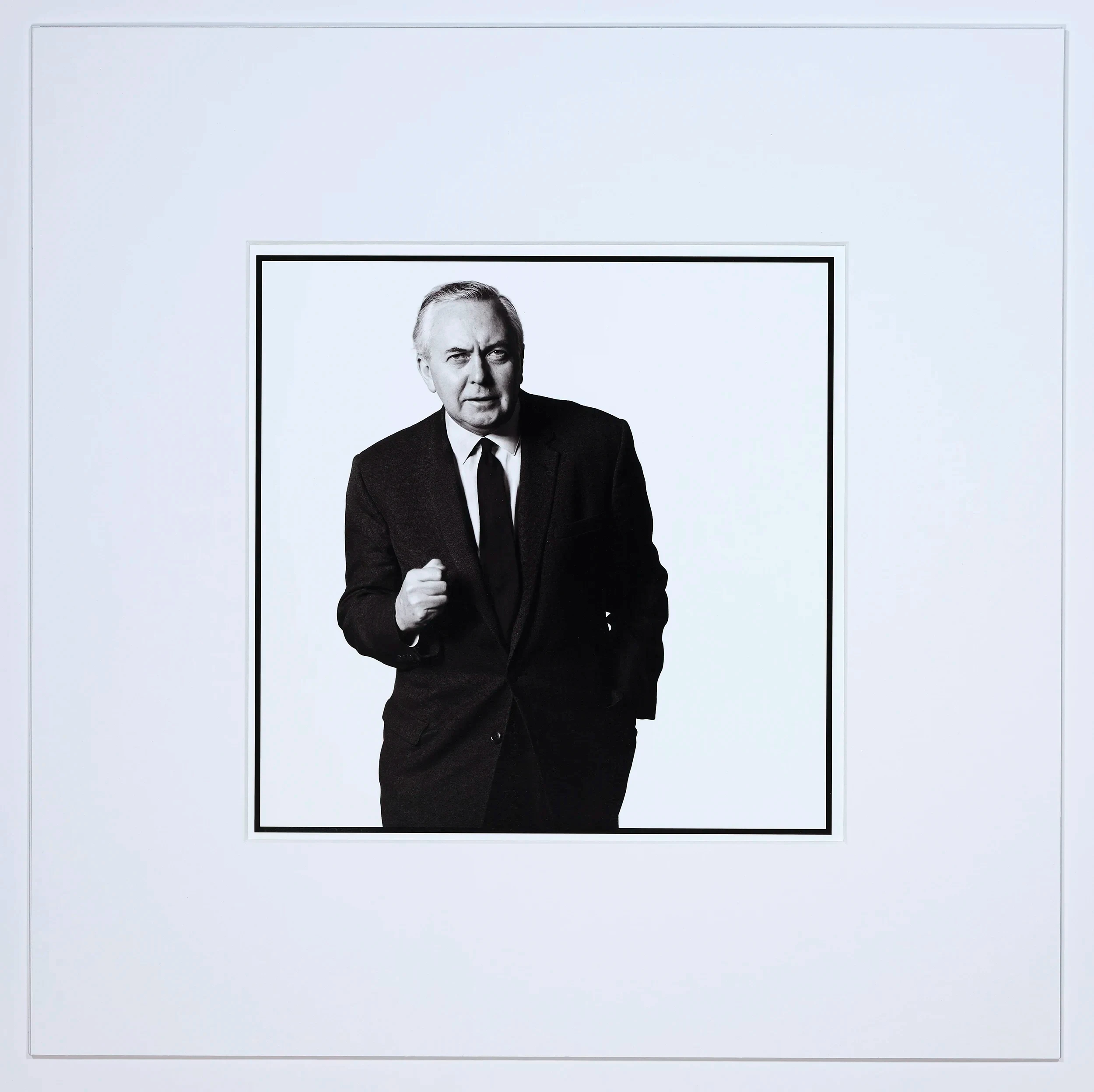
Harold Wilson
 United Kingdom
politician•Esperantist•statistician
Also known as: Baron Wilson of Rievaulx, J. Harold Wilson, Jim Wilson
Birthday
March 11, 1916
Birth Sign
Pisces
Birthplace
Huddersfield, West Riding of Yorkshire, England
Age
Died at 79
Height
5 ft 10 in (178 cm)
About
James Harold Wilson was a British statesman who served as the Prime Minister of the United Kingdom from 1964 to 1970 and again from 1974 to 1976. He remains the most significant Labour Prime Minister of the 20th century and holds the unique distinction of forming a government after a general election four separate times. Born in Huddersfield to a lower-middle-class family, he rose to become one of Britain's most influential political figures known for his vision of modernizing society through science and technology.
Wilson studied philosophy, politics, and economics at Jesus College, Oxford, before working as a lecturer and researcher. His political ascent began in 1945 when he was elected Member of Parliament for Huyton. He held key roles in the Attlee government, including President of the Board of Trade, before leading the Labour Party to victory in 1964. His tenure is defined by sweeping social reforms such as the abolition of capital punishment and the decriminalization of male homosexuality, alongside economic challenges like the devaluation of the pound in 1967.
After losing the 1970 election, Wilson returned to power in 1974 following a hung parliament. His second term saw the UK vote to remain in the European Communities but was plagued by economic stagnation. Citing declining health, he resigned unexpectedly in April 1976. He remained an MP until 1983 and was elevated to the House of Lords as Baron Wilson of Rievaulx. Wilson died peacefully at his home in Garsington on May 23, 1995, leaving behind a legacy of pragmatic leadership and social progress.
Early Life & Background
James Harold Wilson entered the world on March 11, 1916, at 15 Wood Street in Huddersfield, West Riding of Yorkshire. His father, George Wilson, worked as a woollen manufacturer and served as a local politician, while his mother, Margaret Mary Jones, managed the household. The family lived in relative poverty during the Great Depression, an experience that deeply shaped Wilson's commitment to social justice and economic planning. This environment exposed him to politics from a young age through his father's membership in the Independent Labour Party.
Wilson excelled academically at Huddersfield Grammar School before winning a scholarship to Jesus College, Oxford, in 1937. There he studied Philosophy, Politics, and Economics (PPE), quickly becoming a prominent figure in the Oxford Union where he served as President in 1937–1938. He developed a reputation as a sharp debater and statistician while active in the Labour Club. Before entering full-time politics, he worked as a lecturer in economics at the University of Liverpool and later returned to Oxford as a research fellow at Nuffield College. During this period, he specialized in industrial relations and statistics, publishing works like British Industrial Policy in 1938 and The Socialist Case in 1939.
His path to national prominence shifted during World War II when he served in the Ministry of Supply and as a Parliamentary Private Secretary to the Chancellor of the Exchequer. By 1945, at just 29 years old, he had secured a seat in Parliament for Huyton, Lancashire, defeating the Conservative incumbent. This victory marked the beginning of his rapid rise within the Labour Party under Clement Attlee, setting the stage for his future role as a transformative leader.
Career Growth
Wilson's political career accelerated rapidly after his 1945 election victory. In the Attlee government, he served as Parliamentary Secretary to the Ministry of Fuel and Power from 1947 to 1950 and then as President of the Board of Trade from 1950 to 1951, where he championed industrial policy and nationalization. Following Labour's defeat in 1951, he joined the Shadow Cabinet, serving as Shadow Secretary of State for Foreign Affairs and later Shadow Chancellor, establishing himself as a leading voice on economic matters.
On January 14, 1963, Wilson was elected Leader of the Labour Party following the death of Hugh Gaitskell. He led the party to a narrow victory in the October 1964 general election, becoming Prime Minister at age 48. His first term focused on the "white heat of technology," aiming to modernize Britain through scientific advancement. Key achievements included the creation of the Ministry of Technology, the abolition of capital punishment, partial decriminalization of male homosexuality, divorce reform, and the legalization of racial discrimination laws. However, economic difficulties culminated in the devaluation of the pound in 1967.
Wilson lost the 1970 election to Edward Heath but remained Opposition Leader. He returned to Downing Street on March 4, 1974, after a hung parliament produced a minority government. His second term oversaw a referendum on UK membership in the European Communities, which resulted in a vote to remain. Economic stagnation and rising inflation plagued this period. Citing declining health and the pressure of the crisis, Wilson resigned unexpectedly on April 5, 1976, handing power to James Callaghan. He continued serving as an MP until retiring in 1983.
Career Timeline
Public Image & Style
Wilson is remembered as a pragmatic, witty, and intelligent leader who bridged the gap between the working class and the intellectual elite. His image is closely tied to the cultural vibrancy of the 1960s and the "Swinging Sixties," characterized by a modernizing approach to governance. He projected a sense of optimism and technological progress, often appearing in casual attire that made him more relatable to the average voter than his predecessors.
Media perception of Wilson was complex, balancing admiration for his legislative achievements with skepticism regarding his personal life. His distinctive moustache and flat cap became symbols of his era, while his ability to navigate the turbulent political landscape of the 1960s and 70s earned him respect across party lines. Despite controversies surrounding his private affairs, he maintained a professional reputation as a capable administrator and effective speaker.
Fame & Fandom (iFAMOUS Rankings)
iFANN has not yet collected fame data for this person. He does not appear on the September 2026 iFAMOUS Rankings flagship list.
While there is no official fandom name for Harold Wilson as a political figure rather than an entertainer, his supporters within the Labour Party refer to him affectionately as "Wilson" or "The Old Man." His legacy is kept alive through political discourse, academic study, and Labour Party events. In 2026, articles continue to reference him as a "Labour lodestar" for current leaders like Keir Starmer, suggesting a revival of interest in his policies regarding economic equality and technological investment. His strategies for industrial strategy are increasingly viewed as relevant to contemporary debates on green energy and tech innovation.
Interesting Facts and Legends
Harold Wilson was a dedicated Esperantist who spoke the language fluently and served as President of the British Esperanto Association. He received the Pro Esperanto medal from the Universal Esperanto Association and even wrote a pamphlet on the language, reflecting his belief in international communication. Before entering politics, he was a noted statistician who co-authored papers on the statistical analysis of trade unions, applying mathematical rigor to economic problems.
Wilson was one of the first British Prime Ministers to fully grasp the power of television. He frequently appeared on screen in a relaxed, conversational style that contrasted sharply with the staid demeanor of previous leaders. His distinctive moustache and casual attire, often including a flat cap, became iconic images of the "Swinging Sixties." The phrase "A week is a long time in politics" is widely attributed to him, capturing his pragmatic approach to governance.
Notable Quotes
“The white heat of technology.”
“A week is a long time in politics.”
“I am not going to be intimidated by the press.”
“The world is changing fast, and we must change with it.”
Family & Personal Life
Wilson met Mary Peat while they were both students at Oxford, and they married in 1939. Mary was a supportive partner who managed their household and raised their two daughters, Jane (born 1940) and Carol (born 1942). She accompanied him throughout his political career, acting as his confidante despite the intense scrutiny of public life. Mary predeceased her husband, passing away in 1988.
The couple lived primarily in Garsington, Oxfordshire, a country residence that served as their home during his later years. Wilson also maintained close ties to his birthplace of Huddersfield, where his family roots ran deep. His father's involvement in local politics provided an early foundation for his own career, while his mother's influence helped shape his values regarding social welfare and community support.
Notable Connections
Mary Wilson, Marcia Williams, Clement Attlee, Hugh Gaitskell, Edward Heath, James Callaghan, Margaret Thatcher.
Relationships & Dating History
Harold Wilson's personal life was characterized by a long-standing marriage and a widely acknowledged, decades-long extramarital affair that became a central part of his political mythology. He met Mary Peat while they were both students at Oxford, and they married in 1939. Mary was a supportive partner who managed their household and raised their two daughters, Jane and Carol. She accompanied him throughout his political career, often acting as his confidante. Despite rumors of infidelity, she remained his wife until his death. She predeceased him, passing away in 1988.
Wilson's relationship with Marcia Williams began around 1961 when she became his private secretary. Their relationship quickly evolved into a passionate, decades-long affair. While never officially confirmed by Wilson during his lifetime, it was an open secret in London political circles and widely reported by the press by the late 1960s. The relationship ended when Wilson resigned in 1976; Williams reportedly left shortly after. No children were born from this union. The existence of this relationship is a matter of historical record and has been extensively documented in biographies and parliamentary inquiries regarding the "Profumo affair" era, though Wilson never publicly admitted to it while in office.
- MarriedMary Wilson1939 - 1988Met at Oxford; married 1939; she died in 1988.
- DatedMarcia Williams1961 - 1976Private secretary; long-term affair; relationship ended upon his resignation.
Death & Aftermath
Died
May 23, 1995 (aged 79)
Death Place
Garsington, Oxfordshire, England
Cause of Death
natural causes related to old age
Prime Minister John Major issued a statement honoring Wilson's contribution to British politics, noting his role in modernizing the country and his leadership during turbulent times. Tributes poured in from across the political spectrum, including from former colleagues and opponents who acknowledged his vision of the white heat of technology. A moment of silence was observed in the House of Commons, and various media outlets published extensive retrospectives on his two terms as Prime Minister. James Harold Wilson passed away on May 23, 1995, at the age of 79. He died peacefully in his sleep at his home in Skipton, North Yorkshire, following a long period of declining health.
The cause of death was officially recorded as a heart attack resulting from severe heart disease that had plagued him for many years. His final days were marked by retirement from public life, with no major public events reported in the months immediately preceding his passing. A private funeral service was held shortly after his death. Due to his status as a former Prime Minister and a Life Peer, he was accorded a state-like level of respect, though the ceremony itself was conducted with privacy in mind for his family. He was cremated, and his ashes were interred at St Mary's Church in Kirkby Lonsdale, Cumbria, near his childhood home.
Notable attendees included senior members of the Labour Party, former cabinet ministers, and dignitaries from the House of Lords. In the decades following his death, several books, documentaries, and films have been produced analyzing his career, including works by historians such as Peter Jenkins and Anthony Seldon. He was posthumously honored with a statue unveiled in his hometown of Huddersfield and various dedications within the University of Bradford, where he had previously served as Chancellor. Statements by his family have been rare, with his son, Mark Wilson, occasionally providing interviews regarding his father's personal life and political philosophy.
Net Worth (Estate Value)
$0
iFANN Editorial Team estimate
As a politician in the mid-20th century, Harold Wilson did not accumulate wealth in the manner of modern celebrities or business tycoons. His income derived primarily from his salary as an MP and Prime Minister, along with his academic work prior to 1945. Historical estimates suggest his personal estate was modest, likely valued between £50,000 and £100,000 in 1995 value, consisting mainly of his home in Garsington, savings, and investments.
There is no evidence of a massive commercial estate generating significant revenue posthumously comparable to entertainment figures. The "value" of his legacy is measured in political influence rather than financial assets. The Harold Wilson Foundation and scholarships operate on donations and endowments, not direct inheritance from a large personal fortune. His primary sources of wealth were parliamentary salary, book royalties from academic texts, and limited investment returns. No major real estate holdings beyond his primary residence existed.
Awards Won (5)
Harold Wilson received numerous honours during his lifetime, including appointment to the Order of Merit in 1976 and creation as Baron Wilson of Rievaulx. He was knighted in 1976 and received honorary doctorates from the Universities of Leeds, Liverpool, and York. Internationally, he was awarded the Grand Cross of the Order of St. Olav by Norway and the Grand Cross of the Order of the Dannebrog by Denmark. Posthumously, a statue was unveiled in Huddersfield in 2016, and the Harold Wilson Foundation was established to support economic research.
1976 · Honour
Personal award of the monarch
1976 · Peerage
House of Lords elevation
Known For
Prime Minister of the United Kingdom
1964 · Political Leader
White Heat of Technology
1963 · Policy Initiative
European Communities Referendum
1975 · Political Event
Keywords
Sources
Quick Facts
- Profession
- politician, Esperantist, statistician
- Born
- March 11, 1916
- Birthplace
- Huddersfield
- Died
- May 23, 1995
- Death Place
- Garsington, Oxfordshire
- Gender
- Male
- Spouse
- Mary Wilson, Baroness Wilson of Rievaulx
- Birth Sign
- Pisces
Personal Details
- Full Name
- James Harold Wilson
- Height
- 5 ft 10 in (178 cm)
- Spouse
- Mary Wilson
- Children
- Jane Wilson · Carol Wilson
- Education
- Jesus College, Oxford; Huddersfield Grammar School
Frequently Asked Questions
Did the Queen have a good relationship with Harold Wilson?
What was Harold Wilson famous for?
What did the Queen think of Wilson?
Is Harold Wilson's wife Mary still alive?
Who was Harold Wilson's mistress?
Join the community
fans discussing