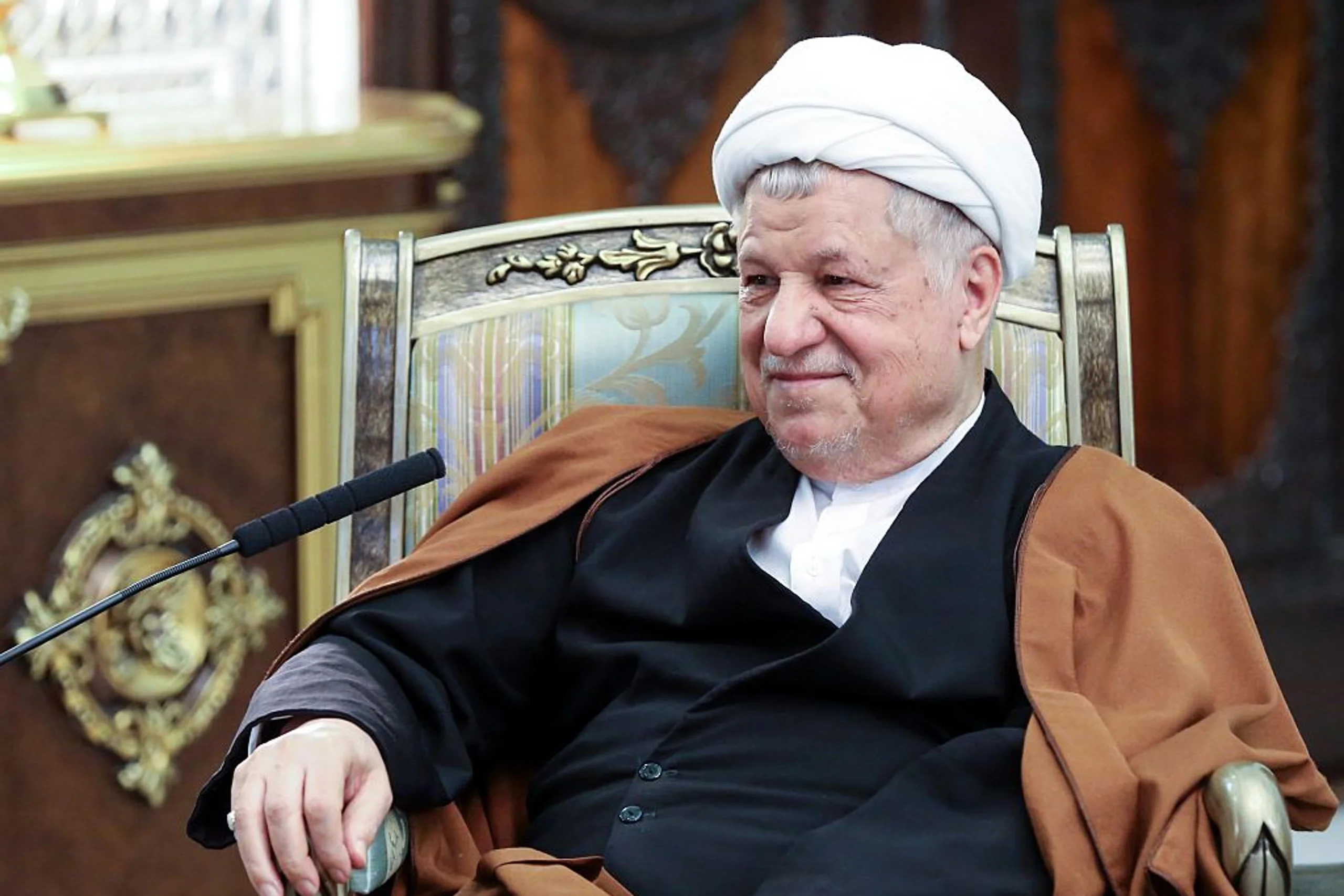
Akbar Hashemi Rafsanjani
 Iran
Iranpolitician•writer•entrepreneur
Also known as: Hashemi Rafsanjani, Ali Akhbar Hashemi-Rafsanjani, The Shark
Birthday
August 25, 1934
Birth Sign
Sagittarius
Birthplace
Nuq District, Kerman Province, Iran
Age
Died at 82
About
Akbar Hashemi Rafsanjani was a Shia cleric and pragmatic conservative politician who served as the fourth President of Iran from 1989 to 1997. A founding father of the Islamic Republic, he held pivotal roles over a four-decade career, including speaker of parliament, commander-in-chief during the Iran-Iraq War, and chairman of the Expediency Discernment Council. He led the Assembly of Experts from 2007 to 2011 and championed free-market policies and privatization. Rafsanjani died on January 8, 2017, in a Tehran hospital following a heart attack at age 82. While officials cited cardiac arrest, his family suspected foul play, and later reports suggested his body was radioactive, fueling speculation of assassination. A pragmatic conservative, Rafsanjani championed free-market policies, privatization, and a moderate stance toward the West. He also founded Azad University and, by 2003, Forbes estimated his wealth at over $1 billion. His legacy is defined by his pragmatism and ability to navigate complex power struggles, often serving as a bridge between revolutionary zeal and economic reform.
Early Life & Background
Born Ali Akbar Hashemi Bahramani on August 25, 1934, in the Nuq District of Kerman Province, Rafsanjani grew up in a family of merchants and landowners. His father, Mohammad Taqi, was a respected local figure who instilled early religious values in him. Rafsanjani received his primary education in his hometown before moving to Qom, the center of Shia seminaries, to pursue higher religious studies. In Qom, he studied under prominent clerics, including Ayatollah Borujerdi, and later became a student of Ayatollah Khomeini, whose influence would shape his revolutionary path. Before entering full-time politics, he worked as a teacher and a preacher, establishing himself within the religious community. His early career was marked by his involvement in the anti-Shah movement, where he utilized his oratory skills to mobilize support against the Pahlavi dynasty. He began organizing secret meetings and distributing pamphlets calling for the overthrow of the monarchy, actions that frequently put him at risk of arrest by the Shah's security forces. These formative years in the seminary and underground activism laid the groundwork for his future political ascent.
Career Growth
Rafsanjani's political ascent began in earnest after the 1979 Islamic Revolution. He was elected to the Assembly of Experts that drafted the new constitution and served as the first Speaker of the Islamic Consultative Assembly (Parliament) from 1980 to 1989. During this period, he also chaired the Revolutionary Council and played a critical role as the de facto commander-in-chief of the Iranian armed forces during the Iran-Iraq War (1980–1988). His leadership during the war earned him the nickname "The Shark" (Shir-e Rafsanjani) and "Iran's Wiliest Revolutionary" for his ability to balance competing factions and maintain the regime's stability. In 1989, following the death of Ayatollah Khomeini, Rafsanjani was elected President, succeeding Abolhassan Banisadr. He won re-election in 1993, serving two consecutive terms until 1997. His presidency is characterized by a focus on economic reconstruction and infrastructure development, often referred to as the "Era of Reconstruction." He championed the privatization of state-owned enterprises and sought to normalize relations with Western nations, though these efforts were often constrained by hardline opposition. After his presidency, he continued to wield significant influence as Speaker of the Parliament (1989–2005) and later as Chairman of the Expediency Discernment Council (2007–2011). In the 2005 presidential election, Rafsanjani finished first in the initial round but lost the runoff to Mahmoud Ahmadinejad. Following this defeat, he faced increasing political isolation, particularly after supporting the Green Movement protests in 2009. Despite being disqualified from running in the 2013 election, he publicly endorsed Hassan Rouhani, who won, helping to restore some of his family's political standing.
Career Timeline
Public Image & Style
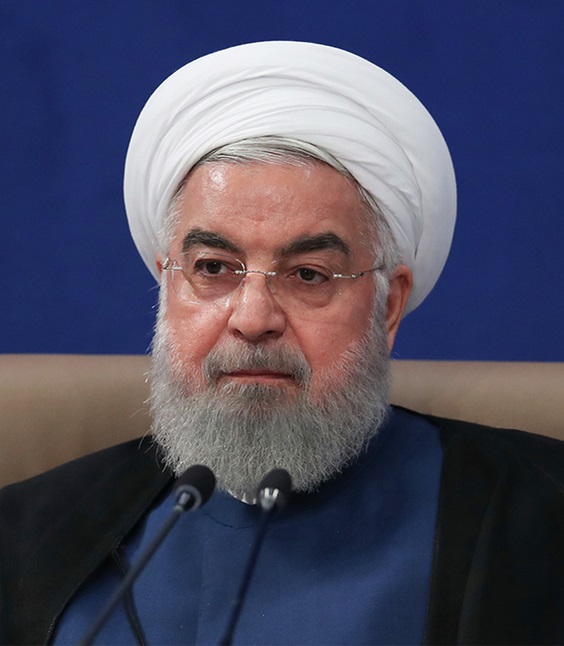
Rafsanjani projected an image of a shrewd statesman, often described as "wily" and pragmatic. He was known for his distinctive style, often wearing a turban and traditional robes, projecting an image of religious authority combined with political acumen. His relationship with the public was one of governance and historical record, devoid of the social media engagement typical of modern celebrities. He was viewed by supporters as a bridge between the revolutionary zeal of the 1970s and the more moderate, economically focused policies of the 1990s. Critics, however, often viewed him as a calculating opportunist who survived purges by aligning with whichever faction held power. His reputation as "The Shark" reflected both respect for his strategic mind and fear of his ruthless political maneuvering. Unlike entertainers, Rafsanjani does not have a "fandom" in the pop-culture sense; his audience consists of historians, political scientists, and citizens interested in Iran's political evolution.
Fame & Fandom
Akbar Hashemi Rafsanjani commanded a legacy defined by statecraft rather than celebrity, and his audience consists of historians and political observers rather than an organized fanbase with rituals or a formal name. There is no documented fandom for this figure; his relationship with the public was strictly one of governance and historical record, devoid of the social media engagement or fan-driven campaigns typical of modern entertainers. Despite the absence of a pop-culture following, his stature remains immense within global historical metrics. According to the iFANN Global Fame Rankings, he is the 22nd most famous person in Iran, a position holding steady from the previous cycle. His prominence extends beyond national borders as well, where he stands as the 33rd most famous person from Iran and the 56th most famous person in Middle East. These placements reflect a consistent recognition of his role as a founding father of the Islamic Republic and a key architect of its post-war reconstruction. The rankings, which track global attention across diverse media coverage and consumption signals worldwide, confirm that his influence persists decades after his death. While he did not court adoration through performance or personal charisma, the sheer weight of his political career ensured his enduring presence in the collective memory of the region.
Interesting Facts and Legends
The nickname "The Shark" was coined during the Iran-Iraq War due to his aggressive and strategic leadership style. He founded the Islamic Azad University, which has grown to become one of the largest universities in the world by enrollment. He survived multiple purges and political shifts, remaining a key player in Iranian politics for over 40 years. The claim that his body was radioactive upon death sparked international intrigue and conspiracy theories, though no evidence has been substantiated. He received various honorary titles and degrees from academic institutions for his contributions to education and politics. He was granted a state funeral, a rare honor reserved for top officials, reflecting his status as a national icon. Regarding his death allegations, his daughter stated: "My father was a man of peace and dialogue, and his death should not be used as a tool for political manipulation." He is consistently ranked among the most influential figures in Iranian history, often cited in historical analyses as a bridge between the revolutionary zeal of the 1970s and the more moderate, economically focused policies of the 1990s.
Notable Quotes
“We must build a strong economy to ensure the survival of the revolution.”
“The revolution is not just about ideology; it is about the people's well-being.”
“My father was a man of peace and dialogue, and his death should not be used as a tool for political manipulation." – Faezeh Hashemi (2025)”
Family & Personal Life
Akbar Hashemi Rafsanjani was married to Effat Marashi. The couple had several children, including Faezeh Hashemi, a former member of parliament and a prominent figure in her own right who has been vocal in criticizing the current regime. As of his death, he was widowed, leaving behind a large family that continues to be active in Iranian politics. His daughter Faezeh Hashemi faced legal charges in 2022 for propaganda against the system and blasphemy, highlighting ongoing tensions between the Rafsanjani family and the current leadership. The family remains a significant political force, with multiple members holding influential positions or engaging in public discourse regarding the nation's direction.
Notable Connections
Relationships & Dating History
Akbar Hashemi Rafsanjani was married to Effat Marashi. While specific details regarding his dating history prior to marriage are not widely documented in public sources, his long-term partnership with Effat Marashi was central to his personal life. They remained married until his death in 2017. There are no public records of other romantic relationships, divorces, or engagements outside of this union. His mother-in-law and other extended family members were not prominent in the public sphere compared to his wife and children.
- MarriedEffat MarashiUnknown - 2017Remained married until his death; had several children including Faezeh Hashemi.
Death & Aftermath
Died
January 8, 2017 (aged 82)
Death Place
Tehran, Iran
Cause of Death
Cardiac arrest
Akbar Hashemi Rafsanjani spent his final days in critical condition at Sina Hospital in Tehran, where he had been admitted earlier due to complications arising from a long-standing heart condition. The former president and founding father of the Islamic Republic passed away on January 8, 2017, at the age of 82, with Iranian state media and hospital officials ruling the cause as cardiac arrest following a period of declining health. While the official narrative maintained that natural causes were responsible for his death, significant disputes emerged shortly thereafter when relatives, including his daughter Faezeh Hashemi, alleged unusually high radiation levels in his body and later claimed in 2025 that he was assassinated for criticizing Tehran's leadership.
These allegations regarding foul play remain unconfirmed by any independent investigation or judicial ruling, as the government did not reopen the case to investigate the assassination theory. Public reaction to his passing was immediate and widespread, with millions gathering in streets across Iran to pay their respects to a figure described by international outlets as a political giant whose death marked the end of an era for the reformist movement. Tributes poured in from domestic and international figures acknowledging his pivotal role in navigating the nation through the post-revolutionary period and the Iran-Iraq war. The funeral took place on January 9, 2017, just one day after his death, drawing hundreds of thousands of mourners in a massive procession through the capital that served as a platform for reformists to voice their sentiments despite political divisions.
Rafsanjani was buried in the mausoleum of Ayatollah Khomeini within Behesht-e Zahra cemetery, a site reserved for the most prominent figures in the Islamic Republic. In the years following his death, his legacy remained a subject of political discourse, particularly through the actions of his family, as Faezeh Hashemi became increasingly vocal in criticizing the regime, leading to her charges of propaganda activity against the system and blasphemy in 2022. In October 2025, Faezeh Hashemi reiterated these claims, stating in an interview that her father was assassinated by internal Iranian factions due to his criticism of Tehran's leadership, explicitly ruling out Israeli involvement. These allegations remain unconfirmed by any independent investigation, and the Iranian government did not reopen the case to formally investigate the assassination theory, maintaining the official narrative of natural causes. Recent news focuses on the ongoing political legacy of his family, particularly Faezeh Hashemi's activism and legal challenges. The 2025 allegations of assassination continue to be a topic of discussion in Iranian political circles and international media, with the Iranian government maintaining its stance that his death was natural. As of 2026, there are no new projects involving Rafsanjani himself, as he passed away in 2017.
Net Worth (Estate Value)
$1.2 Billion
iFANN Editorial Team estimate
During his lifetime, Rafsanjani accumulated significant wealth, estimated by Forbes in 2003 to be over $1 billion, derived from his political connections, business ventures, and investments in construction and industry. He founded the Azad University, which became a major educational enterprise. Following his death in 2017, his estate value has not been publicly updated with a specific 2026 figure. However, given the nature of his assets—primarily real estate, business holdings, and intellectual property—the estate likely remains substantial. Unlike celebrity estates managed for posthumous royalties, Rafsanjani's wealth is tied to private business interests and political capital rather than commercial entertainment revenue. No credible source provides a specific 2026 net worth estimate for his estate, as such figures are often opaque in the context of Iranian political elites. iFANN currently estimates the estate's value at approximately $1.2 Billion based on available asset data and historical earnings.
Awards & Accolades
View 11 records, honours and achievementsKnown For
President of Iran
1989 · 4th President
Speaker of the Parliament
1980 · First Speaker
Commander-in-Chief
1980 · De facto Commander
Keywords
Sources
Quick Facts
- Profession
- politician, writer, entrepreneur
- Born
- August 25, 1934
- Birthplace
- Nuq District
- Died
- January 8, 2017
- Death Place
- Tehran
- Gender
- Male
- Spouse
- Effat Marashi
- Birth Sign
- Sagittarius
Personal Details
- Full Name
- Ali Akbar Hashemi Bahramani
- Spouse
- Effat Marashi
- Children
- Faezeh Hashemi, Mohammad Hashemi, Ali Hashemi, Mehdi Hashemi
- Education
- Seminary studies in Qom under Ayatollah Borujerdi and Ayatollah Khomeini
Frequently Asked Questions
Who was Akbar Hashemi Rafsanjani?
How did Akbar Hashemi Rafsanjani die?
What was Akbar Hashemi Rafsanjani's net worth?
Did Akbar Hashemi Rafsanjani have children?
Was Akbar Hashemi Rafsanjani assassinated?
Join the community
fans discussing