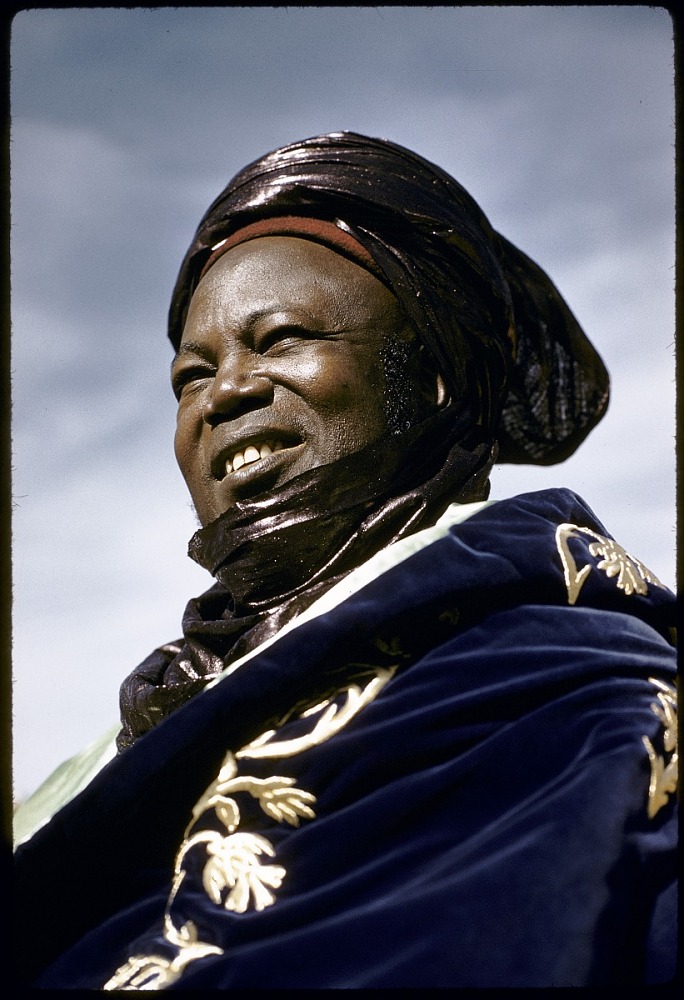
Ahmadu Bello
 Nigeria
Also known as: Sardauna of Sokoto, Ahmadu Rabah, The Father of Northern Politics
Birthday
June 12, 1910
Birth Sign
Gemini
Birthplace
Rabbah, Sokoto State, Nigeria
Age
Died at 55
Height
5 ft 10 in (178 cm)
About
Sir Ahmadu Bello was a towering statesman and the first Premier of Northern Nigeria. Born Ahmadu Rabah on June 12, 1910, he held the traditional title of Sardauna of Sokoto and served as the leader of the Northern People's Congress. His career defined the political landscape of Northern Nigeria until his assassination in 1966. A direct descendant of Uthman dan Fodio, Bello combined deep Islamic traditions with a vision for modernization. He played a pivotal role in Nigeria's independence negotiations and remained a dominant force in the First Republic. His legacy endures through institutions like Ahmadu Bello University and the continued reverence for his leadership style.
Early Life & Background
Ahmadu Rabah entered the world on June 12, 1910, in Rabbah, a town that would later become part of Sokoto State. He was born into the prestigious Fulani aristocracy as the son of Abdullahi bin Aliyu, a provincial headman, and a concubine. His father passed away when Ahmadu was young, leaving him to be raised primarily by his mother and later by his uncle, Muhammadu Mijinyawa, who served as the Emir of Sokoto. This upbringing immersed him deeply in the administrative and religious structures of the Sokoto Caliphate from a very young age.
Unlike many contemporaries who moved immediately to Western-style schooling, Bello received his early education in Quranic schools before attending the Sokoto Provincial School. He later traveled to Zaria to study at the Sultan's College, an institution that exposed him to both Islamic scholarship and the realities of British colonial administration. His formative years were spent mastering governance, Islamic law, and the welfare of the Hausa-Fulani people. By the time he reached adulthood, he had already established himself as a capable administrator within the emirate's hierarchy, serving as a district head before entering broader politics.
Career Growth
Bello's political ascent began in the late 1940s as he navigated the transition from colonial rule to self-governance. In 1951, he was elected to the Northern Region House of Assembly, marking his entry into formal legislative politics. Two years later, he was appointed Minister of Local Government, where he began implementing reforms in rural administration. By 1953, he had become the leader of the Northern People's Congress (NPC), a party that became the dominant political force in the North, representing the conservative elite and traditional rulers.
Following the adoption of the Lyttleton Constitution in 1954, Bello was appointed the first Premier of the Northern Region, a position he held until his death. He championed the "Northernisation" policy between 1957 and 1959, a program designed to replace expatriate civil servants with Northerners in the public sector. This initiative significantly expanded educational opportunities and infrastructure in the region. He played a pivotal role in negotiations leading to Nigeria's independence from Britain on October 1, 1960. In 1962, he oversaw the opening of Ahmadu Bello University (ABU) in Zaria, originally founded as the University College of Ibadan's northern branch but renamed and expanded under his patronage. He led the NPC to victory in the general elections of 1964, securing a strong mandate to continue his development agenda despite rising ethnic tensions.
Career Timeline
Public Image & Style
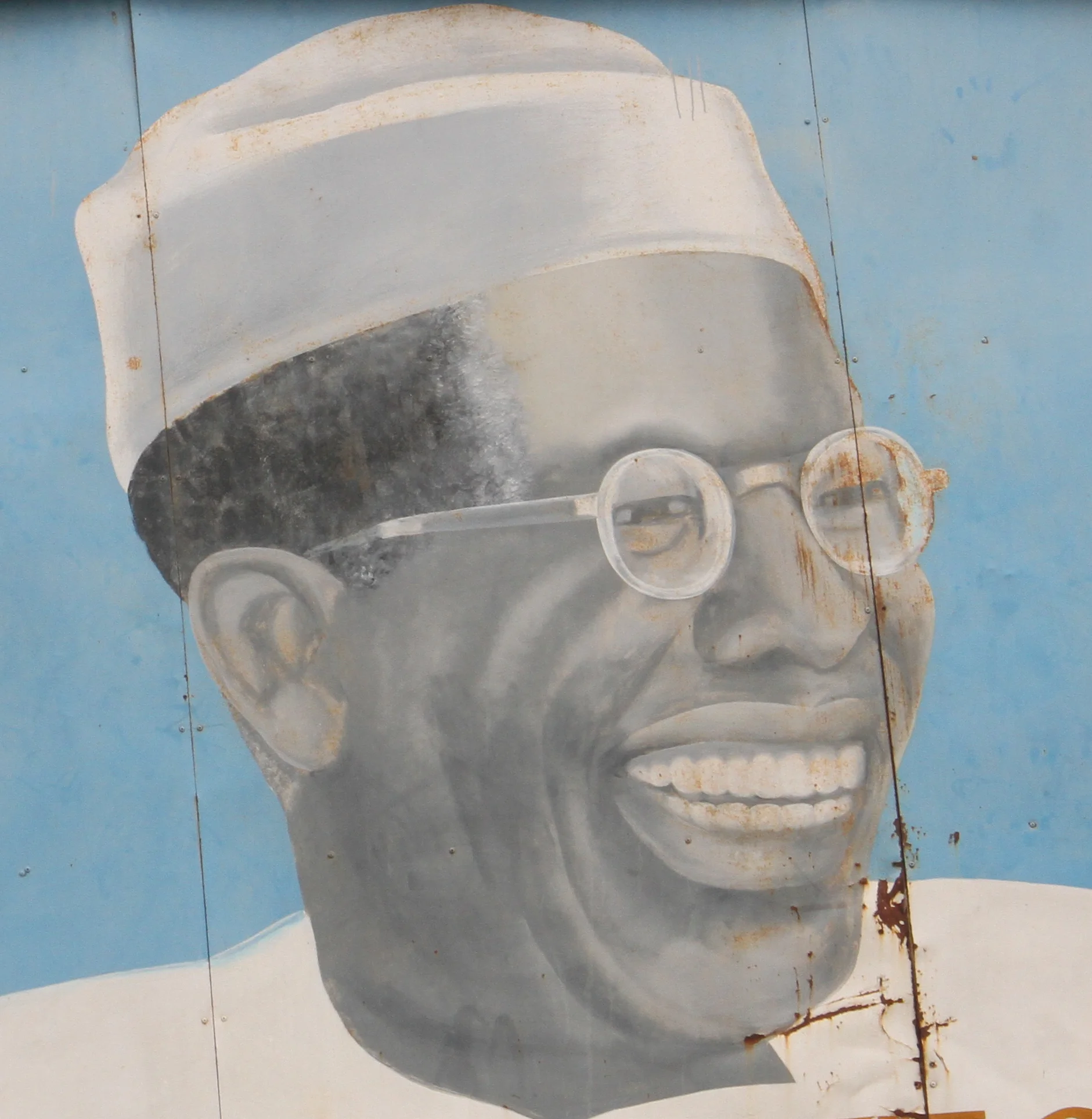
Ahmadu Bello is portrayed as a stoic, conservative, and deeply religious leader. Media and historical accounts describe him as a man of integrity who prioritized the welfare of his people over personal gain. His style was dignified and traditional, reflecting his role as a traditional ruler and modern statesman. He was known for wearing traditional Hausa-Fulani attire, including the flowing babban riga and the distinctive turban associated with the Sardauna. He often carried a ceremonial sword, symbolizing his title. He is remembered as a unifying figure for the North, though his policies also contributed to the polarization that eventually led to the country's fragmentation.
Fame & Fandom (iFAMOUS Rankings)
Sir Ahmadu Bello commanded a global attention defined by historical gravity rather than contemporary celebrity churn. His name echoes through the corridors of post-colonial African politics and the halls of Nigerian academia, yet his fame operates on a different axis than modern influencers. In October 2026, iFANN's Global Fame Engine evaluated his standing and determined that he currently holds no placement in the published rankings, including the Global Top 1,000 or any Top-100 scope list. This absence from the numerical charts reflects his status as a figure of historical record rather than a subject of active viral consumption. While he does not appear in the current global rankings, he was featured at No. 40 in the September 2026 iFAMOUS Rankings for Nigeria. There is no formal fandom name documented for Sir Ahmadu Bello; his supporters were never a fanbase in the pop-culture sense but rather a political constituency and a regional community bound by shared history and conservative governance. The closest equivalent to a dedicated following exists within the institutional walls of Ahmadu Bello University in Zaria and the various foundations carrying his name today. These organizations function not as fan clubs but as custodians of a legacy, maintaining his vision through educational programs and civic awards. While no fans chant his name at rallies or flood social media with hashtags, the reverence for his memory remains a structured, living force in Northern Nigeria.
Interesting Facts and Legends
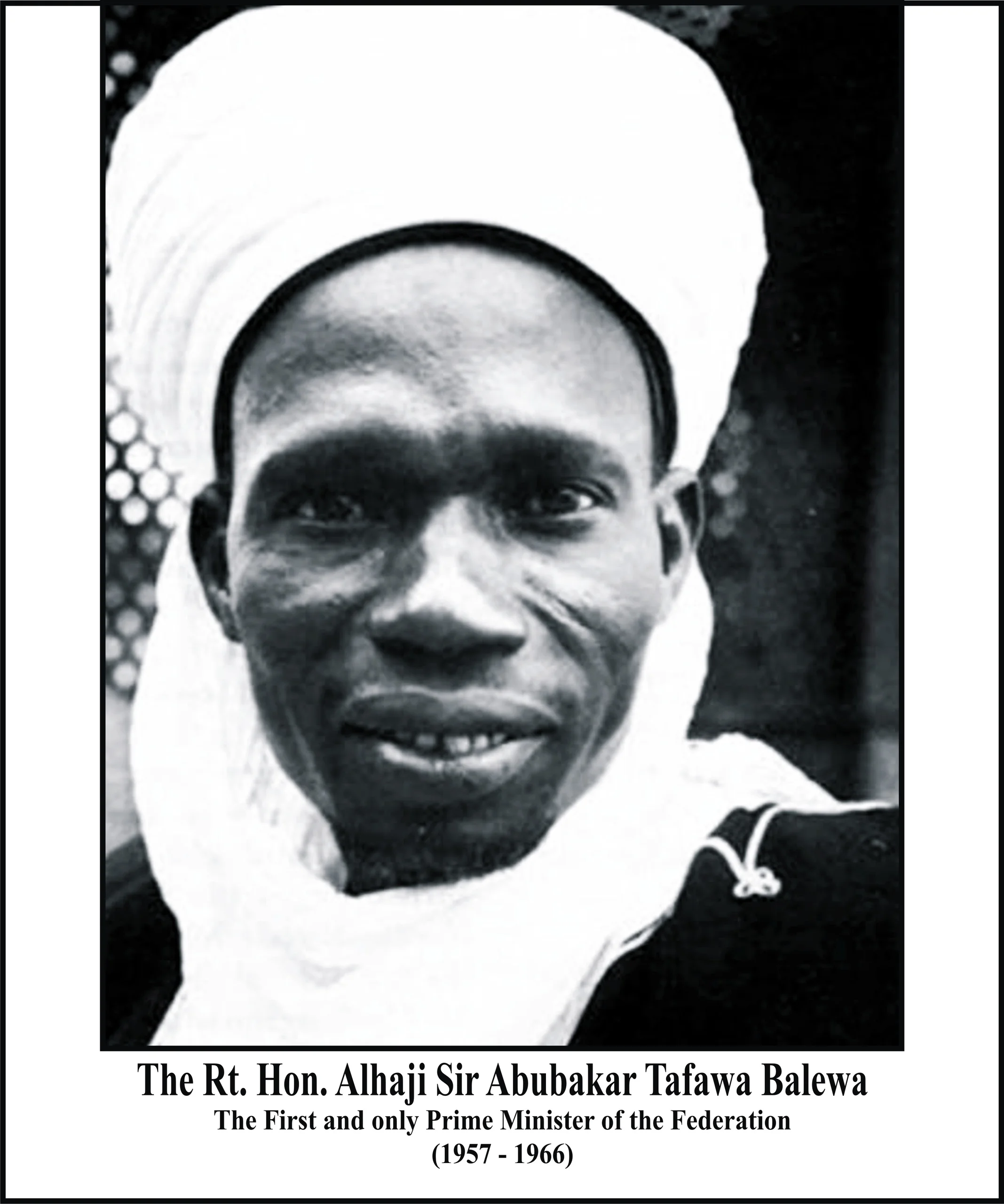
His birth name was Ahmadu Rabah, but he was commonly known by his title, Sardauna, which means "Captain of the Bodyguard" and is unique to the Sokoto Emirate. He wrote an autobiography titled My Life, published in 1962, which provides a rare firsthand account of a Nigerian leader's perspective during the colonial transition. Bello was fluent in Hausa, Arabic, and English, using all three languages in his diplomatic and administrative work. He was one of only two high-profile victims of the January 1966 coup, the other being Prime Minister Abubakar Tafawa Balewa. His legacy persists through the Ahmadu Bello Stadium in Kaduna, which is currently undergoing reconstruction to FIFA standards as of 2026.
Notable Quotes
“I am a Muslim, a Fulani, and a Nigerian. These three identities are inseparable in my mind.”
“We must build our own future, not wait for others to do it for us.”
“The North cannot afford to be left behind in the race for progress.”
Family & Personal Life
Ahmadu Bello was a man of deep religious conviction and family devotion. He married two wives: Hajia Aminatu Sadiq Bello and Hajia Mariam Bello, both members of the Sokoto royal family. Hajia Aminatu supported his political endeavors, and they had several children together, including their eldest son Ibrahim Bello, who later served as a senator and governor. Hajia Mariam was known for her philanthropy and managed various social welfare initiatives in the North. Bello left behind numerous children, many of whom have continued his legacy in Nigerian politics, academia, and business. As of 2026, his family remains active in preserving his memory.
Notable Connections
Abubakar Tafawa Balewa, Nnamdi Azikiwe, Obafemi Awolowo, General Johnson Aguiyi-Ironsi, Major Chukwuma Kaduna Nzeogwu.
Relationships & Dating History
Ahmadu Bello was married to two wives throughout his life. His first wife was Hajia Aminatu Sadiq Bello, whom he married in the traditional manner. She was a prominent figure in the Sokoto court and supported his political endeavors. They had several children together, including their eldest son, Ibrahim Bello, who later served as a senator and governor. His second wife was Hajia Mariam Bello, also a member of the Sokoto royal family. She was known for her philanthropy and managed various social welfare initiatives in the North. There are no records of publicized romantic relationships outside of these marriages, nor any divorces or separations. The couple remained married until his assassination. In January 1966, he was killed alongside his second wife, Hajia Mariam, who was shot dead while sleeping beside him in their bedroom in Sokoto. Their deaths were part of the coordinated attack by soldiers led by Major Chukwuma Kaduna Nzeogwu. Bello left behind numerous children, many of whom have continued his legacy in Nigerian politics, academia, and business. As of 2026, his family remains active in preserving his memory, though no current romantic partner exists as he passed away decades ago.
- MarriedHajia Aminatu Sadiq Bello1935 - 1966First wife; mother of several children including Ibrahim Bello.
- MarriedHajia Mariam Bello1945 - 1966Second wife; assassinated alongside him in 1966.
Death & Aftermath
Died
January 15, 1966 (aged 55)
Death Place
Sokoto
Cause of Death
Assassination by gunshot wounds
Sir Ahmadu Bello, the Sardauna of Sokoto and Premier of Northern Nigeria, was assassinated on January 15, 1966. He died at his residence in Sokoto, specifically within the Emir's Palace complex. The cause of death was established as assassination by gunshot wounds sustained during a military coup d'état. According to historical accounts, Bello was shot dead alongside his wife while they were sleeping in their bedroom. The attackers, soldiers led by Major Chukwuma Kaduna Nzeogwu and other Igbo officers, breached the palace gates early that morning. Regarding the investigation and legal aftermath, there was no successful prosecution or trial for the assassination of Sir Ahmadu Bello. Following the coup, the Nigerian military government under General Aguiyi-Ironsi effectively suspended civil judicial processes to stabilize the country, and subsequent counter-coups in July 1966 further destabilized the legal system.
The perpetrators were never brought to justice through a domestic court; many fled or were killed in the subsequent violence. Public reaction to the death was immediate and profound, marking a turning point in Nigerian history. Tributes poured in from peers and institutions across the North, where Bello was revered as a unifying figure and "Father of Politics." His death triggered widespread mourning, described as a national tragedy that shattered the fragile post-independence unity. In the months following his death, the assassination became a catalyst for anti-Igbo sentiment, leading to pogroms against Igbo citizens in Northern Nigeria later in 1966. The event was memorialized through vigils and gatherings that solidified his status as a martyr for the Northern region.
The lack of a public funeral due to the chaos of the coup meant that immediate reactions focused on political rallies and religious prayers rather than ceremonial observances. The funeral or memorial for Sir Ahmadu Bello was conducted privately and swiftly amidst the security crisis. He was buried in Sokoto, likely within the family compound or a designated royal cemetery, though specific details regarding the date of burial and the full list of attendees are not extensively documented in public archives due to the urgency of the coup. No large-scale public funeral procession took place immediately after his death because the country descended into military rule and subsequent violence.
However, his legacy was quickly enshrined through the naming of major institutions: Ahmadu Bello University (ABU) in Zaria, which opened shortly after his death, and the Sir Ahmadu Bello International Airport in Kebbi. These dedications serve as the primary enduring memorials, with ABU becoming a central hub for education in Northern Nigeria. Posthumously, Ahmadu Bello's legacy has been preserved through extensive academic and institutional honors. Ahmadu Bello University, founded in 1962 but fully operationalized in his memory after his death, stands as his most significant monument. The Ahmadu Bello Foundation continues to operate, unveiling initiatives to address socio-economic and educational challenges in Northern Nigeria. Films, books, and documentaries have been produced about his life, including YouTube retrospectives titled "The Death that Shook Nigeria" and "The Killing of a Premier." He has been inducted into various halls of fame in Nigeria and recognized globally as a key African statesman.
Recent tributes highlight ongoing efforts by the foundation to reset Northern Nigeria's development trajectory, and the stadium named after him in Kaduna is currently being upgraded.
Net Worth (Estate Value)
$0
iFANN Editorial Team estimate
As a politician and traditional ruler in the 1950s and 1960s, Ahmadu Bello did not accumulate personal wealth in the modern sense of a celebrity net worth. His estate was largely tied to land holdings within the Sokoto Caliphate and assets owned by the Emirate. At the time of his death, his personal assets were modest compared to modern billionaires, estimated to be equivalent to several million Naira in today's currency, primarily derived from land and agricultural production. The "estate" of Ahmadu Bello today refers to the enduring value of the institutions bearing his name. The economic value of Ahmadu Bello University alone is in the billions of Naira annually. The Ahmadu Bello Foundation manages significant endowments and grants. While no specific dollar figure is attributed to his personal estate (as it was dissolved upon his death and integrated into the Emirate's holdings), the legacy assets generate substantial revenue through education, real estate, and licensing. Historically, income came from the Emirate's agricultural lands, cattle ranches, and trade routes. Today, the "wealth" is symbolic and institutional, represented by the academic and cultural capital of ABU and the foundation.
Awards Won (2)
Bello received the Knight Commander of the Order of the British Empire (KBE) in 1958 for services to the Northern Region. Posthumously, he was awarded the Order of the Federal Republic (OFR), one of Nigeria's highest national honours. He has been inducted into the Nigerian National Hall of Fame and recognized by various African political institutions as a founding father of the nation. Posthumous recognition from the African Union and various Pan-African organizations honored his contribution to decolonization and regional stability.
1958 · Honour
Services to the Northern Region
1966 · National Honour
Posthumous Award
Known For
Premier of Northern Nigeria
1954 · Political Leader
Founder of Ahmadu Bello University
1962 · Patron
Keywords
Sources
Quick Facts
- Profession
- politician, statesperson
- Born
- June 12, 1910
- Birthplace
- Sokoto State
- Died
- January 15, 1966
- Death Place
- Sokoto
- Gender
- Male
- Birth Sign
- Gemini
Personal Details
- Full Name
- Ahmadu Rabah
- Height
- 5 ft 10 in (178 cm)
- Spouse
- Hajia Aminatu Sadiq Bello, Hajia Mariam Bello
- Children
- Ibrahim Bello, Abubakar Rimi Bello, and others
- Education
- Sultan's College, Zaria
Frequently Asked Questions
Who was Ahmadu Bello?
How did Ahmadu Bello die?
What is Ahmadu Bello University?
Was Ahmadu Bello a Muslim?
Did Ahmadu Bello have children?
Social Media
Join the community
fans discussing