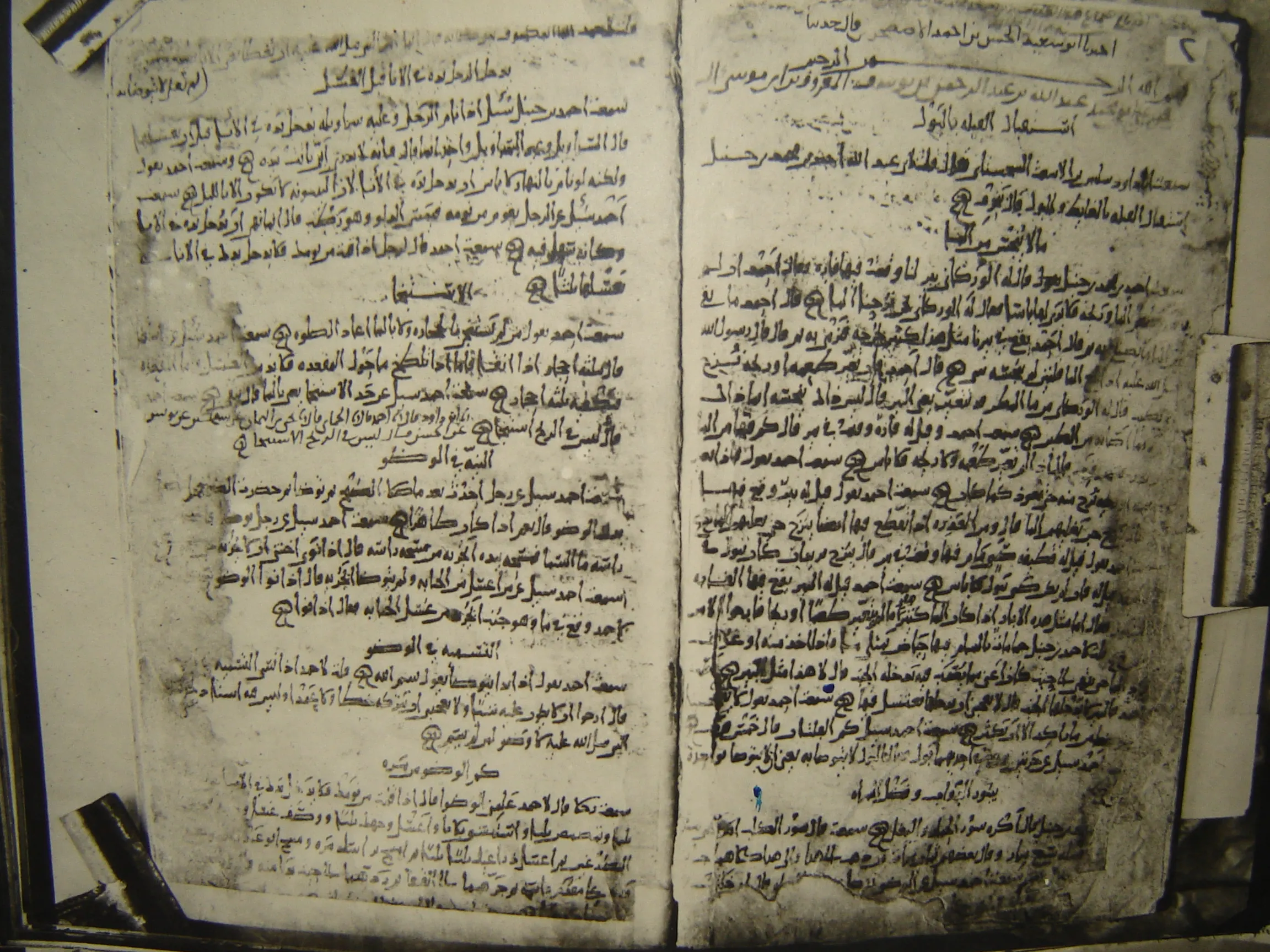
Ahmad ibn Hanbal
muhaddith•Islamic jurist•ulema
Also known as: Imam Ahmad, Imam of Ahl al-Sunnah, Aḥmad ibn Ḥanbal
Birthday
November 23, 780
Birth Sign
Sagittarius
Birthplace
Baghdad, Abbasid Caliphate
Age
Died at 74
About
Ahmad ibn Hanbal was a preeminent Arab Muslim theologian, jurist, and muhaddith born in Baghdad in 780 CE. He is universally recognized as the founder of the Hanbali school of Islamic jurisprudence, one of the four major Sunni schools of law. His life was defined by an unwavering commitment to orthodox Sunni beliefs, most notably during the Mihna, a period of intense persecution where he refused to compromise on the doctrine that the Quran was the uncreated word of God.
Ibn Hanbal is historically distinguished by his unparalleled dedication to the preservation of prophetic traditions. He memorized over one million narrations, a feat unmatched by any other scholar in Islamic history. This massive collection, known as al-Musnad, remains one of the largest and most authentic compilations in the Sunni tradition. Scholars widely regard him as the true proof of the religion and the leader of the Sunnah.
Early Life & Background
Ahmad ibn Hanbal was born on November 23, 780, in Baghdad into a family of modest means. His father, Muhammad ibn Hanbal, was a merchant who died when Ahmad was still very young, leaving him under the care of his mother and extended family. Despite this early loss, he received a rigorous education in theology and law. As a youth, he embarked on extensive travels across the Islamic world, a practice known as rihla. He journeyed to cities like Kufa, Basra, Mecca, Medina, Damascus, and Egypt to study under hundreds of scholars.
During these formative years, Ibn Hanbal studied under more than 600 teachers, absorbing religious texts, poetry, and grammar. One of his earliest pivotal moments occurred when he joined the circle of the renowned hadith master Sufyan al-Thawri. This association solidified his reputation as a student of exceptional memory and integrity. Before achieving fame as a leading jurist, he initially worked as a scribe and later as a teacher. His early career was marked by a profound thirst for knowledge rather than worldly ambition, and he famously lived a life of extreme asceticism, often sleeping on a straw mat and eating simple food even after gaining influence.
Career Growth
Ibn Hanbal's career progressed from a dedicated student to a central figure in Islamic intellectual history. His breakthrough moment came with the compilation of al-Musnad, a massive collection of hadiths containing approximately 40,000 narrations, though some estimates suggest up to 75,000 if repetitions are included. This work served as a primary source for later authors like Al-Bukhari and Muslim.
The defining chapter of his career was the Mihna, initiated by the Abbasid Caliph Al-Ma'mun in 833 CE. The state demanded that all scholars accept the Mu'tazilite doctrine that the Quran was created. Ibn Hanbal became the primary symbol of resistance against this state-sponsored theological imposition. He was publicly flogged, imprisoned, and tortured for years but steadfastly refused to recant his belief in the uncreated nature of the Quran. His resilience turned him into a martyr for the Sunnah. Upon the death of Caliph Al-Mutawakkil in 847 CE, the Mihna was officially abolished, and Ibn Hanbal was vindicated.
Following the end of the persecution, he continued to teach until his death. He established a school of thought that emphasized strict adherence to the Quran and Sunnah, rejecting analogical reasoning where it conflicted with textual evidence. His legacy shaped the conservative theological currents of the Islamic world, influencing later figures such as Ibn Taymiyyah and Muhammad ibn Abd al-Wahhab.
Career Timeline
Public Image & Style
Historical descriptions portray Ibn Hanbal as a man of immense humility and dignity. He was known for his distinctive appearance: he often wore a coarse woolen garment, had a long beard, and walked with a slight limp due to the injuries sustained during the Mihna torture sessions. His aesthetic was one of deliberate simplicity and poverty, rejecting silk or fine clothing to align with the Prophet Muhammad's example. He is remembered as a man who refused to bow to political pressure, earning the title "Imam of Ahl al-Sunnah" (Leader of the People of Tradition) by Sunni Muslims worldwide. His public persona was defined by intellectual courage and moral consistency in the face of oppression.
Fame & Fandom
iFANN has not yet collected fame data for Ahmad ibn Hanbal. While there are no organized fandoms in the modern pop-culture sense, his followers are part of the broader Hanbali school of thought and the general Sunni Muslim community. Millions of Muslims revere him annually, particularly on the anniversary of his death on August 2 and during visits to his shrine in Baghdad. His followers engage in the study of his works, recitation of his sayings, and charitable acts in his name. The Shrine of Imam Ahmad in Baghdad serves as a site of pilgrimage where visitors offer prayers and read his Musnad. Modern digital campaigns and social media groups focus on spreading his teachings on the uncreated nature of the Quran and his resistance to oppression, keeping his legacy relevant in contemporary theological debates.
Interesting Facts and Legends
It is recorded that Ibn Hanbal could recall the chains of narration for millions of hadiths without writing them down, a feat considered miraculous by his contemporaries. A famous anecdote tells of a baker who secretly provided Ibn Hanbal with bread and oil during his imprisonment, unaware of his identity until later, illustrating the widespread support he enjoyed despite state persecution. Historical accounts describe how he would carry his own water and food while traveling and treat students and servants with equal respect. He famously stated, "I am not the author of any opinion; I am merely a transmitter," reflecting his reluctance to claim personal authority over divine revelation. He wrote his Musnad by dictating it to his students, preferring oral transmission to preserve the exact wording and pronunciation of the Prophets' companions.
Notable Quotes
“I am not the author of any opinion; I am merely a transmitter.”
“If you know that something is right, then hold fast to it, even if people oppose you.”
“Do not ask me about what I do not know.”
“The best of this Ummah are my generation, then those who follow them, then those who follow them.”
Family & Personal Life
Ahmad ibn Hanbal was married to Abbassa bint al-Fadl, a woman from a respected family. They had several children, though specific names and details about their offspring are less frequently documented in historical records compared to his scholarly output. Unlike modern public figures, Ibn Hanbal did not have a dating history or romantic relationships outside of marriage. His personal life was characterized by piety, seclusion, and devotion to his studies and family. He remained married to Abbassa until his death. Stories recount how he treated his household with humility and maintained close ties with his extended family throughout his life.
Notable Connections
Abu Hanifa, Malik ibn Anas, Muhammad ibn Idris al-Shafi'i, Sufyan al-Thawri, Ibn Taymiyyah, Muhammad ibn Abd al-Wahhab.
Relationships & Dating History
Ahmad ibn Hanbal was married to Abbassa bint al-Fadl, a woman from a respected family. They had several children, though specific names and details about their offspring are less frequently documented in historical records compared to his scholarly output. Unlike modern public figures, Ibn Hanbal did not have a dating history or romantic relationships outside of marriage. His personal life was characterized by piety, seclusion, and devotion to his studies and family. He remained married to Abbassa until his death in 855 CE. There are no records of divorce, engagement, or public romances, as these concepts do not apply to the biographical context of an 8th/9th-century Islamic scholar.
Death & Aftermath
Died
August 2, 855 (aged 74)
Death Place
Baghdad
Cause of Death
Reported as natural causes following lifelong suffering
The passing of Ahmad ibn Hanbal was recorded by contemporary historians as occurring on August 2, 855 CE in Baghdad, marking the end of a life defined by severe physical endurance and unwavering theological conviction. Historical accounts attribute his death to natural causes following a lifetime of health complications, specifically noting that his condition had been permanently damaged by the torture he endured during the Mihna, where he suffered flogging and imprisonment for refusing to renounce the doctrine that the Quran was uncreated. His final days were spent in relative seclusion due to frailty, yet he continued to receive students and issue legal opinions until shortly before his demise.
The public reaction to his death was one of profound grief and widespread veneration across the Islamic world, with massive gatherings reported in Baghdad where thousands attended his funeral procession, including scholars, students, and common citizens who honored his steadfastness during the Inquisition. The burial took place on the day of his death at the cemetery of Bab al-Saghir, characterized by the participation of tens of thousands of mourners and accompanied by recitations of the Quran and eulogies delivered by leading scholars of the era. In the posthumous era, Ibn Hanbal has been the subject of countless biographies and academic studies, including an English translation titled Imam Ahmad ibn Hanbal: A Life by UCLA professor Michael Cooperson, which won the Sheikh Hamad Award for Translation in 2017.
Various educational foundations and scholarships have been established globally in his name to promote the study of Hadith and Islamic law, while a Turkish-Kuwaiti co-production depicting his life was released in 2016 reflecting enduring cultural interest.
Net Worth (Estate Value)
$0
iFANN Editorial Team estimate
As a historical figure who passed away in 855 CE, Ahmad ibn Hanbal did not accumulate personal wealth in the modern sense. His estate consisted of his scholarly works, primarily the al-Musnad, which continues to generate spiritual value and educational revenue through publications and translations. The iFANN Editorial Team notes that while no monetary net worth exists for the individual, his legacy generates significant cultural and academic interest. Modern translations of his biography, such as Michael Cooperson's 2017 award-winning work, highlight the enduring global relevance of his life story. His influence persists through the Hanbali school of thought, which remains a major force in Sunni Islam today, sustaining a vast network of scholars and institutions dedicated to his teachings.
Awards Won (1)
While Ahmad ibn Hanbal did not receive modern awards, his contributions were honored through spiritual recognition and academic distinction. In 2017, Michael Cooperson won the Sheikh Hamad Award for Translation for his English biography of Ibn Hanbal, highlighting the enduring global interest in his life. His life has been the subject of multiple documentaries and TV series, including a Turkish-Kuwaiti co-production in 2016, cementing his status as a cultural icon. Historians like Al-Dhahabi called him "the true proof of the religion and the leader of the Sunnah," a title that serves as a testament to his scholarly impact.
2017 · Translation
Biography of Ibn Hanbal (by Michael Cooperson)
Known For
al-Musnad
820 · Compiler
Hanbali School of Jurisprudence
850 · Founder
Keywords
Sources
Quick Facts
- Profession
- muhaddith, Islamic jurist, ulema
- Born
- November 23, 780
- Birthplace
- Baghdad
- Died
- August 2, 855
- Death Place
- Baghdad
- Gender
- Male
- Spouse
- Abbassa Bint Alfadl
- Birth Sign
- Sagittarius
Personal Details
- Full Name
- Ahmad ibn Muhammad ibn Hanbal
- Spouse
- Abbassa bint al-Fadl
- Children
- Several children (names not widely recorded)
- Education
- Extensive study under over 600 teachers across the Islamic world including Kufa, Basra, Mecca, Medina, Damascus, and Egypt
Frequently Asked Questions
What is Ahmad ibn Hanbal best known for?
When and where was Ahmad ibn Hanbal born?
What was the Mihna?
Who did Ahmad ibn Hanbal marry?
Is the Quran created or uncreated according to Ahmad ibn Hanbal?
Join the community
fans discussing