
Malik ibn Anas
muhaddith•Islamic jurist•ulema
Also known as: Imam Malik, Scholar of Medina, Imam of Medina, Mālik ibn ʾAnas
Birthday
c. 711
Birth Sign
Capricorn
Birthplace
Medina
Age
Died at 84
About
Malik ibn Anas was a towering figure in early Islamic scholarship who lived from approximately 711 to 795 CE. Born into the Humayr clan of the Banu Taym tribe in Medina, he became the eponym for the Maliki school of jurisprudence, one of the four major Sunni legal traditions still practiced today. He spent his entire life in the city of the Prophet, never leaving except for the annual Hajj pilgrimage, and earned the title Imam of Medina for his unmatched authority on hadith and Islamic law.
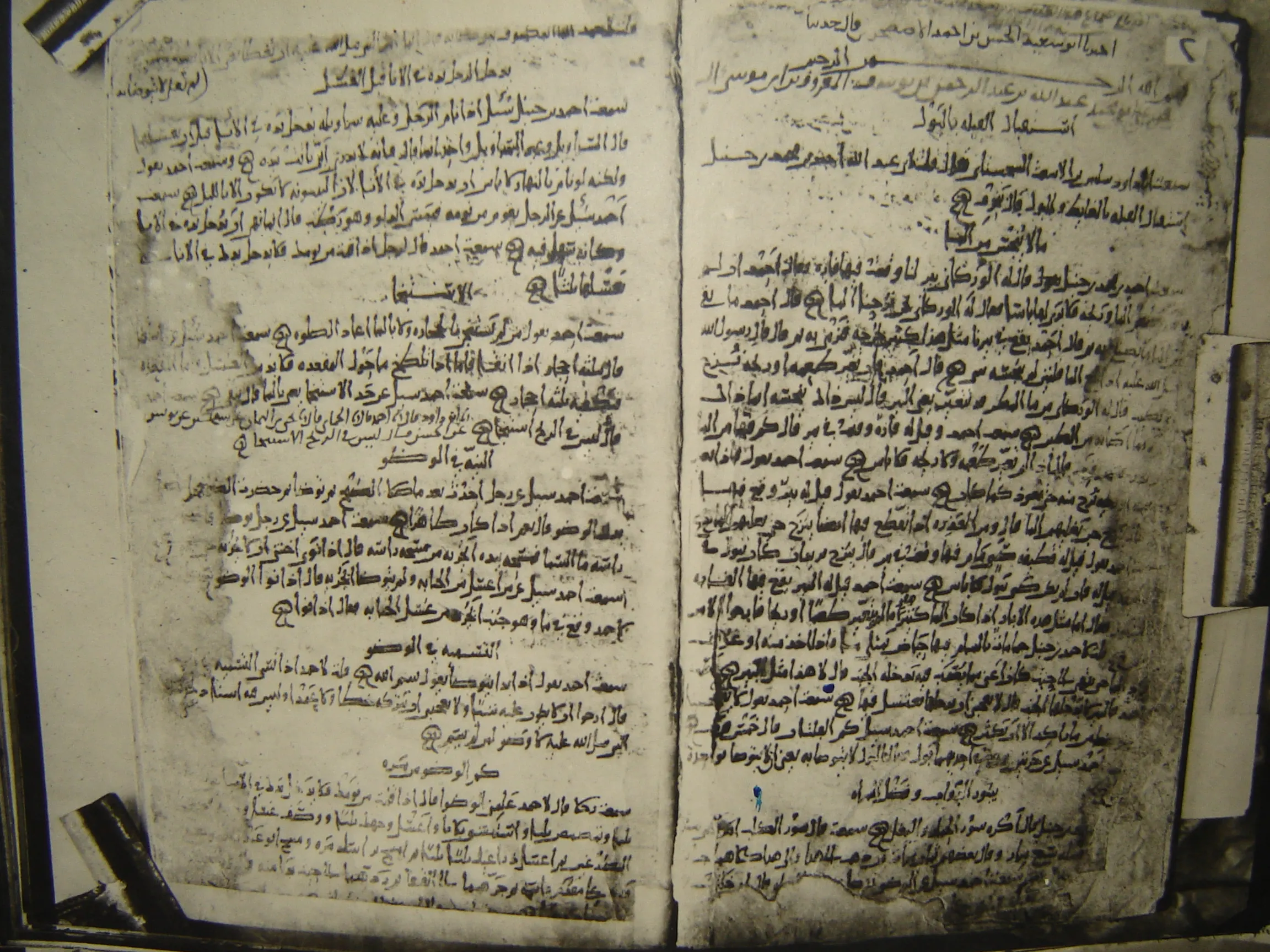
His most enduring legacy is al-Muwatta', an early collection of hadith and legal rulings that sought to unify religious practice around the established customs of Medina. This work was so highly regarded that his student al-Shafi'i called it the soundest book on earth after the Quran. Malik's approach prioritized the living tradition of the Medinan community alongside the Quran and Prophetic sayings, creating a methodology that spread across North Africa, al-Andalus, Egypt, and beyond during his lifetime and long after his death.
Islamic tradition holds that he was the fulfillment of prophecies regarding a wise scholar rising in Medina, though some later critics debated specific attributions. His reputation for piety and independence from political power remains central to his image. Orders like the Shadili and Tijani regard him as a saint, and his legal school continues to guide millions of Muslims across the Arab world and West Africa.
Early Life & Background
Malik was born in Medina around 711 CE into a family with deep roots in the Quraysh tribe through the Banu Taym clan. His grandfather, Malik ibn Abi Amir, was a companion of Umar ibn al-Khattab, establishing a lineage of scholarly prestige within the city. The family traced its origins to Yemen, yet they were fully integrated into the social fabric of Medina. From a young age, Malik displayed a remarkable aptitude for learning and memorization. He began by committing the Quran to memory before moving on to study the sciences of religion under the era's leading masters.
His education took place entirely within the vibrant intellectual circles of Medina. He studied under Hisham ibn Urwa, a renowned historian of the Prophet's life, and Ibn Shihab al-Zuhri, a foundational figure in hadith compilation. He also learned from Ja'far al-Sadiq, the sixth Shia Imam, and Nafi ibn Sarjis, a freed slave of Ibn Umar who was a master of transmission. These teachers exposed him to a rigorous curriculum focused on preserving the authentic practices of the Prophet Muhammad and his companions.
Malik's character was shaped by an intense devotion to asceticism. He was known for frequent fasting and a life of self-denial that set him apart from the worldly pursuits of many contemporaries. Sources describe him as physically imposing, standing very tall with fair hair and a massive beard. Despite his imposing stature, he maintained a humble demeanor. He dedicated himself to teaching and issuing legal opinions while carefully avoiding entanglement in the political machinations of the Umayyad and early Abbasid courts. By the mid-8th century, his reputation as the premier authority on Medinan tradition had grown so significantly that scholars traveled from distant lands to sit at his feet.
Career Growth
The defining moment of Malik's career came when he compiled al-Muwatta' during the early Abbasid period. Caliphs and officials sought a standardized legal code to bring unity to the expanding empire, and Malik provided a text rooted in the consensus of the people of Medina. This work bridged gaps between differing legal schools by establishing a theoretical standard based on community agreement and established sunna. It became the foundation for the Maliki school, which would eventually dominate legal thought in North Africa, al-Andalus, Egypt, Sudan, and parts of Syria and Iraq.
His influence extended far beyond his own writings. He taught a generation of scholars who carried his methods across the Islamic world. Among them was Muhammad ibn Idris al-Shafi'i, who became one of the greatest jurists in history and founded the Shafi'i school. Al-Shafi'i credited Malik as the star among scholars of knowledge and preserved his teacher's teachings as a cornerstone of his own legal theory. Malik's students ensured his methodology survived his death, spreading it through a vast network of madrasas and legal councils.
During his later years, Malik faced pressure from political authorities to endorse specific legal positions that aligned with their interests. He famously refused to compromise his principles, maintaining his independence even when the caliphate demanded obedience. This stance cemented his reputation as a man of integrity who placed religious truth above political expediency. When he died in June 795 at the age of 84, he left behind a legacy that had already reshaped Islamic jurisprudence. His burial in the al-Baqi' cemetery became a site of reverence, and his works continued to be copied and studied for centuries.
Career Timeline
Public Image & Style
Malik ibn Anas is portrayed in Islamic tradition as the quintessential guardian of Medinan tradition, embodying the city's status as the birthplace of Islamic civilization. His public image centers on his role as a rigorous, devout scholar who prioritized the established practice of the Medinan community alongside the Quran and hadith. He is depicted as uncompromising in his commitment to knowledge and piety, often refusing to yield to political pressure.
His reputation for independence made him a symbol of intellectual freedom in an era of growing imperial control. Scholars remember him as a man of immense wisdom who could navigate complex legal questions with clarity and fairness. The title Imam of Medina reflects his status as the premier authority on hadith during his lifetime. Even centuries later, he is revered as a saint by Sufi orders like the Shadili and Tijani, highlighting his spiritual depth beyond his legal achievements.
Fame & Fandom (iFAMOUS Rankings)
iFANN has not yet collected fame data for this person. As a historical figure from the 8th century, Malik ibn Anas does not appear in modern celebrity rankings or global attention metrics. His fame is measured not by search volume or social media engagement but by his enduring influence on Islamic jurisprudence and the millions of Muslims who follow the Maliki school today.
While there is no organized fandom in the modern sense, his followers form a substantial global community. The Maliki school is followed by millions of Muslims across North Africa, including Morocco, Algeria, Tunisia, and Libya, as well as in West Africa, parts of Egypt, Sudan, and the Arabian Peninsula. Adherents maintain scholarly traditions, educational institutions, and legal frameworks based on his methodology. Contemporary discussions about his legacy appear in academic and religious contexts rather than fan culture. A 2026 article in Muslim Matters reflects on the continued relevance of the four great imams, underscoring how Malik's ideas remain active in contemporary Islamic discourse.
Interesting Facts and Legends
Islamic lore attributes a prophecy to the Prophet Muhammad stating that a wise scholar would rise in Medina to guide the people, with many traditions identifying this figure as Malik ibn Anas. While some later critics questioned the specific wording of these attributions, the general belief in his prophesied status persisted across all schools of Sunni thought. His physical appearance was distinctive; sources describe him as very tall and imposing with a huge beard and fair hair, making him easily recognizable in public gatherings.
One famous story illustrates his commitment to accuracy: when a man tried to sell him a forged hadith, Malik immediately recognized the forgery and rejected it without hesitation. Another legend tells of him refusing to write down his book until he was certain it contained only authentic material, spending decades verifying every narration. His student al-Shafi'i once declared that al-Muwatta' was the soundest book on earth after the Quran, a statement that has echoed through Islamic scholarship for over a millennium. Malik also maintained a strict policy against mixing personal opinion with transmitted reports, ensuring the purity of his legal rulings.
Family & Personal Life
Malik was born into the Humayr clan of the Banu Taym tribe, a branch of the Quraysh, giving him both social standing and scholarly credibility. His grandfather, Malik ibn Abi Amir, was a companion of Umar ibn al-Khattab, establishing a lineage of religious service within the family. Historical records confirm that Malik was married and had children, though specific names of his wife and offspring are not preserved in the available sources. His family home in Medina served as a center for learning where students gathered daily to hear his lectures.
The scholar lived a life of modest means despite his high status. He was known for his ascetic lifestyle, often fasting and living simply. His household reflected his values of piety and detachment from worldly wealth. Family stories passed down through generations emphasize his dedication to teaching and his refusal to seek political office or financial gain. The Banu Taym clan remained influential in Medina for centuries after his death, carrying forward his legacy of scholarship.
Notable Connections
Hisham ibn Urwa, Ibn Shihab al-Zuhri, Ja'far al-Sadiq, Nafi ibn Sarjis, Muhammad ibn Idris al-Shafi'i, Abu Hanifa, Ahmad ibn Hanbal
Relationships & Dating History
As a figure from the 8th century, Malik ibn Anas's personal romantic relationships are not documented in the available sources in the manner modern biographies would record them. Historical records from this period typically do not preserve such biographical details for religious scholars. The available sources focus exclusively on his scholarly career, legal contributions, and religious legacy.
Historical accounts mention that he was married and had children, though specific details about his wife and children are limited. No sources document any specific romantic relationships, marriages beyond general acknowledgment, or personal partnerships. The lack of detailed dating history is consistent with the biographical conventions of his time, which prioritized scholarly achievement over personal life. His legacy remains defined by his contributions to Islamic jurisprudence and his role as the Imam of Medina.
Death & Aftermath
Died
June 7, 795 (aged 84)
Death Place
Medina
Cause of Death
Natural causes related to old age and a specific illness (fever)
The streets of Medina cleared to accommodate a funeral procession so vast that historical accounts estimate over fifty thousand mourners gathered to honor the man known as the Imam of the city. Tributes flowed from across the Islamic world, with scholars and judges alike mourning the loss of a pillar who had guarded the Sunnah for nearly a century. This outpouring reflected his status not merely as a jurist but as the spiritual leader whose voice had guided the community through decades of change. Malik ibn Anas passed away on June 7, 795, in the city where he was born and spent his entire life, having refused to leave even once except for the annual Hajj pilgrimage. In his final days, a severe fever and physical weakness associated with his age confined him to his home, yet he continued to lecture students on his magnum opus, the Muwatta, until he became too frail to speak.
Contemporary biographical narratives describe his end as a natural conclusion brought on by old age and illness, with no record of foul play or unnatural circumstances disturbing the peace of his final hours. He was laid to rest in the Al-Baqi' cemetery, a traditional burial ground that remains a site of reverence today. His legacy endured far beyond the funeral rites, establishing the Maliki school of jurisprudence which stands as one of the four major Sunni legal traditions practiced by millions today. Countless books, universities, and institutes now bear his name, ensuring that his teachings continue to shape religious practice centuries after his death.
Net Worth (Estate Value)
$0
iFANN Editorial Team estimate
Malik ibn Anas died in 795 CE, over 1,200 years before the modern concept of net worth emerged. No financial records from his lifetime survive, and no estate valuation exists in contemporary sources. He was known for his ascetic lifestyle and self-denial, suggesting he did not accumulate significant personal wealth. His true legacy is intellectual and religious rather than financial.
His works, particularly al-Muwatta', are in the public domain and have been copied and studied for centuries. There is no modern estate management, posthumous earnings, or licensing revenue associated with his name. The Maliki school operates as a living tradition rather than a commercial enterprise. The iFANN Editorial Team estimates his net worth at $0, reflecting the absence of any quantifiable financial assets or estate value in the modern sense.
Awards & Accolades
View 8 records, honours and achievementsKnown For
Al-Muwatta'
c. 760 · Author
Maliki School of Jurisprudence
c. 760 · Founder
Keywords
Sources
Quick Facts
- Profession
- muhaddith, Islamic jurist, ulema
- Born
- c. 711
- Birthplace
- Medina
- Died
- June 7, 795
- Death Place
- Medina
- Gender
- Male
Personal Details
- Full Name
- Malik ibn Anas ibn Malik ibn Abi Amir al-Asbahi
- Education
- Studied under Hisham ibn Urwa, Ibn Shihab al-Zuhri, Ja'far al-Sadiq, and Nafi ibn Sarjis in Medina
Frequently Asked Questions
Who was Malik ibn Anas?
What is the Maliki school of thought?
What is al-Muwatta'?
When and where was Malik ibn Anas born?
Who was Malik ibn Anas's most famous student?

Join the community
fans discussing