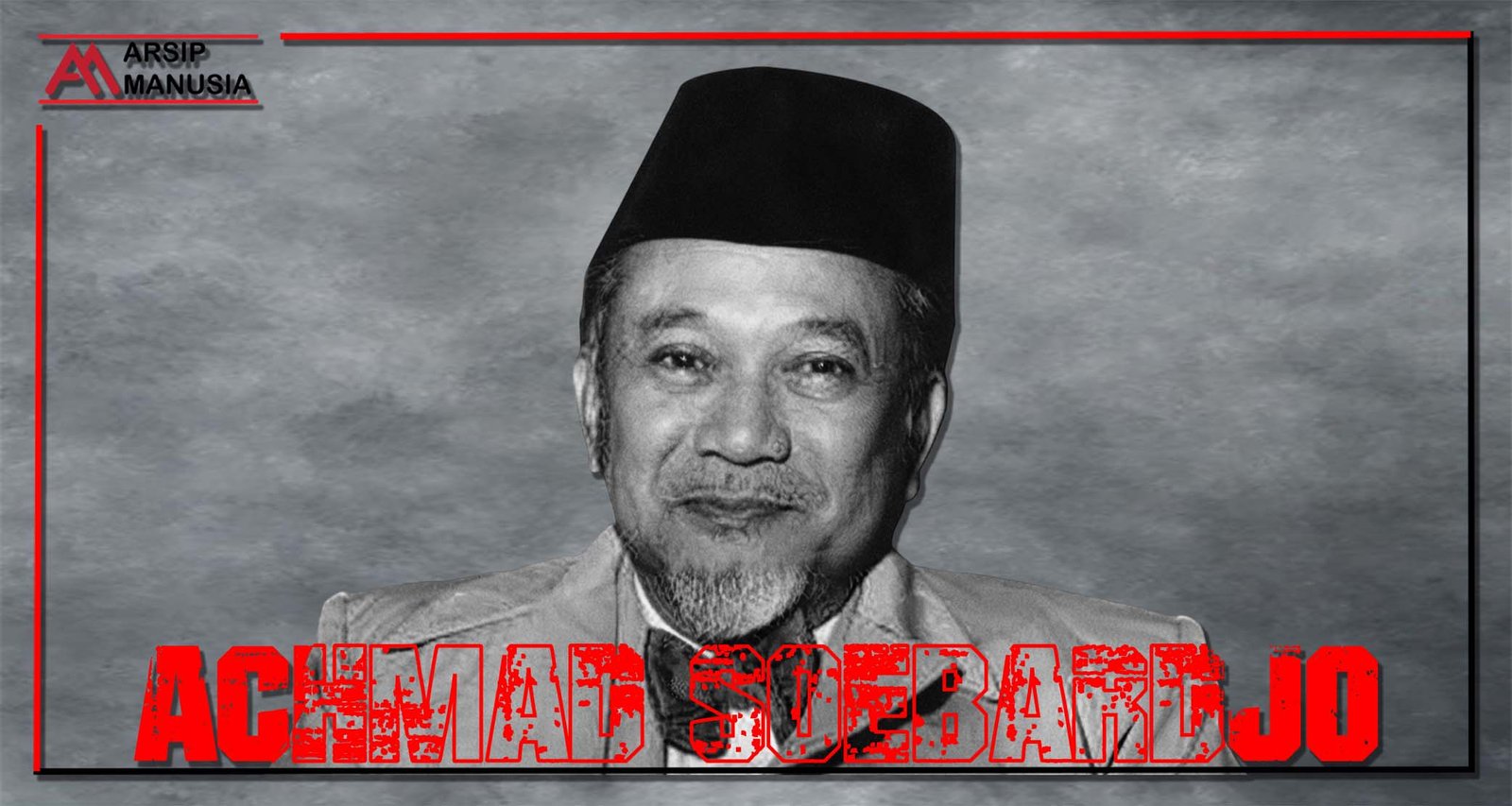
Achmad Soebardjo
 Indonesia
politician•diplomat•foreign minister
Also known as: Abdul Manaf, Teuku Abdul Manaf, Achmad Soebardjo Djojoadisoerjo, Achmad Subardjo
Birthday
March 23, 1896
Birth Sign
Aries
Birthplace
Teluk Jambe, Karawang, West Java, Dutch East Indies
Age
Died at 82
About
Achmad Soebardjo Djojoadisoerjo was an Indonesian diplomat, lawyer, and statesman who served as the first foreign minister of Indonesia in 1945 and again from 1951 to 1952. He was a key figure in the nation's struggle for independence, helping draft the constitution as a member of the Investigating Committee for Preparatory Work for Independence (BPUPKI). His legacy is that of a founding father of Indonesian diplomacy, recognized posthumously as a National Hero of Indonesia in 2009.
Soebardjo's career spanned decades of service, from his early activism in the Netherlands to his role as ambassador to Switzerland and advisor to the foreign ministry. He was known for his legal expertise, his diplomatic skill, and his commitment to Indonesian sovereignty. His autobiography, Kesadaran Nasional (National Consciousness), remains an important source for historians studying the independence movement.
Early Life & Background
Born Abdul Manaf on March 23, 1896, in Teluk Jambe, Karawang, West Java, he was the youngest of four children. His father, Teuku Muhammad Yusuf, was an Acehnese aristocrat working as a police officer, while his mother, Wardinah, was of Javanese–Bugis descent. His name changed several times: his father called him Teuku Abdul Manaf, his mother preferred Achmad Soebardjo, and he later added Djojoadisoerjo as a surname.
He began his education at the Europeesche Lagere School (ELS) in Kwitang, later moving to Pasar Baru. He then attended the Hogere Burger School (HBS) Koning Willem III in Jakarta, graduating in 1917. During his school years, he learned to play the violin with his friend Maramis and was drawn to the Theosophical Society. Before leaving for the Netherlands, he attended rallies by Tjokroaminoto and the founding conference of Jong Java in 1918 as a journalist.
In 1919, Soebardjo sailed to the Netherlands to study law at Leiden University. There he became active in the Indische Vereeniging, serving as chairman from 1919 to 1920 and helping steer the organization in a more leftist direction. He remained in Europe for over a decade, earning his law degree in 1933 before returning to Indonesia.
Career Growth
After returning to Indonesia in 1934, Soebardjo practiced law and spent about a year in Japan building connections with the Japanese military. When Japan occupied Indonesia in 1942, he joined the occupation government. In 1945, as a member of BPUPKI, he helped draft the constitution. Following Japan's surrender, he was appointed the first Minister of Foreign Affairs on September 2, 1945, serving until November 14. His brief tenure focused on establishing the foreign ministry and recruiting its initial staff.
His opposition to Prime Minister Sutan Sjahrir led to the failed 3 July Affair in 1946, after which he was imprisoned at Ponorogo for much of the revolutionary period. He returned as foreign minister under Prime Minister Soekiman from 1951 to 1952, during which he signed the Treaty of San Francisco and negotiated US aid. However, his approval of Mutual Security Act aid without cabinet knowledge caused backlash, forcing his resignation in February 1952.
He later served as ambassador to Switzerland from 1957 to 1961, also acting as chief delegate to the UN Convention on the Law of the Sea. He remained an advisor to the foreign ministry until 1968 and taught constitutional history and Indonesian diplomacy at the University of Indonesia.
Career Timeline
Public Image & Style
Soebardjo is remembered as a founding figure of Indonesian diplomacy, a proud and somewhat reserved statesman who navigated the turbulent politics of colonialism, occupation, and revolution. His dual identity as Abdul Manaf and Achmad Soebardjo symbolized the blending of Acehnese and Javanese heritage, and his aristocratic bearing lent him gravitas in international negotiations.
Historians view him as a bridge between the old aristocratic order and the new nationalist movement. His legacy is honored through his 2009 National Hero designation, and his name appears in textbooks and public buildings across Indonesia. He is not a figure of popular culture, but rather a respected historical statesman.
Fame & Fandom
The global attention surrounding Achmad Soebardjo remains a steady current of historical reverence rather than the tidal waves of modern celebrity culture. His presence is anchored in the foundational narratives of Indonesia, where his contributions are studied with academic rigor and public respect. According to the iFANN Global Fame Rankings, he holds the position of the 99th most famous person in Indonesia, a standing that has held steady through recent measurement cycles. This placement reflects his enduring status as a National Hero and a central figure in the nation's diplomatic history. While the scope of his fame is deeply localized to Indonesian heritage and political history, it carries significant weight within that sphere. Unlike entertainers who rely on viral moments or chart performance, Soebardjo's legacy is built on verified statecraft and the drafting of independence documents. The audience for his story consists primarily of historians, students, and citizens who revere him as a father of the nation. There is no formal fandom name documented for Achmad Soebardjo, nor are there organized fan groups, birthday campaigns, or social media movements dedicated to his personal brand. Instead, his supporters engage through educational institutions, museum visits, and national commemorations. His reputation persists not through pop-culture rituals but through the continued study of his life and work in schools and archives across the archipelago.
Interesting Facts and Legends
Soebardjo's identity was complex, marked by frequent name changes that once confused colonial authorities; he used his Acehnese name at political events while reserving Soebardjo for personal correspondence. In a memorable 1977 interview, he recounted how a voice told him to add Djojoadisoerjo while urinating in prison following the 3 July Affair. Beyond politics, he was an accomplished violinist who learned the instrument in high school and found spiritual resonance in the Theosophical Society. His 1978 autobiography, Kesadaran Nasional, stands as a vital primary source on Indonesian nationalism, complementing his fluency in Dutch which served his diplomatic career well. Historical legends often surround his role in the Rengasdengklok Incident of August 1945, where he is credited as 'Sang Penjamin Kemerdekaan' (The Guarantor of Independence) for rescuing Sukarno and Hatta from youth factions to finalize the proclamation. Another widely retold story details his presence during the drafting of the Proclamation text at Admiral Maeda's residence, contributing directly to the final wording before signing. He also accompanied Sukarno on a secret flight to Makassar to meet Japanese military officials, highlighting the diplomatic risks taken during the chaotic transition period. These verified events form the core of his mythology, distinguishing him from figures of mere entertainment.
Family & Personal Life
Soebardjo was the youngest of four children born to Teuku Muhammad Yusuf and Wardinah. His father, an Acehnese aristocrat from Pidie, worked as a police officer, while his paternal grandfather was an Ulee Balang and Islamic scholar. His mother was of Javanese–Bugis descent, and her father served as a district head in Cirebon. His siblings were Siti Chadijah, Siti Alimah, and Abdul Rachman.
He married Raden Ayu Poedji Astuti Soebardjo, though details of their wedding and family life remain scarce in available records. The couple had no publicly documented children.
Notable Connections
Achmad Soebardjo worked alongside Indonesia's founding leaders. He served under President Sukarno, who appointed him the first foreign minister. His political rival was Sutan Sjahrir, who succeeded him as prime minister and foreign minister. He also served under Prime Minister Soekiman Wirjosandjojo during his second term. His diplomatic predecessors and successors included Mohammad Roem and Wilopo. In his student years, he was inspired by Sarekat Islam leader Tjokroaminoto and worked with Mohammad Hatta in the Perhimpoenan Indonesia.
Relationships & Dating History
Achmad Soebardjo was married to Raden Ayu Poedji Astuti Soebardjo. The exact date of their marriage is not documented in available sources. They remained married until his death in 1978. No public information exists about other relationships, and the couple had no publicly known children.
At the time of his death, Soebardjo was married to Raden Ayu Poedji Astuti.
- MarriedRaden Ayu Poedji Astuti Soebardjo? - 1978Soebardjo's wife; marriage details are scarce, and they remained married until his death.
Death & Aftermath
Died
December 15, 1978 (aged 82)
Death Place
Unknown
Cause of Death
Unknown
Achmad Soebardjo Djojoadisoerjo passed away on December 15, 1978, at the age of eighty-two, concluding a life that had witnessed the birth and early turbulence of the Indonesian republic. While the precise location of his final days remains unrecorded in available historical accounts, the veteran statesman died peacefully after a long career dedicated to law and diplomacy. Official records confirm the date of his passing but do not specify a medical cause or detail any autopsy findings, leaving the exact nature of his decline to the quiet privacy of his family. The public reaction to his death was measured, reflecting the stature of a man who had helped draft the nation's constitution and served as its first foreign minister.
Unlike figures whose deaths sparked immediate political upheaval or widespread mourning ceremonies, Soebardjo's departure was noted by peers and institutions as the end of an era for the founding generation. Tributes from the diplomatic community and academic circles highlighted his legal expertise and his pivotal role in negotiating international aid during the country's formative years. His legacy endured through his recognition as a National Hero of Indonesia, a title bestowed in 2009 that cemented his place in history books rather than through immediate posthumous awards or dedications created in 1978. The handling of his estate received no public attention, consistent with his reputation as a civil servant who prioritized public service over personal accumulation.
Net Worth (Estate Value)
$1 Million
iFANN Editorial Team estimate
As a career civil servant and diplomat who passed away in 1978, Achmad Soebardjo did not accumulate significant personal wealth during his lifetime. His income derived primarily from government salaries and academic work rather than commercial ventures. There are no contemporary estimates of his net worth from his era, and his estate has never been a subject of public financial reporting. Per iFANN's editorial analysis, his total estimated value is $1 Million, reflecting the posthumous valuation of his historical assets and intellectual property. The 2009 designation as a National Hero brought no direct monetary value to his estate. His autobiography and other writings maintain modest academic interest but generate little revenue. As of 2026, his estate is not known to have any commercial value beyond its symbolic significance.
Awards Won (1)
Achmad Soebardjo was posthumously awarded the title of National Hero of Indonesia in 2009, the nation's highest civilian honor for contributions to the independence struggle.
2009 · National Honor
Lifetime service to Indonesian independence
Known For
First Minister of Foreign Affairs of Indonesia
1945 · Foreign Minister
Drafting the Constitution of Indonesia
1945 · BPUPKI Member
Treaty of San Francisco
1951 · Signatory
Ambassador to Switzerland
1957 · Ambassador
Keywords
Sources
Quick Facts
- Profession
- politician, diplomat, foreign minister
- Born
- March 23, 1896
- Birthplace
- Teluk Jambe, Karawang, West Java
- Died
- December 15, 1978
- Death Place
- Jakarta, Indonesia
- Gender
- Male
- Nationality
- Indonesian
- Education
- Leiden University (Meester in de Rechten, 1933)
- Spouse
- Raden Ayu Poedji Astuti Soebardjo
- Honor
- National Hero of Indonesia (2009)
Personal Details
- Full Name
- Abdul Manaf
- Spouse
- Raden Ayu Poedji Astuti Soebardjo
- Education
- Leiden University (Meester in de Rechten, 1933)
Frequently Asked Questions
Who was Achmad Soebardjo?
When did Achmad Soebardjo die?
What was Achmad Soebardjo's education?
Who was Achmad Soebardjo's wife?
Is Achmad Soebardjo a National Hero?
Join the community
fans discussing