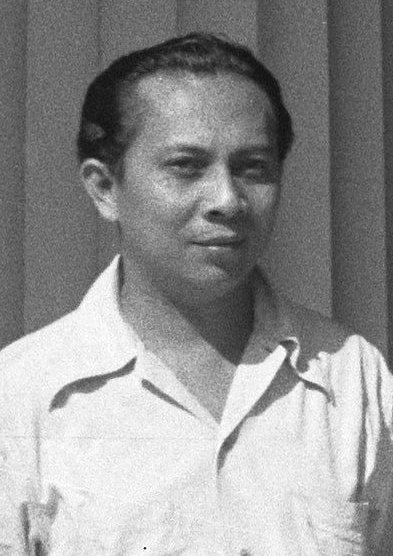
Sutan Sjahrir
 Indonesia
Birthday
+1909-03-05
Birth Sign
Pisces
Birthplace
Padang Panjang
Age
Died at 57
About
Sutan Sjahrir was an Indonesian statesman and a pivotal figure in the nation's fight for independence. Born on March 5, 1909, in Padang Panjang, he emerged as a leading intellectual and idealist within the nationalist movement. His early education took him to Europe, where he studied at the University of Amsterdam and later pursued law at Leiden University. It was during this time that Sjahrir became deeply involved in socialist politics and the burgeoning cause of Indonesian self-determination, forming a close association with fellow nationalist Mohammad Hatta. During the tumultuous years of the Japanese occupation, Sjahrir actively participated in the resistance. Following Indonesia's declaration of independence on August 17, 1945, he played a role in significant events leading up to it, including the Rengasdengklok Incident. His influential 1945 pamphlet, Perjuangan Kita (Our Struggle), captured the spirit of the era. President Sukarno appointed Sjahrir as the first Prime Minister of Indonesia, a position he held from 1945 to 1947. In this capacity, he became a key negotiator, notably participating in the talks that led to the Linggadjati Agreement, and was one of the few Republican leaders who could engage with the Dutch authorities due to his prior non-cooperation stance during the occupation. After his premiership, Sjahrir continued to shape Indonesia's political landscape. In 1948, he founded the Indonesian Socialist Party (PSI), a significant force in early post-independence politics aimed at countering the Indonesian Communist Party. Though influential, the PSI eventually lost support and was banned in 1960. Sjahrir himself faced political challenges, being arrested and imprisoned without trial in 1962. He was eventually released in 1965 to receive medical treatment abroad and passed away in Zürich, Switzerland, on April 9, 1966. Later that same year, he was posthumously recognized as a National Hero of Indonesia.
Fame & Fandom
Sutan Sjahrir commands a legacy defined not by the organized fervor of a modern fanbase, but by the enduring reverence of historians and citizens honoring an intellectual architect of Indonesian democracy. No formal moniker exists for his admirers, nor do digital campaigns or birthday rituals mark his commemoration; instead, his audience consists of political scholars and students engaging with his life as a historical narrative rather than a celebrity performance. His home in Menteng stands as a national heritage site, preserved by state institutions rather than fan clubs, reflecting a public engagement rooted in academic study and diplomatic history. Within this framework of sober admiration, the iFANN Global Fame Rankings place him among the most significant figures of his era. Current data positions Sutan Sjahrir as the 88th most famous person in Indonesia, a slight rise from the previous cycle. Furthermore, he is ranked as the 64th most famous person from Indonesia, holding steady ground against contemporaries. These placements reflect a global attention span that tracks media coverage and consumption signals worldwide, ensuring that even decades after his passing, his role in the struggle for independence remains quantifiable. The rankings confirm that while he lacks the viral energy of pop culture icons, his stature as the first Prime Minister secures a permanent, measurable presence in the global consciousness of Indonesian history.
Interesting Facts and Legends
Sutan Sjahrir served as the first Prime Minister of Indonesia from 1945 to 1947, establishing the framework for parliamentary democracy in the young republic. He was a founding member of Partai Sosialis Indonesia, the nation's first socialist party, which advocated for Western constitutional ideals over radical nationalism. A defining chapter of his life involves his final years marked by tuberculosis, a condition that led to his exile and eventual death in Switzerland on April 9, 1966, far from his homeland. His burial took place in the Netherlands following a memorial service, a somber conclusion to a life dedicated to diplomacy. Historical accounts frequently mythologize him as the "Smiling Diplomat" who defended sovereignty through negotiation at the United Nations rather than armed conflict. Another notable episode in his biography is the failure of his PSI party in the 1955 general election, an event often cited by political historians to illustrate the shifting tides of Indonesian ideology away from liberal socialism. His complex relationship with journalist Mochtar Lubis also remains a recurring topic in analyses of the intersection between journalism and high politics during the early republic.
Death & Aftermath
Died
+1966-04-09 (aged 57)
Death Place
Zurich, Switzerland
Cause of Death
Complications from tuberculosis
Sutan Sjahrir died on April 9, 1966, in Zurich, Switzerland, at the age of 57 while residing in exile. Contemporary accounts describe him as a stricken man suffering from a severe illness that had deteriorated over time, with his condition worsening under political pressures after years of imprisonment by the Dutch during the revolution. This determination relies on family statements and the general medical consensus regarding his long-term struggle rather than a legal investigation into sudden circumstances. Public reaction to his passing was marked by deep mourning among Indonesian nationalists and international observers. The New York Times obituary highlighted his status as a key independence leader who had later been jailed by the Indonesian government itself before going into exile, framing his death as the end of an era for the country's early democratic socialist leadership.
Tributes from peers emphasized his role as an intellectual and idealist who favored Western constitutional democracy over authoritarianism, cementing his legacy through academic and political discourse rather than immediate mass vigils. He was buried in the Kalibata Heroes' Cemetery in Jakarta, the final resting place for many of Indonesia's most prominent independence leaders. Posthumously, Sjahrir has been honored through various dedications, including the naming of streets, universities, and institutions across Indonesia. His life and political philosophy remain the subject of numerous books and documentaries, with renewed interest in reclaiming his legacy as a symbol of ethical self-discipline emerging in recent decades.
Awards & Accolades
Keywords
Quick Facts
- Profession
- politician
- Born
- +1909-03-05
- Birthplace
- Padang Panjang
- Died
- +1966-04-09
- Death Place
- Zurich
- Gender
- Male
- Spouse
- Siti Wahyunah Saleh, Maria Duchateau
- Birth Sign
- Pisces
Personal Details
- Spouse
- Siti Wahyunah Saleh, Maria Duchateau
Join the community
fans discussing