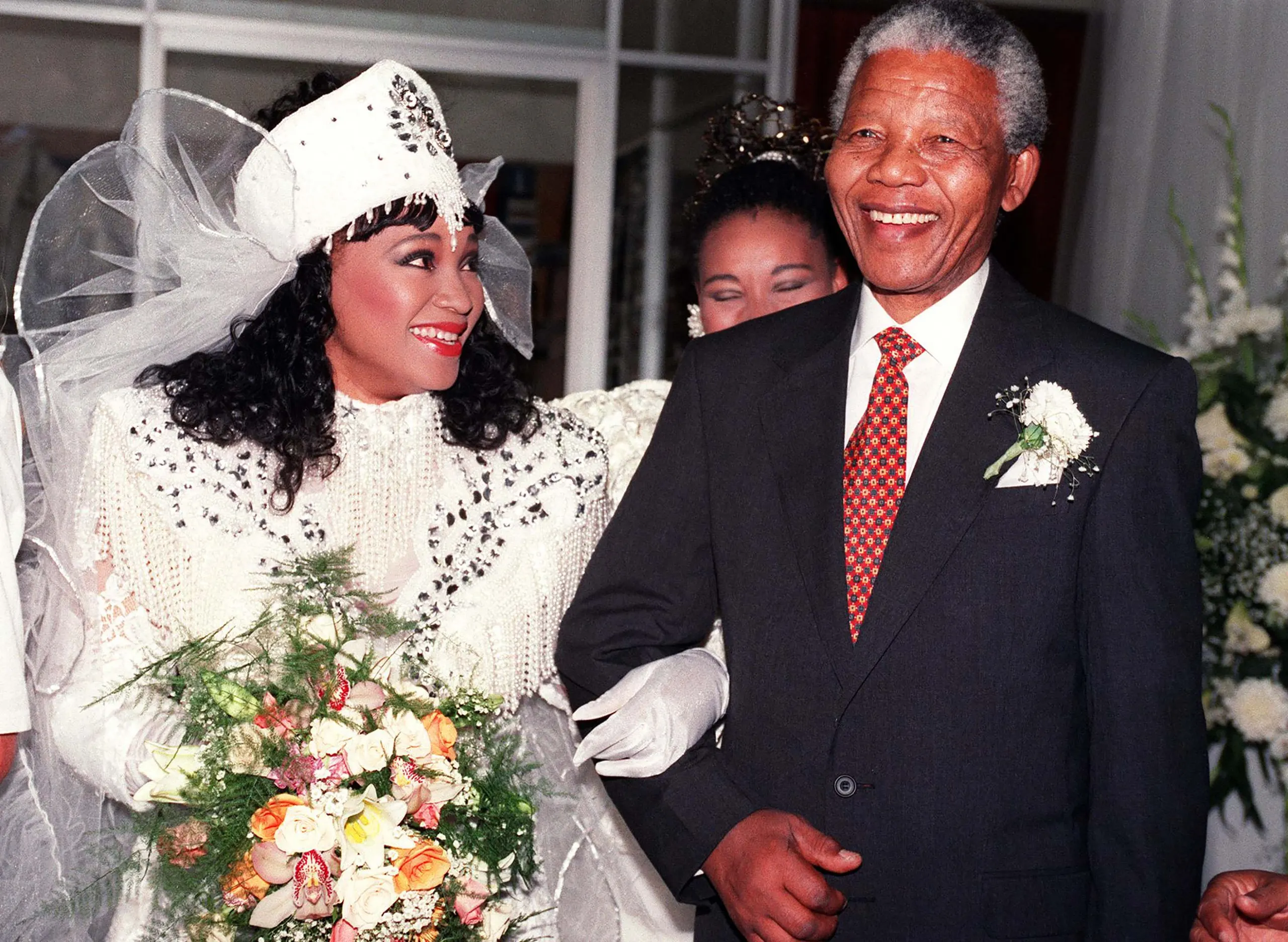
Zindzi Mandela
 South Africa
Also known as: Zindziswa Mandela, Nobutho Zindziswa Mandela-Hlongwane, Mandela, Zinzie, Mandela, Nobutho Zindziswa
Birthday
December 23, 1960
Birth Sign
Sagittarius
Birthplace
Soweto, South Africa
Age
Died at 59
About
Zindziswa "Zindzi" Mandela (23 December 1960 – 13 July 2020), also known as Zindzi Mandela-Hlongwane, was a South African diplomat, poet, and activist. Born in Soweto, she was the youngest daughter of Nelson Mandela and Winnie Madikizela-Mandela, both central figures in the anti-apartheid movement. Zindzi grew up in the shadow of their activism, and her own life reflected that legacy.
Zindzi first came to public attention in 1978 with the publication of her poetry collection, Black As I Am, accompanied by photographs by Peter Magubane. The book captured the raw experience of life under apartheid, and her words resonated with a generation. She also became a familiar face on the global stage, famously reading her father's speech rejecting then-President P.W. Botha's offer of conditional release in 1985.
As a diplomat, Zindzi served as South Africa's ambassador to Denmark, a post she held until her death in 2020. She was also set to become ambassador to Liberia. From 1996 to 1998, she served as a stand-in First Lady of South Africa, a role that underscored her prominence within the Mandela family. Her career spanned decades of public service, and she was known for her fierce independence and outspoken nature.
Zindzi died on 13 July 2020 at the age of 59, in Johannesburg. Her passing came less than two years after the death of her mother, Winnie, and marked the end of an era for the Mandela family. She is remembered as a poet who gave voice to the voiceless and a diplomat who carried her family's legacy into the post-apartheid world.
Early Life & Background
Zindziswa Nobutho Mandela entered the world on December 23, 1960, in Soweto, South Africa. Her arrival coincided with a period of intense political upheaval, as the apartheid regime tightened its grip on black communities. She was the youngest of Nelson Mandela's three daughters, following Zenani and Makaziwe, who died in infancy. Her childhood unfolded in the chaotic aftermath of her parents' imprisonment and banning orders. While her father sat on Robben Island, her mother faced constant harassment, detention, and house arrest, leaving young Zindzi to navigate a life of instability and fear.
The trauma of her early years shaped her worldview profoundly. At just sixteen years old in 1977, she found herself arrested and detained without trial by the apartheid security police. Authorities held her in solitary confinement for several months, a harrowing experience that left deep psychological scars but also forged an unbreakable resilience. This period of isolation fueled her desire to express the pain of her people through art rather than silence.
Before stepping onto the international diplomatic stage, Zindzi pursued education and literary expression. She attended school in Soweto and later studied at the University of the North, now known as the University of Limpopo. In 1978, at the tender age of seventeen, she published her debut poetry collection titled Black As I Am. The book featured stark photographs by renowned photographer Peter Magubane and offered an unflinching look at life under oppression. This publication established her as a significant literary voice within the resistance movement before she transitioned into formal public service.
Career Growth
Zindzi's career evolved from poetry to high-level diplomacy, reflecting her family's legacy and her own commitment to justice. In 1978, she published her debut poetry collection, Black As I Am, establishing her as a young poet of the anti-apartheid movement. The book captured the raw reality of life under apartheid and established her as a literary voice of the resistance movement before she turned to diplomacy.
In 1985, she gained international fame when she read a statement on behalf of her father, who was then imprisoned on Robben Island. In this address, she rejected President P.W. Botha's offer of conditional release, declaring, "My father is not a beggar for freedom." This moment cemented her status as a symbol of defiance. Following the unbanning of the ANC and the end of apartheid, she transitioned into diplomatic service. From 1996 to 1998, she served as the stand-in First Lady of South Africa during the presidency of her father, filling the role often associated with the First Lady in official state functions.
From 2008 to 2020, she held the post of South Africa's Ambassador to Denmark. During her tenure, she worked to strengthen ties between South Africa and Scandinavia and promoted cultural exchange. Shortly before her death in 2020, she was appointed as South Africa's Ambassador to Liberia but passed away before assuming the post. She also founded the Mandela Legacy Foundation, dedicated to preserving the history and values of the anti-apartheid struggle.
Career Timeline
Public Image & Style
Zindzi projected an image of strength, intelligence, and grace throughout her life. Known for her elegant, dignified attire befitting her diplomatic role, she often incorporated traditional South African elements into her wardrobe. Media descriptions emphasize her bravery, intellect, and unwavering commitment to justice. She was portrayed as a fierce independent woman who carried the weight of her family's legacy without being overshadowed by it. Her presence commanded respect rather than adoration, fitting for a figure of national importance.
Fame & Fandom (iFAMOUS Rankings)
Zindzi Mandela never courted a fanbase in the way pop stars do. She was not an entertainer whose image fueled billboards or whose concerts drew fainting crowds. Her public life belonged to the realm of statesmanship and poetry, where respect replaces adoration. No organized groups rallied behind her name with inside jokes or charity drives funded by donations from strangers. The Nelson Mandela Foundation and state tributes carry her legacy forward, not grassroots movements or viral hashtags. She remained a figure of national importance, a diplomat who served as Ambassador to Denmark, and a poet whose voice echoed through the struggle against apartheid. Her audience consisted of citizens, diplomats, and readers rather than fans waiting for a new single or a tour date.
The iFANN Global Fame Engine evaluated Zindzi Mandela in August 2026. She does not currently hold a placement in the published rankings for the Global Top 1,000 or any Top-100 scope list. While she commanded significant global attention through her family's history and her own diplomatic service, she has no formal fandom name documented in the system. The world remembers her as a bridge between generations of anti-apartheid leadership, but she remains unranked in the current fame metrics.
Interesting Facts and Legends
Zindzi spent months in solitary confinement as a teenager, an experience that shaped her resilience and later informed her poetry. Her reading of her father's speech in 1985 was broadcast globally, making her a household name in the West at a time when she was only 25. The name "Zindzi" means "bring life" or "life-bringer" in isiXhosa, a name that reflected her parents' hope for a future free from oppression. She published her first collection of poems, Black As I Am, at just 17 years old, accompanied by photographs by Peter Magubane. The most iconic moment in her life occurred on February 10, 1985, when she stood before the press and read her father's letter rejecting P.W. Botha's offer of release.
Notable Quotes
“My father is not a beggar for freedom. He will not accept any conditions that compromise the dignity of the people.”
“Poetry is the voice of the voiceless. It is the weapon we use to fight the darkness.”
Family & Personal Life
Zindzi was the youngest daughter of Nelson Mandela and Winnie Madikizela-Mandela. She had one sister, Zenani Mandela-Dlamini. Her husband was Thabo Hlongwane, a fellow activist and businessman. They had two children together: a son named Mandla and a daughter named Zoliswa. Thabo Hlongwane was a close associate within the anti-apartheid movement, and their marriage was a partnership rooted in shared political ideals. There are no widely documented romantic relationships prior to her marriage to Hlongwane that have been confirmed by credible sources; her early life was largely consumed by the demands of her family's political struggle and her own detention.
Notable Connections
Relationships & Dating History
Zindzi Mandela married Thabo Hlongwane, a fellow activist and businessman. The couple had two children together: a son named Mandla and a daughter named Zoliswa. Thabo Hlongwane was a close associate within the anti-apartheid movement, and their marriage was a partnership rooted in shared political ideals. There are no widely documented romantic relationships prior to her marriage to Hlongwane that have been confirmed by credible sources; her early life was largely consumed by the demands of her family's political struggle and her own detention.
As of her death on 13 July 2020, Zindzi was married to Thabo Hlongwane. She left behind her husband and two children. Following her passing, Thabo Hlongwane has remained active in various capacities related to the Mandela legacy, though he has kept a lower public profile than his wife. There are no reports of divorce, separation, or subsequent marriages for Zindzi.
- MarriedThabo Hlongwane1985 - 2020They had two children together: Mandla and Zoliswa.
Death & Aftermath
Died
July 13, 2020 (aged 59)
Death Place
Johannesburg, South Africa
Cause of Death
Complications from COVID-19
Zindzi Mandela-Hlongwane spent her final days under medical care at a Johannesburg hospital after contracting the coronavirus. She passed away in the early hours of July 13, 2020, at the age of 59. The Nelson Mandela Foundation confirmed the death through family statements, citing her positive test result as the cause.
Tributes poured in from global leaders and anti-apartheid peers who recalled her iconic 1985 reading of her father's letter to the world. South African President Cyril Ramaphosa expressed shock at the loss of a diplomat and activist whose work had long resonated beyond her lineage. The foundation described the passing as untimely, emphasizing her role as a symbol of the struggle against apartheid.
Her funeral took place four days later on July 17, 2020, with burial services held in South Africa. Dignitaries and family members gathered for eulogies honoring her life as a poet and ambassador. Her remains were interred in the family plot in Qunu, continuing the tradition of burying Mandela family members in the Eastern Cape village where Nelson Mandela was laid to rest.
Net Worth (Estate Value)
$1 Million
iFANN Editorial Team estimate
As a diplomat and poet, Zindzi Mandela did not accumulate wealth through commercial ventures or celebrity endorsements. Her financial status was derived from her salary as a senior civil servant and ambassador. This figure reflects a standard diplomatic salary, savings, and potential real estate holdings typical of a high-ranking South African official.
Primary income sources included her diplomatic salary, her work as a writer, and possibly investments managed by her family. There were no major business ventures or endorsement deals attributed to her. Upon her death, her estate was managed by her family and the Nelson Mandela Foundation. No significant posthumous revenue streams (such as movie rights or massive book sales) have been reported that would drastically alter the estate's value. The estate remains a private matter, with no public disclosures of its total current value as of 2026.
Awards & Accolades
Known For
Black As I Am
1978 · Author
Ambassador to Denmark
2008 · Diplomat
Keywords
Sources
Quick Facts
- Profession
- diplomat, poet, activist
- Born
- December 23, 1960
- Birthplace
- Soweto, South Africa
- Died
- July 13, 2020
- Death Place
- Johannesburg, South Africa
- Gender
- Female
- Birth Sign
- Sagittarius
Personal Details
- Full Name
- Zindziswa Nobutho Mandela-Hlongwane
- Spouse
- Thabo Hlongwane
- Children
- Mandla Hlongwane, Zoliswa Hlongwane
- Education
- University of the North (now University of Limpopo)
Frequently Asked Questions
Who was Zindzi Mandela?
How did Zindzi Mandela die?
What was Zindzi Mandela famous for?
Did Zindzi Mandela have children?
Was Zindzi Mandela married?
Social Media
Join the community
fans discussing