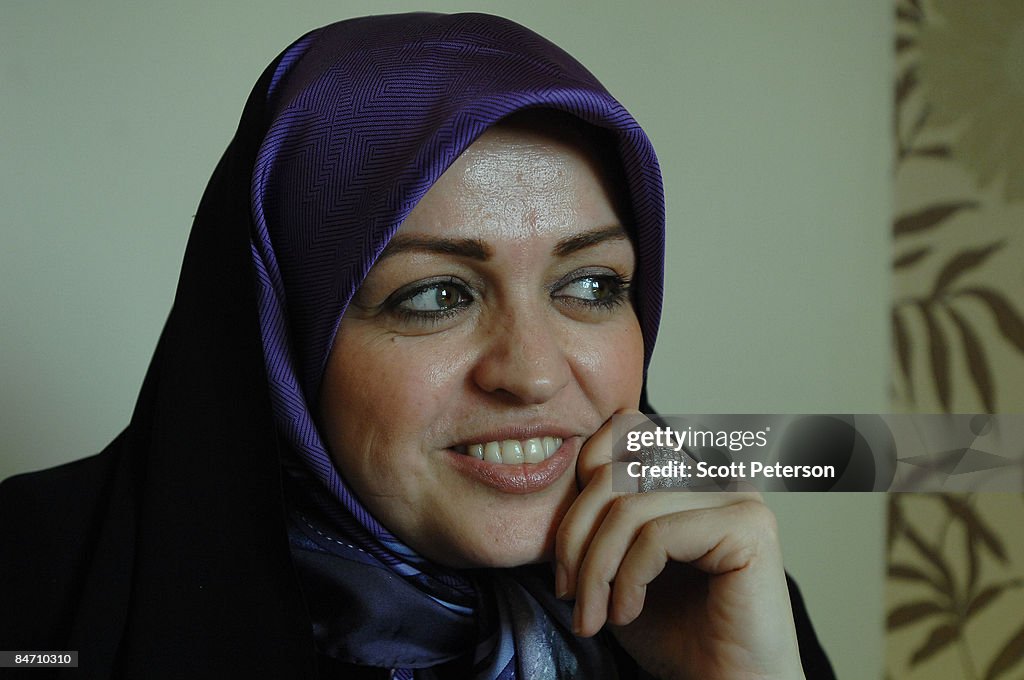
Zahra Eshraghi
 Iran
Iranactivist•human rights defender•former government official
Birthday
1964-01-01
Birth Sign
Capricorn
Birthplace
Tehran, Iran
Age
62 years old
About
Zahra Eshraghi is an Iranian human rights defender, activist, and former government official. Born in Tehran in 1964, she is the granddaughter of Ayatollah Ruhollah Khomeini, the founder of the Islamic Republic, yet she has become one of the most prominent voices inside Iran calling for women's rights and political liberalization. Her marriage to Mohammad-Reza Khatami, a reformist leader and brother of former president Mohammad Khatami, places her at the heart of Iran's reform movement.
Eshraghi's public life has been defined by her willingness to challenge the system from within. She has spoken out against mandatory veiling, the disqualification of reformist candidates, and the restrictions on women's personal freedoms. Her critiques have appeared in international outlets like The New York Times and The Atlantic, and she has used social media to reach a broader audience. As of 2026, she maintains an active Instagram presence with over 140,000 followers, where she continues to engage with supporters and share her views on Iran's political and social landscape.
Early Life & Background
Zahra Eshraghi was born in 1964 in Tehran, into the family of Ayatollah Ruhollah Khomeini. She was named after her father's sister, Zahra, a rebellious figure in the family who defied conventions. Growing up in the politically charged atmosphere of pre-revolutionary Iran, she witnessed firsthand the events that led to the 1979 Islamic Revolution. Her family's central role in that upheaval shaped the world she would later navigate as an activist.
Details about her early education are sparse, but she pursued studies in mechanical engineering, a field where women were a rarity in Iran at the time. This technical background gave her a pragmatic edge, though her path soon turned toward politics and advocacy. By the early 2000s, she had emerged as a public figure, speaking out on issues that many in her position would have avoided. Her status as Khomeini's granddaughter gave her a platform, but she used it to challenge the very system her grandfather had founded, a move that surprised many observers.
Career Growth
Eshraghi's breakthrough as a public advocate came in 2003, when The New York Times profiled her as a 'daughter of the revolution' fighting the veil. That article brought her international attention and established her as a reformist voice within Iran's ruling establishment. Over the following years, she became a frequent commentator on the country's political direction, often expressing alarm at the hardliners' grip on power.
In 2008, she spoke out against the disqualification of reformist candidates ahead of parliamentary elections, calling for a reformist to run. Her activism intensified after the disputed 2009 presidential election, and in February 2010, she and her husband were reportedly taken into custody as they sided with protesters. The detention underscored the risks she faced despite her lineage.
By 2013, she was publicly discussing the possibility of a 'color revolution' in Iran, a term that alarmed the authorities. Her willingness to push boundaries has kept her in the spotlight, and her blog and social media have become platforms for her ongoing advocacy. She remains an influential figure in Iran's reform movement, though her exact role in recent years has been less documented.
Public Image & Style
Zahra Eshraghi's public image is a study in contradictions. As the granddaughter of the Islamic Republic's founder, she could have been a symbol of the establishment. Instead, she has become a voice for reform, often at odds with the government. Her willingness to criticize the system from within has earned her respect among reformers and international observers, while also making her a target for hardliners.
In interviews and public appearances, she projects a calm but resolute demeanor. She is often described as a leader of the reformist movement, though she has also been called a traitor by some. Her use of social media, particularly Instagram, allows her to bypass traditional media and speak directly to supporters. Her posts blend personal moments with political commentary, creating a relatable yet formidable persona.
Fame & Fandom (iFAMOUS Rankings)
Zahra Eshraghi commands a global audience defined by political urgency rather than celebrity worship. Her influence stretches from Tehran to international policy circles, where her lineage as the granddaughter of Ayatollah Ruhollah Khomeini intersects with her role as a defiant reformist voice. In August 2026, the iFANN Global Fame Engine evaluated her profile and determined she does not currently hold a placement in the published rankings, including the Global Top 1,000 or any Top-100 scope list. This absence of a numeric rank reflects her status as a polarizing political figure whose fame is concentrated within specific ideological spheres rather than broad pop culture consumption. She holds no position on the world's most famous people charts at this time. Her support base has no formal fandom name, operating instead as a community of activists, human rights advocates, and supporters of the Iranian reform movement. These individuals engage with her through social media channels like Instagram, where she maintains over 140,000 followers, rather than through fan rituals or organized campaigns. There are no documented fan-funded projects, viral birthday tributes, or subreddit communities dedicated to her legacy. Her public interactions remain strictly professional and political, focused on women's rights and democratic processes rather than entertainment. The lack of a structured fanbase underscores that her impact stems from her courageous stance against the establishment and her unique position within Iran's ruling family, not from the mechanisms of modern celebrity culture.
Interesting Facts and Legends
Named after her aunt Zahra, known for her rebellious spirit, Eshraghi inherited a precedent for defiance early in life. She once remarked, 'If I want to breathe I must have permission from my husband,' highlighting the absurdity of laws requiring spousal consent for basic freedoms. Her husband's brother, Mohammad Khatami, served as Iran's president from 1997 to 2005, making her part of a family central to both the revolution and the reform movement. Despite her elite lineage, she has been arrested multiple times for her activism, proving that no one is above the state's reach. A widely retold story positions her as the 'Rebel Granddaughter' who publicly urged reformists to run for office during the 2008 parliamentary elections, criticizing the Guardian Council's mass disqualifications as a vendetta. Another pivotal moment occurred in 2013 when she expressed hope for a 'Color Revolution' in Iran, signaling a desire for non-violent systemic change similar to movements in Eastern Europe. Reports surfaced that the Khomeini family sided with protesters during unrest, placing the family in direct conflict with state authorities.
Family & Personal Life
Zahra Eshraghi is the granddaughter of Ayatollah Ruhollah Khomeini, the founder of the Islamic Republic of Iran. Her father, Mostafa Khomeini, was the ayatollah's eldest son and a cleric who died in 1977, before the revolution. Her mother, Fatemeh Tabatabai, was the daughter of a prominent cleric. She has siblings, though details about them are scarce.
She is married to Mohammad-Reza Khatami, a reformist politician and former vice president of Iran. The couple has been together for decades, and their partnership has been both personal and political. They have children, though their names and details are not publicly known. The family lives in Tehran, where Eshraghi continues her advocacy work despite the risks.
Relationships & Dating History
Zahra Eshraghi married Mohammad-Reza Khatami in the 1980s. Mohammad-Reza is a reformist politician and the brother of former president Mohammad Khatami. Their marriage has been a political partnership as much as a personal one, with both sharing a commitment to reform. They have weathered arrests and political turmoil together.
As of 2026, they remain married, and their relationship appears stable. Their public appearances together are rare, but they have stood by each other during difficult times. No other significant relationships have been reported.
- MarriedMohammad-Reza Khatami1980 - presentCurrentMarried since the 1980s; political partnership.
Salary, Net Worth In 2026
Zahra Eshraghi's net worth is not publicly documented, and she does not appear on any celebrity wealth lists. As an activist and former government official, her income likely comes from speaking engagements, writing, and possibly family inheritance. Her husband's political career may also provide some financial stability.
Given the lack of verifiable data, it is not possible to estimate her net worth with any accuracy. She is not known for commercial ventures or endorsements. Her focus remains on advocacy, and she has not sought to monetize her public profile. As of 2026, her financial status is not a topic of public discussion, and any figures would be speculative.
Awards & Accolades
Known For
Women's rights advocacy in Iran
· Activist
Granddaughter of Ayatollah Khomeini
· Public figure
Reform movement leadership
· Activist
Keywords
Sources
Quick Facts
- Profession
- activist, human rights defender
- Born
- 1964
- Birthplace
- Tehran, Iran
- Gender
- Female
- Spouse
- Mohammad-Reza Khatami
- Birth Sign
- Capricorn
Personal Details
- Spouse
- Mohammad-Reza Khatami
- Education
- Mechanical Engineering (background)
Frequently Asked Questions
Who is Zahra Eshraghi?
What is Zahra Eshraghi's net worth in 2026?
Is Zahra Eshraghi still active in 2026?
Who is Zahra Eshraghi married to?
What is Zahra Eshraghi best known for?
Social Media
Similar People
Join the community
fans discussing