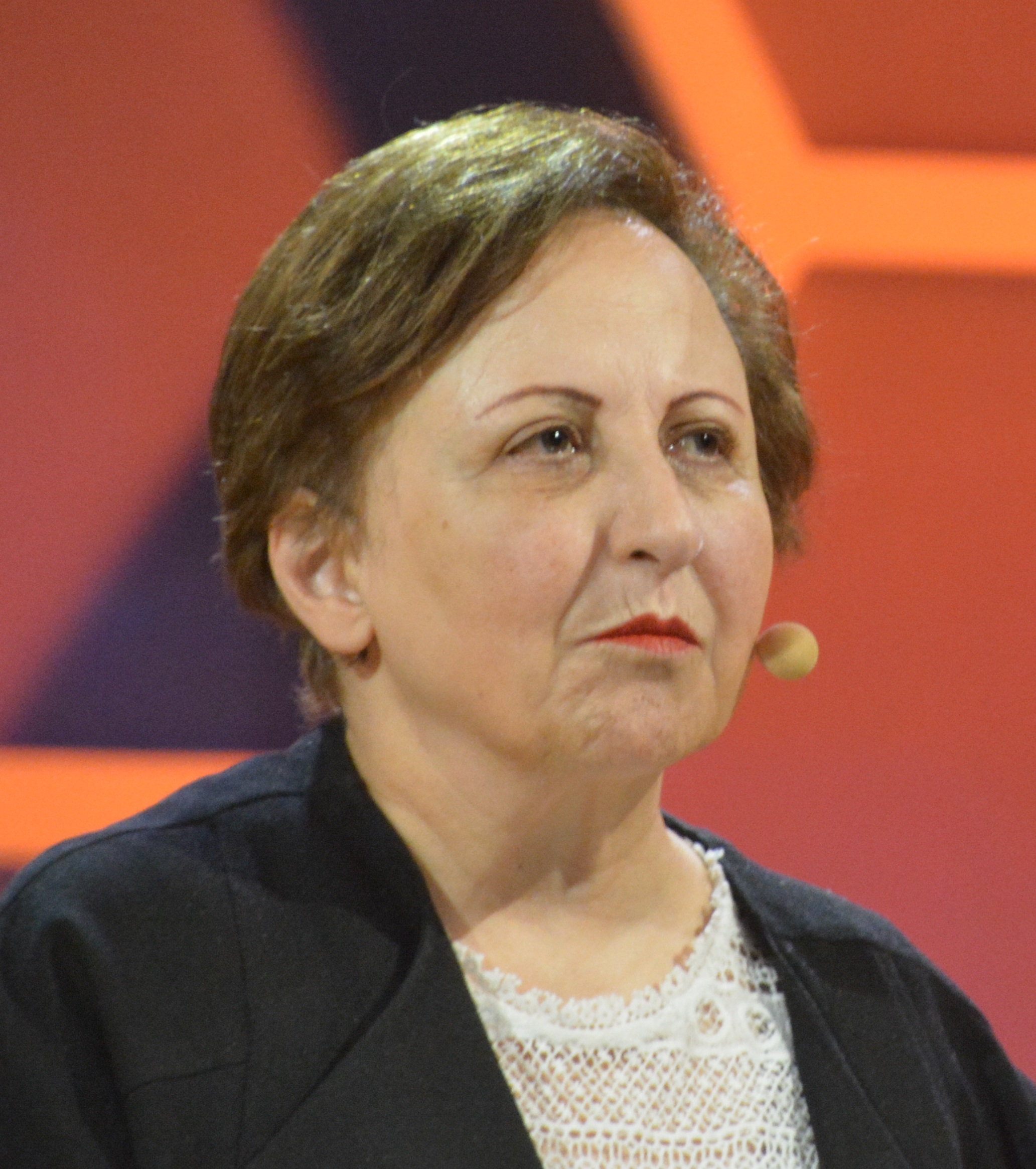
Shirin Ebadi
 Iran
Iranjudge•writer•human rights defender
Birthday
+1947-06-21
Birth Sign
Sagittarius
Birthplace
Hamadan
Age
79 years old
About
Shirin Ebadi, born on June 21, 1947, in Hamadan, Iran, is a lawyer, writer, and human rights defender. She made history in 2003 as the first Iranian to win the Nobel Peace Prize, recognized for her tireless work advocating for democracy and the rights of women, children, and refugees. A former judge, Ebadi was forced to resign in 1979 after the Islamic Revolution, which barred women from serving on the bench. She then turned to law practice and scholarship, becoming a prominent voice for justice in Iran. In 2001, she founded the Defenders of Human Rights Center, an organization dedicated to monitoring abuses and providing legal aid to the oppressed. Ebadi's career spans decades of activism and legal work. She has authored several books on human rights and women's rights, including "The Rights of the Child" and "Iran Awakening," a memoir that details her personal and professional struggles. Her legal practice has seen her defend journalists, dissidents, and victims of state violence, often at great personal risk. Despite facing constant harassment and threats from the Iranian government, she remained a steadfast advocate until forced into exile in London in 2009, where she continues her work. In March 2026, Iranian opposition leader Reza Pahlavi announced that Ebadi would lead a committee to draft regulations for transitional justice in Iran. This committee aims to create a framework for a court and fact-finding commission to address human rights violations committed under the Islamic Republic. Her leadership in this effort underscores her enduring commitment to accountability and the rule of law. That same year, Time magazine named her one of the 100 most influential people, a fitting tribute to a woman who has spent her life fighting for the voiceless. Ebadi's journey from a pioneering female judge to a Nobel laureate and exile exemplifies courage and resilience in the face of authoritarianism.
Fame & Fandom
Shirin Ebadi commands a global audience that defies the conventional architecture of celebrity fandom. There is no organized fanbase with a formal name, no seasonal campaigns, and no ritualistic gatherings typical of pop culture icons; instead, her supporters are an international network of legal professionals, human rights activists, and political advocates who engage with her work through the lens of serious advocacy rather than fandom worship. Her influence operates on moral authority and documented achievement rather than viral momentum or commercial branding. Within this landscape of dedicated observers, her standing in the broader cultural consciousness remains significant. According to the iFANN Global Fame Rankings, she holds the 53rd most famous person from Iran, a placement that is holding steady from the previous cycle as tracked by the 53rd most famous person from Iran. This metric reflects a sustained level of recognition across media coverage, search activity, and consumption signals worldwide, distinguishing her from figures whose prominence fluctuates with fleeting trends. The data indicates that her legacy is anchored in historical fact and continuous activism rather than the ephemeral nature of modern stardom. While she does not command the adulation reserved for entertainers, her visibility persists as a constant reference point in discussions regarding justice and civil liberties. The rankings confirm that her profile remains stable, reflecting a deep-seated respect for her role as a dissident voice and Nobel laureate. In the hierarchy of global public figures, she occupies a specific and enduring niche where fame is measured by impact rather than volume of applause.
Interesting Facts and Legends
Born in Hamadan in 1947, Shirin Ebadi made history as the first woman appointed as a judge in Iran, serving as president of the Tehran City Court until 1979. Following the Islamic Revolution, which barred women from the bench, she was forced to resign but immediately pivoted to become a fierce defender of human rights, founding the Defenders of Human Rights Center in 2001. Her most defining moment occurred in 2003 when she became the first Iranian and the first Muslim woman to win the Nobel Peace Prize, validating decades of risk-taking in the face of authoritarian pressure. A central narrative in her biography involves her transition from a state-appointed official to the regime's primary critic, a shift that cemented her status as a symbol of resistance. Recent accounts from 2026 highlight her continued relevance, noting her inclusion in Time magazine's list of the 100 Most Influential People alongside filmmaker Jafar Panahi. During this period, she drew attention for criticizing European silence on Iran's repression and calling for US intervention during protests. Her political positioning remains complex and independent, as evidenced by early 2026 backlash she faced for expressing support for the son of the ousted Shah, a stance that underscored her refusal to align with popular sentiment when it conflicted with her principles.
Awards & Accolades
Keywords
Quick Facts
- Profession
- judge, writer, human rights defender
- Born
- +1947-06-21
- Birthplace
- Hamadan
- Gender
- Female
- Birth Sign
- Sagittarius
Join the community
fans discussing