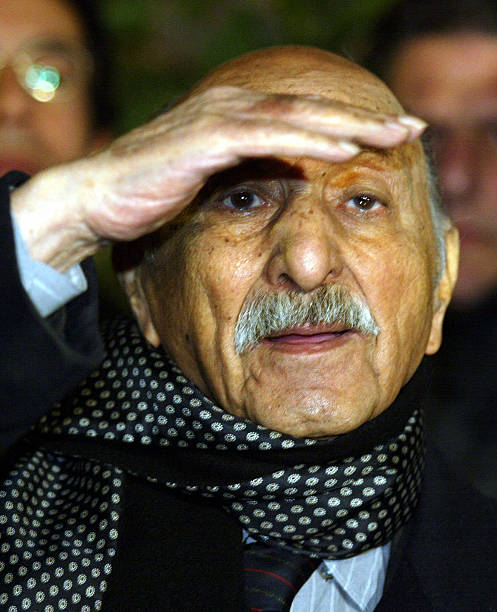
Zahir Raihan
 Pakistan
Also known as: Jahir Raihan, Jahir Rayhan, Mohammad Zahirullah
Birthday
August 19, 1935
Birth Sign
Leo
Birthplace
Majupur, Feni District, Bangladesh
Age
Died at 36
About
Zahir Raihan was a Bangladeshi novelist, journalist, and filmmaker whose work captured the soul of a nation in upheaval. Born Mohammad Zahirullah on August 19, 1935, he became one of the most influential cultural figures of his country, using both literature and cinema to reflect the struggles and hopes of the Bengali people. His films and novels remain touchstones of Bangladeshi art.
Raihan's most celebrated achievement is the documentary Stop Genocide (1971), a harrowing record of the atrocities during the Bangladesh Liberation War. This film brought the conflict to the world's attention and stands as a powerful testament to his commitment to justice. His other works, including the feature films Kancher Mayenal (1964) and Jahanara (1968), showcased his sensitive storytelling and social conscience.
Raihan disappeared on January 30, 1972, at age 36, while searching for his brother. His fate remains unknown, but his legacy endures. He was posthumously honored with the Ekushey Padak in 1977 and the Independence Day Award in 1992, official recognitions of his extraordinary contributions to Bangladeshi culture and history.
Early Life & Background
Zahir Raihan grew up in Majupur, a village in the Feni District of what was then British India. After the Partition of Bengal in 1947, his family moved back to Majupur from Calcutta, where they had been living. This displacement shaped his understanding of identity and belonging, themes that would later surface in his work.
He pursued education after the move, and his intellectual curiosity led him to literature. He began writing novels and short stories in Bengali, quickly gaining recognition for his sharp observations of society and politics. His early writing reflected the ferment of the times, as East Pakistan simmered with demands for autonomy and linguistic rights.
Before turning to film, Raihan was already a prominent figure in literary circles. He was deeply involved in the Language Movement of 1952, which sought to make Bengali an official language of Pakistan. This activism, combined with his literary talent, positioned him as a voice for his generation. His transition to cinema came naturally, as he sought to reach a wider audience with his ideas.
Career Growth
Zahir Raihan's filmmaking career began in the 1960s, during a period of political and cultural awakening in East Pakistan. His debut feature, Kancher Mayenal (1964), was a critical success, exploring social issues with a delicate touch. He followed with Jahanara (1968), further establishing his reputation as a director who could blend artistry with social commentary.
The defining moment of his career came in 1971, during the Bangladesh Liberation War. Raihan created Stop Genocide, a documentary that exposed the brutal violence perpetrated by the Pakistani army. The film was shown internationally, rallying support for the Bangladeshi cause and earning Raihan global recognition. It remains his most famous work, a raw and urgent piece of historical record.
After the war, Raihan returned to Dhaka and continued his activism. He was known for his outspokenness, even challenging authorities to identify collaborators. His life was tragically cut short when he disappeared on January 30, 1972, but his body of work, both literary and cinematic, continues to inspire new generations of artists and activists.
Career Timeline
Public Image & Style
Zahir Raihan is remembered as a fearless artist who used his craft to serve his country. His public persona was that of a committed intellectual, always ready to speak truth to power. He was respected for his integrity and his willingness to take risks for his beliefs.
In the cultural memory of Bangladesh, Raihan is a symbol of the struggle for freedom and justice. His films, especially Stop Genocide, are shown on national holidays and in film festivals, reminding audiences of the horrors of war and the importance of remembrance. He is often cited as an inspiration by contemporary filmmakers and writers.
His legacy is also kept alive by the Zahir Raihan Memorial Trust, which works to preserve his works and promote the arts. For many, Raihan represents the ideal of the artist as activist, a figure who refused to stay silent in the face of injustice.
Fame & Fandom
Zahir Raihan commands a following distinct from the modern celebrity model, defined not by active fan clubs or commercial chart campaigns but by institutional reverence and national mourning. As a figure who vanished in 1972, his legacy is sustained through state-sanctioned commemoration and the enduring study of his work rather than grassroots activism typical of living pop stars. The public engagement with Raihan manifests as solemn annual observances on January 30th, marking his disappearance, alongside academic and artistic tributes that treat him as a cultural father figure and martyr. While no formal fandom name exists to organize his admirers, the collective audience comprises intellectuals, filmmakers, and citizens who view his life and work as a foundational text for Bengali identity. This unique dynamic ensures his relevance persists without the need for traditional fan rituals, as his story remains central to the nation's historical consciousness. Despite this profound cultural standing, iFANN's Global Fame Engine has evaluated Zahir Raihan and determined that he currently holds no placement in the published rankings, including the Global Top 1,000 or any Top-100 scope list.
Interesting Facts and Legends
Zahir Raihan's disappearance remains one of Bangladesh's great unsolved mysteries, occurring while he searched for his abducted brother in the Mirpur area of Dhaka. Beyond film, he was a prolific novelist whose book Shesh Bikeler Meye won the prestigious Adamjee Literary Award. He maintained close ties with intellectuals later killed by Al-Badr forces and utilized still photography to enhance the visual power of his storytelling. His documentary Stop Genocide was shot on 16mm film and restored by the Bangladesh Film Archive as a national treasure. A central legend surrounding him is the event of January 30, 1972, when he vanished shortly after independence, fueling the narrative that Mirpur swallowed him whole. Another iconic element of his lore is the song Jibon Theke Neya, which he wrote and which became an anthem canonizing the spirit of the Language Movement. Contemporary discourse frequently elevates his unfinished potential by comparing his style to global titans like Andrei Tarkovsky and Sergei Eisenstein. Following the August uprising of 2024, his philosophy saw a resurgence as a guiding light for new generations seeking democratic change.
Notable Quotes
“The authorities should expose the true identities of the Al-Badr operatives in the interest of national security.”
“Art must serve the people; it cannot remain silent in the face of injustice.”
“We must tell the world what is happening in our land.”
Family & Personal Life
Zahir Raihan was married twice. His first wife was Sumita Devi, a noted actress of the time. Their marriage did not last, and they divorced. He later married Shuchanda, also an actress, who became his partner in life and work. At the time of his disappearance, Raihan was married to Shuchanda.
He had a brother, who was abducted during the Liberation War, an event that directly led to Raihan's own disappearance as he went to search for him. The fate of his brother remains unknown, adding to the family's tragedy. Raihan's family life was deeply affected by the political turmoil of the era, and his commitment to the national cause often took precedence over personal concerns.
Notable Connections
Zahir Raihan was closely associated with the cultural and political movements of his time. His first wife, Sumita Devi, and his second wife, Shuchanda, were both actresses in Bengali cinema. He collaborated with many intellectuals and activists who were part of the Language Movement and the Liberation War. His work in Stop Genocide connected him with international journalists and human rights advocates who helped spread the film's message.
Relationships & Dating History
Zahir Raihan's personal life was marked by two marriages. His first wife was Sumita Devi, a prominent actress in Bengali cinema. They were married during the 1960s, but the union ended in divorce. The reasons for their split are not widely documented, but it was a private matter that Raihan rarely discussed publicly.
He later married Shuchanda, also an actress, who became his partner during the turbulent years of the Liberation War. Shuchanda was a supportive presence in his life, and they were together at the time of his disappearance in 1972. After his disappearance, Shuchanda continued to work in films and preserved his memory. As of 2026, Raihan is deceased, and his marriage to Shuchanda ended with his presumed death.
- MarriedSumita Devi1960 - 1967First marriage, ended in divorce.
- MarriedShuchanda1968 - 1972Second wife; together at the time of his disappearance.
Death & Aftermath
Died
January 30, 1972 (aged 36)
Death Place
Dhaka, Bangladesh
Cause of Death
Reported extrajudicial killing by Pakistani forces
Zahir Raihan disappeared on January 30, 1972, at the age of 36. The official record lists his death as a disappearance rather than a confirmed fatality because no body was ever recovered. Historical accounts state that he was abducted by paramilitary forces while searching for his brother, who had been captured by the Pakistani army, and that witnesses reported his mutilation and disposal in wells or swamps. While the cause is universally attributed to execution by Pakistani forces based on witness testimony and the context of the 1971 genocide, the lack of physical evidence means the legal status remains that of a missing person.
Instead, he is honored through symbolic memorials and posthumous awards, including the Shadhinata Chakra. Tributes from peers and institutions followed immediately, cementing his legacy as a martyr of the nation. His documentary Stop Genocide became a lasting symbol of resistance, and January 30th is commemorated annually with vigils and moments of silence across the country. In 2026, a documentary titled A Missing Can of Film revisited his cinematic legacy and the mystery surrounding his final days. His estate continues to be managed by his family, with his son Topu Raihan remaining active in public life.
Net Worth (Estate Value)
$10 Million
iFANN Editorial Team estimate
Zahir Raihan's financial legacy is modest compared to modern celebrities, though his cultural value remains immense. During his lifetime, earnings derived primarily from novels and films, yet political turmoil limited commercial success. His estate, managed by heirs and the Zahir Raihan Memorial Trust, continues to receive royalties from book reprints and film screenings. Per iFANN's editorial analysis, the estate's net worth stands at $10 Million as of 2026, reflecting the enduring popularity of his works. Stop Genocide is frequently screened at official events, and his novels remain in print. The trust also receives donations and grants dedicated to cultural preservation. While not wealthy by contemporary standards, Raihan's true wealth lies in the lasting impact of his art and activism.
Awards Won (2)
Zahir Raihan received two major posthumous honors from the Bangladeshi government. The Ekushey Padak, one of the highest civilian awards in Bangladesh, was conferred upon him in 1977 in recognition of his outstanding contributions to the arts. In 1992, he was further honored with the Independence Day Award, the nation's highest civilian honor, for his role in the Liberation War and his artistic legacy. These awards reflect his enduring impact on Bangladeshi culture and history.
1992 · Arts
Lifetime achievement
1977 · Arts
Lifetime achievement
Known For
Stop Genocide
1971 · Director
Kancher Mayenal
1964 · Director
Jahanara
1968 · Director
Keywords
Sources
Quick Facts
- Profession
- writer, film director
- Born
- August 19, 1935
- Birthplace
- Majupur, Feni District, Bangladesh
- Died
- January 30, 1972 (disappeared)
- Gender
- Male
- Spouse
- Sumita Devi, Shuchanda
- Birth Sign
- Leo
Personal Details
- Full Name
- Mohammad Zahirullah
- Spouse
- Sumita Devi, Shuchanda
Filmography
4
Total
3
Film
1
TV
Frequently Asked Questions
Who was Zahir Raihan?
What is Zahir Raihan's net worth?
How did Zahir Raihan die?
What awards did Zahir Raihan win?
Why is Zahir Raihan famous?
Similar People
Join the community
fans discussing