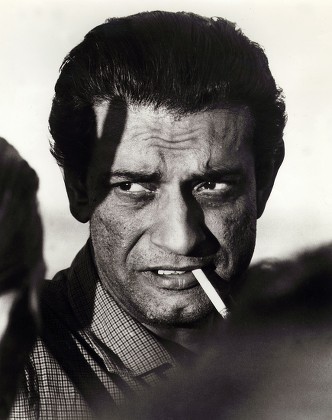
Satyajit Ray
 India
IndiaBirthday
May 2, 1921
Birth Sign
Taurus
Birthplace
Calcutta, India
Age
Died at 70
Height
5 ft 10 in (178 cm)
About
Satyajit Ray was an Indian film director, screenwriter, author, lyricist, magazine editor, illustrator, calligrapher, and composer. He is widely considered one of the greatest and most influential filmmakers in cinema history. Ray directed 36 films, including features, documentaries, and shorts, and his work is celebrated for its humanism, realism, and deep emotional resonance. His most famous films include The Apu Trilogy (1955-1959), The Music Room (1958), The Big City (1963), Charulata (1964), and the Goopy-Bagha trilogy. Ray's films won numerous international awards, including an Academy Honorary Award in 1992. He also wrote popular fiction, creating beloved characters like the detective Feluda and the scientist Professor Shonku. His distinctive visual style and storytelling continue to inspire filmmakers worldwide. As of 2026, his legacy endures through his films, writings, and the Satyajit Ray Lifetime Achievement Award at the International Film Festival of India.
Early Life & Background
Satyajit Ray was born into a prominent intellectual family in Calcutta. His father, Sukumar Ray, was a renowned writer and illustrator, and his grandfather, Upendrakishore Ray Chowdhury, was a celebrated author, artist, and entrepreneur. Ray attended Ballygunge Government High School and later studied economics at Presidency College, Kolkata. He then went to Visva-Bharati University in Santiniketan, founded by Rabindranath Tagore, but found the academic environment stifling and eventually dropped out. His early interests included art and literature. He began his career as a junior visualizer at the advertising agency D.J. Keymer & Son. A pivotal moment came in 1950 when he visited London and encountered Italian neorealist films, especially Vittorio De Sica's Bicycle Thieves (1948). This experience, along with meeting French filmmaker Jean Renoir (who was in India to shoot The River), ignited his passion for filmmaking. Upon returning to India, he started working on his first film, Pather Panchali, handling every aspect from scripting to editing.
Career Growth
Ray's debut film, Pather Panchali (1955), won eleven international prizes, including the Best Human Document award at the 1956 Cannes Film Festival. This launched his career and formed the first part of the Apu Trilogy. The second film, Aparajito (1956), won the Golden Lion at the Venice Film Festival, and the trilogy concluded with Apur Sansar (1959). Ray continued to direct acclaimed films throughout the 1960s and 1970s, including The Music Room (1958), The Big City (1963), and Charulata (1964). In 1969, he launched the Goopy-Bagha trilogy with Goopy Gyne Bagha Byne. His later works included The Kingdom of Diamonds (1980) and his final film, The Stranger (Agantuk), released in 1992 shortly before his death. Ray's films earned him a record 37 Indian National Film Awards, including the Dadasaheb Phalke Award, and top prizes at Berlin, Venice, and Cannes. He received an Academy Honorary Award in 1992.
Career Timeline
Public Image & Style
Ray is revered for his humanistic approach to filmmaking, his keen observational skills, and his ability to capture the nuances of Indian life. His visual style is characterized by understated elegance, naturalistic lighting, and profound emotional depth. He is often described as a master of the slow burn, allowing stories to unfold organically. Fans and critics admire his intellectual rigor and his refusal to compromise artistic vision for commercial appeal. His work has inspired generations of filmmakers, including Martin Scorsese, Francis Ford Coppola, and Akira Kurosawa. In India, he is a cultural icon, and his films are studied in universities. The annual Satyajit Ray Film and Television Institute in Kolkata trains aspiring filmmakers in his tradition.
Fame & Fandom (iFAMOUS Rankings)
Satyajit Ray stands as the 81st most famous person in India, the 57th most famous person from India, and the 27th most famous person in South Asia. Within the film industry specifically, he holds the position of the 20th most famous person in Bollywood. These placements reflect his enduring stature across global attention metrics tracked by the iFANN Global Fame Rankings, with each rank holding steady from the previous cycle. His legacy is not driven by a single organized fan club but rather by a vast, decentralized community of cinephiles, academics, and artists who view him as a pillar of world cinema.
This devoted following operates through preservation and reverence rather than modern social media activism. The community actively champions restorations, such as the 2026 retrospective for Days and Nights in the Forest, and organizes annual screenings to mark his birth and death dates. Contemporary directors like Christopher Nolan continue to validate his timeless work, while new projects like Srijit Mukherji's documentary on Goopy Gyne Bagha Byne ensure that fresh generations of filmmakers act as custodians of his vision.
Interesting Facts and Legends
Satyajit Ray was a multifaceted creative force who composed music blending Indian classical and folk elements, designed his own credit titles, and illustrated his books. Despite his international acclaim, he never owned a car, preferring rickshaws or walking in Kolkata, and his favorite treat remained Bengali sweets, especially sandesh. He created iconic literary characters including the detective Feluda, the scientist Professor Shonku, and the storyteller Tarini Khuro. An avid reader and collector of rare books, he also served as an editor for the magazine Sandesh.
Modern lore often recounts how Stan Lee collaborated with Ray on a comic featuring an Indian Spider-Man for just Rs 10, a rare cross-cultural footnote that fans still retell. Another story gaining traction involves Christopher Nolan praising Pather Panchali as an "incredible film" in 2026, cementing Ray's relevance against modern blockbusters. Critics also frequently cite his 1966 film Nayak as prophetic, noting its deep understanding of being constantly watched long before the digital age of self-curation arrived.
Notable Quotes
“The director is the only person who can tell a story from beginning to end, in his own way.”
“If I had to choose between being a filmmaker and being a writer, I would choose to be a writer.”
“The cinema is a very powerful medium. It can be used for good or for evil.”
Family & Personal Life
Satyajit Ray was married to Bijoya Das Ray, his cousin, in 1949. They had one son, Sandeep Ray, who became a filmmaker. Ray's father, Sukumar Ray, was a famous writer and illustrator, and his grandfather, Upendrakishore Ray Chowdhury, was an author and entrepreneur. Ray's family was deeply intellectual and artistic, which influenced his creative development. He lived in Kolkata throughout his life, in a house on Lake Temple Road. The family had a pet cat named Bagha, which inspired the character in the Goopy-Bagha series.
Notable Connections
Ray frequently collaborated with actors Soumitra Chatterjee, Sharmila Tagore, and Utpal Dutt. He worked with composer Ravi Shankar on early films like Pather Panchali and Apur Sansar. He was influenced by Jean Renoir and Vittorio De Sica.
Relationships & Dating History
Satyajit Ray married Bijoya Das Ray, his first cousin, in 1949. Their marriage was a love match despite family opposition. They had one son, Sandeep Ray, born in 1953. Bijoya was a supportive partner who managed the household and assisted with his work. She died in 2005. Ray remained married to her until his death in 1992. There are no public records of other relationships.
- MarriedBijoya Ray1949 - 1992Ray married his first cousin Bijoya in 1949; they had one son, Sandeep.
Death & Aftermath
Died
April 23, 1992 (aged 70)
Death Place
Calcutta, West Bengal, India
Cause of Death
Heart attack (myocardial infarction)
Satyajit Ray spent his final days largely bedridden at his residence in Calcutta, grappling with chronic health issues. The acclaimed director passed away on April 23, 1992, shortly after being admitted to the Medical College Hospital where he was treated for a cardiac event. Tributes poured in immediately from global peers like Martin Scorsese and Steven Spielberg, while the Government of India declared a national day of mourning led by Prime Minister P.V. Narasimha Rao. Fan vigils gathered outside his home and at the Film and Television Institute of India, marking a profound moment in Indian cultural history before a private cremation took place the following day at the Maniktala Crematorium attended by close family and colleagues including Shashi Kapoor and Aparna Sen.
His legacy flourished posthumously with the release of Company Limited in 1995 and ongoing restorations of classics like Days and Nights in the Forest, alongside honors such as induction into the American Academy of Arts and Sciences. The Satyajit Ray Film and Television Institute stands as a lasting dedication in Kolkata, managed by his widow Bijoya Ray and daughter Sandhya Ray who have stewardship over his estate.
Net Worth (Estate Value)
$10 Million
iFANN Editorial Team estimate
Per iFANN's editorial analysis, Satyajit Ray's estate is valued at $10 million as of 2026 estimates. The bulk of this wealth originated from his prolific film career, encompassing box office earnings, royalties from films and books, and sales of his artwork. His cinematic works continue to generate significant revenue through streaming platforms, television broadcasts, and home video releases. The estate also benefits from licensing his beloved characters, such as Feluda and Professor Shonku, for merchandise and adaptations. Managed by the Satyajit Ray Society with oversight from his son Sandeep Ray, the portfolio has grown in value due to posthumous releases and meticulous restorations. Recent years have seen a surge in international interest in world cinema, further boosting streaming royalties for his extensive catalog.
Awards Won (134)
Satyajit Ray won a record 37 Indian National Film Awards, including the Dadasaheb Phalke Award. He received the Academy Honorary Award in 1992. At international festivals, he won the Golden Lion at Venice for Aparajito, the Golden Bear at Berlin for Kanchenjungha, and the Best Human Document at Cannes for Pather Panchali. He was awarded the Bharat Ratna, India's highest civilian award, in 1992.
1956 · Prix du document humain
Pather Panchali
1956 · OCIC Catholic Award
Pather Panchali
1956 · Diploma Of Merit
Pather Panchali
1956 · Golden Carbao
Pather Panchali
1956 · Vatican Award
Pather Panchali
1957 · Selznick Golden Laurel for Best Film
Pather Panchali
1957 · Golden Gate Award for Best Film
Pather Panchali
1957 · Golden Gate Award for Best Director
Pather Panchali
1957 · Golden Lion for Best Film
Aparajito
1957 · Cinema Nuovo Award
Aparajito
1957 · FIPRESCI Critics' Award
Aparajito
Known For
Pather Panchali
1955 · Director, Screenwriter, Composer
Aparajito
1956 · Director, Screenwriter, Composer
Apur Sansar
1959 · Director, Screenwriter, Composer
Charulata
1964 · Director, Screenwriter, Composer
The Music Room
1958 · Director, Screenwriter, Composer
Keywords
Quick Facts
- Profession
- film director, author, composer
- Born
- May 2, 1921
- Birthplace
- Calcutta, India
- Died
- April 23, 1992
- Death Place
- Kolkata, India
- Gender
- Male
- Spouse
- Bijoya Ray
- Birth Sign
- Taurus
Personal Details
- Full Name
- Satyajit Ray Chowdhury
- Height
- 5 ft 10 in (178 cm)
- Spouse
- Bijoya Ray
- Children
- Sandeep Ray
- Education
- Presidency College, Kolkata (Economics); Visva-Bharati University, Santiniketan
Filmography
36
Total
28
Film
0
TV
Frequently Asked Questions
Who is Satyajit Ray?
What is Satyajit Ray's net worth in 2026?
What awards did Satyajit Ray win?
Why is Satyajit Ray famous?
Is Satyajit Ray still influential in 2026?
Similar People

Join the community
fans discussing