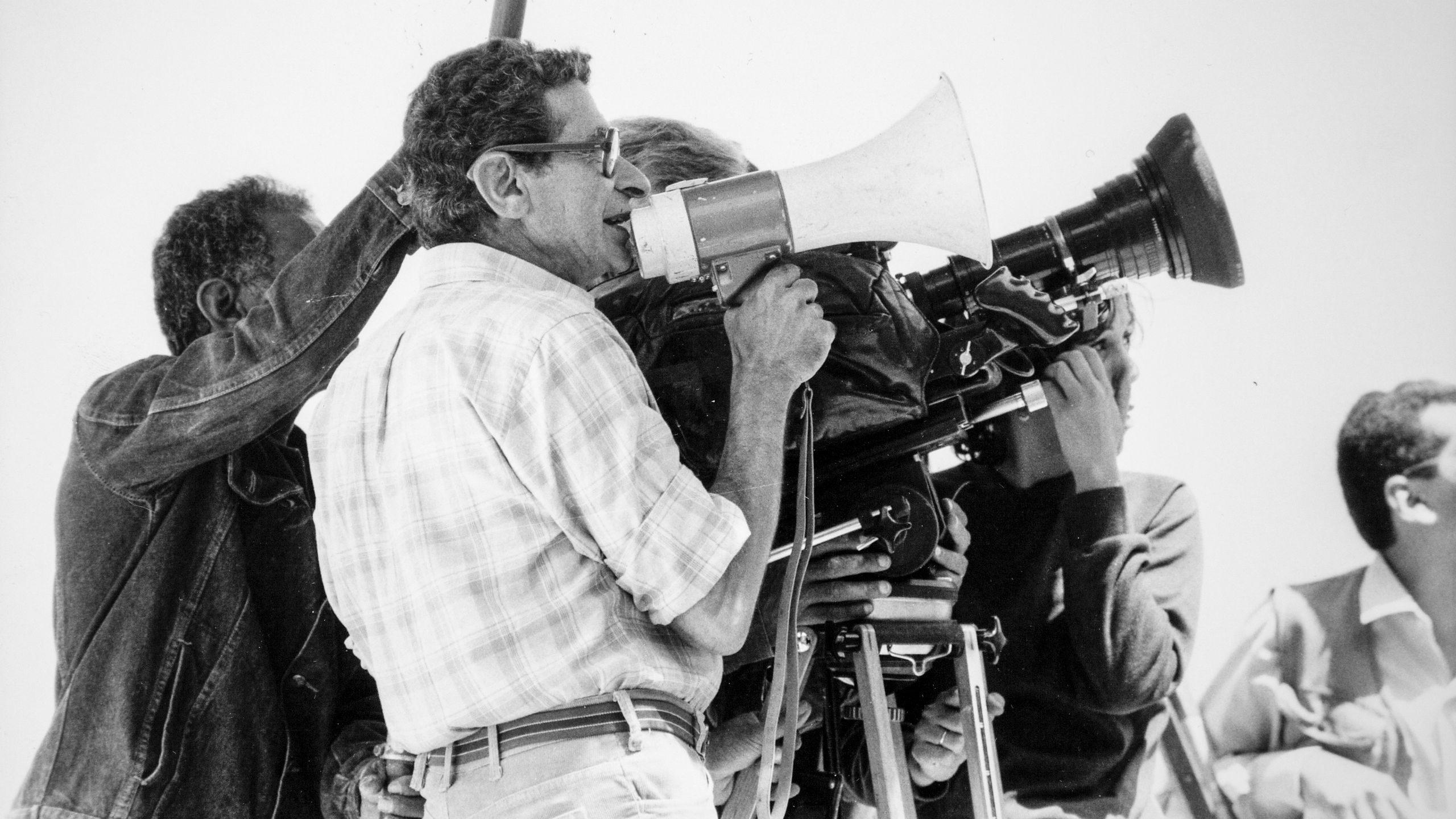
Youssef Chahine
 Egypt
film director•screenwriter•producer•actor
Also known as: Youssef Gabriel Chahine, Yousseff Chahine, Yusuf Shahin
Birthday
January 25, 1926
Birth Sign
Sagittarius
Birthplace
Alexandria, Egypt
Age
Died at 82
Height
5 ft 10 in (178 cm)
About
Youssef Gabriel Chahine was a seminal Egyptian film director, screenwriter, and actor whose six-decade career transformed Arab cinema into a globally recognized art form. Born on January 25, 1926, in Alexandria, he died on July 27, 2008, in Cairo at the age of 82. He is widely celebrated as the "Cosmopolite of Egyptian Cinema" for his unique ability to blend personal autobiography with political commentary, often using the city of Alexandria itself as a central character in his work.
Chahine directed over 30 feature films, many of which were controversial for their sharp critique of Egyptian society and government. His breakthrough came with The Blazing Sun in 1958, establishing him as a major voice in regional cinema. Later in life, he shifted toward autobiographical filmmaking with the acclaimed Alexandria Trilogy, earning international acclaim including the Cannes Film Festival's 50th Anniversary Award in 1997. He remains a towering figure in world cinema, known for challenging censorship and exploring themes of identity and colonialism.
Early Life & Background
Youssef Chahine was born into a wealthy, cosmopolitan family in the Montaza district of Alexandria. His father, Gabriel Chahine, was a Greek-Egyptian textile merchant, and his mother, Marie-Clémence, was of Italian descent. This multicultural heritage deeply influenced his worldview and filmmaking style, which frequently explored themes of identity, colonialism, and social stratification. Growing up in this diverse environment gave him a unique perspective that would later define his artistic voice.
Before fame, Chahine attended the Collège des Frères, a Catholic school run by friars, and later Victoria College, a British-style high school in Alexandria where he excelled academically but chafed against the rigid curriculum. He developed an early passion for the arts, studying photography, acting, and dancing. In the late 1940s, he moved to Paris to study film at the Institut des Hautes Études Cinématographiques (IDHEC). There, he met influential figures like Jean Cocteau and François Truffaut, though he found the French academic approach too theoretical compared to his desire for practical storytelling. He returned to Egypt in 1949, determined to make films that reflected the realities of his homeland rather than European aesthetics.
Career Growth
Chahine’s career began in earnest in 1950. His first feature film, Baba Amin (1951), was a commercial success but not artistically ambitious. His breakthrough came with The Blazing Sun (Bab al-Hadid, 1958), a gritty social realist drama that established him as a major voice in Egyptian cinema. The film starred Omar Sharif, whom Chahine discovered and launched to international stardom. Throughout the 1960s and 1970s, Chahine directed over 30 films, many of which were controversial for their political critique of the Egyptian government and society. Notable works include The Land (Al-Ard, 1969), which faced censorship and was banned for years due to its depiction of peasant struggles and its perceived anti-government stance.
In the 1990s and 2000s, Chahine shifted toward autobiographical filmmaking, creating the acclaimed Alexandria Trilogy: Alexandria... Why? (1979), Alexandria Again and Forever (1990), and Alexandria New York (2004). These films blended memory, history, and personal narrative, earning him international acclaim. His most significant international milestone was receiving the Cannes Film Festival's 50th Anniversary Award in 1997 for lifetime achievement, making him the first Arab filmmaker to receive such a distinction. He also contributed to the anthology film 11'9"01 September 11 (2002), directed by various filmmakers in response to the 9/11 attacks. His final film, Alexandria... New York, was released posthumously in 2004, though it was completed before his death.
Career Timeline
Public Image & Style
Youssef Chahine was known for his intellectual rigor, political activism, and deep connection to his hometown of Alexandria. He was often portrayed in the media as a visionary who challenged the status quo and used his art to explore complex social and political issues. His signature style was characterized by a blend of realism and poetic imagery, often featuring long takes and non-linear narratives. He famously described his approach as a "cinema of the 'I' as a political act," reflecting his role as a controversial yet universally respected artist. His public persona was that of a serious thinker who refused to compromise his vision for commercial appeal.
Fame & Fandom (iFAMOUS Rankings)
Youssef Chahine commanded the Arab world not through pop-star adoration but as a revered public intellectual whose art dissected identity and politics. His legacy is kept alive by film institutions, critics, and scholars rather than an organized fanbase with a formal name or ritualistic gatherings. No crowds shut down streets for his presence, nor did fans faint at his appearances; instead, his mythos rests on cinematic milestones like the Alexandria Trilogy, which cemented his status as the Cosmopolite of Egyptian Cinema. He spoke of civilization through the lens of his hometown, creating a body of work that remains a touchstone for global cinema. While he passed in 2008, his influence endures through retrospectives and centenary projects announced for 2026. This enduring relevance places him firmly within the global consciousness tracked by the iFANN Global Fame Rankings. Youssef Chahine is currently evaluated by the engine but not currently in the Top 1,000. He is not on the September 2026 iFAMOUS Rankings flagship list.
Interesting Facts and Legends
Chahine was a multilingual speaker, fluent in Arabic, French, English, and Italian. He was a skilled photographer and often used his own photographs as storyboards for his films. He once said, "I am not a filmmaker; I am a storyteller," emphasizing his focus on narrative over technical perfection. His film The Blazing Sun was banned in Egypt for several years due to its political content. He was a close friend of the famous actor Omar Sharif, whom he discovered and launched to stardom. A defining legend of his life involves his lifelong connection to Alexandria, which served as the spiritual home for works like Alexandria... Why?, Alexandria Again and Forever, and Alexandria New York. These films explored themes of memory and multiculturalism, turning the city itself into a character.
Notable Quotes
“I am not a filmmaker; I am a storyteller.”
“Cinema is a political act.”
“Alexandria is my muse, my lover, my enemy.”
“The past is never dead. It's not even past.”
Family & Personal Life
Youssef Chahine was married twice. His first marriage was to Nadia El-Nakhal, a dancer and actress, from 1953 to 1960. They had one daughter, Hala Chahine, who later became a filmmaker herself. The couple divorced amid growing tensions over Chahine's demanding career and political activism. His second marriage was to Sharon Hakim, a French-Egyptian journalist and writer, in 1963. The marriage lasted until his death in 2008. Sharon Hakim was a constant presence in his life, managing his public image and supporting his creative endeavors. She was known for her sharp intellect and played a crucial role in promoting his work internationally. They did not have children together.
Notable Connections
Omar Sharif, Sharon Hakim, Hala Chahine, Jean Cocteau, François Truffaut
Relationships & Dating History
Youssef Chahine was married twice during his lifetime. His first marriage was to Nadia El-Nakhal, a dancer and actress, from 1953 to 1960. They had one daughter, Hala Chahine, who later became a filmmaker herself. The couple divorced amid growing tensions over Chahine's demanding career and political activism. His second marriage was to Sharon Hakim, a French-Egyptian journalist and writer, in 1963. The marriage lasted until his death in 2008. Sharon Hakim was a constant presence in his life, managing his public image and supporting his creative endeavors. She was known for her sharp intellect and played a crucial role in promoting his work internationally. They did not have children together. As of his death in 2008, Chahine was widowed. There are no reported romantic relationships after 2008, as he passed away.
- DivorcedNadia El-Nakhal1953 - 1960Mother of his daughter Hala Chahine; divorce due to career tensions.
- WidowedSharon Hakim1963 - 2008Journalist and manager; marriage lasted until his death.
Death & Aftermath
Died
July 27, 2008 (aged 82)
Death Place
Cairo, Egypt
Cause of Death
Complications from lung cancer
Youssef Chahine died on July 27, 2008. The cause of death was reported as complications from a long battle with cancer. His passing triggered an immediate outpouring of grief across Egypt and the Arab world, where he was revered as a national icon. Then-Egyptian President Hosni Mubarak expressed deep sorrow over the loss of a cultural giant, leading the government to declare three days of mourning while citizens gathered in Cairo and Alexandria for vigils. A massive funeral procession moved from his home in Alexandria to the Al-Rawda Mosque, followed by burial at the Al-Rawda Cemetery on July 28, 2008. Thousands attended, including prominent actors, directors, politicians, and international dignitaries, marking the event with traditional music and poetry readings. In the years following his death, retrospectives of his work appeared at major festivals like the Tokyo International Film Festival and the Harvard Film Archive. Foundations and scholarships named in his honor were established to support emerging filmmakers, ensuring his influence persisted in future generations.
Net Worth (Estate Value)
$6 Million
iFANN Editorial Team estimate
As of 2026, the estate of Youssef Chahine is valued at approximately $6 million per iFANN Editorial Team analysis. The estate is managed by his wife, Sharon Hakim, and his daughter, Hala Chahine. Major revenue streams include ongoing film royalties from his 30+ feature films, licensing deals for merchandise and books, and restoration projects undertaken by the Mediterranean Film Institute. The institute is currently restoring 20 of his films, generating additional revenue through distribution rights and educational screenings. Scholarships and foundations established in his name continue to support emerging filmmakers, adding to the estate's cultural capital and financial activity. Posthumous releases and documentary projects about his life contribute to the steady income flow. The estate's trajectory has remained stable, driven by the enduring global interest in his work and the continuous demand for restored classics in the Arab world and international festivals.
Awards Won (8)
Youssef Chahine won numerous prestigious awards throughout his career, including the Cannes Film Festival's 50th Anniversary Award for lifetime achievement in 1997. He received the Special Mention for The Blazing Sun at the Venice Film Festival in 1958 and the Golden Stallion at FESPACO for the same film. He won Best Director at the Cairo International Film Festival for both The Land (1969) and Alexandria... Why? (1979). In 2004, he received the Lifetime Achievement Award from the Arab Film Festival in New York. He was also honored with an Honorary Doctorate from the University of Alexandria in 2005 and the Grand Officer of the National Order of Merit in Egypt in 2006.
1997 · Lifetime Achievement
Lifetime Achievement
1958 · Special Mention
The Blazing Sun
Known For
Alexandria... Why?
1979 · Director
The Blazing Sun
1958 · Director
The Land
1969 · Director
Alexandria New York
2004 · Director
Keywords
Sources
Quick Facts
- Profession
- actor, film director, screenwriter
- Born
- January 25, 1926
- Birthplace
- Alexandria, Egypt
- Died
- July 27, 2008
- Death Place
- Cairo, Egypt
- Gender
- Male
- Birth Sign
- Sagittarius
Personal Details
- Full Name
- Youssef Gabriel Chahine
- Height
- 5 ft 10 in (178 cm)
- Spouse
- Sharon Hakim
- Children
- Hala Chahine
- Education
- Victoria College (Alexandria), Institut des Hautes Études Cinématographiques (Paris)
Filmography
32
Total
30
Film
2
TV
Frequently Asked Questions
Who was Youssef Chahine?
When did Youssef Chahine die?
What was Youssef Chahine's most famous film?
Did Youssef Chahine have any children?
What is Youssef Chahine's legacy?
Social Media
Similar People
Join the community
fans discussing