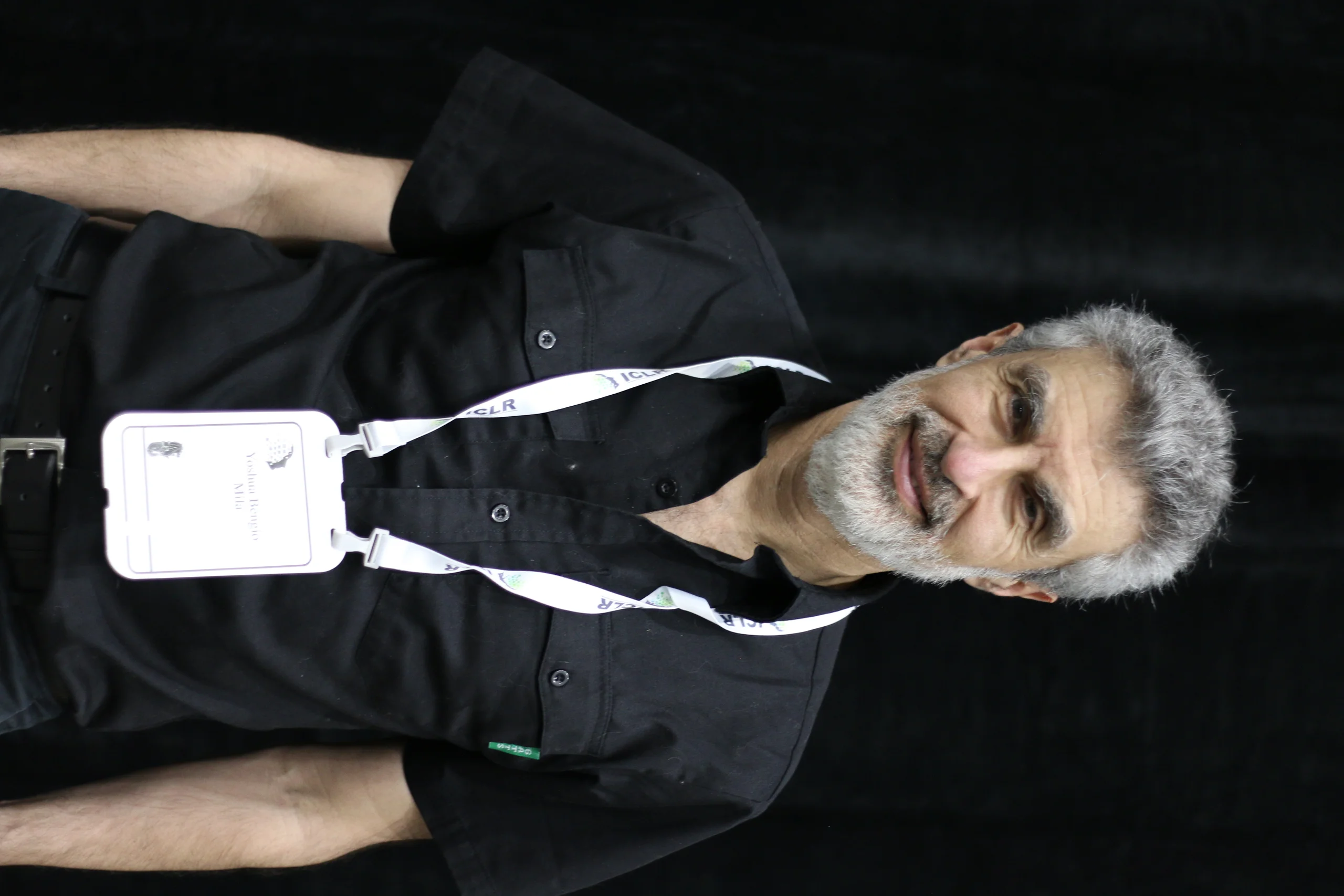
Yoshua Bengio
 Canada
artificial intelligence researcher•professor•computer scientist
Birthday
March 5, 1964
Birth Sign
Pisces
Birthplace
Paris, France
Age
62 years old
About
Yoshua Bengio is a Canadian computer scientist and a foundational figure in the field of artificial intelligence. Born in Paris in 1964, he moved to Canada early in life and has spent his career at the Université de Montréal. He currently serves as Co-President and Scientific Director of LawZero, a nonprofit organization dedicated to AI safety. In 2018, he shared the ACM A.M. Turing Award with Geoffrey Hinton and Yann LeCun for their conceptual breakthroughs that made deep neural networks possible. Together, they are often called the "Godfathers of AI." Bengio remains one of the most cited scientists globally and a leading voice on the ethical governance of autonomous systems.
In recent years, his public role has shifted from pure technical innovation to urgent advocacy. He warns frequently about existential risks posed by uncontrolled AI and has addressed global bodies like the United Nations Security Council. His work continues to influence how governments and tech companies approach the development of advanced machine learning models.
Early Life & Background
Yoshua Bengio was born into a secular Jewish family in Paris during the late 1960s. His parents were college students who had rejected traditional religious observances in favor of the counterculture movements of the era. This environment prioritized intellectual freedom and academic pursuit over convention, laying the groundwork for his future path. Although born in France, Bengio relocated to Canada as a child and settled in Montreal, where he would eventually build his life's work.
His early interests naturally gravitated toward mathematics and logic. These subjects became central to his academic trajectory as he pursued higher education in Quebec. He earned his Bachelor's degree in Electrical Engineering from McGill University in 1987, followed by a Master's degree in the same field in 1989. During these formative years, he began exploring the intersection of statistics and pattern recognition, setting the stage for his later innovations in neural networks.
Bengio then moved to the United States to attend the Massachusetts Institute of Technology. There, he completed his Ph.D. in Computer Science in 1993. His dissertation focused on statistical methods for speech recognition, a field that was beginning to intersect with neural network research. After finishing his doctoral studies, he returned to Montreal to join the faculty at the Université de Montréal, where he has remained ever since. Before his rise to global prominence, he published seminal papers on recurrent neural networks, establishing himself as a serious theorist in a field that many still considered niche.
Career Growth
Bengio's career accelerated in the 1990s as he published groundbreaking research on sequence modeling and recurrent neural networks. By the mid-2000s, he played a pivotal role in the resurgence of neural networks, helping to move the industry beyond the limitations of support vector machines. In 2006, he co-authored a landmark paper on Deep Belief Networks, a major catalyst for the modern deep learning revolution that underpins today's AI capabilities.
In 2008, he founded Mila (Quebec Artificial Intelligence Institute) and served as its scientific director until 2025. Under his leadership, Mila grew into a global hub for deep learning research, attracting top talent from around the world. His work in natural language processing and machine translation between 2013 and 2017 laid the theoretical foundations for many commercial AI products used today.
The apex of his technical recognition came in 2018 when he shared the ACM A.M. Turing Award with Geoffrey Hinton and Yann LeCun. This prestigious honor, often called the "Nobel Prize of Computing," celebrated their conceptual and engineering breakthroughs. Following this achievement, Bengio expanded his focus toward AI ethics and safety. In November 2025, he became the first AI researcher to surpass one million citations on Google Scholar. More recently, he co-founded LawZero, which received a $300 million grant from Canada and Germany in 2026 to pursue safer AI ambitions.
Career Timeline
Public Image & Style
Bengio is portrayed as a serious, thoughtful, and increasingly urgent voice in the tech world. Once seen purely as a brilliant mathematician, his public image in 2026 is that of a "conscience" for the AI industry, a man who built the technology now warning humanity about its dangers. His tone is sober and authoritative, often contrasting with the hype-driven narratives of Silicon Valley. He is known for speaking plainly about existential risks without resorting to sensationalism, earning him respect across political and academic divides.
Fame & Fandom (iFAMOUS Rankings)
Yoshua Bengio stands as the 11th most famous person in AI, a position he holds steady within the iFANN Global Fame Rankings. This placement reflects a global attention span that tracks media coverage, search trends, and consumption signals across every continent. He was featured at No. 11 in the September 2026 iFAMOUS Rankings.
While his name resonates with millions of tech enthusiasts and policymakers, his fanbase does not carry a formal moniker. There are no organized groups calling themselves "Bengioites," nor do crowds gather for autograph sessions or birthday billboards. His supporters are primarily the global scientific community, students, and industry professionals who follow his work in deep learning and artificial intelligence safety through academic channels rather than pop culture rituals. The reverence he commands is professional rather than cultish. He engages his audience through research publications, lectures at the Université de Montréal, and high-level forums like the World Economic Forum. The title "Godfather of AI" serves as his primary identifier, a recognition of his foundational role alongside Geoffrey Hinton and Yann LeCun. This respect manifests not in fan campaigns but in the urgent adoption of his warnings regarding existential risks.
Interesting Facts and Legends
His name, Yoshua, is the Hebrew form of Joshua, reflecting his Jewish heritage despite his parents' secular upbringing. Before fully committing to computer science, there are hints in early interviews that he had an interest in music, which some say influenced his understanding of pattern recognition in sequences. While Hinton, LeCun, and Bengio share the title of "Godfather of AI," Bengio is often credited with specific architectural innovations that made deep learning scalable, particularly in sequence modeling. He is fluent in French and English, with knowledge of other languages gained through international collaborations. The moment he, Hinton, and LeCun accepted the Turing Award together marked the official recognition of deep learning as a transformative force in computing. His address to the UN Security Council in September 2026 is now considered a landmark event in AI history, where he explicitly framed AI risk as a matter of global security comparable to nuclear proliferation.
Notable Quotes
“We're losing control.”
“AI cannot be allowed to hide behind humans.”
“It is only a matter of time before AI replaces every job, including trades like plumbing.”
“The window for action may close.”
Family & Personal Life
Yoshua Bengio maintains a very private personal life. Unlike many public figures in the tech sector, he rarely discusses his romantic relationships or family details in interviews or public forums. There are no verified records of marriages, engagements, or publicly acknowledged long-term partners in credible sources. He does not appear to have children, or if he does, they are kept strictly out of the public eye. His primary focus has been his academic work, the founding of institutions like Mila and LawZero, and his advocacy for AI safety. The lack of public relationship history is consistent with his preference for privacy and his dedication to his professional mission.
Notable Connections
Relationships & Dating History
Yoshua Bengio is known for maintaining a very private personal life. Unlike many public figures in the tech sector, he rarely discusses his romantic relationships or family details in interviews or public forums. There are no verified records of marriages, engagements, or publicly acknowledged long-term partners in credible sources. He does not appear to have children, or if he does, they are kept strictly out of the public eye. As of 2026, he is reported to be single. His primary focus has been his academic work, the founding of institutions like Mila and LawZero, and his advocacy for AI safety. The lack of public relationship history is consistent with his preference for privacy and his dedication to his professional mission.
Salary, Net Worth In 2026
$10 Million
iFANN Editorial Team estimate
iFANN currently estimates Yoshua Bengio's net worth at approximately $10 million. As a Full Professor at the Université de Montréal, he earns a competitive salary typical of top-tier academics in Canada. His wealth also stems from high-profile speaking engagements at conferences like the World Economic Forum and advisory roles with governments and tech giants. While he founded Mila as a non-profit, his advisory roles with various AI startups and labs likely involve equity stakes or consulting fees. Additionally, he has secured millions in research grants, though these are typically directed toward institutional funding rather than personal wealth. Unlike celebrity figures, his wealth is not driven by endorsements or entertainment royalties but by academic prestige and strategic advisory positions.
Awards Won (3)
Yoshua Bengio won the ACM A.M. Turing Award in 2018, often called the "Nobel Prize of Computing." He was included in *Time* magazine's list of the 100 Most Influential People in 2024. In 2025, he became the first AI researcher to surpass one million Google Scholar citations. He has received honorary doctorates from several universities, including the University of Edinburgh and the University of Toronto.
2018 · Computer Science
Foundational work on deep neural networks
2019 · Science
University of Toronto
2017 · Science
University of Edinburgh
Known For
Deep Learning
2006 · Researcher
Turing Award
2018 · Recipient
AI Safety Advocacy
2026 · Spokesperson
Keywords
Sources
Quick Facts
- Profession
- artificial intelligence researcher, professor, computer scientist
- Born
- March 5, 1964
- Birthplace
- Paris, France
- Gender
- Male
- Birth Sign
- Pisces
Personal Details
- Children
- Education
- B.Sc. Electrical Engineering (McGill University, 1987), M.Sc. Electrical Engineering (McGill University, 1989), Ph.D. Computer Science (MIT, 1993)
Frequently Asked Questions
What is Yoshua Bengio famous for?
How old is Yoshua Bengio?
Is Yoshua Bengio married?
What did Yoshua Bengio say at the UN?
Who founded Mila?
Social Media
Join the community
fans discussing