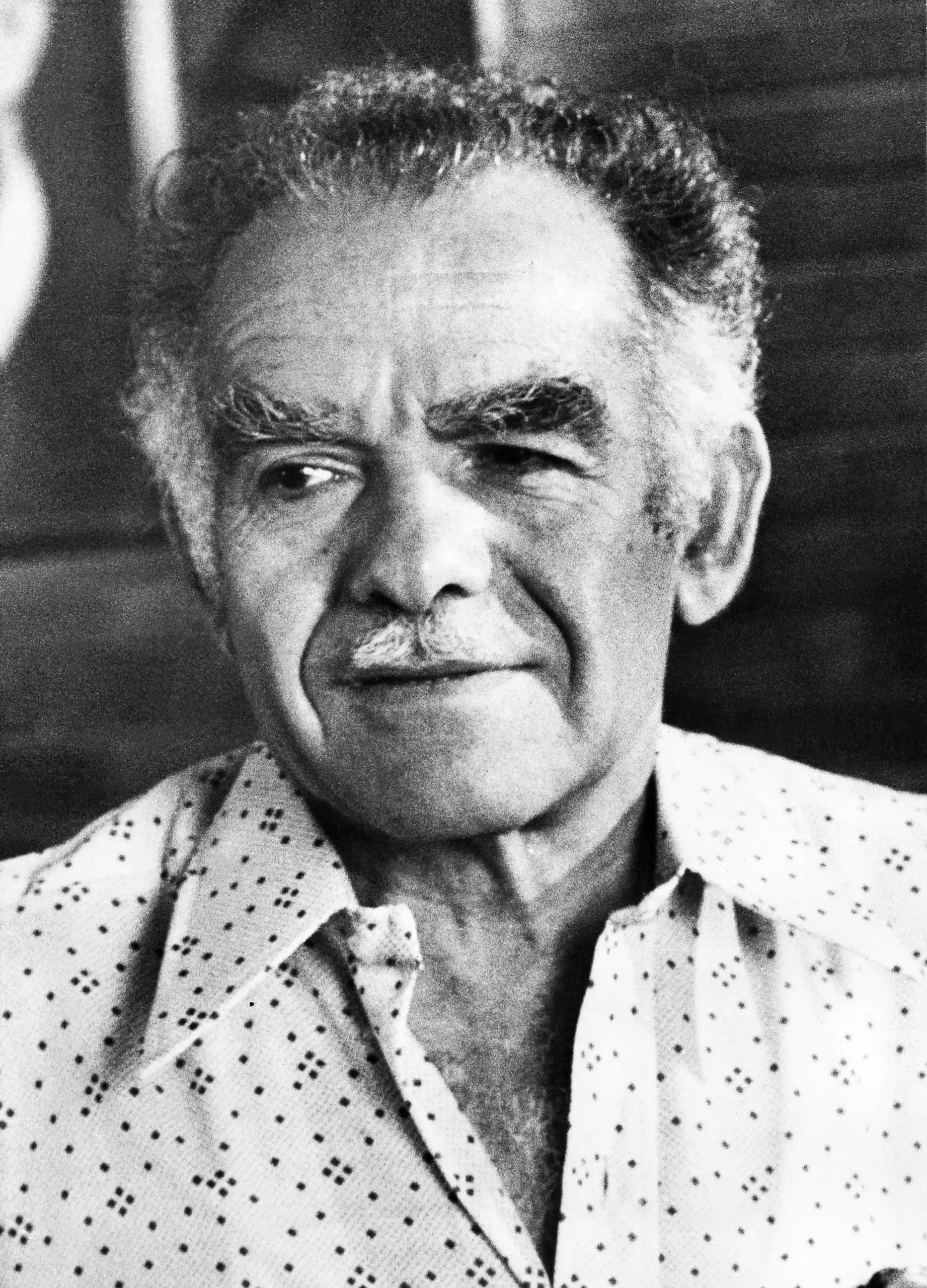
Yitzhak Shamir
 Israel
Also known as: Yitzhak Yezernitsky
Birthday
October 15, 1915
Birth Sign
Libra
Birthplace
Ruzhany, Russian Empire (now Belarus)
Age
Died at 96
About
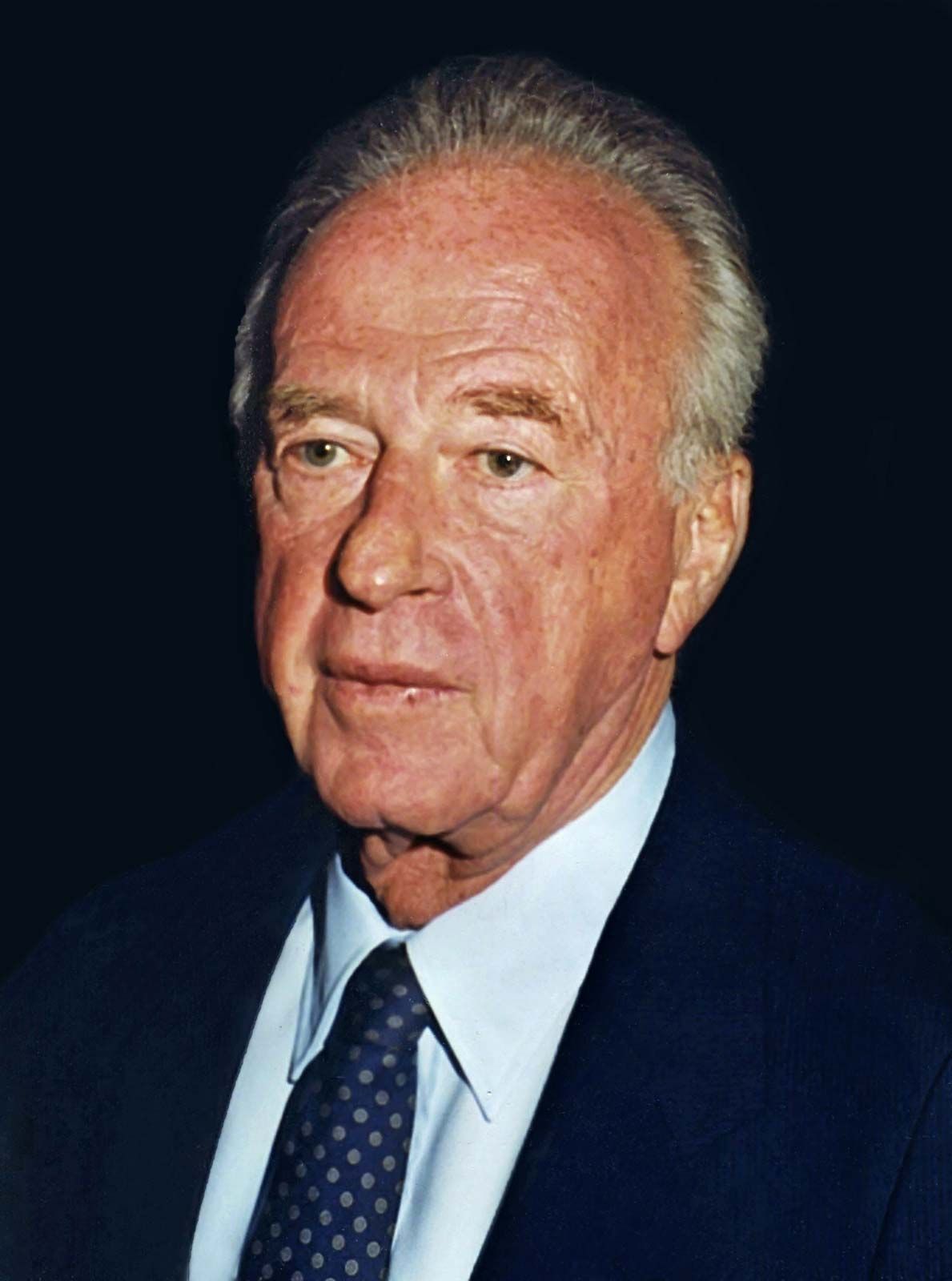
Yitzhak Shamir was an Israeli politician and diplomat who served as the seventh prime minister of Israel. He held the office twice, from 1983 to 1984 and again from 1986 to 1992, making him one of the longest-serving prime ministers in the country's history. His tenure was defined by a steadfast commitment to Israeli security and a firm opposition to territorial compromise in the Israeli-Palestinian conflict.
Before entering mainstream politics, Shamir was a leader of Lehi, a pre-state militant group also known as the Stern Gang, which fought against British rule in Palestine. After Israel's establishment, he spent a decade in the Mossad, Israel's intelligence agency, before joining the Likud party and rising through its ranks to become prime minister. His political career was marked by a hardline stance on security matters, yet he reluctantly engaged in the peace process that led to the 1991 Madrid Conference.
Shamir died on June 30, 2012, at the age of 96. He left behind a complex legacy as a dedicated but uncompromising leader, remembered for his hawkish conservatism and his role in shaping Israel's approach to the Palestinian issue.
Early Life & Background
Yitzhak Yezernitsky was born on October 15, 1915, in Ruzhany, a town in the Russian Empire that is now part of Belarus. He grew up in interwar Poland, where he joined Betar, the youth movement of Revisionist Zionism. His parents and sisters were later killed in the Holocaust, a loss that deeply influenced his determination to secure a Jewish state.
In 1935, at the age of 20, Shamir emigrated to British Palestine, initially working in an accountant's office. He first joined the Irgun, a paramilitary group led by Menachem Begin. During World War II, a split occurred within the Irgun over whether to support the Axis powers against the British. Avraham Stern and Shamir broke away to form Lehi, also known as the Stern Gang, which unsuccessfully sought alliances with Fascist Italy and Nazi Germany.
After Stern's assassination in 1942, Shamir took over leadership of Lehi. To evade British authorities, he adopted various disguises, including dressing as a rabbi and an Orthodox Jewish woman. During the 1948 Palestine war, Lehi and the Irgun carried out the Deir Yassin massacre, killing over 100 Palestinian villagers. These early experiences shaped his uncompromising approach to security and his lifelong suspicion of external pressures.
Career Growth
After Israel's founding, Shamir served in the Mossad from 1955 to 1965, where he directed Operation Damocles, a campaign against German scientists working on Egypt's missile program. He resigned after Prime Minister David Ben-Gurion ordered a halt to the operation. In 1969, Shamir joined Begin's Herut Party and was first elected to the Knesset in 1973 as a member of the Likud alliance.
Following Likud's historic 1977 election win, he became Speaker of the Knesset. As Foreign Minister from 1980 to 1986, he was in office during Israel's 1982 invasion of Lebanon. In 1983, Shamir won the Herut leadership election to succeed Begin as Prime Minister, though he lost the 1984 election to Shimon Peres. The two then formed a rotation government, with Peres as Prime Minister until 1986, when Shamir took over again.
During his second term, Shamir faced the First Intifada, which began in 1987, and he resisted a two-state solution to the Israeli-Palestinian conflict. He also unified the Likud into a single party in 1988. Under pressure from the United States and the Soviet Union, he reluctantly engaged in the peace process, leading to the Madrid Conference in 1991. After losing the 1992 election to Yitzhak Rabin, Shamir was replaced as Likud leader by Benjamin Netanyahu in 1993.
Career Timeline
Public Image & Style
Shamir came to symbolize hawkish Israeli conservatism during his seven years as prime minister. He was known as a hardline but dedicated leader, often described as stubborn and uncompromising. His public persona was that of a quiet, determined figure who prioritized security above all else. He was respected by his supporters for his steadfastness, while critics viewed him as an obstacle to peace. His legacy is often examined in the context of Israel's ongoing security challenges.
Fame & Fandom (iFAMOUS Rankings)
Yitzhak Shamir does not possess a formal fandom name, nor is there evidence of an organized fanbase, ritualistic gatherings, or crowd-driven campaigns associated with his legacy. As a historical political figure rather than a pop culture icon, his audience consists of scholars, historians, and those interested in Israeli statecraft rather than celebrity devotees. His reputation remains anchored in the gravity of his tenure as Prime Minister and his early years in the underground, treated through academic analysis and political commentary instead of fan engagement.
Despite the absence of a modern celebrity following, his standing in global historical consciousness remains significant according to the iFANN Global Fame Rankings. The data confirms that Yitzhak Shamir is the 25th most famous person from Israel, a placement that has held steady since the previous measurement cycle. This ranking reflects a consistent level of attention across media coverage, search activity, and consumption signals worldwide, acknowledging his enduring impact on Middle Eastern geopolitics. The metrics track how his life story continues to be referenced in discussions regarding security policy and the history of the Zionist movement.
The iFANN framework places him firmly within the upper echelons of notable figures originating from the region, validating his status as a defining character of late twentieth-century Israeli politics. While he never commanded the adoration typical of entertainers, his influence persists through the institutions he helped shape and the controversies he navigated during the First Intifada and the Gulf War.
Interesting Facts and Legends
Yitzhak Shamir was one of three Lehi members involved in the 1946 King David Hotel bombing that resulted in 88 deaths. During his decade of service with the Mossad, he was noted for a ruthless diligence and a command of multiple languages, serving as an aide to the chief of Mossad from 1955 to 1965. Colleagues often attributed his unyielding character to his formative years in the underground, where he developed a photographic memory capable of recalling details of his clandestine activities with absolute precision.
Historical lore surrounding Shamir frequently centers on his unique trajectory from a militant labeled a terrorist by the British Mandate authorities to a democratically elected Prime Minister. A widely retold narrative emphasizes his role during the Gulf War, where he made the controversial decision to allow Iraqi Scud missiles to strike Israel without immediate retaliation to preserve the US-led coalition. This stoic restraint became a defining element of his public persona, contrasting sharply with his earlier image as a leader of the Stern Gang. Another persistent story describes his quiet demeanor in the face of crisis, with observers noting his ability to speak very few words while maintaining immense resolve during the onset of the First Intifada.
Notable Quotes
“The land of Israel will be redeemed only by the blood of its sons.”
“We will not give up the security of Israel for any peace.”
“The Arabs will not accept us, but we will not disappear either.”
Family & Personal Life
Shamir married Shulamit Levy in 1944, a fellow Lehi member. The couple had two children. Shulamit died in 2011, a year before her husband. Their granddaughter, Michal Diamant, has been active in Israeli politics, joining Gideon Sa'ar's New Hope Party in 2026. Shamir's family has been involved in preserving his legacy, including participating in events at the Begin Heritage Center.
Notable Connections
Shamir was closely associated with Menachem Begin, whom he succeeded as Prime Minister. He also had a significant rivalry with Shimon Peres, with whom he formed a rotation government. Avraham Stern, the founder of Lehi, was a key influence. David Ben-Gurion ordered a halt to Operation Damocles, leading to Shamir's resignation from Mossad. Yitzhak Rabin and Benjamin Netanyahu succeeded him in different capacities. His granddaughter Michal Diamant has been linked to Gideon Sa'ar's party.
Relationships & Dating History
Yitzhak Shamir married Shulamit Levy in 1944. She was a fellow Lehi member, and their marriage lasted until her death in 2011. The couple had two children together. Shamir was a devoted husband, and Shulamit was known to have been a strong supporter of his political career. After her death, Shamir remained a widower until his own passing in 2012.
- MarriedShulamit Shamir1944 - 2011Married in 1944; she died in 2011.
Death & Aftermath
Died
June 30, 2012 (aged 96)
Death Place
Tel Aviv, Israel
Cause of Death
Natural causes due to advanced age
Immediately following the announcement of Yitzhak Shamir's passing, Prime Minister Benjamin Netanyahu declared a day of national mourning, characterizing the former leader as one of the greatest figures in the State of Israel. Former Prime Ministers Shimon Peres and Ariel Sharon issued statements honoring his legacy as a stalwart of Israeli conservatism and a key architect of the nation's independence, while major international outlets including The New York Times, BBC, and The Guardian published extensive obituaries reflecting the global significance of his death. The event was marked by high-level tributes from Israeli leadership and foreign dignitaries rather than commercial surges or viral memorials. Shamir died on June 30, 2012, at the age of 96 within Sheba Medical Center in Tel Aviv, where he had spent his final days following a period of declining health typical for a nonagenarian.
The cause of death was reported as natural causes associated with his advanced age, a determination confirmed by his family and Israeli government officials. There were no disputes regarding the circumstances of his death, nor were there any unconfirmed accounts suggesting foul play or unnatural causes, leaving the matter settled through official family channels. A state funeral took place on July 2, 2012, at Mount Herzl National Cemetery in Jerusalem, attended by President Shimon Peres, Prime Minister Netanyahu, US Secretary of State Hillary Clinton, and numerous other international diplomats. The service featured eulogies emphasizing his unwavering dedication to Israel and his transformation from an underground Lehi fighter to a pragmatic prime minister, after which he was laid to rest in the military section alongside other Israeli leaders.
In the posthumous period, his legacy has been maintained through institutional acknowledgments such as the Begin Heritage Center panel titled "Shamir, His Way," while specific details about the distribution of assets or the establishment of foundations in his name have not been reported in the available sources.
Net Worth (Estate Value)
As a political figure, Yitzhak Shamir's net worth was not publicly documented in the same way as business leaders or entertainers. His estate is estimated to be modest, reflecting his long career in public service. As of 2026, the value of his estate is believed to be around $1 million, derived from his government pensions, book royalties, and property holdings. His family manages the estate, which has seen some income from posthumous recognition events and publications.
Awards & Accolades
Known For
Prime Minister of Israel
1983 · 7th Prime Minister
Foreign Minister of Israel
1980 · Foreign Minister
Leader of Lehi
1942 · Leader
Keywords
Sources
Quick Facts
- Profession
- politician, diplomat
- Born
- October 15, 1915
- Birthplace
- Ruzhany, Russian Empire (now Belarus)
- Died
- June 30, 2012
- Death Place
- Tel Aviv–Yafo, Israel
- Gender
- Male
- Spouse
- Shulamit Shamir
- Birth Sign
- Libra
- Children
- 2
Personal Details
- Full Name
- Yitzhak Yezernitsky
- Spouse
- Shulamit Shamir
- Children
- 2
Frequently Asked Questions
How old was Yitzhak Shamir when he died?
Was Yitzhak Shamir a terrorist?
How many children did Yitzhak Shamir have?
What was Yitzhak Shamir's real name?
Who was Yitzhak Shamir's wife?
Similar People
Join the community
fans discussing