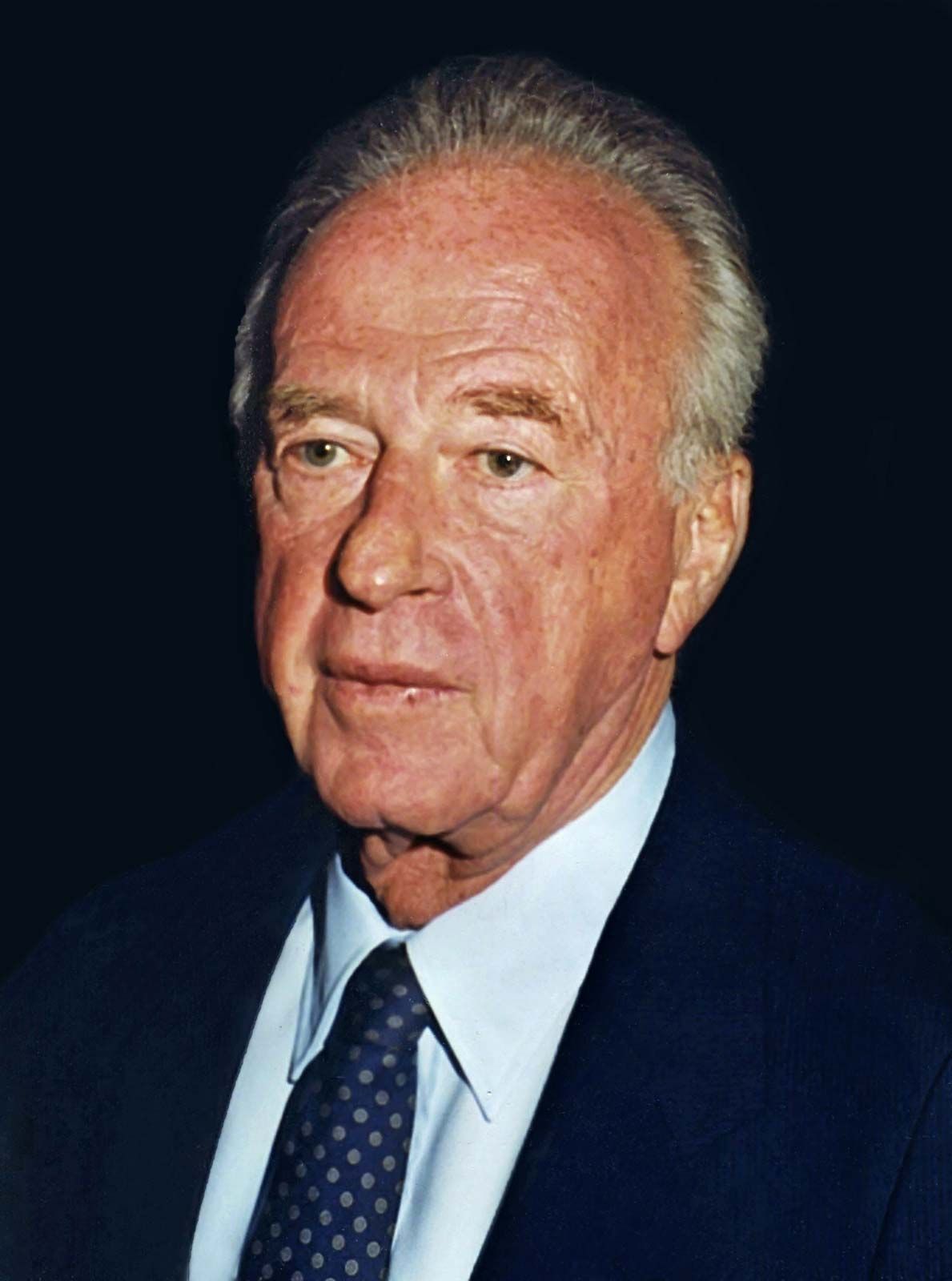
Yitzhak Rabin
 Israel
diplomat•military officer•politician
Also known as: Itzhak Rabin, Itshak Rabin, Rabin
Birthday
March 1, 1922
Birth Sign
Pisces
Birthplace
Jerusalem
Age
Died at 73
About
Yitzhak Rabin was an Israeli statesman and military leader who served as prime minister twice, from 1974 to 1977 and again from 1992 until his assassination in 1995. He was the first prime minister born in the land that would become Israel, and the only one ever assassinated. Rabin's career spanned the creation of the state and its most existential conflicts, and his later embrace of diplomacy reshaped the Middle East's political landscape.
Today Rabin is remembered above all for the Oslo Accords, the 1993 agreement with the Palestine Liberation Organization that established the Palestinian Authority and set a framework for peace. That work earned him the Nobel Peace Prize in 1994, shared with Shimon Peres and Yasser Arafat, and a peace treaty with Jordan the same year. His assassination by an Israeli extremist at a Tel Aviv peace rally on November 4, 1995, turned him into a global symbol of the costs of conflict, and his memory remains a touchstone in Israeli public life.
Early Life & Background
Born in Jerusalem on March 1, 1922, Yitzhak Rabin grew up in a household shaped by Labor Zionism. His parents, Nehemiah and Rosa, had emigrated from Eastern Europe, and his mother was active in socialist politics. The family moved to Tel Aviv when he was young, and Rabin attended the School for Workers' Children and later the Kadoorie Agricultural High School, where he excelled academically.
At 18 he joined the Palmach, the elite strike force of the pre-state Jewish community, and rose quickly through its ranks. During the 1948 Arab-Israeli War he served as chief of operations for the Palmach, helping coordinate the defense of Jerusalem and the campaign in the Negev. When the Israel Defense Forces were formed, Rabin transferred to the regular army, beginning a 27-year military career. In the 1950s he helped shape IDF training doctrine, and from 1959 he headed the Operations Directorate. In 1964 he became chief of the general staff, a position he held through the Six-Day War of 1967, when Israeli forces captured the Sinai, the West Bank, the Golan Heights, and Gaza. Rabin's military reputation was built on meticulous planning and a willingness to make hard calls under pressure.
Career Growth
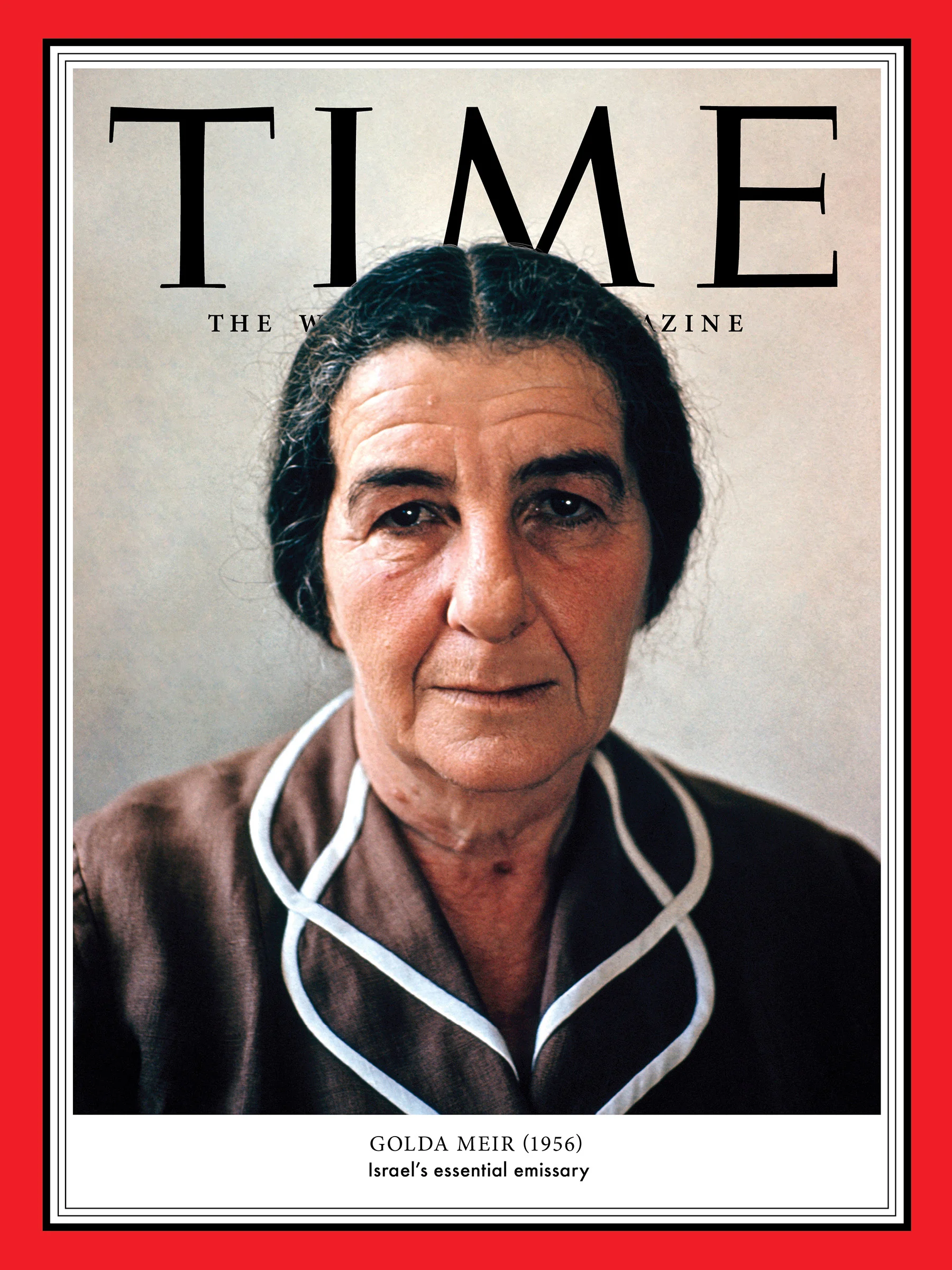
After retiring from the military in 1968, Rabin served as Israel's ambassador to the United States for five years, strengthening the alliance that would underpin Israel's security for decades. He entered politics and became prime minister in 1974, succeeding Golda Meir. His first term saw the Sinai Interim Agreement with Egypt, which pulled back forces and set the stage for later peace efforts, and the 1976 Entebbe raid, which rescued hostages from a hijacked Air France plane in Uganda. Rabin resigned in 1977 after a financial scandal involving his wife's bank account, which he said was a misstep he regretted.
In the 1980s he served as defense minister, a period that included the outbreak of the First Intifada. His approach to quelling the Palestinian uprising drew criticism, but it also hardened his conviction that Israel needed a political solution. Rabin returned to the premiership in 1992 with a mandate to pursue peace. The Oslo Accords, signed in 1993, were the centerpiece of his agenda, followed by the Israel-Jordan peace treaty in 1994. His assassination in 1995 cut short a process that had already changed the region's diplomatic map.
Career Timeline
Public Image & Style
Rabin's public image evolved dramatically over his career. As a general he was seen as a gruff, no-nonsense military man, a perception he never entirely shed. In his second term as prime minister, he became the face of the peace process, often appearing at rallies with a quiet, almost reluctant charisma. His relationship with the public was complicated; supporters saw him as a pragmatic leader willing to take risks for peace, while opponents viewed the Oslo Accords as a betrayal. After his assassination, he was elevated to the status of a national martyr, and his name became synonymous with the peace camp. Annual memorial ceremonies at his grave in Jerusalem draw thousands, and his image appears on posters and murals across Israel.
Fame & Fandom (iFAMOUS Rankings)
Yitzhak Rabin does not possess a fandom in the traditional sense of organized clubs, fan rituals, or a collective name for his supporters. His public standing was defined by political constituencies and national mourning rather than the devotional culture surrounding entertainers. While he commanded immense loyalty during his tenure as Prime Minister and remains a polarizing figure in Israeli politics, there are no documented fan campaigns, unofficial nicknames for his followers, or fan-funded projects dedicated to his memory. The closest equivalent to fan behavior involves political rallies and commemorative ceremonies that reflect deep societal divisions rather than shared cultural worship. Despite the absence of a formal fanbase, his historical footprint ensures his continued prominence on global metrics. According to the iFANN Global Fame Rankings, Rabin is currently the 3rd most famous person in Israel, a position holding steady from the previous cycle. He also ranks as the 8th most famous person from Israel and stands as the 15th most famous person in Middle East. These placements confirm that his legacy as a statesman and military leader retains significant resonance decades after his death.
Interesting Facts and Legends
Rabin was an avid reader of military history and was known to carry a worn copy of a book on the Battle of the Bulge throughout his career. He smoked heavily for much of his life, a habit his doctors repeatedly warned him about, yet he persisted until his later years. In retirement, he took up painting as a way to relax, though he rarely showed his work to the public. He possessed a dry sense of humor that sometimes surprised people who saw him only as a stern general. One of his favorite sayings, repeated in interviews, was that you make peace with your enemies, not with your friends. Historical records cement two legendary moments in his narrative. The assassination of Rabin on November 4, 1995, at a peace rally in Tel Aviv, transformed him into a martyr figure, symbolizing the deep divisions within Israeli society just two years after his historic handshake with Yasser Arafat. That handshake on the White House lawn in September 1993, accompanying the signing of the Oslo I Accord, remains a defining icon of diplomatic breakthrough, marking the shift from force to negotiation for a man once known as a hardline soldier.
Notable Quotes
“You don't make peace with friends. You make it with very unsavory enemies.”
“We have to conduct ourselves with wisdom and restraint.”
“I was a military man for 27 years. I know the price of war.”
“Peace is not just a dream. It is a practical policy.”
Family & Personal Life
Rabin married Leah Schlossberg in 1948, and they remained together until his death. Leah, who had served in the British army during World War II, was a constant presence in his political life. The couple had two children: Dalia, who became a lawyer and later a Knesset member, and Yuval, who worked as a journalist and software engineer. The family lived in Tel Aviv, and their home became a gathering place for political and military figures. Rabin's parents, Nehemiah and Rosa, were both active in the Labor movement, and his mother's death when he was a teenager had a profound effect on him.
Notable Connections
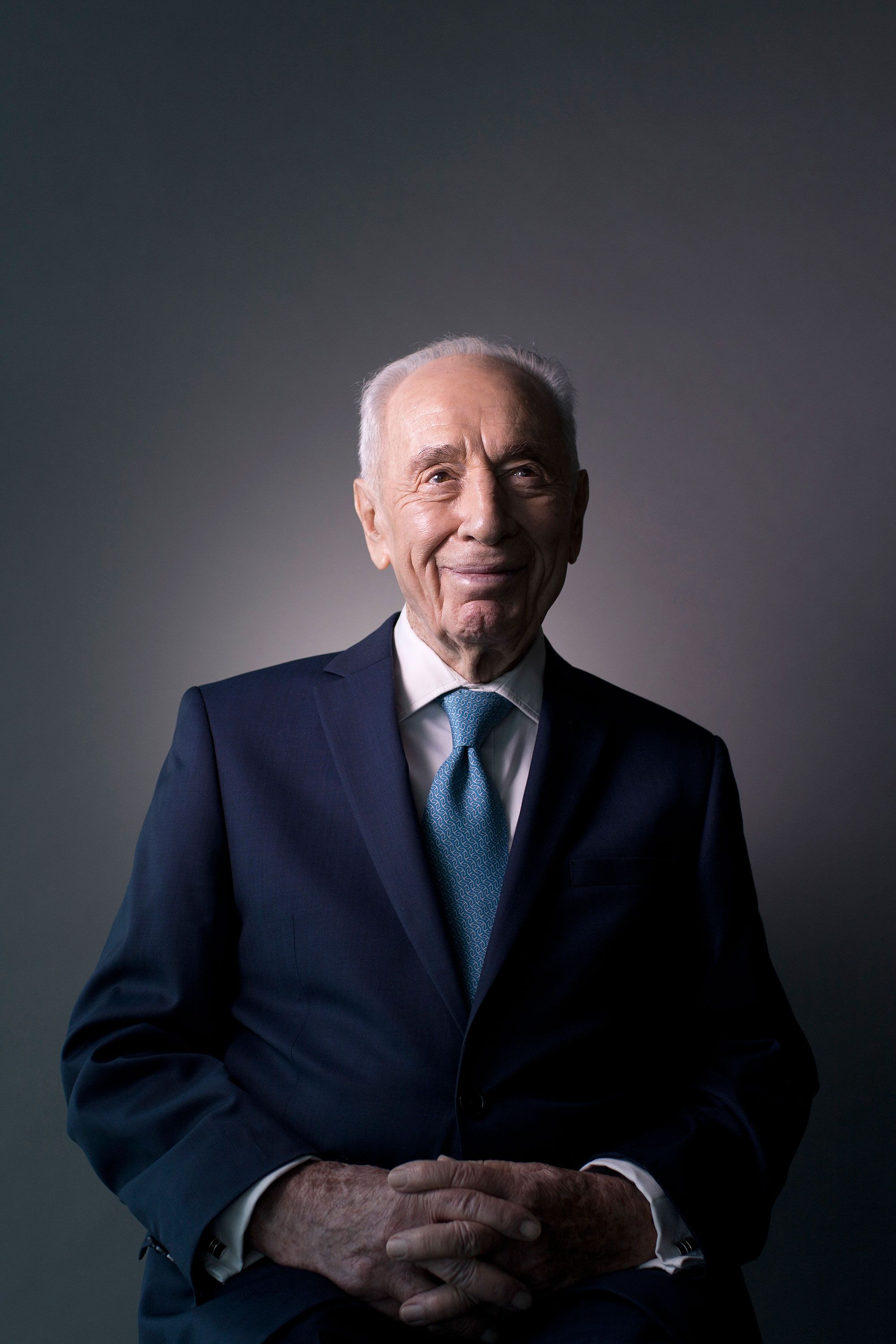
Rabin's life was intertwined with other key figures in Israeli history. He succeeded Golda Meir as prime minister and later worked closely with Shimon Peres, his political rival and partner in the peace process. The Oslo Accords brought him into direct contact with Yasser Arafat, with whom he shared the Nobel Peace Prize. His assassin, Yigal Amir, was a law student who opposed the accords. Rabin's relationship with Benjamin Netanyahu, who led the opposition during his second term, was marked by sharp parliamentary clashes. Eitan Haber, his bureau chief and confidant, remained a vocal defender of his legacy until Haber's death in 2026.
Relationships & Dating History
Rabin's personal life was remarkably stable compared to his political career. He met Leah Schlossberg in 1944 while both were active in the Palmach, and they married in 1948. The marriage lasted 47 years, until his death. Leah was his closest confidante, and her own political activism sometimes put them at odds with the public. In 1977, a scandal over her illegal US bank account forced Rabin to resign as prime minister, an event he later described as one of the most painful of his life. The couple had two children, Dalia and Yuval. Rabin was not known to have any other romantic relationships; his marriage was considered solid and devoted. At the time of his assassination, he was married to Leah, who survived him by five years, dying in 2000.
- MarriedLeah Rabin1948 - 1995Married for 47 years until his death; she was a political partner and confidante.
Death & Aftermath
Died
November 4, 1995 (aged 73)
Death Place
Tel Aviv, Tel Aviv District, Israel
Cause of Death
Massive blood loss from gunshot wounds
The State of Israel announced the death of Prime Minister Yitzhak Rabin on November 4, 1995, following a shooting at Kings of Israel Square in Tel Aviv. The event occurred at approximately 22:00 after a peace rally supporting the Oslo Accords, where Rabin was walking toward his vehicle when he was shot three times by Yigal Amir, a 24-year-old Jewish extremist who opposed the peace process. Emergency surgery performed by Dr. Yosef Tamir at Ichilov Hospital could not prevent massive blood loss from gunshot wounds to the heart and lung, leading to his pronouncement of death at 22:45 that same evening. An autopsy confirmed that one bullet had penetrated the left lung and another struck the heart, causing rapid exsanguination.
Yigal Amir was arrested at the scene and later convicted of first-degree murder in the Jerusalem District Court, receiving a life sentence without parole in May 1996. The assassination triggered an unprecedented outpouring of grief across Israel, with spontaneous vigils erupting within hours and millions gathering in streets holding candles and singing folk songs. Tributes poured in from world leaders including US President Bill Clinton, UK Prime Minister John Major, and French President Jacques Chirac, all of whom attended the state funeral held on November 6, 1995, at Mount Herzl National Cemetery in Jerusalem. During the service, military honors befitting a former Chief of Staff were rendered, including a gun salute and the playing of the Israeli flag over the coffin.
Following the burial next to his wife Leah in a private section of the cemetery, Rabin received numerous posthumous honors, including the recognition of his 1994 Nobel Peace Prize alongside Shimon Peres and Yasser Arafat. Institutions bearing his name were established to promote democratic values and peace education, while films such as "Rabin: The Last Day" documented the events of his final day. The song "Shir LaShalom," which Rabin had sung at rallies, saw a surge in airplay and sales, becoming an anthem of the moment. Memorial murals appeared overnight in cities across Israel and abroad, and the annual commemoration now includes a fixed tradition of observing a moment of silence.
Net Worth (Estate Value)
$15 Million
iFANN Editorial Team estimate
Rabin's personal wealth remained modest by the standards of modern political leaders. As prime minister and a career military officer, his income derived from his government salary and military pension. He did not hold business interests or investments that would have generated significant income. At the time of his death, his estate was valued at a few hundred thousand dollars, primarily consisting of the family home in Tel Aviv and modest savings. In the decades since, the estate has benefited from royalties from his autobiography and documentary appearances, though these have been relatively small. Per iFANN's editorial analysis, the estate's value is estimated at around $15 million as of 2026, reflecting the ongoing commercial use of his name and image, as well as the appreciation of the family property. The estate is managed by his children, Dalia and Yuval, who have overseen the licensing of his memoir and participation in commemorative projects.
Awards Won (2)
Rabin received the Nobel Peace Prize in 1994, recognized for his role in the Oslo Accords. That same year he was awarded the Presidential Medal of Freedom by the United States, one of the highest civilian honors in that country. His military service earned him numerous decorations from the IDF, though these are less well-documented in public sources.
1994 · Peace
Oslo Accords
1994 · Civilian Honor
For contributions to peace
Known For
Oslo Accords
1993 · Signatory as Prime Minister of Israel
Six-Day War
1967 · Chief of the General Staff of the IDF
Israel-Jordan Peace Treaty
1994 · Signatory as Prime Minister
Keywords
Sources
Quick Facts
- Profession
- diplomat, military officer, politician
- Born
- March 1, 1922
- Birthplace
- Jerusalem
- Died
- November 4, 1995
- Death Place
- Tel Aviv
- Gender
- Male
- Spouse
- Leah Rabin
- Birth Sign
- Pisces
Personal Details
- Full Name
- Yitzhak Rabin
- Spouse
- Leah Rabin
- Children
- Dalia Rabin-Pelossof, Yuval Rabin
Frequently Asked Questions
When was Yitzhak Rabin assassinated?
What was Yitzhak Rabin known for?
How many times did Yitzhak Rabin serve as Prime Minister?
Who awarded Yitzhak Rabin the Nobel Peace Prize?
What was Yitzhak Rabin's role in the Six-Day War?
Similar People
Join the community
fans discussing