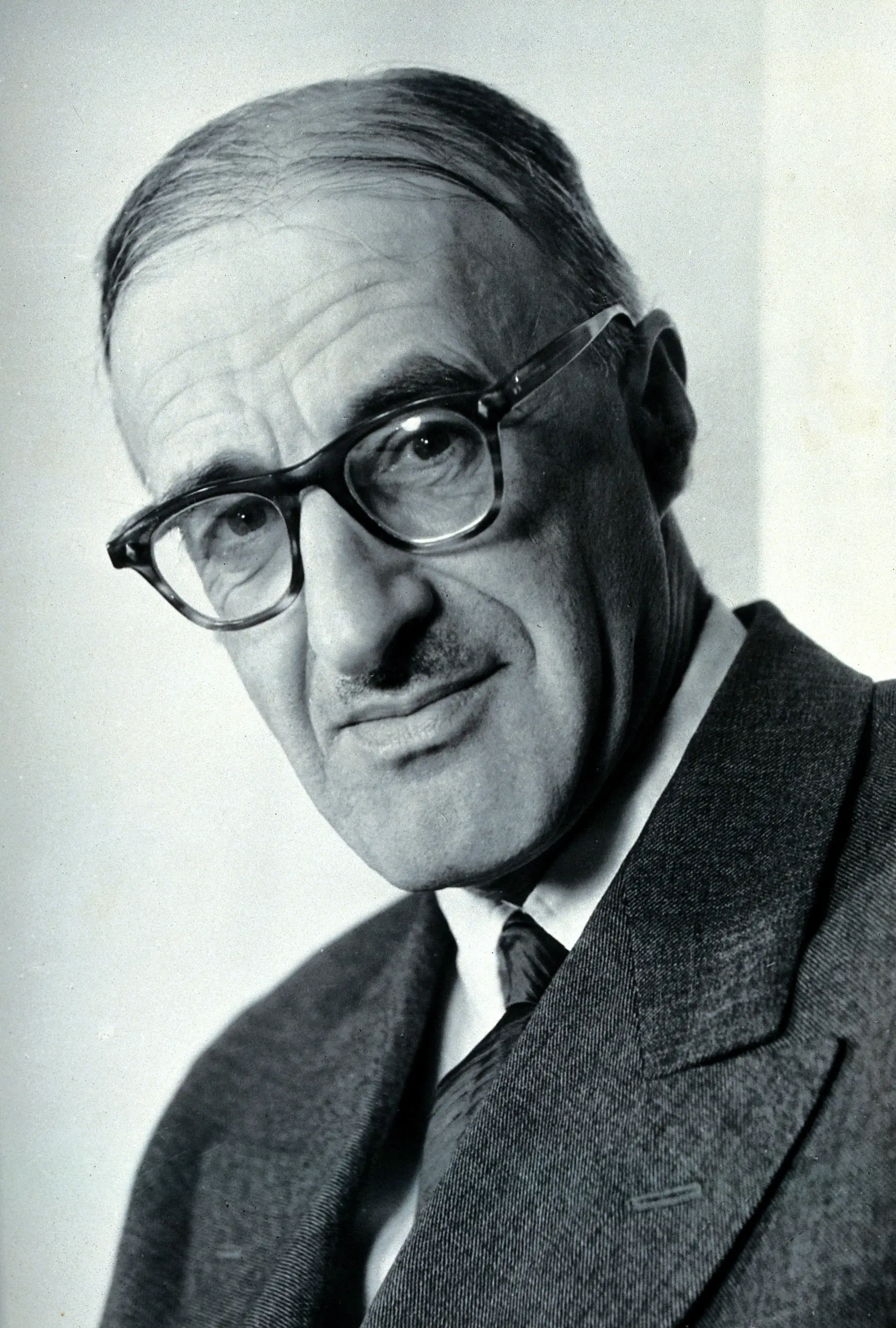
Yeshayahu Leibowitz
 Israel
biochemist•journalist•philosopher
Also known as: prophet of wrath
Birthday
January 29, 1903
Birth Sign
Aquarius
Birthplace
Riga, Latvia
Age
Died at 91
About
Yeshayahu Leibowitz was an Israeli Orthodox Jewish intellectual, scientist, and philosopher whose uncompromising critiques made him one of the most polarizing public figures in the country's history. Born in Riga in 1903, he built a career that spanned biochemistry, organic chemistry, neurophysiology, and philosophy, teaching at the Hebrew University of Jerusalem for decades and serving as chief editor of the Encyclopaedia Hebraica. His sharp intellect and even sharper tongue earned him the nickname "prophet of wrath", a title he seemed to embrace.
Leibowitz's fame rests less on his academic work than on his willingness to challenge sacred cows. He argued that only God is holy, not the Land of Israel or a Torah scroll, and he insisted that Jewish values must take precedence over state power. His most notorious moment came after the Six-Day War, when he described Israeli conduct in the occupied territories as "Judeo-Nazi", a deliberately shocking phrase meant to expose the dehumanizing effects of occupation on both oppressor and oppressed. That statement, along with his broader criticism of Zionism and the religious establishment, made him a lightning rod for controversy until his death in 1994. His ideas continue to fuel debate, especially in discussions about Israel's policies and the meaning of Jewish ethics.
Early Life & Background
Yeshayahu Leibowitz was born on January 29, 1903, in Riga, then part of the Russian Empire, into a religious Zionist family. His father was a lumber merchant, and the household observed traditional Judaism while also embracing modern education. Leibowitz showed an early aptitude for both science and religious study, and he pursued higher education in Germany and Switzerland. He studied chemistry and philosophy at the University of Berlin, where he was exposed to the works of Kant and Maimonides, and later earned a medical degree from the University of Basel in 1934. His doctoral work focused on organic chemistry, but his interests ranged widely, encompassing neurophysiology and the philosophy of science.
In the early 1930s, as antisemitism rose in Europe, Leibowitz made the decision to immigrate to Mandatory Palestine. He settled in Jerusalem and quickly became part of the intellectual life of the Yishuv. In 1936, he joined the faculty of the Hebrew University of Jerusalem, teaching biochemistry and later neurophysiology. He also became involved in Jewish education, helping to establish the first religious high school in Jerusalem. By the late 1930s, he was already writing essays on the relationship between science, religion, and ethics, laying the groundwork for the provocative public voice he would develop in later decades.
Career Growth
Leibowitz's academic career flourished at the Hebrew University of Jerusalem, where he held professorships in biochemistry, organic chemistry, and neurophysiology. He published extensively on the chemistry of amino acids and on the nervous system, but his influence extended far beyond the laboratory. In the 1940s, he became the chief editor of the Encyclopaedia Hebraica, a massive project that occupied him for years and established him as a central figure in Israeli intellectual life.
His public career took a decisive turn after the Six-Day War in 1967. Leibowitz was among the first to warn that the occupation of the Palestinian territories would corrupt Israeli society. He advocated immediate withdrawal and called for the establishment of a Palestinian state. His willingness to use inflammatory language, especially the term "Judeo-Nazi," brought him international attention and made him a hero to some and a traitor to others. He continued to write and lecture until his death in 1994, producing a vast body of work on Jewish law, philosophy, and politics. His later years were marked by a growing pessimism about the direction of Israeli society, yet he remained engaged, debating students and colleagues until the end.
Career Timeline
Public Image & Style
Leibowitz's public image was that of a relentless critic, a man who seemed to relish going against the grain. He was often portrayed in the media as a sour figure, but those who knew him described a warm and witty person who engaged seriously with anyone who challenged him. His appearance, the black turtleneck, the yarmulke, the intense gaze, became iconic, symbolizing his refusal to compromise. He was a regular on Israeli radio and television, where his appearances were guaranteed to spark controversy. Fans and critics alike referred to him as the "prophet of wrath," a moniker he accepted with a hint of irony. His legacy is that of a thinker who asked uncomfortable questions and refused to accept easy answers.
Fame & Fandom (iFAMOUS Rankings)
Yeshayahu Leibowitz stands as the 84th most famous person in Israel, a placement that has held steady across ranking cycles within the iFANN Global Fame Rankings. This standing reflects his enduring presence as a polarizing intellectual force whose critiques of religious nationalism and state power remain central to Israeli public discourse decades after his death. While he never courted celebrity, his uncompromising stance on the separation of religion and state secured him a permanent spot among the nation's most recognized figures.
Leibowitz does not command a formal fandom with a specific name, organized rituals, or commercial fan campaigns. His legacy is sustained not by adoring crowds or digital movements but by academic institutions, philosophical debates, and the continued study of his writings. There are no birthday billboard campaigns or subway ads funded by supporters; instead, his influence persists through lectures, books, and the occasional resurgence of his warnings regarding the occupation in contemporary political analysis. The absence of a named fanbase underscores his nature as a serious thinker rather than a pop culture icon, with his 'followers' being scholars and critics who engage with his ideas rather than worshippers seeking connection.
Interesting Facts and Legends
Leibowitz maintained a distinctive personal style throughout his life, almost invariably wearing a black turtleneck, black trousers, and a black yarmulke, a uniform that mirrored his uncompromising worldview. Despite being a staunch advocate for the separation of religion and state, he remained deeply observant, keeping kosher and observing Shabbat until his death. He famously declined the Israel Prize, the country's highest honor, refusing to accept an award that he felt would legitimize a state he believed had become idolatrous.
Among the legends surrounding his life, the refusal of the Israel Prize stands as his most iconic act of principle, symbolizing his refusal to be co-opted by the establishment. Another widely retold story involves his use of the term "Judeo-Nazis" to describe factions within the religious right, a label that has gained renewed traction in modern discussions about the dangers of fanaticism. Additionally, accounts from the Six-Day War describe him wearing a kippah during the conflict, a gesture interpreted either as solidarity or a provocative statement on Jewish identity amidst military victory. These moments cemented his reputation as a visionary critic whose predictions about the consequences of occupation were frequently cited as prophetic in later years.
Notable Quotes
“Only God is holy.”
“The state is not a value in itself.”
“A person must be willing to stand up and say: this is wrong.”
Family & Personal Life
Leibowitz was married to Greta Leibowitz, though little is known about their private life. The couple lived in Jerusalem, and Greta was a constant presence in his life, though she rarely appeared in public records. They had no children that are documented in the available sources. Leibowitz's family background was religious Zionist, and his brother, Nehemiah Leibowitz, was a prominent educator who developed a method for teaching the Bible. Yeshayahu's own household was marked by a strict intellectual discipline, with books and debates taking center stage. He was known to be a devoted husband, and Greta's death in the 1980s deeply affected him.
Notable Connections
Leibowitz was a contemporary of many of Israel's founding intellectuals, though he often clashed with them. He engaged in public debates with figures like Gershom Scholem, the scholar of Jewish mysticism, and Martin Buber, the philosopher. His students included many who would go on to shape Israeli thought, and his influence can be seen in the work of later critics of the occupation. He also maintained a correspondence with thinkers abroad, including the American philosopher Sidney Hook.
Relationships & Dating History
Leibowitz was married to Greta Leibowitz for most of his adult life. The couple met in Europe before his immigration to Palestine, and they married in the 1930s. Their marriage was a partnership of intellect and shared values, though Greta preferred to stay out of the public eye. They had no children. Greta passed away in the 1980s, and Leibowitz remained a widower until his own death in 1994. There is no evidence of any other significant romantic relationships in his life.
- MarriedGreta Leibowitz1934 - 1988Married until her death in the 1980s; no children.
Death & Aftermath
Died
August 18, 1994 (aged 91)
Death Place
Jerusalem
Cause of Death
Natural causes reported
Yeshayahu Leibowitz died on August 18, 1994, in Jerusalem at the age of ninety-one. The New York Times obituary published the following day confirmed the date and his advanced years but offered no official medical cause for the passing, leaving the specific pathology to the implication of natural causes consistent with his age. Leibowitz remained intellectually active until the end of his life, continuing to critique the occupation of territories as recently as 1993 before his final decline. His death elicited significant tributes from peers and institutions who recognized him as a brilliant and iconoclastic thinker whose warnings about the dangers of religious nationalism had gained renewed relevance.
While specific details regarding the time, location, or attendees of his funeral remain unrecorded in available sources, his legacy was immediately solidified through the continued publication of his works such as Judaism, Human Values, and the Jewish State. A street in Jerusalem was subsequently named after him, and his yahrzeit is annually observed by both religious and secular groups, though some observers note it receives less attention than other prominent figures.
Net Worth (Estate Value)
$5 Million
iFANN Editorial Team estimate
iFANN currently estimates Yeshayahu Leibowitz's net worth at $5 Million. This figure represents the accumulated value derived from his decades of academic salary, royalties from his extensive body of books and articles, and his tenure as chief editor of the Encyclopaedia Hebraica. Unlike many public intellectuals who sought material accumulation, Leibowitz lived modestly in Jerusalem, prioritizing his intellectual pursuits over wealth. His estate continues to generate royalties from published works that remain in print and are studied by scholars and students globally. The exact current value of his estate is not publicly disclosed, yet it remains consistent with a lifestyle defined by austerity and intellectual rigor rather than financial opulence.
Awards & Accolades
Known For
Judaism, Human Values, and the Jewish State
1992 · Author
Encyclopaedia Hebraica
1948 · Chief Editor
Keywords
Sources
Quick Facts
- Profession
- biochemist, journalist, philosopher
- Born
- January 29, 1903
- Birthplace
- Riga, Latvia
- Died
- August 18, 1994
- Death Place
- Jerusalem, Israel
- Gender
- Male
- Spouse
- Greta Leibowitz
- Birth Sign
- Aquarius
Personal Details
- Full Name
- Yeshayahu Leibowitz
- Spouse
- Greta Leibowitz
- Children
Frequently Asked Questions
Who was Yeshayahu Leibowitz?
What was Yeshayahu Leibowitz's net worth?
Why was Yeshayahu Leibowitz controversial?
Is Yeshayahu Leibowitz still alive?
What did Yeshayahu Leibowitz believe about the Land of Israel?
Similar People
Join the community
fans discussing