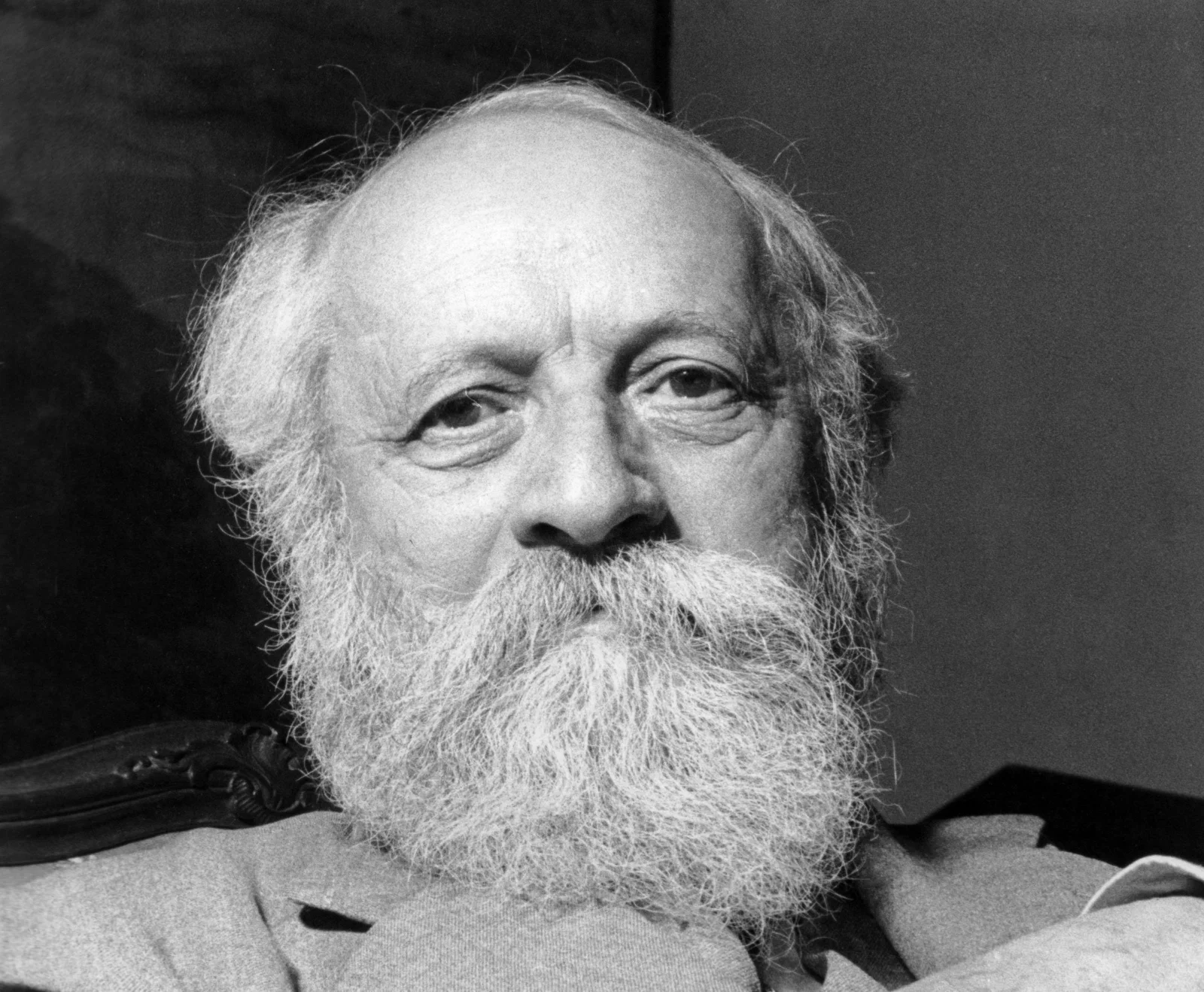
Martin Buber
 Israel
philosopher•existentialist•translator
Birthday
February 8, 1878
Birth Sign
Aquarius
Birthplace
Vienna, Austria
Age
Died at 87
About
Martin Buber was an Austrian-born Israeli Jewish philosopher, religious thinker, and educator whose work reshaped existentialist thought. He is best known for his philosophy of dialogue, which distinguishes between the I-Thou relationship of mutual encounter and the I-It relationship of objectification. His seminal 1923 essay Ich und Du (I and Thou) became a cornerstone of modern religious philosophy, influencing thinkers from Martin Luther King Jr. to Allen Ginsberg.
Buber's intellectual range was vast. He translated the Hebrew Bible into German, wrote extensively on Jewish thought and biblical studies, and engaged deeply with political activism, particularly Zionism, for nearly five decades. His contributions earned him ten nominations for the Nobel Prize in Literature and seven for the Nobel Peace Prize.
He died on June 13, 1965, in Jerusalem, at age 87, leaving a legacy that continues to resonate in philosophy, theology, and social activism. His ideas on dialogue and encounter remain central to discussions of ethics, education, and community.
Early Life & Background
Martin Buber was born on February 8, 1878, in Vienna, into an observant Jewish family. After his parents divorced when he was three, he was raised by his paternal grandparents in Lemberg (now Lviv, Ukraine). His grandfather, Solomon Buber, was a renowned midrash scholar, and his grandmother's salon attracted intellectuals, shaping a childhood steeped in Jewish learning and European culture.
Buber's early education was traditional, but he soon gravitated toward secular philosophy. He studied at the universities of Vienna, Berlin, Leipzig, and Zurich, where he encountered the works of Kant, Nietzsche, and Dilthey. During this period, he became active in the Zionist movement, drawn by its vision of Jewish cultural renewal rather than mere political statehood.
In 1899, he married Paula Winkler, a Catholic writer who converted to Judaism. The couple settled in Berlin, where Buber edited the Zionist weekly Die Welt and began publishing essays on Hasidism, a mystical Jewish movement that profoundly influenced his later thought. His early writings on Hasidic tales, such as The Legend of the Baal-Shem (1908), already hinted at his central theme: the sacredness of everyday encounter.
By the early 1910s, Buber had established himself as a leading intellectual in German-Jewish circles. Yet his most famous work was still a decade away. The outbreak of World War I, which he initially supported, and the subsequent disillusionment with nationalism, pushed him toward a deeper exploration of what it means to truly meet another person.
Career Growth
Buber's breakthrough came in 1923 with the publication of Ich und Du (I and Thou), a short but dense essay that laid out his philosophy of dialogue. The book distinguished two fundamental modes of relating: the I-Thou, a direct, mutual, and present encounter, and the I-It, an instrumental, objectifying relationship. It was an immediate sensation and has never gone out of print.
In 1925, Buber began a monumental collaboration with Franz Rosenzweig on a new German translation of the Hebrew Bible. The project, which he continued after Rosenzweig's death in 1929, would occupy him for over three decades and is considered a literary and theological masterpiece.
From 1926 to 1930, he co-edited the journal Die Kreatur, and in 1930 he became a professor at the University of Frankfurt. When the Nazis came to power in 1933, Buber resigned his professorship and founded the Central Office for Jewish Adult Education, which helped German Jews prepare for emigration. In 1938, he left Germany for Palestine, where he became a professor of social philosophy at the Hebrew University of Jerusalem.
In Jerusalem, Buber continued to write and teach, publishing works such as Between Man and Man (1947) and Paths in Utopia (1949). He remained a vocal advocate for Jewish-Arab cooperation and a binational state, a stance that made him a controversial figure in Zionist circles. His later years were marked by honors, including the Erasmus Prize in 1963, and by continued engagement with young scholars and activists.
Career Timeline
Public Image & Style
Martin Buber presented himself as a man of quiet intensity, with a beard and penetrating eyes that seemed to look through his interlocutors. He was known for his calm, measured demeanor, even in the midst of heated political debates.
His public persona was that of a bridge-builder, someone who sought dialogue between opposing camps: religious and secular, Jew and Arab, East and West. This image made him a beloved figure among students and intellectuals, but also a target of criticism from those who saw his positions as too conciliatory.
Fans of his work often describe reading I and Thou as a transformative experience, and his ideas have permeated popular culture through references in music, literature, and self-help. His emphasis on authentic encounter has made him a touchstone for those seeking deeper human connection in a world of increasing alienation.
Fame & Fandom (iFAMOUS Rankings)
Decades after his passing, Martin Buber remains a towering figure in intellectual history, currently recognized as the 20th most famous person from Israel, a standing that has held steady through recent cycles. This placement within the iFANN Global Fame Rankings reflects his enduring resonance across philosophy, theology, and civil rights discourse rather than fleeting pop culture trends. His legacy is not defined by fan clubs or chart-topping metrics but by the profound, sustained engagement of scholars, students, and activists who continue to apply his dialogical philosophy to modern ethical challenges. While he lacks a formal fandom name typical of entertainment icons, his audience functions as a global community of thinkers united by the study of his work. The concept of the I-Thou relationship serves as a shared ritual in academic circles, where his ideas are cited as essential frameworks for authentic human connection. Unlike celebrities who rely on viral moments, Buber's influence manifests in the quiet persistence of his texts in university syllabi and theological debates. His impact on figures like Martin Luther King Jr. and Allen Ginsberg cemented his status as a bridge-builder between opposing worldviews, ensuring his relevance transcends generations. This intellectual reverence creates a unique form of fandom where the primary interaction is deep reading and philosophical application rather than public adoration. The reach of his ideas spans media coverage, search, and consumption signals worldwide, confirming his position as a foundational voice in existential thought.
Interesting Facts and Legends
Buber's commitment to his philosophy extended beyond theory; he reportedly insisted on addressing his students with the intimate 'Du' instead of the formal 'Sie', embodying the mutual encounter he championed. A lifelong vegetarian, he advocated for animal welfare as a reflection of the interconnectedness of all beings. His German translation of the Hebrew Bible, started in 1925, became so distinctive that it remained a staple in Jewish liturgy and study for decades. He was nominated for the Nobel Prize in Literature ten times and for the Nobel Peace Prize seven times, though he never received either award. His seminal work, I and Thou, deeply influenced both Martin Luther King Jr. and Allen Ginsberg, serving as a touchstone for their activism and poetry. Beyond these documented facts, Buber is legendary for his unwavering advocacy for a binational state in Palestine, a stance that required him to engage in dialogue with Arab leaders despite intense political polarization. Another enduring story involves his revitalization of Hasidic tales, which he transformed from obscure folklore into accessible wisdom for the modern world, effectively wrestling with God and modernity in his writings. These efforts established him not just as a philosopher, but as a moral exemplar who lived his principles of dialogue even when facing opposition.
Notable Quotes
“All real living is meeting.”
“The world is not divine sport, it is divine destiny.”
“Man wishes to be confirmed in his being by man, and wishes to have a presence in the being of the other.”
“I-Thou is the primary word of relation, I-It is the primary word of experience.”
Family & Personal Life
Martin Buber's marriage to Paula Winkler, a Catholic writer who converted to Judaism, was a partnership of intellect and creativity. Paula, who published under the pen name Georg Munk, was an accomplished novelist and translator. The couple had two children, a son named Rafael and a daughter named Eva.
Rafael Buber became a prominent scholar in his own right, editing his father's works and teaching at the Hebrew University. Eva married and had children, but the family largely remained private, avoiding the public eye.
Buber's relationship with his grandfather Solomon, a renowned midrash scholar, deeply shaped his early education and instilled in him a lifelong reverence for Jewish texts. After his parents' divorce, he was raised in his grandparents' home, an environment that blended traditional learning with modern European culture.
Notable Connections
Martin Buber's ideas have influenced a wide range of thinkers and artists. Martin Luther King Jr. drew on Buber's concept of the I-Thou relationship in his civil rights activism. Poet Allen Ginsberg cited I and Thou as an influence on his work. Theologians such as Paul Tillich and Reinhold Niebuhr engaged with Buber's philosophy. In contemporary times, his work is studied in fields as diverse as education, psychology, and communication, and his legacy is kept alive by the Martin Buber Society of Fellows at the Hebrew University.
Relationships & Dating History
Martin Buber's personal life was marked by a single, enduring marriage. In 1899, he married Paula Winkler, a Catholic writer who converted to Judaism. The couple met in Vienna, where Paula was pursuing a literary career. Their partnership was both romantic and intellectual, with Paula publishing her own novels and essays under the pen name Georg Munk.
The Bubers had two children, Rafael and Eva. Rafael became a scholar and edited his father's works, while Eva married and raised a family. The marriage lasted until Paula's death in 1958, a loss that deeply affected Buber.
After Paula's death, Buber did not remarry. He lived the remaining seven years of his life in Jerusalem, surrounded by his children and grandchildren. At the time of his death in 1965, he was a widower, having been married for nearly six decades.
- MarriedPaula Buber1899 - 1958Paula Winkler was a Catholic writer who converted to Judaism; they married in 1899 and had two children.
Death & Aftermath
Died
June 13, 1965 (aged 87)
Death Place
Jerusalem
Cause of Death
Failing health due to advanced age
The academic and religious communities marked the passing of Martin Buber with tributes that honored his enduring influence on existentialist thought and Jewish philosophy rather than with public vigils or commercial surges. His ideas, which had already shaped movements like the civil rights struggle through citations in Martin Luther King Jr.'s 1963 Letter from Birmingham Jail, continued to resonate as scholars revisited his moral vision and political views on Zionism in the decades following his life. The funeral was a private affair held at the Mount of Olives cemetery in Jerusalem, attended by family, close colleagues, and members of the academic community who gathered to honor a figure whose work reshaped modern religious philosophy.
Buber passed away on June 13, 1965, in Jerusalem at the age of 87 after his health had been failing for some time, with no specific medical cause beyond general decline ever officially released to the public. His estate was managed by his family, primarily his daughter Ruth, who oversaw the publication and preservation of his extensive literary archives while his wife Paula predeceased him. Since then, foundations such as the Martin Buber Society of Friends of the Hebrew University have been established to promote dialogue and peace, ensuring his legacy remains active in contemporary discussions on ethics and religion.
Net Worth (Estate Value)
$3 Million
iFANN Editorial Team estimate
Martin Buber's financial profile reflects his life as a dedicated scholar rather than a commercial enterprise. His income during his lifetime derived primarily from his university salary, book royalties, and fees for lectures. His publications, especially I and Thou, have maintained steady sales for nearly a century, providing a consistent revenue stream for his heirs. Per iFANN's editorial analysis, the estate's value stands at $3 million as of 2026. Managed by his descendants, the estate oversees the licensing of his extensive writings and translations. While his monetary legacy appears modest compared to modern entertainers, his intellectual contributions remain immeasurable. His works continue to be widely read and cited, ensuring a reliable, if understated, financial return for his family.
Awards Won (1)
Martin Buber received the Erasmus Prize in 1963, a major European cultural award, for his contributions to the humanities. He was also nominated for the Nobel Prize in Literature ten times and for the Nobel Peace Prize seven times, although he never won. His legacy is honored through ongoing academic study and the Martin Buber Society of Fellows.
1963 · Cultural Achievement
Lifetime achievement
Known For
I and Thou
1923 · Author
Hebrew Bible Translation
1925 · Translator
Between Man and Man
1947 · Author
Paths in Utopia
1949 · Author
Keywords
Sources
Quick Facts
- Profession
- philosopher, existentialist, translator
- Born
- February 8, 1878
- Birthplace
- Vienna, Austria
- Died
- June 13, 1965
- Death Place
- Jerusalem
- Gender
- Male
- Spouse
- Paula Buber
- Birth Sign
- Aquarius
- Notable Works
- I and Thou, Hebrew Bible translation
- Awards
- Erasmus Prize (1963)
Personal Details
- Full Name
- Martin Buber
- Spouse
- Paula Buber
Frequently Asked Questions
Who was Martin Buber?
What is Martin Buber's philosophy of dialogue?
What is Martin Buber's most famous work?
Did Martin Buber win a Nobel Prize?
What was Martin Buber's connection to Zionism?
Similar People
Join the community
fans discussing